Author: Huang Publish Time: 20-03-2026 Origin: Site


If you’re planning or upgrading site lighting, the hardest part often isn’t choosing luminaires—it’s choosing the control approach that will actually work outdoors, stay reliable in weather, and meet code. This guide gives you a fast, practical path to the right choice. We’ll map common scenarios—municipal streets and parking, campuses and yards, architectural façades, and residential patios/pools—to the control families that fit: 0–10V/1–10V, DALI‑2/D4i, DMX512‑A, PWM, phase‑cut, and modern wireless meshes like Zigbee and Thread/Matter.
Primary intent: help you select and implement smart outdoor lighting controls that balance capability, cost, reliability, and compliance. No vendor hype—just how the pieces fit together.
The table below aligns typical outdoor scenarios with recommended control families and the “why.” Use it as your first filter, then jump to the relevant section for wiring, sensors, and commissioning specifics.
| Scenario | Recommended control family | Why it fits | Watch-outs |
Municipal streets and large parking | DALI‑2/D4i bus with smart sockets (ANSI C136.41) or Zhaga‑D4i nodes; simple 0–10V for budget zoning | Per‑fixture addressing, telemetry for maintenance, standards‑based photo/node interchangeability | Bus integrity, addressing/commissioning, surge protection levels |
Campuses and industrial yards | DALI‑2/D4i for area/group control; mix with 0–10V where feedback isn’t needed | Flexible grouping and diagnostics across many poles/buildings | Grounding/bonding, long‑run wiring practices, code‑driven after‑hours reduction |
Architectural façades and color effects | DMX512‑A | Precise multi‑channel color and effects control | RS‑485 cabling/termination; weatherproofing; isolation/repeaters |
Residential patios, pools, facades (retrofit) | Phase‑cut/TRIAC if drivers are rated; otherwise 0–10V; for app/voice scenes use Zigbee or Thread/Matter | Minimal rewiring; familiar dimmers; smart scenes without complex panels | Driver compatibility/flicker; outdoor‑rated nodes; mesh coverage |
Low‑voltage landscapes and strips (12–24 VDC) | PWM controllers/drivers | Simple brightness control for strips and landscape runs | High‑frequency PWM to reduce visible artifacts; IP‑rated enclosures |
Use this section as a quick mental model. Then jump to the scenario chapters for wiring, sensors, and commissioning details.
0–10V can dim to very low light levels (often “dim‑to‑dark,” driver‑dependent), while 1–10V typically holds a ~10% minimum. Outdoors, long cable runs and electrical noise can disturb low‑end control, so clean wiring and shielding matter.
For a practical behavior and wiring primer, see Smarts Electronics’ what changes between 0–10V, 1–10V, and 10V PWM dimming.
DALI‑2 tightens multi‑vendor interoperability and standardizes input devices. D4i adds intra‑luminaire data and power so fixtures can share energy use, status, and diagnostics and can power attachable sensors/controllers—useful for outdoor maintenance.
The DALI Alliance summarizes these capabilities in DALI at a glance.
For façades and color effects, DMX512‑A is the default because it gives precise multi‑channel control. It rides on RS‑485, must be daisy‑chained (no stars), uses 120 Ω cable, and needs a 120 Ω terminator at the last device.
For practical wiring, see eldoLED’s How to wire a DMX system and ESTA/USITT’s published documents index.
PWM controllers vary on/off duty cycle to set brightness, and they’re common for 12/24 V landscape and strip runs. Outdoors, designers often prefer higher‑frequency PWM to reduce visible artifacts and camera banding—but you should verify flicker with instrumentation on site.
Phase‑cut or TRIAC dimming can be handy in residential retrofits when you need to keep existing line‑voltage wiring and wall dimmers. Compatibility depends entirely on the driver; many outdoor fixtures prefer 0–10V or DALI to avoid flicker, so confirm driver ratings before specifying.
Outdoor control failures rarely come from the protocol choice alone. They come from water, surges, bad wiring practice, and incomplete commissioning. Use the checkpoints below as your baseline.
Pick fixtures, drivers, and enclosures with appropriate ratings—IP65–IP66 is a common baseline for pole luminaires and junction boxes in exposed sites. Keep low‑voltage control conductors separated from mains to reduce interference; DMX and analog 0–10V are both happier when you avoid long parallel runs with power.
If you’re deploying DMX outdoors, eldoLED’s How to wire a DMX system includes practical separation and wiring guidance.
Lightning and grid transients punish outdoor LEDs. Many outdoor families offer 10 kV/10 kA surge protection devices as standard, with options for 20 kV/10 kA in harsher sites. Signify’s overview shows typical SPD ratings and where external SPDs may be added: Philips surge protection devices for outdoor LED systems.
For roadway and area luminaires, ANSI C136.41 7‑pin twist‑lock receptacles add low‑voltage signal pins so you can attach photocontrols or networked nodes. TE Connectivity summarizes mechanical and electrical expectations in its LUMAWISE Endurance N dimming receptacle datasheet.
Under‑luminaire modules often use the Zhaga Book 18 interface; Zhaga’s overview explains how Book 18 and Zhaga‑D4i support plug‑and‑play modules: Smart interface between outdoor luminaires and sensing/communication modules.
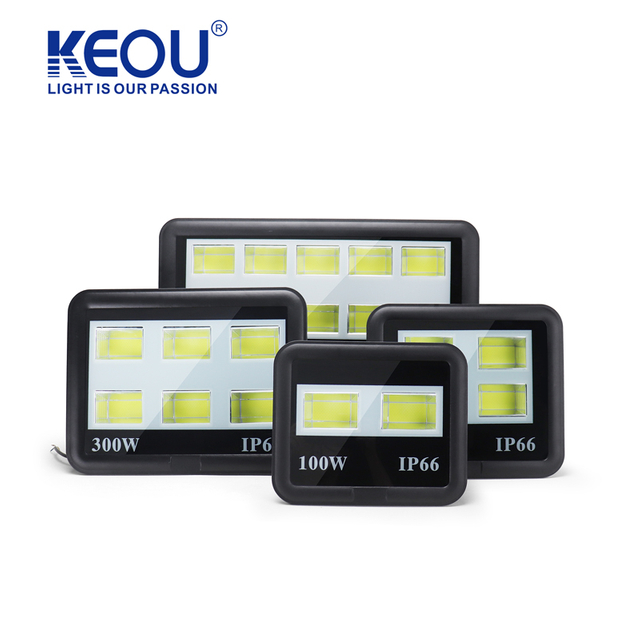
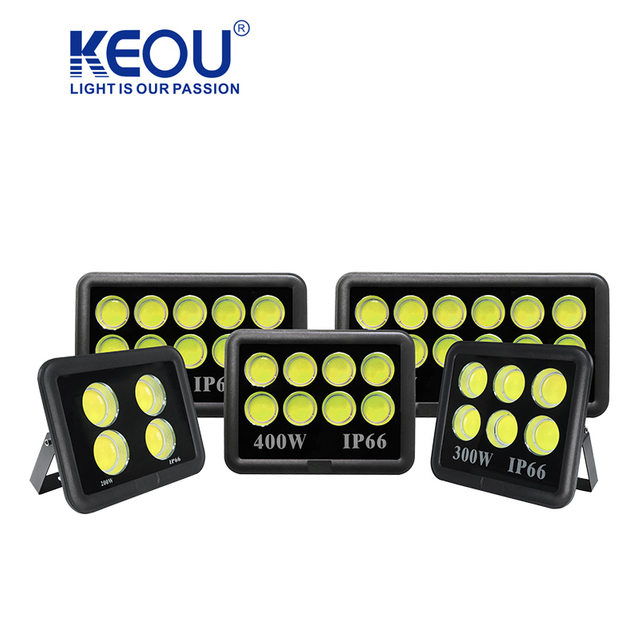
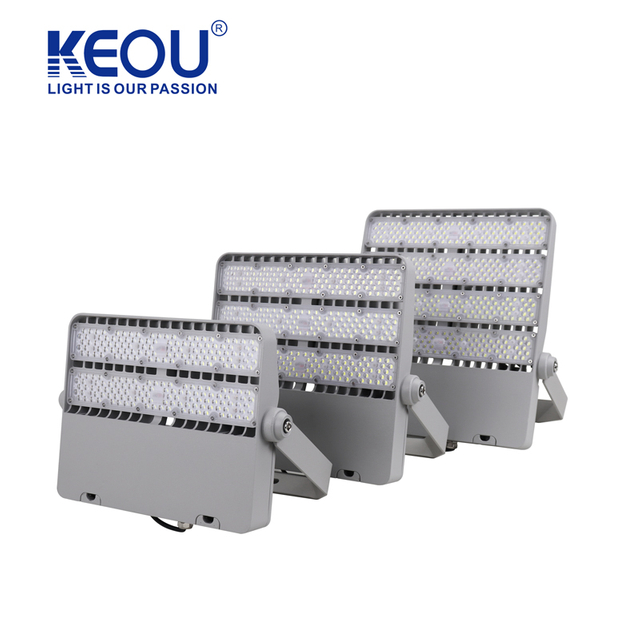
Many manufacturers offer IP66 outdoor floodlights and sealed high‑bays suitable for tough sites. For a quick visual reference on common enclosure and sealing approaches, you can browse KEOU Lighting’s IP66 floodlights. Treat product pages as a starting point for enclosure style—then confirm control interfaces and surge specs in the driver documentation.
In many U.S. jurisdictions, commercial exterior lighting must shut off when daylight is available (often via photocells) and reduce output after inactivity in certain zones (such as parking). For context, see ASHRAE’s Lighting changes in ASHRAE/IES 90.1‑2022 and DOE’s IECC 2021 commercial provisions overview, then confirm the adopted edition locally.
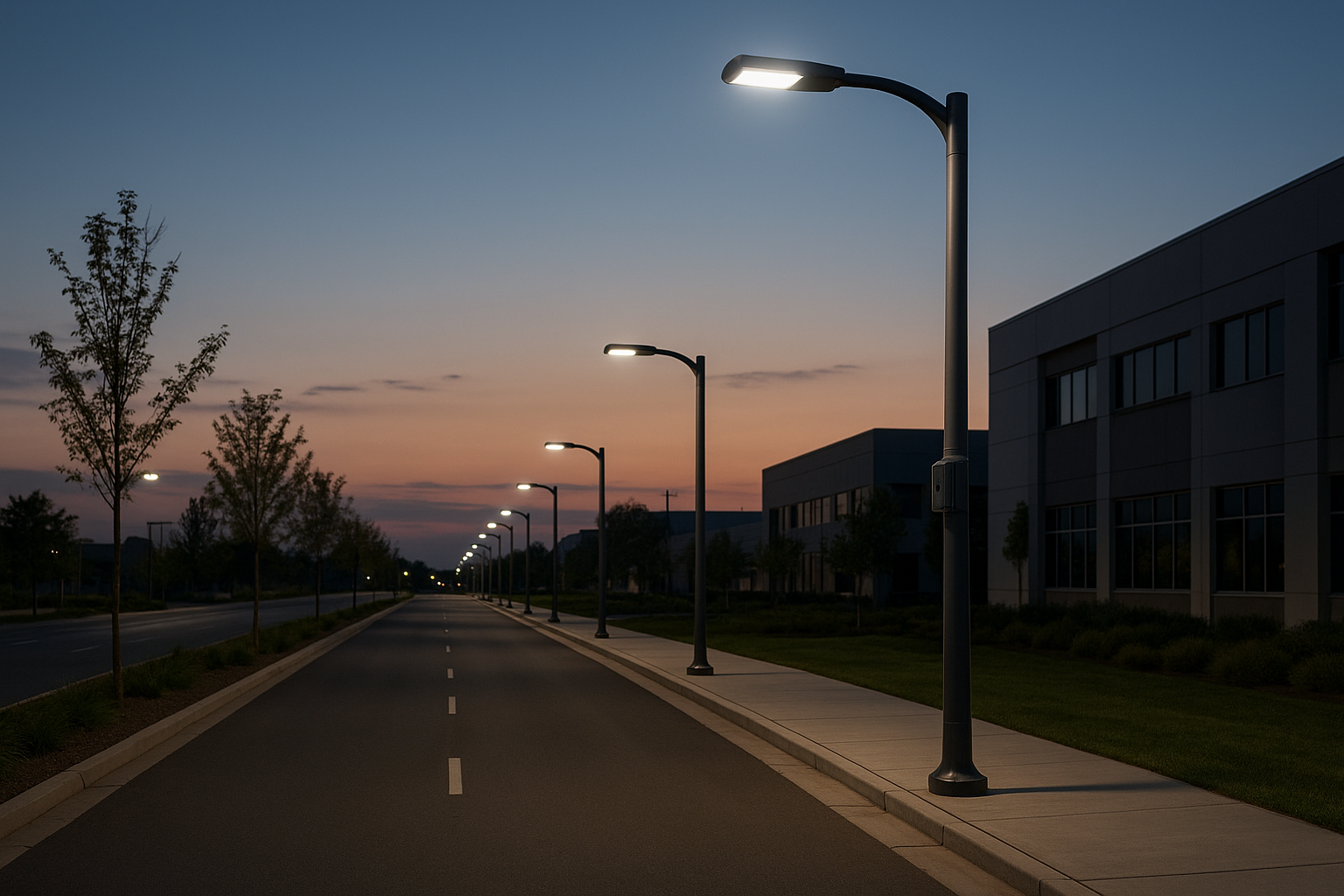
When you’re lighting roadways and big parking fields, two questions dominate: can you monitor fixtures individually, and can you service them efficiently? That’s why DALI‑2 with D4i drivers has momentum outdoors. Each luminaire becomes an addressable asset that can report energy use, driver and light‑source status, and runtime, which feeds maintenance workflows. The DALI Alliance explains D4i data and power provisions in DALI at a glance.
On poles, an ANSI C136.41 7‑pin receptacle often hosts a photocontrol or a network node that bridges your DALI or D4i ecosystem to a headend. Under‑luminaire, Zhaga Book 18 sockets enable small, replaceable sensor and communication modules.
Use astronomic schedules for predictable baselines and photocells for site‑specific daylight response. For after‑hours energy cuts and safety, layer motion sensing (PIR or microwave) to step down and pop back up on detection—tuned to local code limits.
Specify SPDs (often 10 kV/10 kA minimum; consider 20 kV/10 kA in storm‑heavy or exposed utility grids), follow good grounding and bonding practice, and separate low‑voltage control from mains to keep the bus quiet.
If budgets are tight and you only need zoning (not per‑fixture feedback), analog 0–10V can work—just mind voltage drop, shielding, and minimum‑level behavior at long runs.
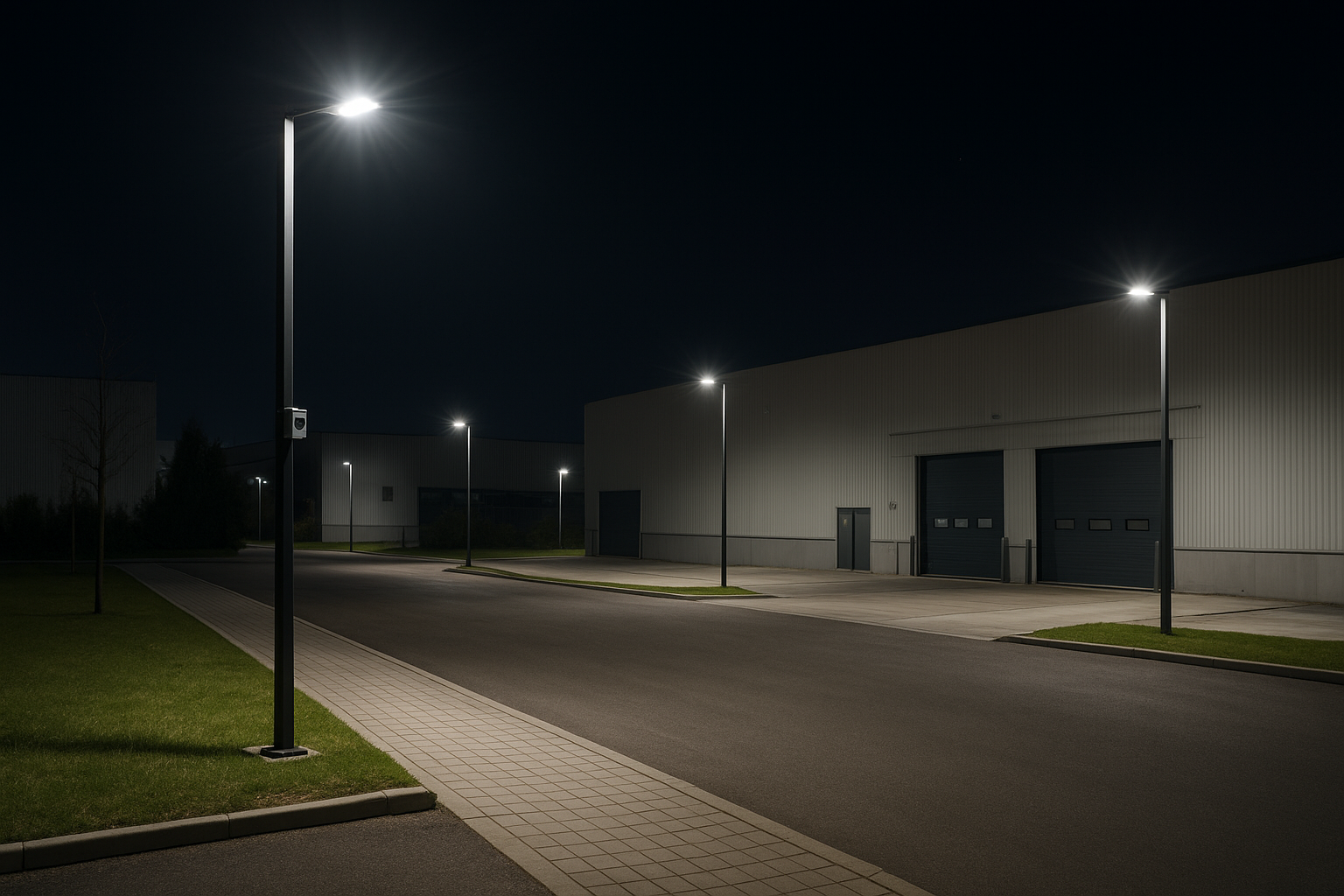
Campuses mix parking areas, walkways, docks, and loading aprons. DALI‑2 and D4i can provide a consistent backbone for grouping and scene control across building edges and outdoor nodes, while still giving you fixture‑level diagnostics. Where feedback isn’t required, you can blend in 0–10V zones to keep the architecture cost‑balanced.
Use DALI where you need grouping, scenes, and diagnostics across a lot of fixtures. Use 0–10V where you’re effectively doing “dimming by zone” and you don’t need per‑fixture status.
Plan addressing by zone, label junction boxes with bus segments, and validate bus integrity before you seal enclosures. For inspections, document daylighting and after‑hours reduction settings; DOE’s IECC slides and ASHRAE’s summaries offer high‑level context for typical exterior control expectations.
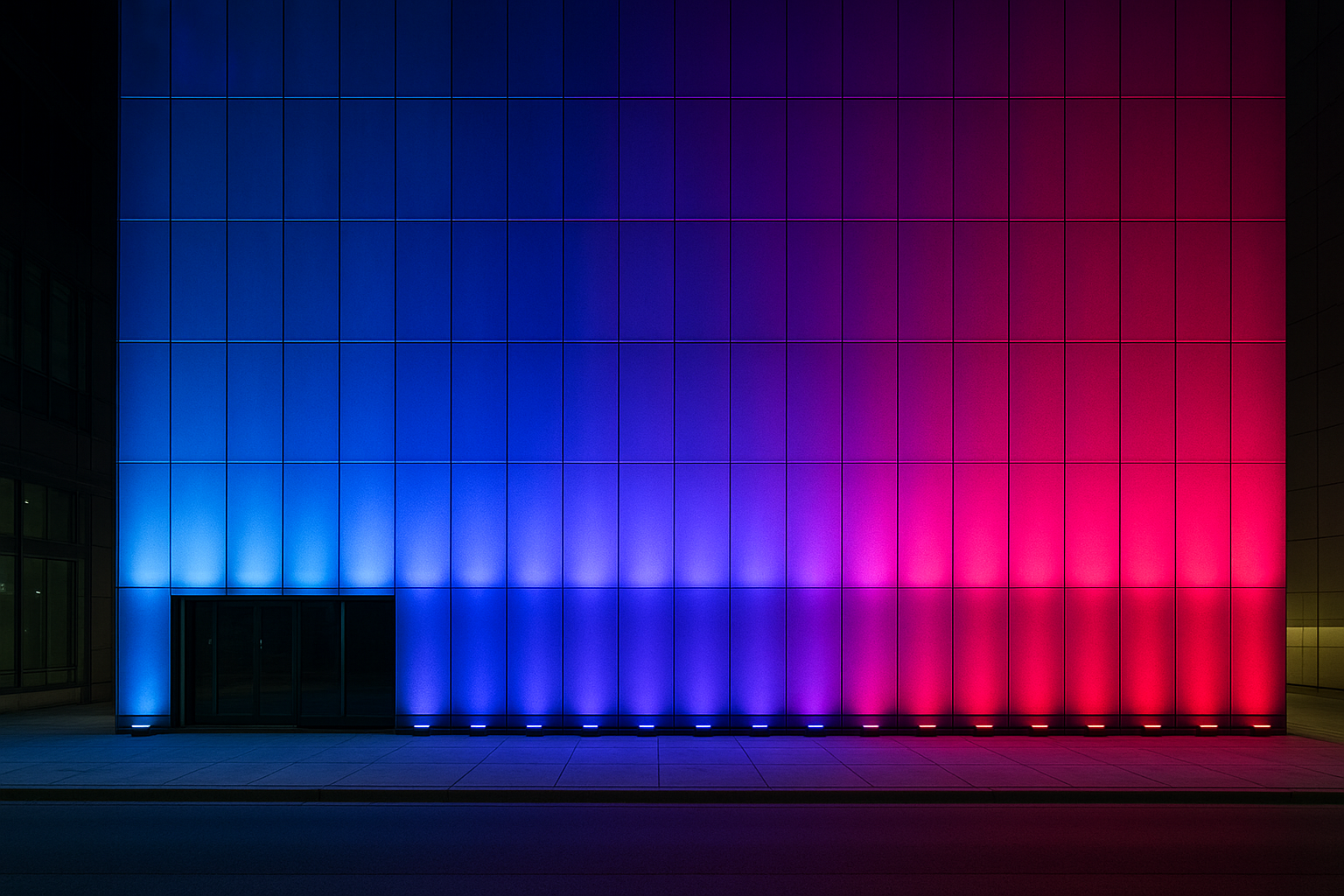
For hotels, cultural sites, and feature walls, you need smooth color fades, precise channel mixing, and repeatable scenes. That’s DMX512‑A.
Treat DMX like any RS‑485 system: use 120 Ω shielded DMX cable, daisy‑chain devices (avoid star topologies), terminate the last device with 120 Ω, and label universes and addresses. eldoLED’s How to wire a DMX system is a solid field companion, and the ESTA/USITT DMX512‑A published documents index is helpful for standards provenance.
Put controllers and splitters in IP‑rated enclosures, use weather‑sealed connectors, add isolation or repeaters when you approach run‑length or load limits, and test signal integrity before you close up boxes. It’s worth repeating: daisy‑chain, don’t star.
It’s common to run baseline on/off or dimming via photocell or astronomic scheduling and overlay color effects via DMX only when needed. That split reduces DMX runtime and simplifies troubleshooting.
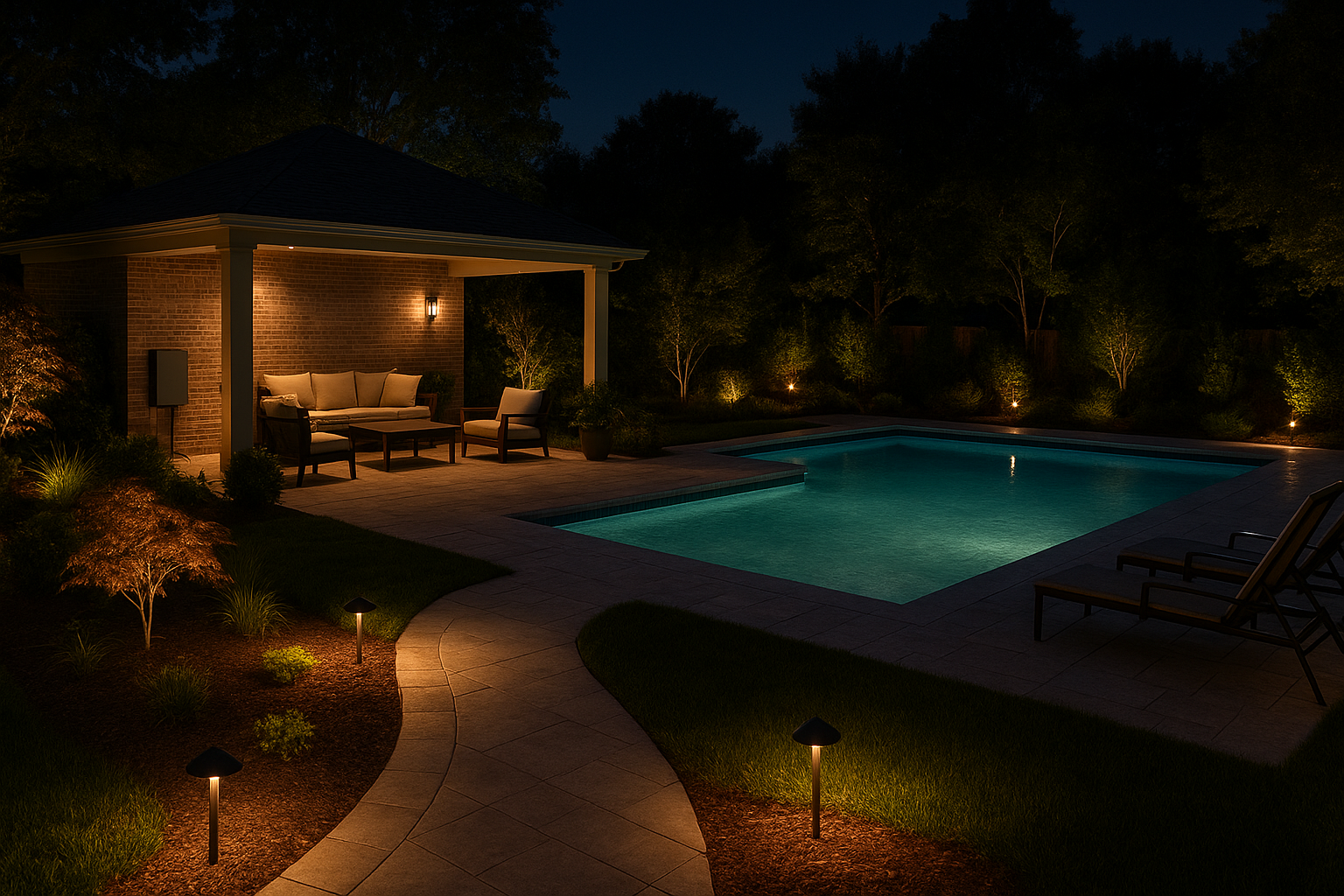
Residential outdoor control is mostly about reliability and convenience. The best system is the one that still works when it’s raining, your Wi‑Fi is busy, and you haven’t opened the app in a month.
If the existing wall dimmer and line‑voltage run must stay, choose fixtures explicitly rated for phase‑cut or TRIAC dimming. Where compatibility is shaky—or you want more predictable dimming—move to 0–10V drivers controlled by a small outdoor‑rated dimmer or bridge.
For app and voice control with scenes and schedules, Zigbee and Thread/Matter meshes are strong choices outdoors because line‑powered nodes can repeat signals across your yard. The Connectivity Standards Alliance’s CSA 2023 Annual Report outlines Zigbee and Matter ecosystem momentum.
Keep nodes outdoor‑rated, plan mesh coverage (border routers for Thread; powered repeaters for Zigbee), and minimize dependence on Wi‑Fi for large node counts.
A simple astronomic schedule might be all you need for predictable on/off. Add a photocell when cloud cover or nearby building shadows make ambient light unpredictable. Use PIR or microwave motion to step lights down late at night and pop back up when someone approaches.
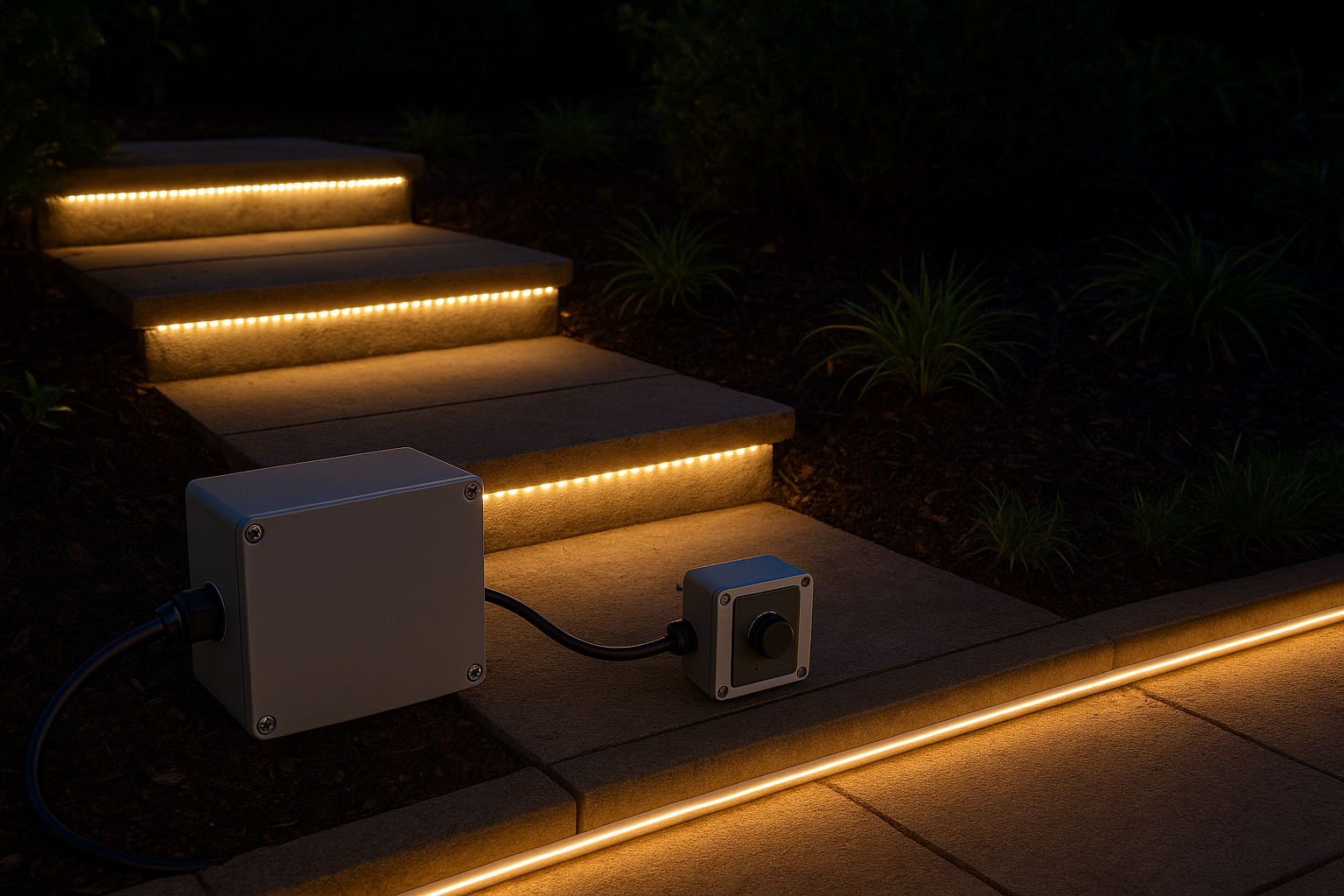
Low‑voltage landscape systems are forgiving in some ways and unforgiving in others. The control part is simple; the field installation details are what decide whether it stays stable outdoors.
12/24 V landscape runs and LED strips almost always use PWM controllers or drivers. PWM sets brightness by changing the duty cycle, which is why it’s a natural fit for strips and DC runs.
House controllers in IP‑rated boxes with clean cable glands, keep low‑voltage runs tidy, and keep splices and connectors protected from standing water.
Designers often prefer higher‑frequency PWM to reduce visible artifacts and camera banding. Because frequency guidance varies by device, test with a flicker meter (for example, Pst LM or percent flicker) before you commit settings across the site.
Multi‑protocol sites are normal when each area has different needs. The trick is to keep ownership boundaries clear: one system should always be responsible for baseline safety lighting, and “effects” should be layered on top.
Use DALI‑2 or D4i for streets and paths, and DMX512‑A for the façade. Keep cabling distinct and coordinate schedules so baseline illumination is independent of the effects system.
In large lots, you can group fixtures on 0–10V controllers and use a networked lighting control bridge to schedule zones and collect coarse telemetry. This keeps hardware simple while still adding central management.
In residential yards, keep low‑voltage PWM for strips but add a Zigbee or Thread/Matter bridge for scenes and remote control, placing powered repeaters where you need coverage.
A little forethought saves a lot of truck rolls. Use this as a practical routine you can hand to whoever’s commissioning the site.
For DALI, pre‑plan addresses by pole or zone and label junction boxes with the bus segment and node IDs. For DMX, document universes and start addresses at every enclosure.
On DALI, check bus voltage and insulation resistance. On DMX, confirm daisy‑chain continuity and 120 Ω termination at the last device. On 0–10V, measure control voltage at the farthest fixture to ensure the minimum level behaves as expected.
Set photocell thresholds and astronomic offsets, then program after‑hours reductions to meet the adopted IECC or ASHRAE edition. Keep a commissioning log for inspections, referencing ASHRAE’s Lighting changes in ASHRAE/IES 90.1‑2022.
Confirm SPDs are installed to spec and that bonding and grounding follow the driver OEM’s guidance. Signify’s SPD overview is a good yardstick for typical outdoor ratings.
Start with power (breakers, contactors, astronomic schedules). Then check the control layer (DALI scan and addressing, DMX termination and universe routing, or 0–10V control voltage at the fixture). Finally, check the environment (moisture ingress, corroded connectors, surge‑tripped protection components).
Commercial parking lot retrofit. Goal: reduce maintenance calls and energy after midnight. Approach: swap to luminaires with D4i drivers, add ANSI C136.41 receptacles, and fit network nodes that expose per‑fixture energy and status. Program astronomic schedules plus motion‑based step‑downs after business hours. Result: cleaner maintenance planning (driver warnings flow to the headend), measurable post‑hours savings, and simpler night‑time troubleshooting.
Hotel façade and plaza. Goal: evening color themes with reliable baselines. Approach: keep site illumination on photocell + schedule, then add a DMX512‑A universe for façade washers and accent nodes. Wire with 120 Ω shielded cable in daisy‑chains, terminate correctly, and isolate long runs with repeaters. Result: effects stay crisp without jeopardizing baseline safety lighting.
Backyard pool and garden. Goal: app‑controlled scenes with minimum rewiring. Approach: keep existing TR IAC wall dimmer for a small porch circuit (driver‑rated), use a Zigbee or Thread/Matter mesh for path lights and strips (PWM controllers in IP boxes), and add one outdoor‑rated powered node near the fence to improve coverage. Result: scenes and timers work reliably across the yard with voice control, and maintenance is limited to occasional controller enclosure checks.
DALI‑2/D4i capabilities and the “smart‑ready” fixture concept are summarized in the DALI Alliance’s specifier guide: DALI at a glance.
For DMX wiring best practices and topology rules, see eldoLED’s guide: How to wire a DMX system and the ESTA/USITT index: DMX512‑A published documents.
For ANSI C136.41 receptacle context, TE Connectivity’s datasheet covers mechanical/electrical expectations: LUMAWISE Endurance N dimming receptacle.
For Book 18 under‑luminaire modules, see Zhaga’s overview: Smart interface between outdoor luminaires and sensing/communication modules.
For outdoor SPD expectations and typical ratings, review Signify’s overview: Philips surge protection devices.
For code context on exterior controls, use the ASHRAE 90.1‑2022 lighting changes summary: Lighting changes in ASHRAE/IES 90.1‑2022 and DOE’s IECC 2021 commercial slides: IECC 2021 commercial provisions overview.
For residential meshes and ecosystem context, the CSA 2023 report touches on Zigbee and Matter: Connectivity Standards Alliance 2023 Annual Report.
Think of “smart outdoor lighting controls” as a toolbox. Use DALI‑2/D4i when you need per‑fixture telemetry and repeatable maintenance workflows. Reach for DMX512‑A when the brief says color and effects. Keep 0–10V for simple zoning and retrofits; bring phase‑cut/TRIAC only when drivers are rated and rewiring isn’t feasible. For homeowners, Zigbee or Thread/Matter meshes make scenes and remote control practical—as long as the nodes and enclosures are truly outdoor‑ready. Most of all, respect the outdoor details: IP sealing, SPDs, clean wiring, and thorough commissioning. That’s what keeps lights on and headaches off.