
Author: Huang Publish Time: 03-05-2026 Origin: Site


If you sell commercial lighting into mixed projects, you already know the problem: “standard” recessed panels are easy to quote, but hard to differentiate. A dual‑zone recessed panel solves that in a practical way—without asking installers to change how they work.
This guide is BOF on purpose. It’s written for distributors/VARs who are ready to shortlist a model, validate fit, and move to quote/sample.
Dual‑zone panels create two distinct value paths for you:
A SKU that’s easier to position: the side ring and center light can do different jobs (accent vs ambient), which makes it easier to match different environments.
A cleaner upsell story: instead of “same panel, different wattage,” you can sell a visible lighting effect—useful for retail displays, hospitality mood zones, and feature corridors.
A clearer spec line in tenders: you can offer a dual-zone RGB panel light for feature areas, while keeping standard white panels for general lighting.
If you’re building out a panel lineup, it also fits naturally next to standard recessed panels in your catalog—see KEOU’s broader LED panel light range for the “baseline” SKUs distributors typically stock.
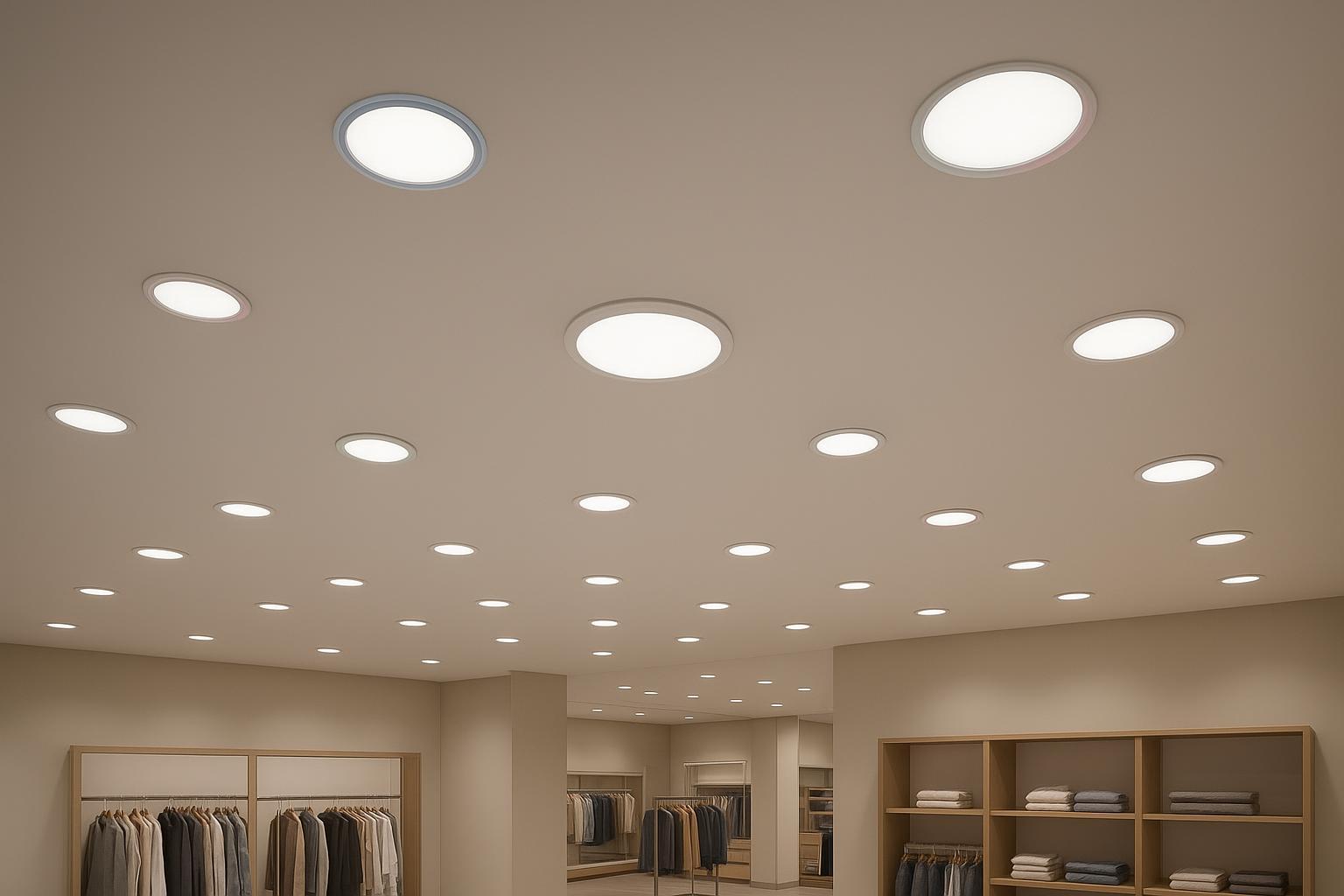
If you’re searching or bidding around the term recessed color ring panel light, the detail that matters is whether the ring is just decorative—or a true second lighting zone.
In this product, it’s a true second zone.
With KEOU‑MB053 Recessed Color Ring Panel Light, the side ring and the center light can be controlled independently—so they can display different colors at the same time.
That matters because it lets you build multiple “looks” from one fixture:
Center = clean white / Ring = color accent (retail feature zones, brand colors)
Center = task lighting / Ring = wayfinding glow (corridors, reception edges)
Center = warm ambience / Ring = cool contrast (lounges, boutique hospitality)
From a distributor perspective, the feature is simple to sell: one recessed cutout, but two lighting zones.
This model uses wall‑switch stepping—in other words, it’s a wall switch color changing ceiling light that changes modes by cycling power on/off in a sequence. For many projects, that’s a benefit:
No additional controller to source
Lower installation complexity for basic applications
Easy for end users who only have a standard wall switch
That said, every “switch‑step” product has a real‑world checklist. Before you commit to a large order, confirm the basics with your factory contact:
Mode sequence: what’s the exact order (white → RGB → dual‑zone presets, etc.)?
Memory behavior: does it return to the last mode after power loss, or restart a default?
Project use case: does the customer need independent dimming, scenes, or BMS integration? If yes, switch‑step may not be the right fit.
For controls-heavy commercial projects, it’s worth reminding buyers that controls compatibility matters (drivers, dimmers, and control strategies vary). Even if you’re not specifying a protocol here, a neutral reference like Litetronics’ guide to commercial LED lighting controls helps frame the conversation with engineers and installers.
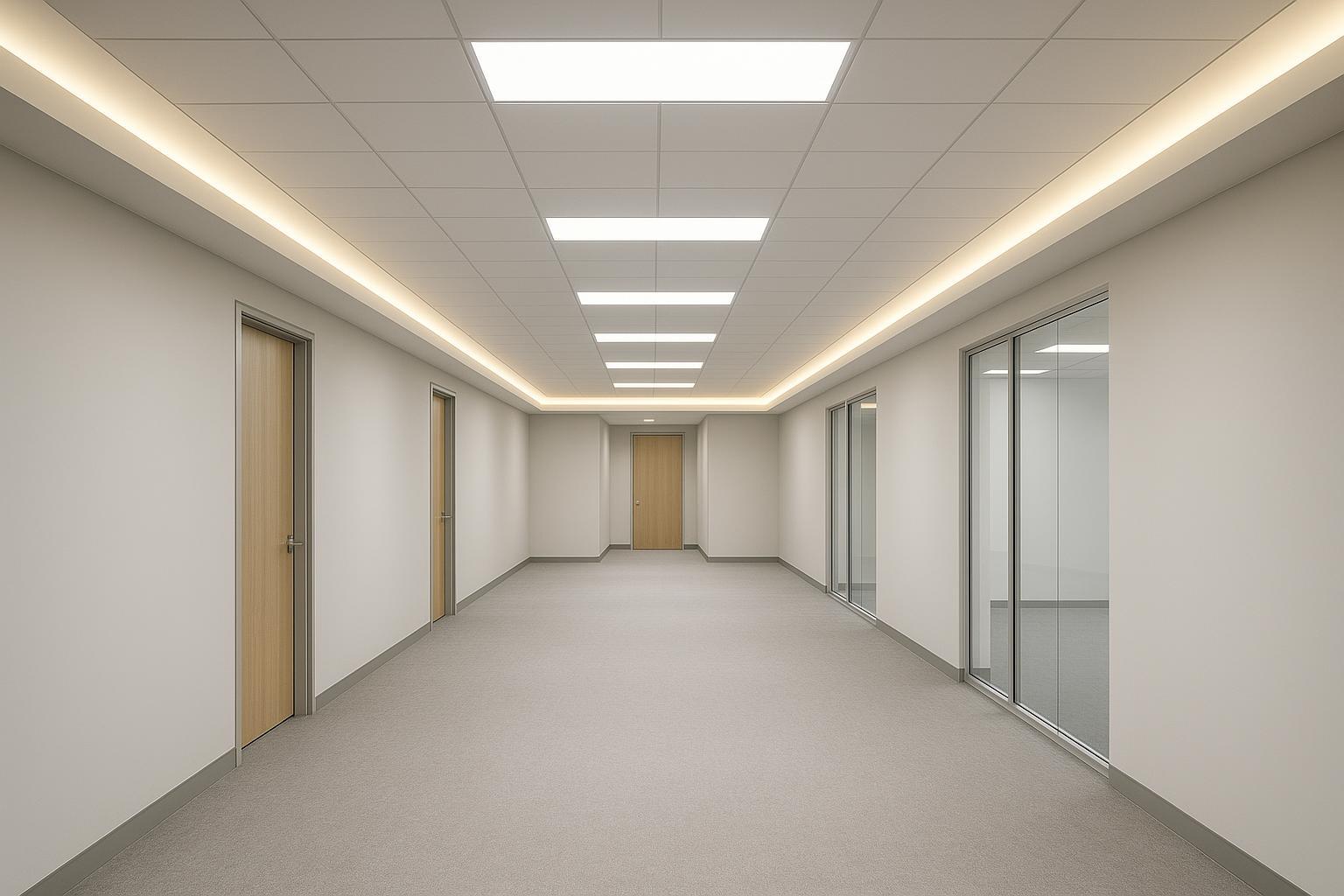
A common cause of panel returns is painfully simple: the ceiling hole is not the size you expected.
KEOU‑MB053 is built for that reality. It supports an adjustable cutout range of 75–205 mm, so one family can cover multiple site conditions and reduce the “wrong cutout” failure mode.
The fixture is designed for recessed installation and uses spring retention to hold the body securely in the ceiling cutout. If you’re comparing options, this is effectively a spring clip recessed panel light retention approach: spring clips are a standard method in recessed luminaires when installed correctly. Emilux provides a plain explanation of how spring clips secure downlights.
⚠️ Warning: For any recessed panel, retention depends on the cutout edge quality and ceiling material. If the ceiling is soft, cracked, or oversized beyond spec, no spring system will “magically” fix it. Confirm ceiling thickness/condition on retrofit jobs.
If you need more language and specs to educate buyers on adjustable cutouts (and why it reduces site risk), KEOU also has an internal guide: Adjustable cutout recessed LED panel light buyer guide.
When distributors lose time, it’s usually on fit questions: cutout range, thickness, and lumen level. Treat this as an adjustable cutout recessed panel light first—and a color feature second.
Below are the specs you can confidently copy into a quotation or submittal draft for this model.
Model: KEOU‑MB053
Material: Aluminium
Efficacy claim: 100 lm/W
Adjustable hole size range: 75–205 mm
Power | Size (mm) | Hole size (mm) | Luminous flux (lm) |
|---|---|---|---|
18W | φ120×25 | φ75–105 | 1620 |
24W | φ174×25 | φ75–155 | 2160 |
36W | φ226×25 | φ75–205 | 3240 |
How to use this table in the field:
If the project has mixed cutouts, this range can reduce the number of SKUs you carry.
If the ceiling is shallow, the 25 mm thickness is an easy first check for feasibility.
For quick comparisons, focus on lumens and hole size, not wattage alone—this matches how many commercial buyers evaluate recessed fixtures (see a general recessed lighting buying guide for typical selection factors).
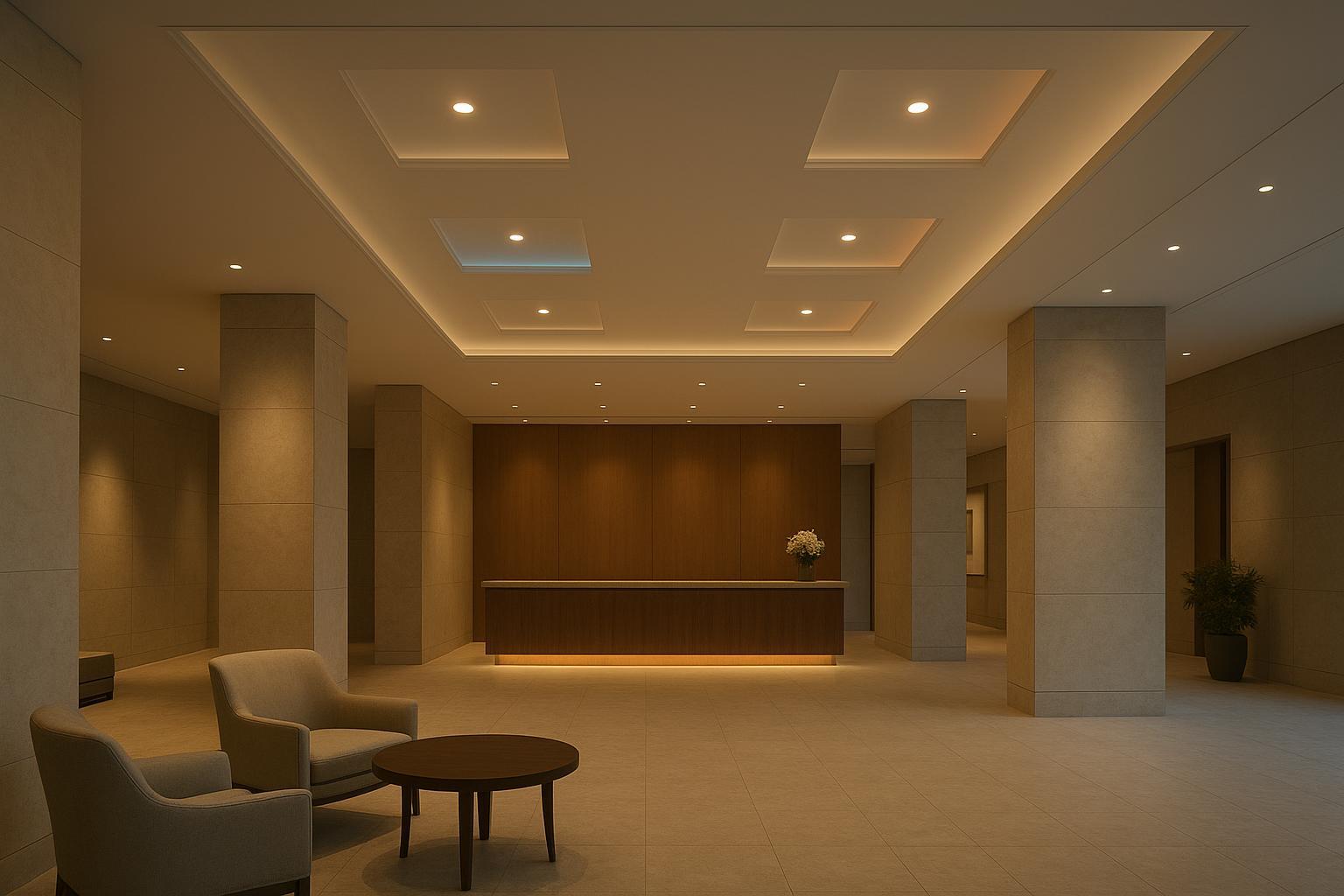
Use cases that typically benefit from “ring + center” lighting:
Retail: ring accent helps highlight brand identity or display zones; center keeps general illumination functional.
Hospitality: ring color sets mood; center white supports cleaning/turnover cycles.
Reception & corridors: ring creates wayfinding or edge definition without over-brightening the space.
Where it may be the wrong tool:
Projects that require formal BMS integration, scene programming, or precise dimming curves.
Jobs where spec documents demand specific certifications that are not yet confirmed for this exact variant.
If the client wants a more “pure commercial panel” look with less visual effect, it can help to offer an alternative recessed option in the same quote set—e.g., KEOU’s frameless recessed LED panel light or a standard recessed round panel light.
To quote faster and reduce surprises, ask for these items up front:
Ceiling cutout range on site (min/max) and ceiling material condition
Which wattage/size (18W / 24W / 36W) and target lumen level per area
Control expectations
confirm wall‑switch stepping is acceptable
confirm whether the customer needs dimming/BMS/scene control (if yes, specify requirements)
Color mode requirement
RGB multi-color
fixed CCT options (3000K/4000K/6500K)
white + RGB dual mode
Documentation needed for the market (test reports, certifications, labeling requirements) — request availability per shipment/region
Pro Tip: If your customer is sensitive to returns, request one sample first and validate the cutout fit on the actual ceiling type before committing to a full container.
If you want, send your BOM + target cutout range + wattage mix and we’ll respond with a quote based on KEOU‑MB053 (including the adjustable hole-size fit and the dual‑zone side/center color behavior). For faster validation, request a sample to check ceiling fit and control expectations on-site.


