Author: Huang Publish Time: 16-02-2026 Origin: Site


In commercial parks across the Middle East and Southeast Asia, lighting is both a safety system and a brand tool—shaping circulation, night‑time image, and user experience across roads, parking, walkways, plazas, loading bays, and façades. This concise guide focuses on creating consistent, high‑quality visual outcomes while addressing harsh regional conditions (extreme heat, salt spray, sand/dust) with standards‑aligned selection logic, a durability checklist, and practical specification and commissioning tips.

Why: Provide even longitudinal luminance and control backlight toward façades and neighboring properties.
Typical installation: 6–10 m mounting height for internal drives; spacing 25–40 m depending on luminaire distribution and EN 13201 class target.
Key specs to request: precise photometric distribution (IES file), cut‑off/BUG rating, IP66, driver Ta rating (≥50°C if specified), surge protection rating.
Why: Efficient corridor coverage for multi‑lane drives and service roads while limiting pole count.
Typical installation: 6–8 m mounting for main internal boulevards; aim optics to reduce uplight and backlight on façades.
Key specs: asymmetrical optics option, minimal uplight (U0 up component), lumen output matched to spacing, dimming capability (0–10V/DALI/programmable scenes).
Why: Simple targeting for intersections and conflict points; useful for retrofits on existing poles.
Typical installation: 6–8 m with adjustable brackets; combine with targeted poles at intersections to meet higher C-class needs.
Key specs: mechanical aiming range, anti‑vandal fixings (IK08+), IP66.
Why: Compact footprint, simplified wiring, and factory‑configured surge/driver modules for harsh grids.
Typical installation: pole‑top replacements on existing columns or new poles where low visual clutter is required.
Key specs: modular driver access, SPD spec (kV rating), thermal management data (Tc), and available optics for forward‑throw patterns.
Verify EN 13201 class selection (M/C/P) early to size pole heights and luminaire distributions. Use photometric modeling rather than rules‑of‑thumb for final spacing.
For façades near roadways, prefer forward‑throw asymmetric optics and house‑side shields to reduce trespass and sky glow.

Why: Provide broad, uniform illuminance for open parking fields with good optical control to reduce glare and obtrusive light.
Typical installation: pole heights 4–8 m depending on bay size; spacing planned to meet maintained Em and uniformity (photometric calculation required).
Key specs: IP66, serviceable driver compartment, lumen maintenance (L70/L80), tilt/aim options, surge protection.
Why: Improve perceived uniformity and reduce forward glare for drivers and pedestrians.
Typical installation: perimeter poles and aisle runs; combine with full‑cutoff fixtures on boundary poles where light trespass risk is higher.
Key specs: asymmetrical optics, measured vertical illuminance data (for CCTV/recognition), BUG rating.
Why: Flexible for long aisles and irregular layouts; modular scaling and easier retrofit of existing circuits.
Typical installation: 3–6 m poles for surface parking; staggered arrays over aisles for even coverage.
Key specs: sealed optics, IP66, service access, modular lumen packages.
Why: Provide vertical illumination for wayfinding and approach visibility without over‑lighting the lot.
Typical installation: 1–3 m for bollards; 2.5–4 m for wall‑mounts near entrances.
Key specs: glare‑shielded optics, IK rating for bollards, corrosion‑resistant finish for coastal sites.
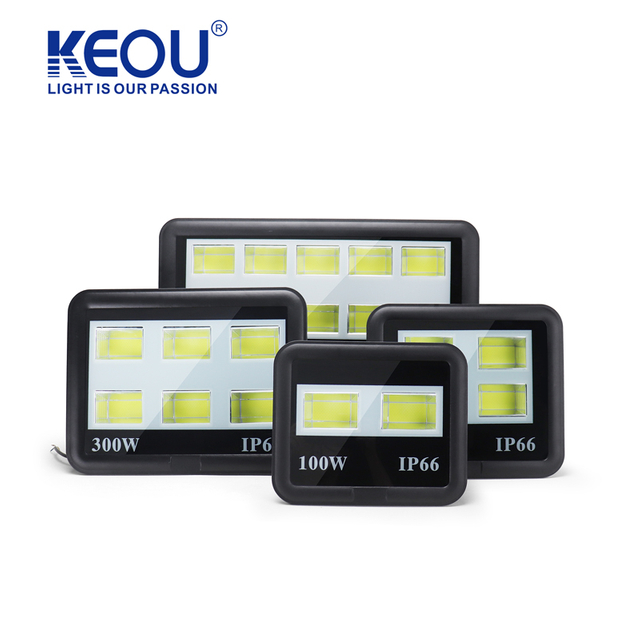
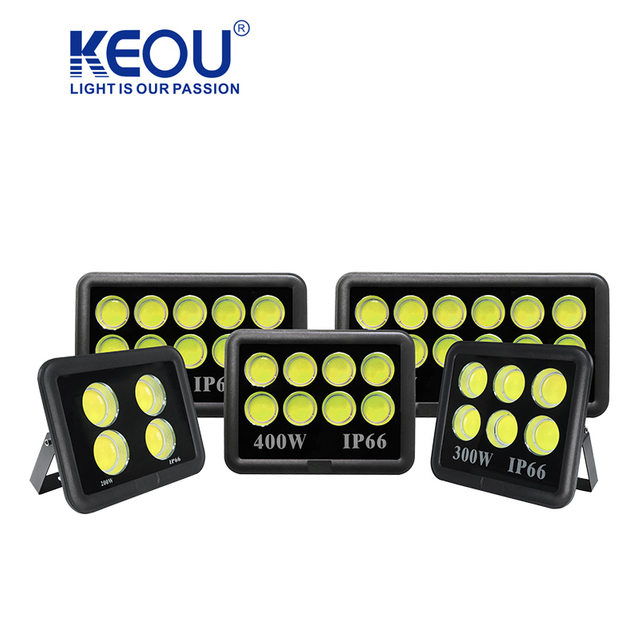
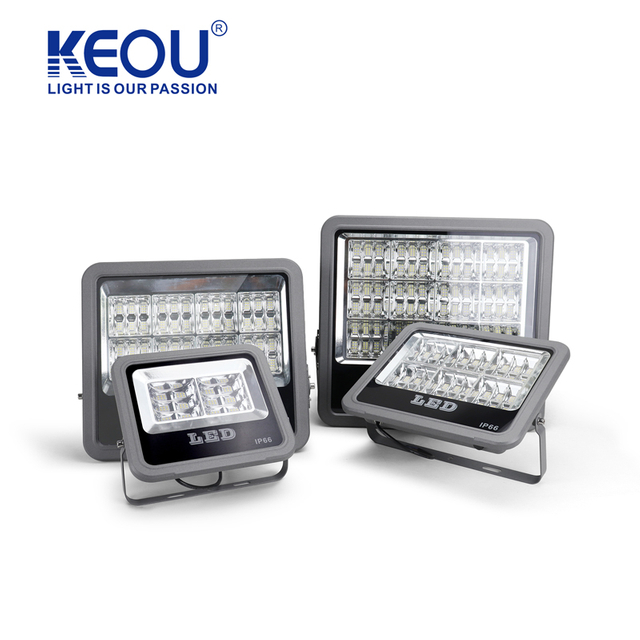
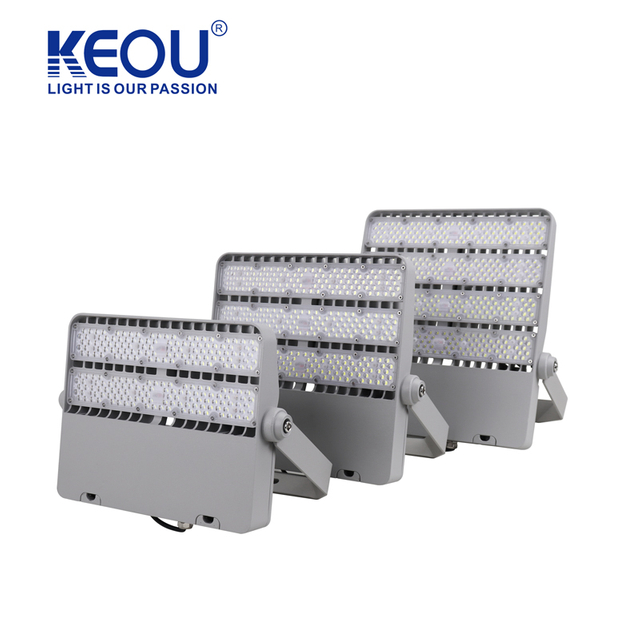
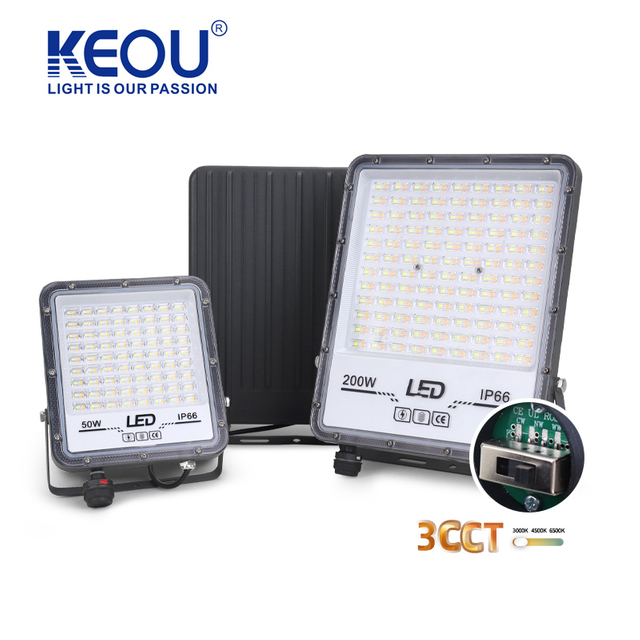
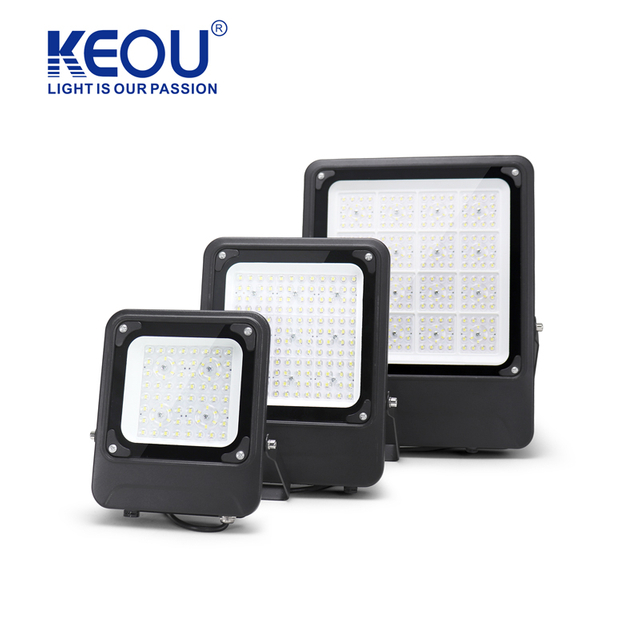
Disclosure: KEOU Lighting is our product. For a neutral example of an IP66 area luminaire suitable for medium‑traffic parking, see KEOU’s flood light overview (https://www.keouled.com/flood-light).
Owner checklist: request datasheet fields for IP/IK, Ta rating, surge spec (kV), lumen maintenance, IES file, and mounting/access details before purchase.
Design for vertical illuminance where CCTV or facial recognition is required (consult camera vendor for Ev targets). Start with conservative Ev ≈3 lx as a baseline for security zones, then refine.
Select fixtures with accessible driver compartments for faster on‑site maintenance in dusty or coastal environments.

Why: Control eye‑level brightness to preserve pedestrian comfort and wayfinding.
Typical installation: 2.5–5 m mounting for shared promenades; lower mounting for intimate plazas (3–4 m typical).
Key specs: low mounting luminance, BUG/UGR performance for pedestrian sightlines, dimming scene capability.
Why: Edge definition and subtle wayfinding without raising ambient sky glow.
Typical installation: 0.7–1.2 m bollard heights placed along paths and edges.
Key specs: IK rated, sealed gaskets for dust ingress (IP54+), corrosion‑resistant finishes for coastal sites.
Why: Layered lighting creates depth and supports brand presentation on plazas and plazas’ feature elements.
Typical installation: concealed uplights at 0.2–0.5 m from features for grazing; accent spots for trees and sculptures.
Key specs: narrow beam optics, glare shields/louvres, low‑brightness surrounds.
Why: Provide flexible scenes for events and allow post‑curfew dimming to meet obtrusive‑light limits.
Typical installation: poles or façade‑mounted washers; coordinate scenes with building façade lighting to preserve brand consistency.
Key specs: tunable CCT options (3000–4000 K), CRI ≥80 (90+ for feature zones), dimming protocol compatibility.
Favor 3000–4000 K for plazas to balance warmth and visual clarity; increase CRI where brand colors or material textures are critical.
Use scenes and curfews to reduce output after hours to limit sky glow and neighbor complaints.

Why: Durable option for dock faces exposed to vehicle impacts and frequent use.
Typical installation: wall mounting above dock doors and along corridor walls at 3–6 m depending on bay geometry.
Key specs: IK09–IK10, IP66/IP67 for washdown zones, quick‑swap driver modules, and integrated surge protection where possible.
Why: Provide even task lighting along narrow lanes and under canopies; good for label reading and pallet handling.
Typical installation: continuous runs along corridor ceilings or eaves at 3–6 m.
Key specs: sealed connectors, high lumen packages, low‑glare diffusers, Ta rating suitable for ambient temperatures.
Why: Targeted task lighting for dock faces and reversing areas while limiting spill into adjacent spaces.
Typical installation: wall‑mounted brackets or pole mounts aimed to minimize driver glare.
Key specs: adjustable locking aim, IK rating for impact resistance, IP66.
Why: Continuous duty, high efficacy, and serviceable drivers for covered operations.
Typical installation: ceiling mounts at heights matching operator visibility—commonly 4–10 m for covered docks.
Key specs: high lumen packages, robust thermal design (Tc data), quick maintenance access.
Prioritize IK and IP ratings above optical finesse—safety and uptime matter more than appearance in these zones.
Specify surge protection and confirm earthing practices for areas with heavy equipment and variable power quality.

Why: Highlight texture, vertical elements, and brand geometry with tight control over beam placement.
Typical installation: close to the plane (0.5–1.5 m offset) with narrow beams (5°–15°) for grazing.
Key specs: precise aiming hardware, CRI ≥80 (90+ for color‑critical façades), low stray light.
Why: Provide broad, even color and tone across large planes for consistent brand presentation.
Typical installation: offset mounting 1–3 m from façade; choose beam angle to match façade height for uniform wash.
Key specs: tunable CCT options, even‑output lenses, anti‑glare louvers, IP66 for exposed façades.
Why: Smooth signage illumination with minimal hot spots and consistent color rendition.
Typical installation: integrated into sign channels or surface mounted behind diffuser strips.
Key specs: even‑output optics, CRI ≥80–90, weather‑tight joints and UV‑stable diffusers.
Why: Flexible branding scenes and seasonal color coordination while retaining control over spill and intensity.
Typical installation: discreet mounted floods with precise aiming and dimming scenes tied to building controls.
Key specs: color stability, color calibration data, dimming protocol compatibility, and glare control accessories.
Maintain consistent CCT and CRI across building elevations to preserve brand appearance; avoid mixing warm and cool sources on the same plane.
Use shielding, cut‑off optics, and curfews to control obtrusive light and protect neighboring dark‑sky needs.
Use EN 12464‑2 for outdoor workplace areas (parking, loading, pedestrian zones) and EN 13201 for road and internal‑drive classification and TI/visibility considerations; supplement those with CIE/ILP guidance for obtrusive light limits and consult local municipal requirements for mandatory deviations.
Specify IP66 minimum for dust and spray (IP67 where immersion or heavy washdown is expected), IK08 or higher for exposed poles and public fixtures (IK09–IK10 for high‑risk impact zones), surge protection rated at least 10 kV for unstable grids, and drivers/luminaires rated for continuous operation at Ta ≥50–55°C with manufacturer derating curves.
Keep CCT consistent across elevations (typically 3000–4000 K) and CRI ≥80 (90+ for color‑critical elements), use narrow grazing for texture and wide washers for uniform planes, and control spill/uplight with cut‑off optics, louvers, and timed dimming to preserve image while minimizing sky glow.
Require IES files for each proposed luminaire, maintained Em and U0 targets, vertical/semi‑cylindrical illuminance data where CCTV or facial recognition is a concern, lumen maintenance (L70/L80) estimates, driver Ta/Tc ratings and derating curves, IP/IK ratings, and explicit surge/SPD specifications.
Verify as‑built photometry against the design, implement a cleaning and inspection schedule (monthly–quarterly depending on dust load), replace or service drivers with modular access to reduce downtime, and document spare‑parts and dimming scenes so that brand lighting scenes remain consistent over time.