
Author: Huang Publish Time: 13-07-2026 Origin: Site


If you’re sourcing ceiling luminaires for a project, “flush mount” and “surface mount” get used loosely. That confusion can lead to the wrong fixture being quoted, then rework on site.
Here’s the practical way to think about it:
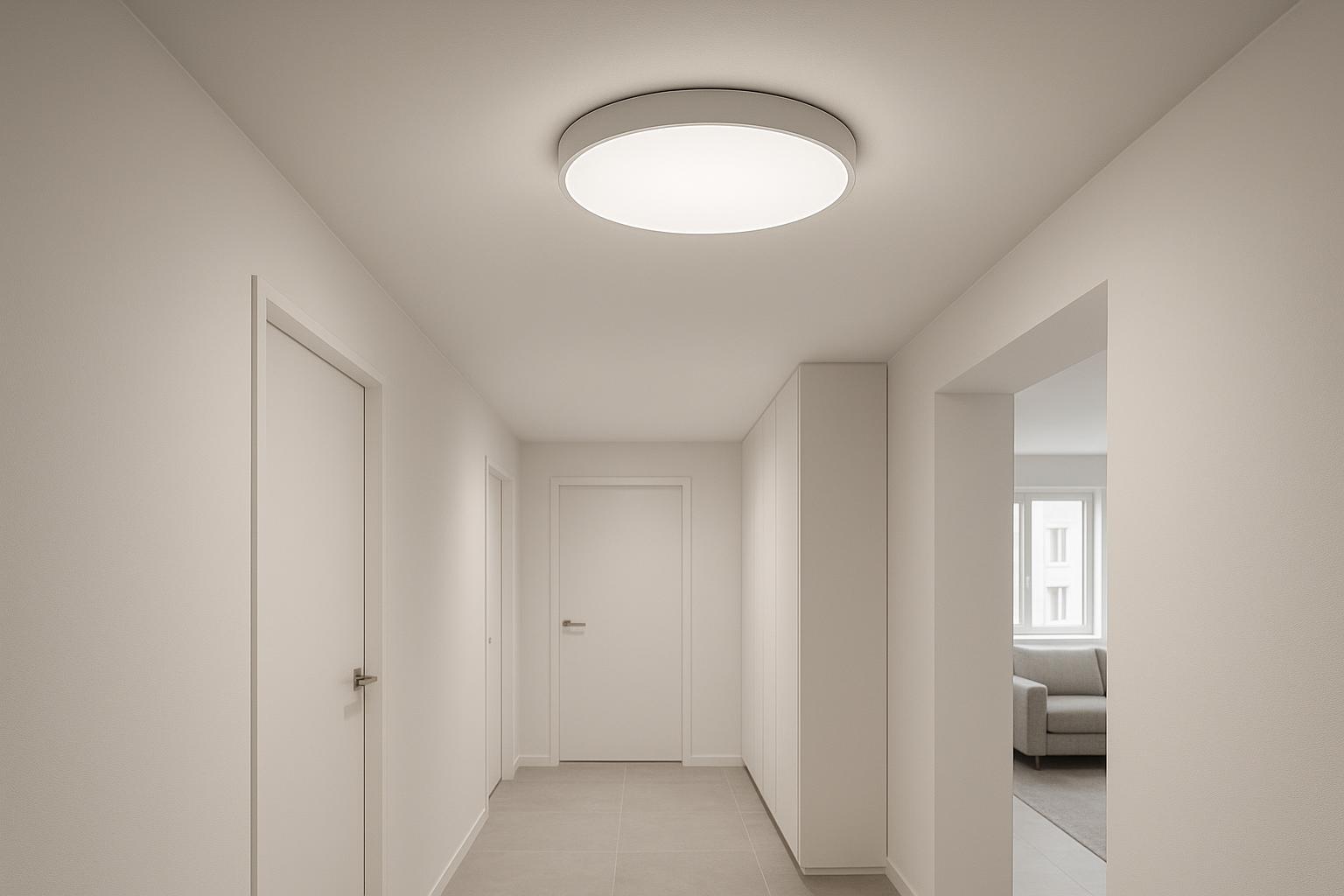
Flush mount: the fixture sits tight to the ceiling surface with little or no gap.
Surface mount: a broader category for fixtures mounted on the ceiling surface (housing visible). A flush mount is often a type of surface mount.
In many RFQs, what buyers really mean by “surface mount vs flush mount” is flush mount vs a protruding surface mount (often called semi-flush). You’ll also see it written as flush mount vs semi flush ceiling light.
That’s the comparison this guide focuses on, using criteria that help you pick a spec that installs cleanly and doesn’t come back as a return.
If your project has… | Default to | Why |
|---|---|---|
Low ceilings, corridors, small rooms | Flush mount | Maximizes headroom and reduces accidental impact risk |
A gypsum/false ceiling and you want simple access for future maintenance | Protruding surface mount | More physical clearance makes access easier |
Concrete slab ceiling with limited wiring cavity | Surface mount (flush or low-profile) | Avoids deep cut-outs; works with surface wiring solutions |
Glare-sensitive spaces (office, classroom, retail) | Either, but specify optics | The mounting type matters less than diffuser/UGR and beam control |
Dimming/control requirements (0–10V, DALI, phase-cut) | Either, but specify driver/control match | Flicker issues are usually a control/driver mismatch, not a mounting choice |
Pro Tip: If the RFQ uses the phrase “surface mount”, ask one clarifying question: Do you mean flush-to-ceiling, or a protruding (semi-flush) body? Retail terminology varies across suppliers. Ferguson Home’s guide is a good reference for flush vs semi-flush definitions: “Flush Mount Lights vs. Semi-Flush Mount Lights”.
Choose flush mount when headroom is tight or the area has a lot of foot traffic. It keeps the profile close to the ceiling and lowers the chance of contact. If you’re writing the spec for apartments, corridors, or washrooms, this is the typical flush mount ceiling light for low ceiling choice.
Choose a protruding surface mount (semi-flush) when you have ceiling height to spare and you want a more decorative fixture, or you want a little more room for airflow and access.
If you’re buying for mixed projects, your SKU strategy can be simple:
flush mount for “standard-height” apartments, corridors, washrooms
protruding surface mounts for living rooms, lobbies, feature spaces
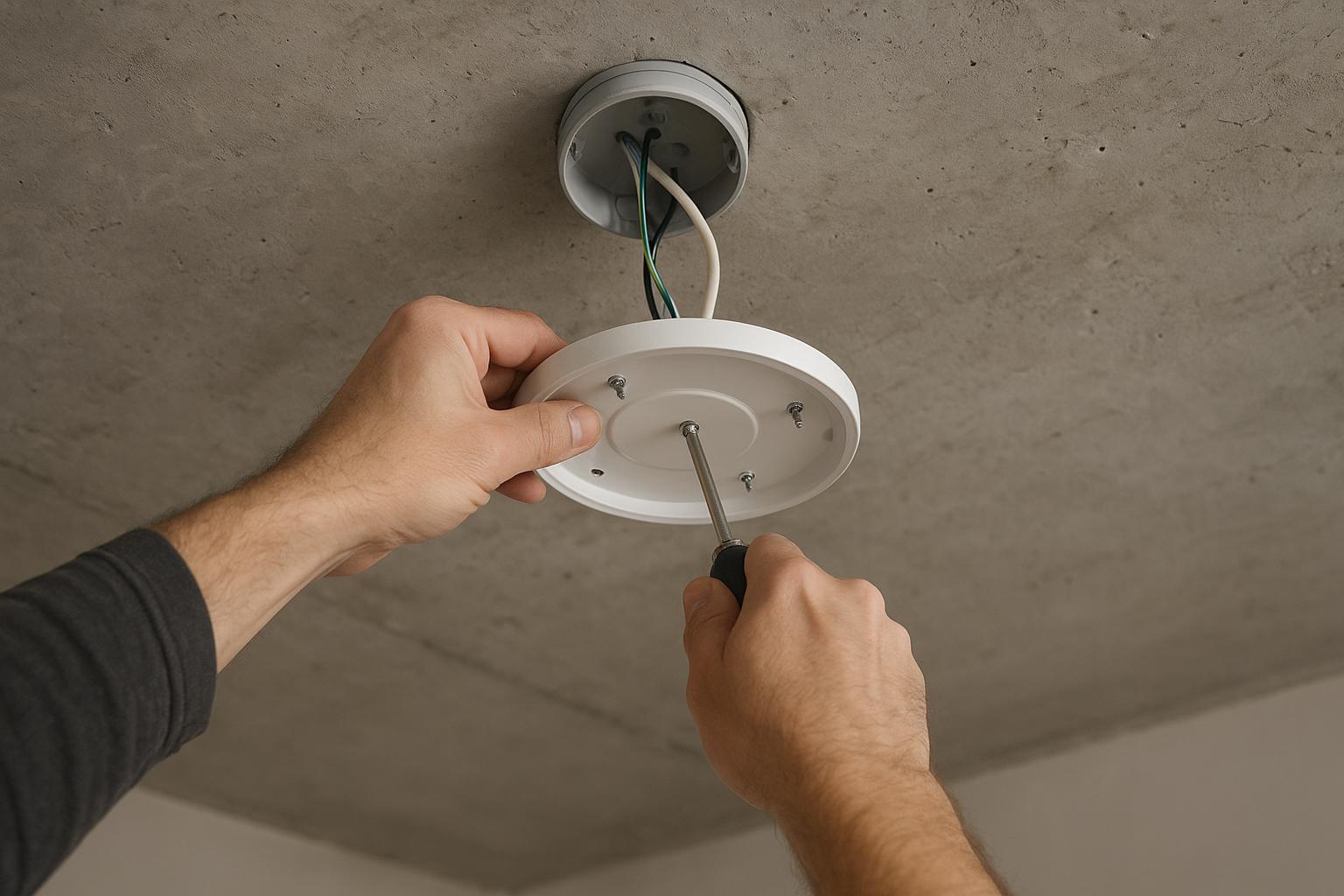
This is where surface-mount options often win in real projects.
Concrete slab ceilings: wiring changes are harder to hide. Many teams prefer surface-mounted solutions rather than deep recess work.
Gypsum/false ceilings: you gain a wiring cavity, which makes both recessed and surface fixtures easier to route and service.
The key procurement takeaway isn’t “which is prettier.” It’s: what can your installer mount safely, with the wiring access you actually have? This is where surface mounted ceiling light installation details matter more than the catalog photo.
General installation guidance also changes with substrate. For example, Saint-Gobain Gyproc notes that heavy fixtures should be suspended from structural members rather than the gypsum board itself: “Lighting up the Ceiling” (Gyproc).
For integrated LED ceiling lights, the driver and connections are often the service point.
Flush mounts can be perfectly serviceable, but access is tighter.
Protruding surface mounts typically give more hand clearance for removing covers and reaching drivers.
If you’re specifying for projects where maintenance is outsourced and time on ladder is expensive, write this into your spec package:
driver must be accessible without damaging the ceiling finish
spare driver availability (or approved equivalents)
clear method statement for replacement
Mounting type affects perception, but it’s not the main control knob.
If the space is glare-sensitive, focus your RFQ on optical performance:
diffuser type (opal, microprismatic, honeycomb)
beam angle / distribution
UGR target when relevant
A flush mount with a good optic can be comfortable. A protruding surface mount with a bare bright source can still create discomfort.
In kitchens, bathrooms, and back-of-house areas, sealing matters.
Specify IP rating based on the zone and cleaning conditions. Sealed flush mounts are often easier to keep clean because there are fewer exposed ledges and gaps, but the correct answer is always “match the IP rating to the environment,” not “flush is always better.”
If you’ve ever had a “the lights flicker” call-back, you already know: the issue is usually the control stack.
Best practice is simple: match the driver to the control protocol (phase-cut/TRIAC, 0–10V, or DALI). Mixing them causes unstable dimming, buzzing, or flicker.
For a practical overview of protocol differences and why compatibility lists matter, see Kingseng’s guide: “LED Dimming Guide: TRIAC 0-10V DALI PWM Explained”.
What to ask suppliers:
dimming protocol supported (exact)
tested compatible dimmer/controller models (if phase-cut)
flicker performance claims (and test method, if available)
LED fixtures don’t fail because the LED chip is bad. They fail because heat and driver stress add up.
You don’t need to over-engineer this section in an RFQ, but you should request:
ambient temperature rating (Ta)
driver brand/model (or performance class)
lumen maintenance target (e.g., L70) if the project is long-life oriented
Surface-mount bodies often have more physical volume to dissipate heat, but the real-world outcome depends on the fixture design.
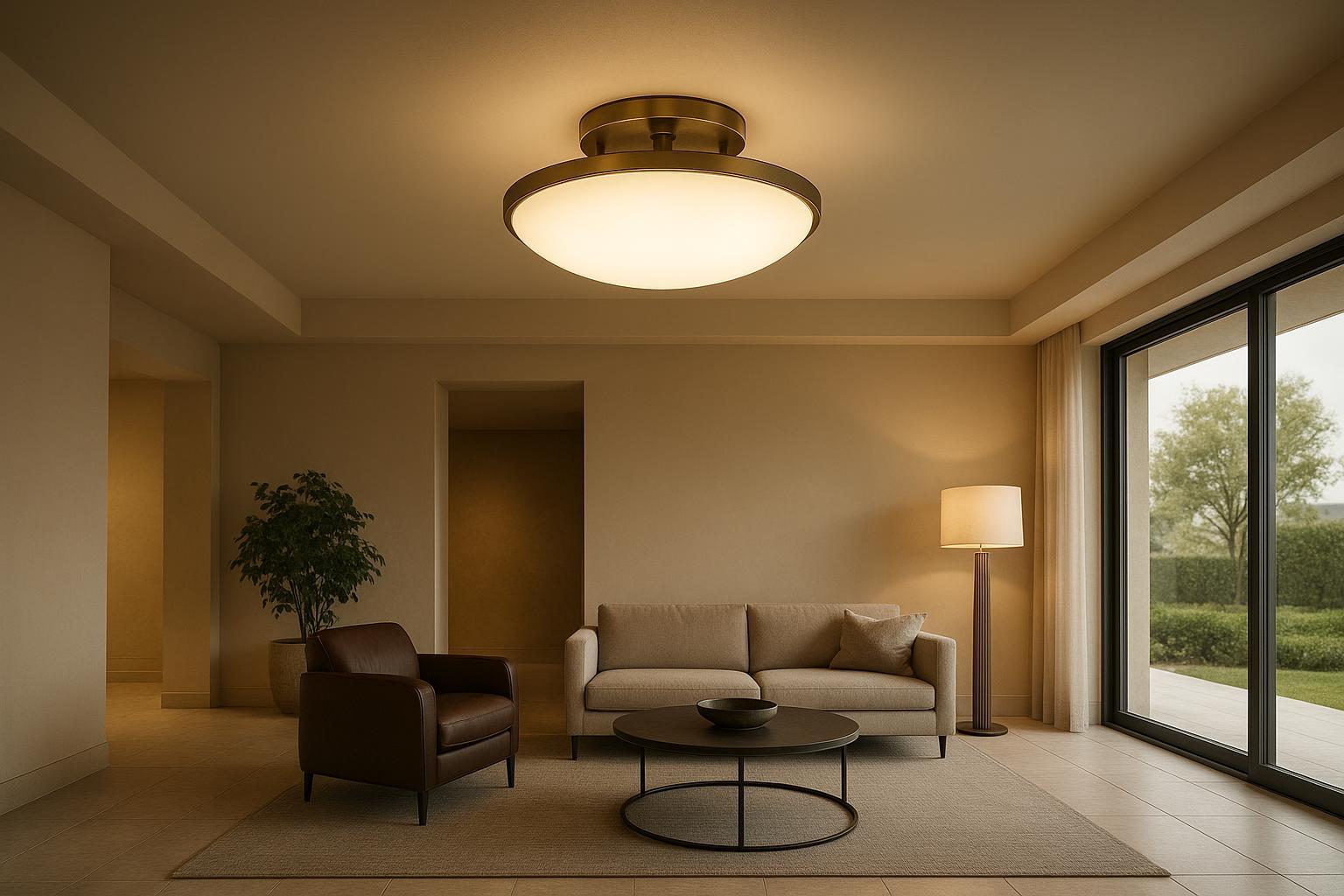
If you’re selling into UAE projects, you’ll see both minimal “clean ceiling” requirements and more decorative demands depending on segment.
Practical rule:
flush mount for visual quietness and low-profile ceilings
protruding surface mount when you need a design feature without moving to pendants/chandeliers
If your team needs a repeatable process, treat this article as how to choose ceiling light mounting type guidance: confirm the substrate and controls first, then pick the form factor.
Send this as part of your BOM package so the supplier quotes the right thing the first time.
Mounting intent: flush-to-ceiling or protruding body (semi-flush)
Ceiling substrate: concrete slab / gypsum false ceiling / other
Input voltage and frequency: UAE projects are commonly 230V / 50Hz (confirm per site standard). A UAE electrical overview reference: GoSwitchgear on UAE sockets and supply standard
Size constraints: fixture diameter/length + maximum allowable drop
Photometrics: lumens, CCT, CRI, beam angle/distribution
Glare target (if applicable): UGR requirement and optic type
Driver and controls: on/off only or dimmable; protocol (TRIAC / 0–10V / DALI)
IP rating by zone (dry, humid, dusty)
Service plan: how the driver is accessed and replaced
Packaging and spares: spare drivers, diffusers, clips (if required)
If you want, share your BOM/spec (mounting intent, sizes, CCT/CRI, dimming protocol, IP zones). We can review it and suggest a flush vs surface-mount spec that avoids the usual problems: clearance conflicts, flicker call-backs, and maintenance headaches.
You can browse KEOU ceiling lights for common ceiling fixture formats, and if your project needs low-profile surface options, see KEOU indoor panel lights.
Not exactly. “Surface mount” is an umbrella term for fixtures mounted on the ceiling surface. “Flush mount” usually means a surface-mounted fixture that sits tight to the ceiling with little or no gap. Retail and supplier wording varies, so it’s worth clarifying in the RFQ.
No. A recessed luminaire’s housing sits inside the ceiling cavity, while a flush mount is mounted on the surface. The Illuminating Engineering Society (IES) definitions help clarify recessed vs surface concepts: IES definition: “flush mounted or recessed”.
In general, protruding fixtures are easier to access because there’s more clearance to remove covers and reach drivers. But a well-designed flush mount can still be serviceable if the access method is planned.
Driver/control mismatch is a frequent cause. The fix is usually to confirm the dimming protocol (TRIAC, 0–10V, DALI) and use a driver and controller that are tested compatible.


