
Author: Huang Publish Time: 09-07-2026 Origin: Site


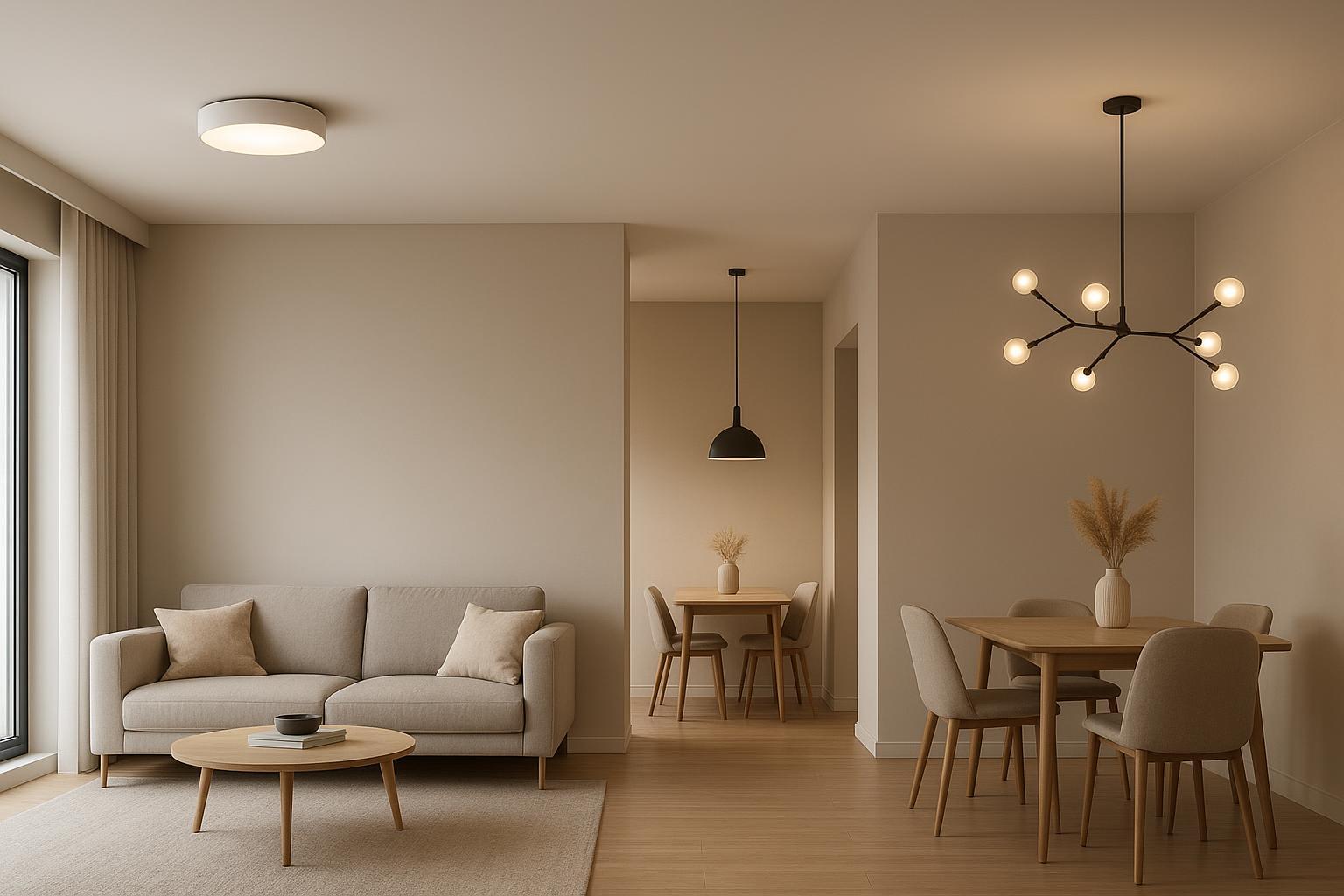
People use the words ceiling light, pendant, and chandelier interchangeably—until they need to specify a fixture for a project, a quote, or a replacement.
If you’ve ever said “I want a simple chandelier” and received a pendant, or ordered a “flush mount” and got something that hangs too low, this guide is for you.
Below are plain-English definitions of three common terms, followed by a practical way to choose between them—especially in UAE interiors where false ceilings and AC vents often affect installation.
Flush mount ceiling light means the fixture sits tight to the ceiling, with little to no visible gap. It’s typically chosen for low ceilings and for general, even room lighting.
Pendant light means the fixture hangs down from the ceiling using a cord, rod, or chain. Pendants are often used to light a specific zone—like a dining table or kitchen island—more than they’re used to light an entire room.
Branch chandelier is a chandelier style with multiple arms/“branches,” each holding a lamp or shade. It’s designed to be a focal point first, and a source of ambient light second.
If you’re searching more broadly, these are part of common ceiling light types (flush, semi-flush, pendant, chandelier, etc.).
(General terminology is consistent across major lighting references, including Visual Comfort’s ceiling light overview and retail buying guides like The Home Depot’s flush vs semi-flush guide.)
A flush mount is mounted directly to the ceiling junction box. Because it doesn’t drop into the room, it’s a safe default when ceiling height is limited or you want a clean, low-profile look.
Flush mount tends to be the right choice when you need broad, general illumination (corridors, bedrooms, kitchens, utility areas), and you want to avoid fixtures that people can bump into.
Many buyers ask for “flush mount” but actually want semi-flush. Semi-flush is still ceiling-mounted, but it hangs down a bit more—more decorative, but it needs more clearance.
If you’re supplying for apartments and villas with standard ceiling heights, confirming flush vs semi-flush early prevents the most common mismatch.
A pendant is “a light that intentionally hangs.” The main advantage is that it brings the light source closer to the task zone. That’s why pendants are common over tables, counters, and reception desks.
Modern lighting guides often frame pendants as zone/task fixtures and chandeliers as multi-light decorative fixtures; see 2Modern’s pendant vs chandelier explanation for a clear distinction.
A simple planning check before you choose: do you have enough vertical clearance for the drop, and will the fixture interfere with sight lines (for dining) or movement (for walkways)?
A chandelier is a multi-light fixture designed to be seen. A branch chandelier is the classic form: several arms radiating outward, each carrying a bulb or shade.
In practice, this is the cleanest distinction:
A pendant is usually one main drop with one main light point.
A branch chandelier is many light points arranged as a statement piece.
Branch chandeliers make sense in foyers, stair voids, and dining rooms where the ceiling height and room scale can support a focal fixture—and where the buyer accepts higher cleaning and maintenance compared with a flush mount.
Criteria | Flush mount | Pendant | Branch chandelier |
|---|---|---|---|
Mounting | Fixed to ceiling, minimal drop | Suspended by cord/rod/chain | Suspended + multi-arm structure |
Best use | General lighting | Task/zone lighting | Ambient + decorative focal point |
Ceiling height tolerance | Best for low ceilings | Needs safe clearance | Needs the most clearance |
Light distribution | Broad and even | More focused downward (shade-dependent) | Wider ambient spread from multiple lamps |
Maintenance | Simple | Moderate | Highest (more parts, more surfaces) |
Common spec risk | Confused with semi-flush | Wrong hanging height | Weight/support + cleaning expectations |
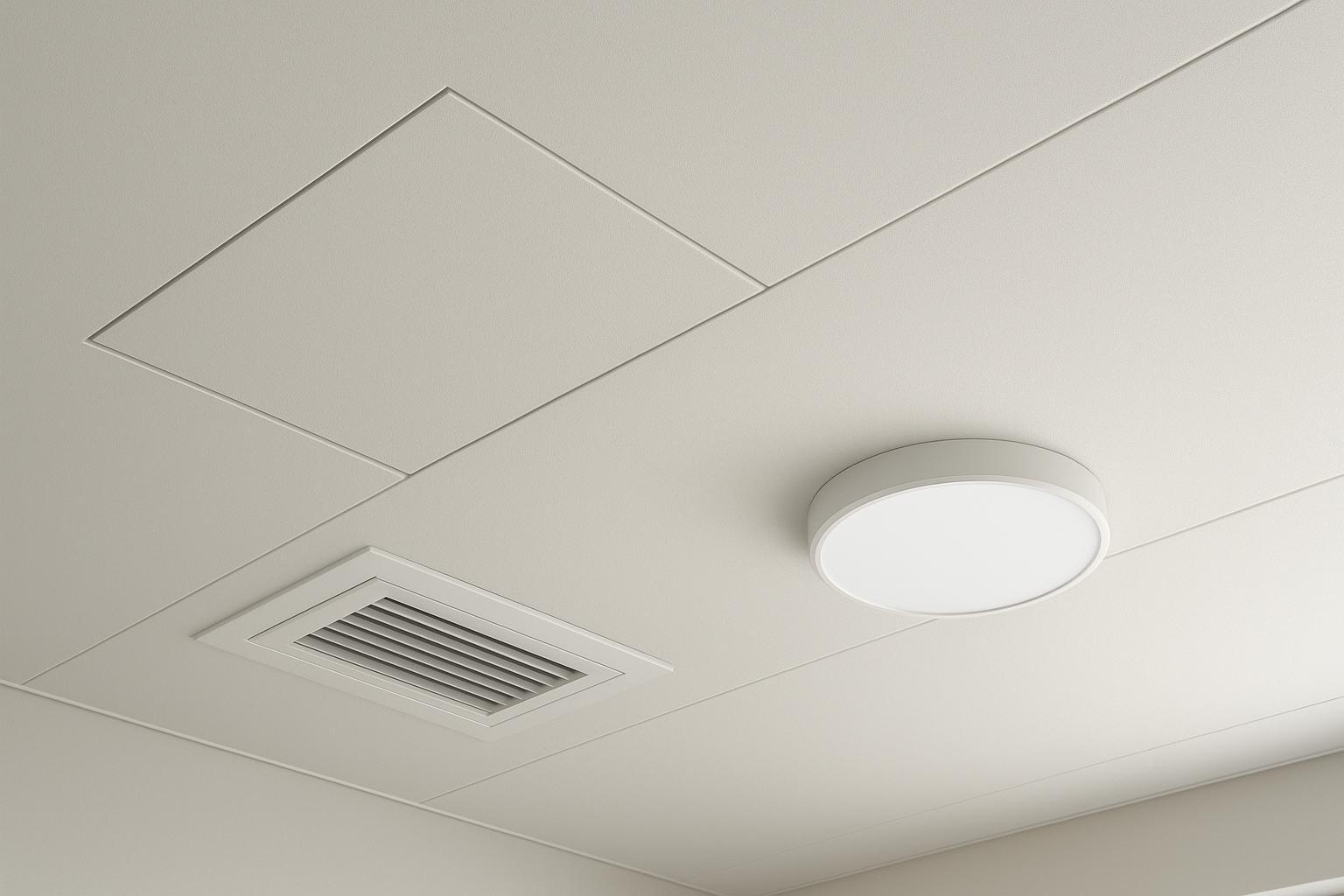
You don’t need “UAE-specific terminology,” but you do need to plan around how many UAE interiors are built.
False ceilings are common. Hanging fixtures should be supported by the structural ceiling, not only gypsum board—especially for heavier chandeliers. Flush mounts usually reduce risk when ceiling space is tight.
AC airflow matters. Ceiling cassette AC units and vents can create strong airflow near the ceiling plane. A low-profile flush mount is less likely to interfere; hanging fixtures placed too close to vents may collect dust faster or feel visually busy.
Humidity exposure changes what you should specify. In bathrooms, balconies, or other humid areas, confirm the fixture is suitable for the environment and rating level you’re using. As a reference point for how these products are commonly described, see KEOU’s flush mount moisture-proof ceiling light (IP54).
Send these four items up front:
Fixture type: flush mount / pendant / branch chandelier (and whether semi-flush is acceptable)
Ceiling height and (if applicable) false ceiling depth
Use case: general lighting vs task/zone lighting vs decorative focal point
Environment: dry / humid / semi-outdoor + any rating requirement
If you’re building a ceiling-light range for distribution, a practical approach is to map your assortment by mounting style first (flush/surface mount vs hanging), then refine by wattage, CCT, and protection rating.
For flush-mount options and variants, you can start with the KEOU Lighting ceiling light category. If you share your typical room heights (apartment vs villa) and the top 2–3 use cases (bedroom, corridor, kitchen, balcony), we can recommend a clean fixture mix that avoids the most common selection mistakes.


