Author: Huang Publish Time: 20-04-2026 Origin: Site


If you’re a facility owner or manager, the “plastic vs aluminum” question isn’t really about looks. It’s about how often you’ll be replacing fixtures, how much disruption that causes, and how confidently you can standardize lighting across rooms and sites.
Plastic frame LED panel lights can be a rational choice in the right conditions. But if the space runs long hours, has higher ambient heat, or you can’t afford frequent call-backs, an aluminum frame LED panel light often becomes a lifecycle decision—not a line item.
This guide gives you a buyer-ready way to decide, plus practical spec language you can use to reduce the risks when plastic is on the table.
If you’re doing procurement comparisons, treat this as a LED panel light frame material decision first, then validate that the full fixture construction (including back plate and heat-spreading design) supports your operating conditions. That frame and back-plate choice is effectively your LED panel light housing material strategy.
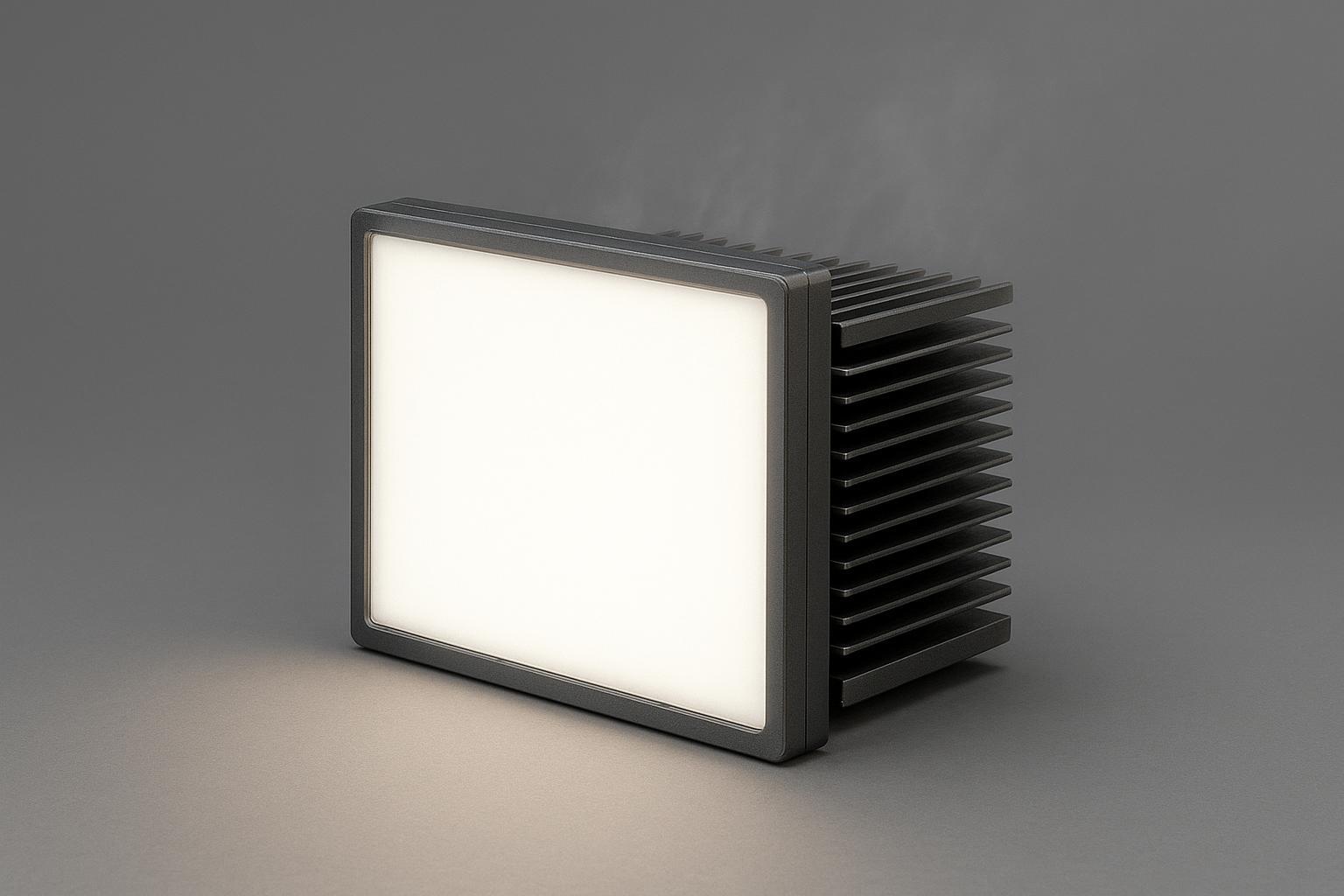
When suppliers say “plastic panel light,” they may be referring to different parts of the fixture:
Plastic frame / trim: the visible perimeter that holds the diffuser and gives the panel its shape.
Plastic diffuser (lens): often PMMA or polycarbonate; this is about uniformity, glare control, and impact resistance.
Plastic back plate: the rear housing that can affect rigidity and heat flow.
This article focuses on plastic frame/trim vs aluminum frame—because the frame influences rigidity, installation handling, and (in some designs) the path for heat to leave the fixture.
In other words, you’re not just buying a “plastic panel light.” You’re choosing a frame and housing approach that will determine how the panel behaves after thousands of on/off cycles.
If you’re still narrowing down panel types, start with KEOU Lighting’s selection basics in How to Select the Perfect LED Panel Light for Any Room.
(For a product overview, you can also browse the KEOU panel light category.)
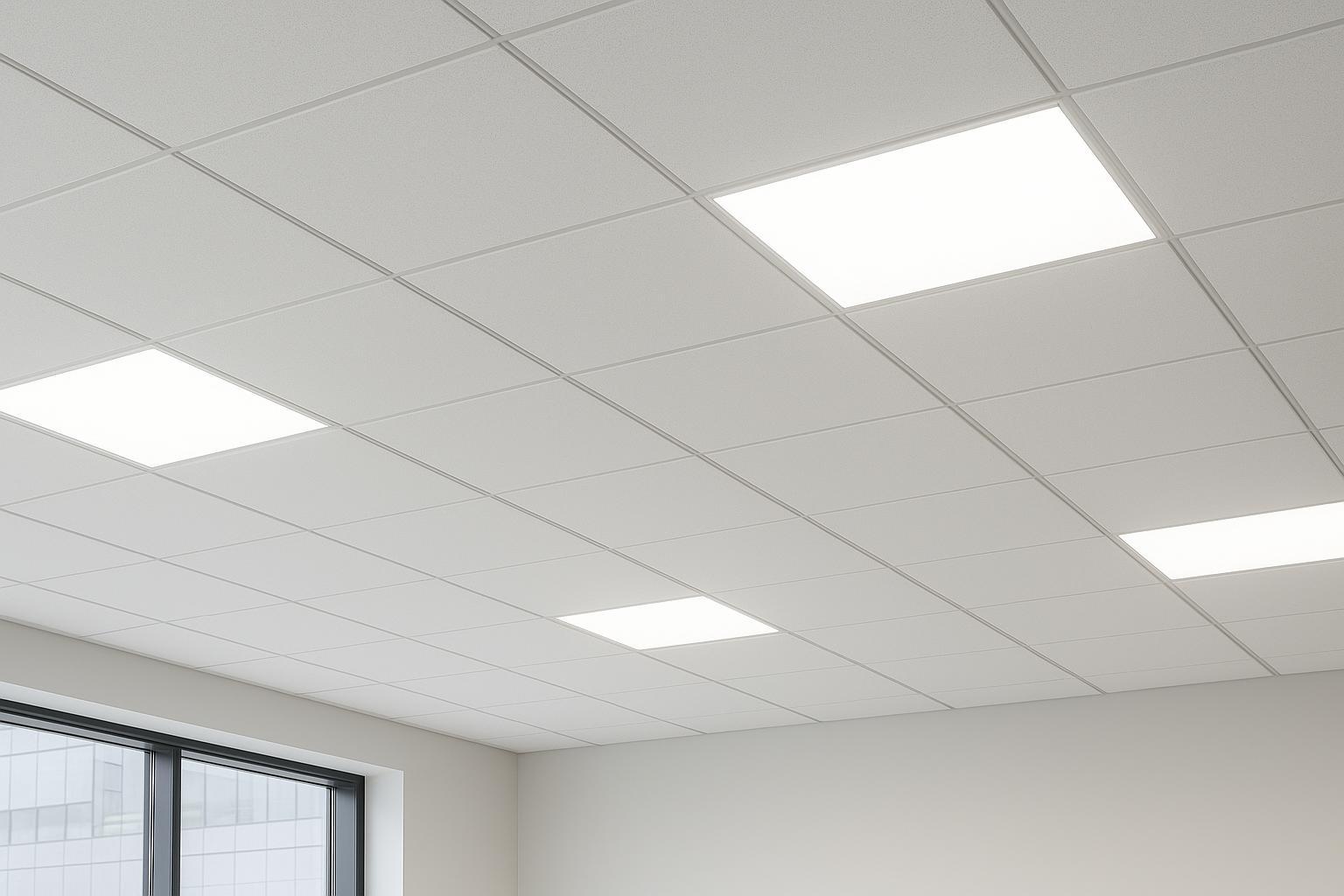
Plastic frames aren’t automatically “bad.” They can be appropriate when your priorities are cost control and simple, low-risk deployment.
1) Your operating hours are moderate. If the lights aren’t running long daily cycles, the thermal and materials-aging demands are lower.
2) The ceiling environment is stable. Indoor areas without sustained heat buildup or direct sunlight exposure are friendlier to plastics.
3) You have easy access for maintenance. If replacing a panel is quick and low disruption (e.g., a back-of-house corridor with accessible ceiling access), the cost of an occasional swap is manageable.
4) Your priority is lightweight handling. Plastic frames can be lighter, which can help on projects where installers are working quickly at height or where shipping damage risk is tightly managed.
Pro Tip: If you’re choosing plastic frames mainly for cost, spend the budget on the parts you can’t see—driver quality, flicker performance, and consistent LED binning often matter more than cosmetics when your goal is fewer maintenance incidents.
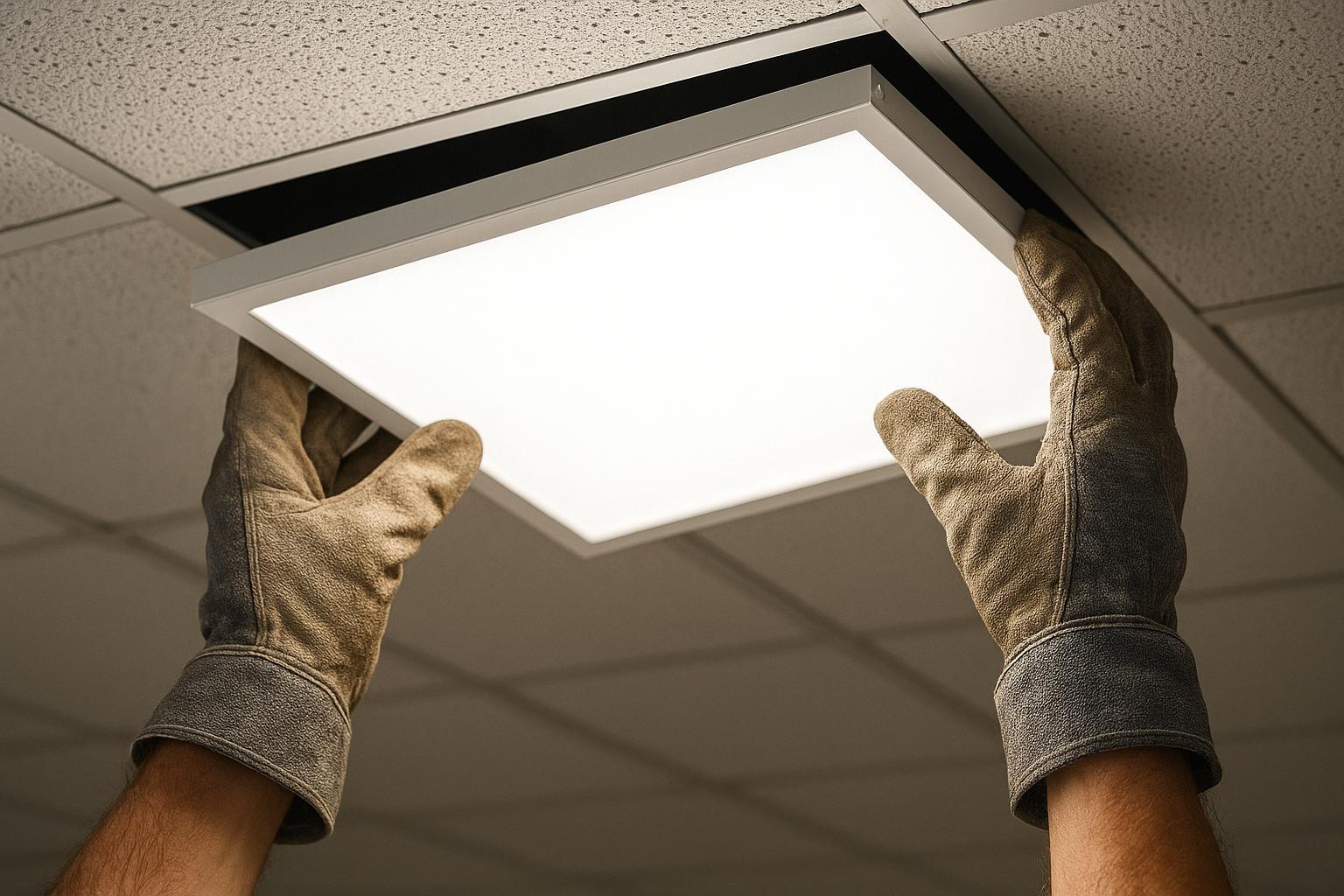
For most facility deployments, the most expensive part of a lighting failure isn’t the fixture. It’s the disruption: labor, access equipment, scheduling after-hours work, and reputational impact when lighting quality drops in customer-facing areas.
Aluminum frames tend to justify themselves when you’re optimizing for durability and stability.
Many quality discussions about LED fixtures come back to one point: heat is the enemy of long-term performance. Aluminum is widely used in lighting products because it dissipates heat better than plastic in comparable designs.
Even sources writing about LED channels and general construction note that aluminum is preferred for longevity and thermal reasons, while plastic options are often chosen for budget builds (see Wired4Signs USA’s overview: aluminum vs plastic LED channels).
You don’t need to be an engineer to apply the takeaway: if your panels run many hours a day, or the ceiling plenum gets warm, aluminum constructions reduce the odds that heat becomes a silent lifetime-shortener.
Facility retrofits fail in real life for unglamorous reasons: ceiling grids aren’t perfectly square, installers rush, and fixtures get flexed.
Plastic trims are more likely to crack, warp, or degrade than aluminum trims under handling stress and long-term aging. NuWatt Lighting summarizes this risk in their note on plastic trim cracking and warping over time.
If you’re installing in offices, lobbies, classrooms, retail areas, or anywhere with “visible ceilings,” a frame that stays straight and clean-looking matters.
If you’re managing multiple buildings or many zones (office + corridors + meeting rooms + back-of-house), aluminum-frame panels often make it easier to standardize because they’re typically positioned as longer-life products.
That doesn’t mean “aluminum always wins”—it means aluminum reduces variability in your maintenance plan.

Use this as a practical rule-of-thumb. It’s not perfect, but it prevents the most common buying mistakes.
Facility condition | Plastic frame: OK? | Aluminum frame: preferred? | Why it matters |
|---|---|---|---|
Lights run long daily hours | Sometimes | Yes | Heat + material aging risk compounds over time |
Hard-to-access ceilings | Risky | Yes | Maintenance cost dominates lifecycle cost |
Customer-facing areas | Sometimes | Yes | Warping/yellowing/fit issues become visible problems |
Budget-limited, easy swap areas | Yes | Nice to have | Simple environments tolerate more replacement |
Tight ceiling depth / shallow ceilings | Depends | Depends | Mounting method often matters more than frame material |
For shallow-ceiling constraints, see KEOU’s comparison of surface-mounted vs recessed LED panel lights for shallow ceilings to make sure the mounting approach matches your ceiling depth and access.
If you’re going with plastic frames (for cost, weight, or availability), the goal is simple: remove ambiguity from your purchase spec so you don’t end up with panels that age poorly.
Here’s a procurement-ready checklist you can copy into an RFQ.
Ask bidders to confirm suitability for:
daily operating hours (e.g., “12 hours/day, 6 days/week”)
ambient temperature range at ceiling level
humidity/condensation risk (bathrooms, kitchens, coastal buildings)
whether any panels receive direct sunlight (skylights, perimeter glass)
This prevents “cheap indoor trim” designs being used in harsher locations.
“Plastic frame” alone doesn’t tell you how the fixture handles heat. Ask:
where the driver sits and how it’s cooled
whether the design uses a metal back plate/heat spreader
what the supplier recommends for continuous operation environments
If you want the plain-English reason a lot of buyers care about back plates and rigidity, LEDSave discusses how cost-cut designs can use plastic back plates that don’t help heat conduction or structural stiffness in Are all LED panel lights the same?.
A plastic diffuser can be a good thing (uniformity and glare control) while a plastic frame might be the compromise.
Define what you care about:
uniform illumination (no hot spots)
glare management in workspaces
cleanability (dust/grease environments)
If you’re working in offices or learning environments, glare is often the hidden driver of complaints. (If glare control is a priority, keep it as a separate requirement from frame material so you don’t end up trading durability for comfort.)
For plastic frames, ask suppliers to commit to:
resistance to yellowing/discoloration under indoor lighting
dimensional stability (no warping that creates visible gaps)
secure fastening so the frame doesn’t loosen over time
You don’t need exotic lab reports; you need clear acceptance criteria and replacement policy language in your purchase order.
A lot of “material problems” are actually installation problems:
panels not seated square in the grid
frames stressed by misaligned ceilings
diffusers scratched during handling
Standardize install prep. Use KEOU’s checklist on what’s needed to install LED panel lights for tools, prep, and handling steps—especially if you’re rolling out across many rooms and installers.
⚠️ Warning: If the supplier can’t explain how their design moves heat away from the LED board and driver, don’t assume “plastic frame” is the only compromise. In many projects, hidden thermal shortcuts—not the visible trim—are what create early failures.

You can catch a surprising number of issues before the first full-floor install.
Check frame straightness: corners sit flat; no twist.
Check diffuser fit: no rattling, uneven gaps, or stress marks.
Check consistency across units: identical color appearance and brightness at the same setting.
Check driver access: confirm how maintenance is done without damaging the frame.
Do a short burn-in: run samples long enough to reveal early flicker/noise/thermal issues.
If you’re choosing panels by application, KEOU’s practical guide on how to choose LED panel lights by use case can help you avoid mismatches (e.g., using the wrong panel type in a high-heat back-of-house area).

If you’re building a facility standard and want fewer maintenance surprises, KEOU Lighting manufactures a range of panel light options and supports customization/ODM where the project needs it.
If you share three inputs—(1) ceiling type and mounting method, (2) daily operating hours, and (3) heat/humidity conditions—we can recommend a practical frame/material spec for each zone and provide a quote that matches your installation realities.