Author: Huang Publish Time: 11-04-2026 Origin: Site


If your ceiling plenum is shallow, “recessed vs surface-mounted” isn’t an aesthetic debate—it’s a buildability and rework-risk decision. Below is a criteria-first, side-by-side comparison focused on what actually changes when you don’t have much space above the ceiling.
Criterion | Surface-mounted LED panel | Recessed LED panel |
|---|---|---|
Installation depth | Works when above-ceiling depth is limited because the fixture mounts to the ceiling face; you mainly need a safe wiring route. | Depends on available above-ceiling space for the panel body/driver/wiring slack and clearances; shallow plenums can be a hard constraint. |
Labor time | Faster: typically fewer steps, no cutting/patching. | Slower: layout + cutting + above-ceiling work + potential finishing. |
Risk | Lower risk of ceiling damage; main risks are alignment/level and secure fixing. | Higher rework risk: mis-cuts, clashes with MEP, access and maintenance constraints. |
Aesthetics | Low-profile, modern “clean box” look; a slight drop from the ceiling plane. | Flush/minimal when conditions are right; can look best in new builds or deep plenums. |
Pro Tip: Before you choose a recessed solution, confirm the real usable depth—not the design drawing depth. Ducts, cable trays, sprinklers, and structural beams often reduce clearance where the fixture actually needs to land.
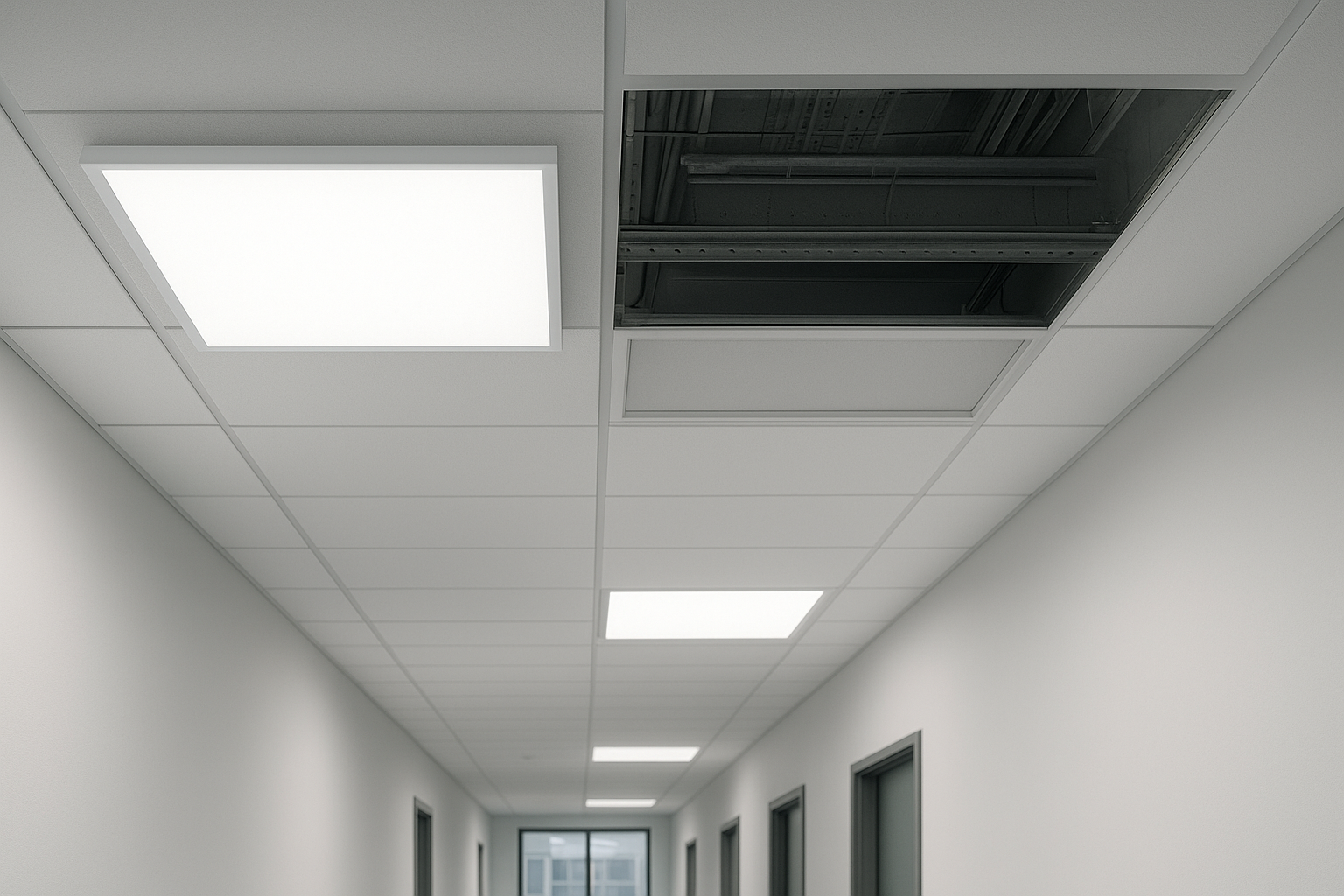
Surface-mounted panels attach to the ceiling surface. That means you’re not trying to “hide” the entire assembly above the ceiling plane. In shallow-plenum retrofits, this is often the simplest way to avoid a conflict with ducting or structure.
For a practical installation reference, see KEOU’s surface-mounted frameless LED panel light installation guide (example: base/driver fixed first, then the panel rotates to lock).
Recessed panels look clean when they can sit flush, but they rely on above-ceiling space for:
the fixture body and/or frame
driver placement (and cable slack)
safe clearances and service access
In shallow ceilings, the most common failure mode isn’t “it won’t fit on paper”—it’s that the usable space is fragmented by MEP and structure.
For a ceiling-type sanity check, KEOU’s install overview notes recessed mounting as a natural fit for grid/drop ceilings, while surface mounting is often used for solid ceilings—see KEOU’s checklist of what’s needed to install LED panel lights.
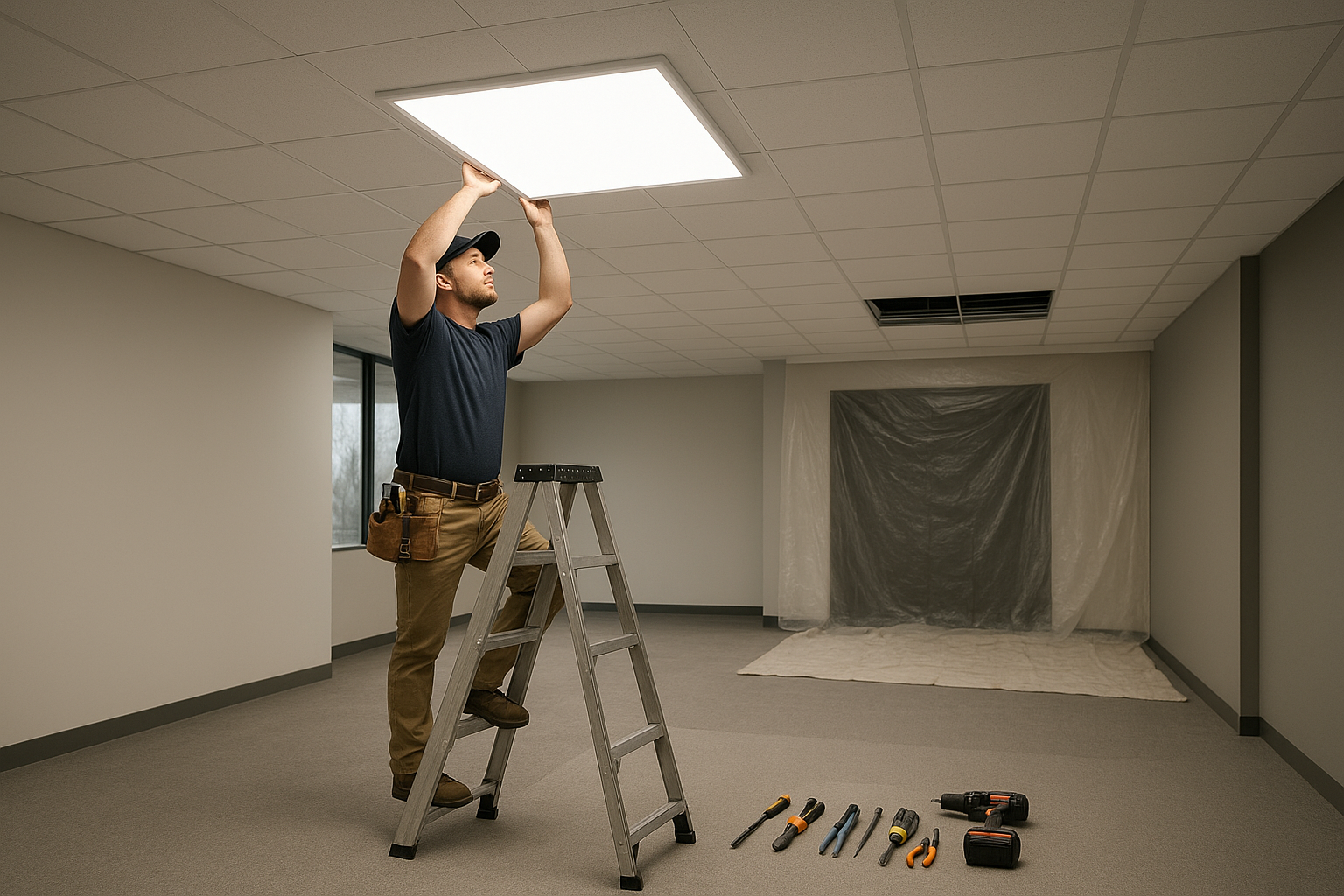
Surface-mount labor is typically predictable because you can avoid ceiling cutouts and finishing. A common workflow is:
mark locations
mount bracket/driver base
connect power
mount the panel
On KEOU’s reference page for the surface-mounted frameless model, the installation concept is described as securing the driver/base first, then aligning and rotating the luminaire to lock (a 90° lock-style mechanism is shown in the page’s install section).
Recessed labor tends to expand because it can involve more trades and more “soft” time:
layout and precise cutting (tile or drywall)
dust control and protection for occupied spaces
working above ceiling to position driver/wiring
patch/paint if the opening needs correction
If you’re bidding retrofit work, those steps translate directly to time risk.
⚠️ Warning: The fastest way to lose time on recessed installs is a small layout mistake that forces re-cutting (or visible trim compromises). In shallow ceilings, you often can’t “move it a little” because the next cavity may be blocked by MEP.
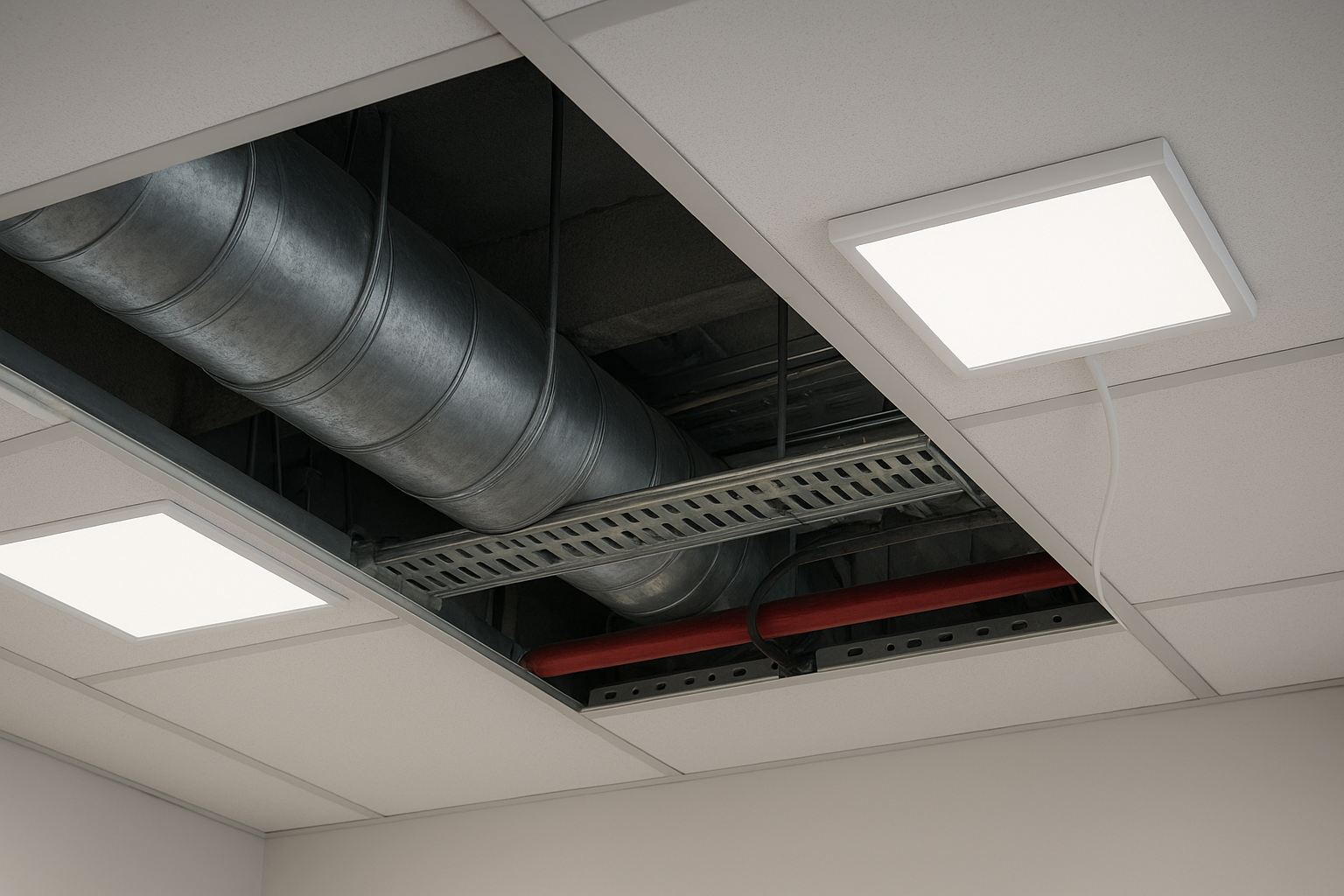
Surface-mounted panels generally reduce the risk of irreversible ceiling damage because you’re not cutting large openings. The main risks to manage are:
visible misalignment (a surface fixture shows level and spacing errors)
mount integrity (ensure secure fixing to prevent sagging)
wiring neatness (poor cable routing is more visible)
KEOU’s installation checklist emphasizes basic electrical safety (power isolation, correct tools, and using qualified electricians when needed) in KEOU’s checklist of what’s needed to install LED panel lights.
Recessed installs can be perfectly successful—but shallow plenums raise the odds of these issues:
ceiling damage and cosmetic rework from cutting errors
driver/service access problems (especially when access panels aren’t planned)
unexpected clashes with ductwork, trays, sprinklers, or framing
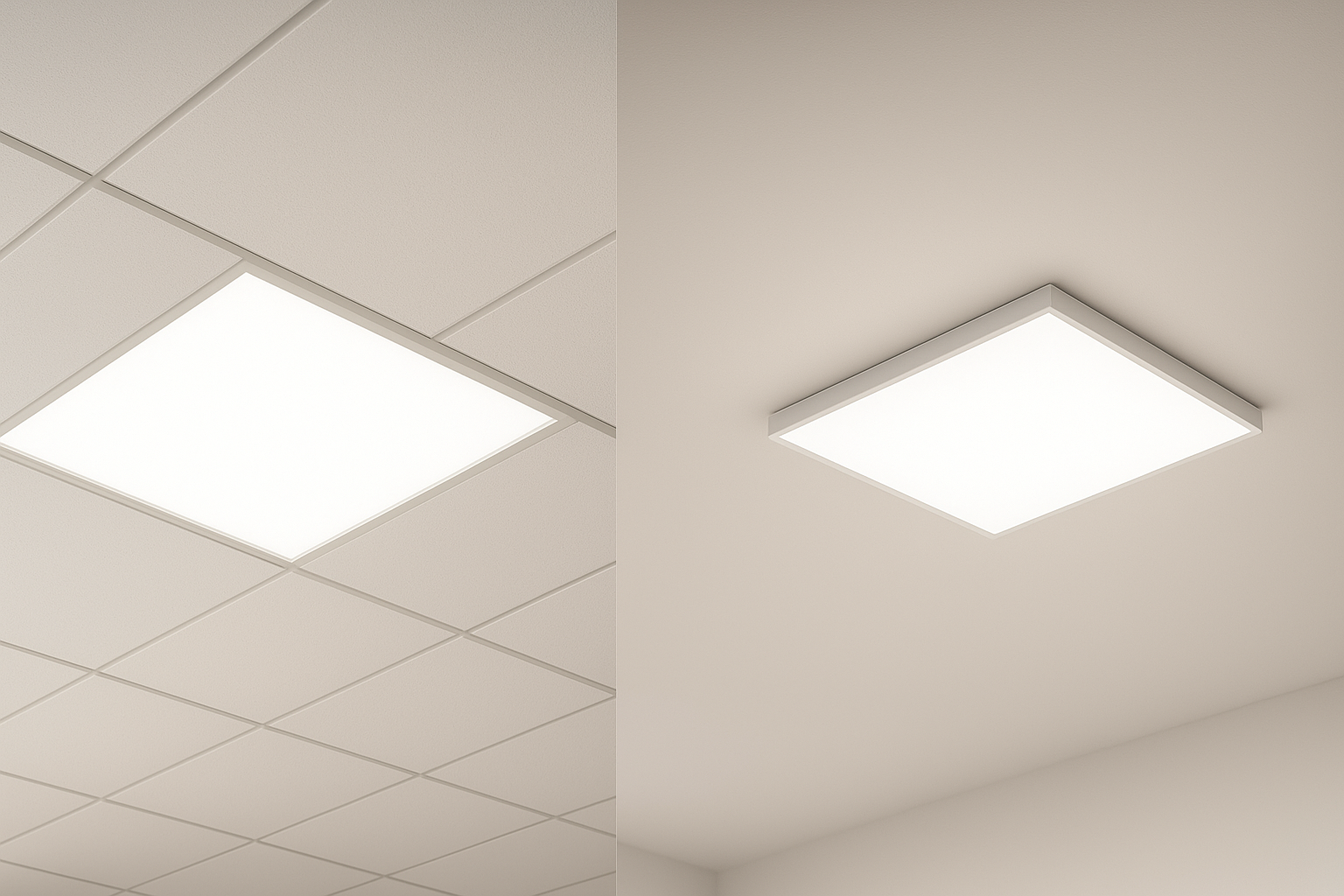
Choose recessed when you can confidently support the build:
grid/drop ceiling or adequate plenum depth
controlled layout (new build or full ceiling replacement)
clear service plan for drivers and wiring
The payoff is a flush plane that reads “architectural” and minimal.
Surface-mounted can look premium when you treat it like a design element:
align fixtures on a consistent grid
keep spacing symmetric to room geometry
control cable/conduit routing
pick low-profile housings that don’t feel bulky
This is where purpose-built surface-mount designs help. If your goal is a shallow-ceiling-friendly, clean look without heavy ceiling rework, start with KEOU’s surface-mounted frameless LED panel light installation guide.

Choose surface-mounted LED panels if:
you have shallow plenums or unpredictable above-ceiling obstructions
you’re doing retrofit work in occupied spaces and want to minimize dust/disruption
you want predictable labor and lower rework exposure
Choose recessed LED panels if:
you have a grid/drop ceiling setup or confirmed clearance above the ceiling plane
aesthetics require a flush finish and you can control the ceiling build
you have a clear plan for driver placement and future service access
If you want a confident recommendation (and a clean quote), send:
your available ceiling depth (or best estimate)
ceiling photos showing likely obstructions
your project BOM or target size/wattage
We’ll help you choose surface-mounted vs recessed and match the installation method to your ceiling constraints—then connect you with engineering for the details.