
Author: Huang Publish Time: 28-07-2026 Origin: Site


If you’re specifying high bay lighting for a car wash, “waterproof” is too vague to be useful. The right question is: what kind of water exposure will the fixture actually see—jets, wind-driven spray, steam/condensation, or temporary flooding?
Because IP66 and IP67 protect against different failure modes, choosing the higher number doesn’t automatically reduce risk.
What you’re trying to prevent | What to spec | What it actually tests | Common misunderstanding |
|---|---|---|---|
High-pressure wand spray / hose-down / directional splash | IP66 | “Powerful water jets” against the enclosure | “IP67 is higher so it must cover this” (not necessarily) |
Temporary standing water / brief flooding / pooling around the housing | IP67 | Temporary immersion (often cited as ~1 m for ~30 minutes) | “IP66 covers immersion” (it doesn’t) |
Code / safety suitability for direct water exposure (North America) | UL ‘Suitable for Wet Locations’ | Location suitability (dripping, splashing, flowing water) | “UL Wet replaces IP” (it’s a different system) |
According to Clarion UK’s explanation of IP testing, IP66 addresses “powerful water jets,” while IP67 addresses temporary immersion—two different tests with different stresses on seals and cable entries (IP ratings explained).
In most car wash ceiling installations, the baseline answer is:
Specify IP66 for the luminaire enclosure in any bay where the fixture can be hit by hose spray, wand jets, or strong directional splash.
Then treat IP67 as an add-on only when immersion risk is real.
Below is the decision logic you can use to defend the spec in a bid or an RFQ.
A self-serve bay, tunnel wash, or detailing bay is fundamentally a jet-and-spray environment:
Operators aim wands in unpredictable directions.
Automated equipment creates strong directional spray.
Water rebounds off vehicles and walls.
That maps more directly to the “water projected against the enclosure” scenario behind IP66.
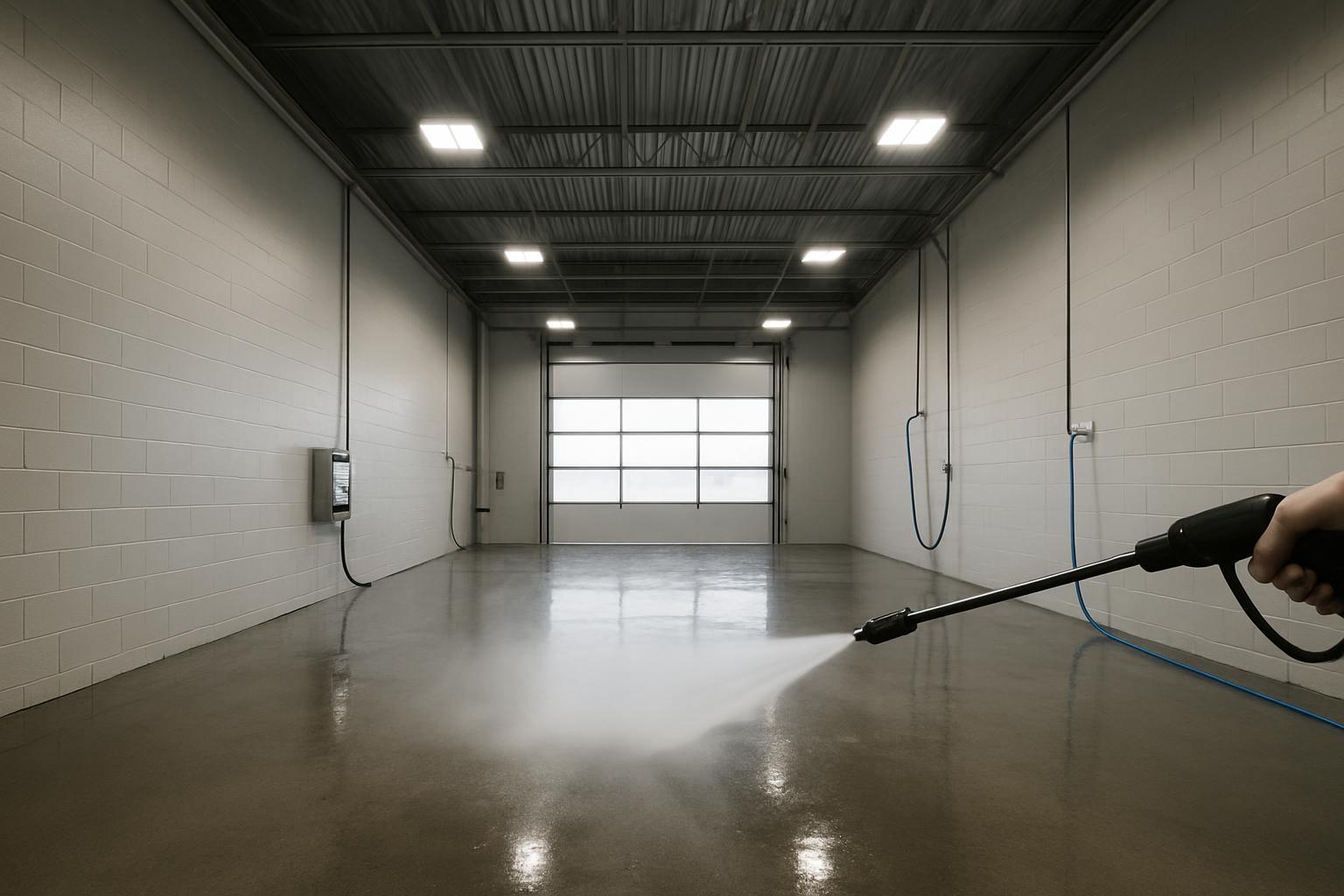
A car wash lighting guide from Hyperlite goes further and calls IP66 the minimum for car wash lighting survival, specifically because lower jet-rated levels often fail under real wash spray exposure (Car Wash Lighting: Why IP66 is Essential).
IP67 is about temporary immersion, not jet impact.
It becomes justified when one of these is credible:
The luminaire (or driver box/junction) is mounted low enough that water can pool around it.
The site has a known flooding or wash-bay overflow risk.
The fixture is installed in a location where standing water is normal during cleanup.
If those aren’t true, IP67 usually doesn’t address the most likely failure mode.
If you need protection against both jet washdown and temporary immersion, don’t assume one rating covers the other. Ask for a fixture that is explicitly tested/marked for IP66 and IP67.
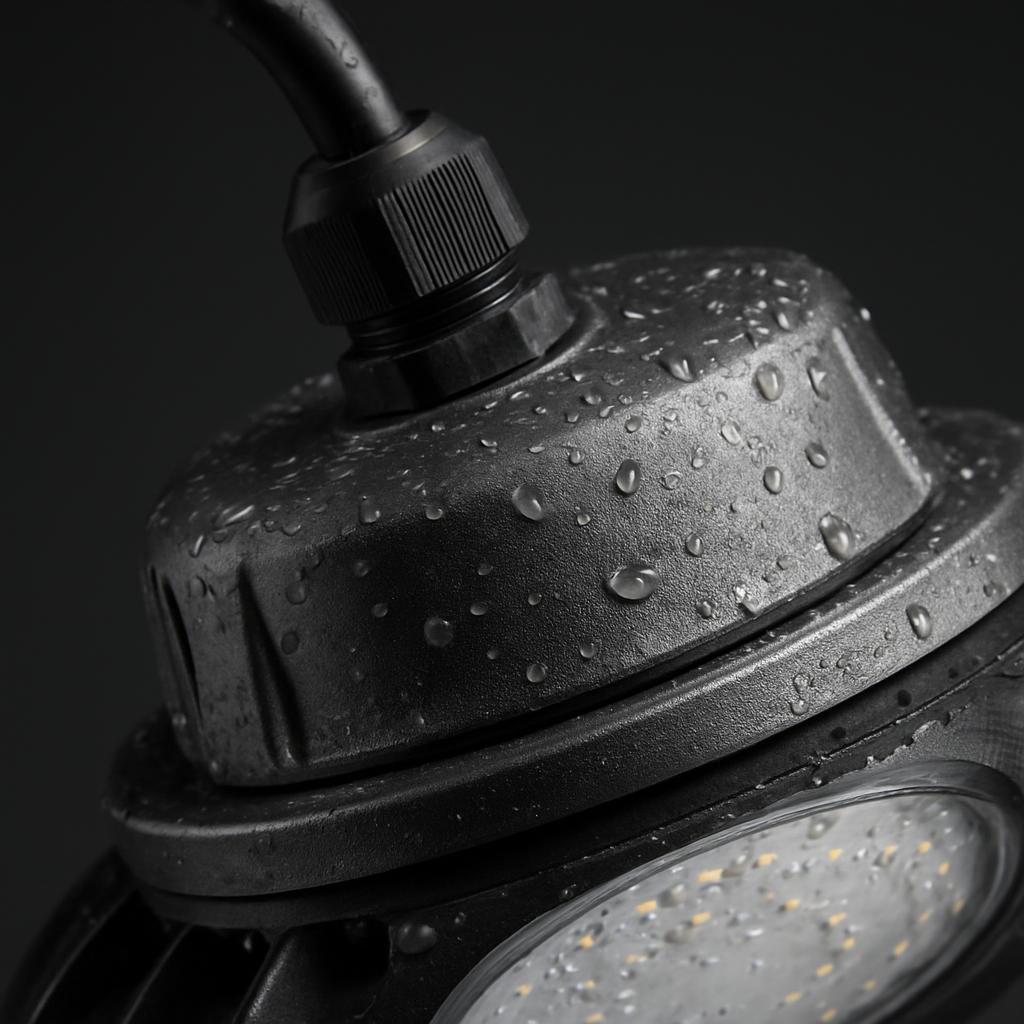
For wash bays, IP66 is typically sufficient for direct hose spray when the fixture’s weak points are handled properly:
cable entry and glands
gasket compression
seam orientation
breather/pressure equalization approach
In practice, many “IP-rated” failures happen at cable entries and maintenance points, not through the middle of the lens.
Car wash detergents introduce a different risk: chemical attack on seals and coatings.
IP ratings are about ingress, not long-term compatibility with alkaline cleaners, solvents, or degreasers. Even a fixture that passes IP66 can fail early if:
gaskets swell, shrink, or soften
lens material hazes or cracks
fasteners corrode and compromise sealing pressure
So your spec should separate these two requirements:
Ingress protection (IP66/IP67)
Material compatibility (ask for gasket material type, lens material, and corrosion resistance details)
The fixture is mounted high (typical high bay heights).
The dominant exposure is spray, not immersion.
Water drains quickly and the fixture won’t sit in a puddle.
In these cases, paying extra for IP67 can be less valuable than specifying the real reliability drivers: good cable sealing, corrosion-resistant hardware, and condensation control.
You have a credible temporary immersion scenario (flooding, pooling, low mounting).
The luminaire is installed in recessed pockets or structural areas where water can collect.
If you’re not sure, ask a simple question on site: “Could this fixture ever be sitting in water for 30 minutes?” If the honest answer is “no,” IP67 probably isn’t the lever that reduces risk.
No—UL Wet Location and IP ratings answer different questions.
UL “Suitable for Wet Locations” is about whether the luminaire is appropriate for environments where water can drip, splash, or flow onto it.
IP66/IP67 is about the enclosure’s resistance to specific ingress test conditions.
A practical explanation of the difference is laid out by Portfolio Lighting’s discussion of UL 1598 wet-location listing vs IEC IP ratings, emphasizing that they’re not interchangeable systems (UL 1598 vs IP ratings explained).
If your project is in a UL/NEC-driven market, treat this as the safer approach:
Spec UL Wet Location first (for code/safety), then add the IP level that matches the exposure (for durability).
Wind-driven spray (open-sided bays, outdoor edges, strong cross-drafts) changes two things:
Directionality: water hits from angles you didn’t design for.
Velocity: spray behaves more like impact than gentle wetting.
That generally strengthens the case for IP66, because you’re dealing with “projected water” exposure, not immersion.
It also changes what you should look for in the luminaire design:
seams and latches should not face the prevailing spray direction
cable glands should be on the “dry side” when possible
mounting should minimize direct blast at joints
Use this as a starting point, then adjust based on how aggressive cleaning is.
Zone / scenario | Typical exposure | Practical spec target |
|---|---|---|
Self-serve bays (wand spray, unpredictable angles) | Direct jets + rebound splash | IP66 baseline |
Tunnel wash interior (active spray equipment) | Heavy spray + mist + detergent | IP66 baseline; consider higher washdown ratings if cleaning is extreme |
Detailing bays | Frequent spray, less violent than tunnels | IP66 if direct spray possible |
Open-sided bays / windy outdoor edges | Wind-driven spray + directional rain | IP66 baseline |
Low-mounted fixtures or flood-prone sites | Pooling / temporary immersion possible | IP67 (or IP66+IP67 if also exposed to jets) |
⚠️ Warning: If the real exposure is hot, high-pressure washdown at close range (industrial sanitation-style cleaning), you may need ratings beyond IP66/IP67. Don’t guess—define the cleaning profile (pressure, distance, temperature, chemistry) and match the rating to that.
Also, use the term ingress protection rating in your procurement language (instead of “waterproof”) so suppliers can’t hide behind vague marketing.
Keep the RFQ precise. Ask for:
The IP rating marking for the exact configuration you’re buying (including cable glands, sensors, emergency options)
Cable entry details: gland type, seal approach, torque guidance
Gasket material and serviceability (what happens after maintenance?)
Corrosion approach (hardware material, coating type) for humid chemical environments
Any guidance on condensation/pressure equalization (common hidden failure mode in humid bays)
If you’re a distributor, this is the kind of detail that reduces returns and avoids warranty disputes.
If you’re comparing options for a car wash project and want a second set of eyes on the spec, KEOU Lighting can help you shortlist fixture types and define an RFQ that matches the real exposure profile.
Browse high bay fixture options here: KEOU Lighting High Bay Light
For broader high bay selection criteria (including sealed fixtures), see: Factory High Bay Lighting Types: A Simple Buyer’s Guide
For a practical IP/IK selection mindset in harsh environments: IP/IK best practices for industrial lighting
If you share two details—mounting height and how cleaning is done (pressure washer vs hose vs automated arches)—we can recommend a clean spec line (IP + wet-location language) you can paste into your procurement document.


