Author: Huang Publish Time: 18-02-2026 Origin: Site


If you run a standard supermarket (about 800–3000 m² with 3.5–6 m ceilings), this quick checklist maps each zone to suitable LED fixtures. It keeps specs light and gives just-enough guidance—CCT/CRI bands, aiming or glare tips, and a mounting/control hint—so you can make fast, confident choices for supermarket LED lighting.
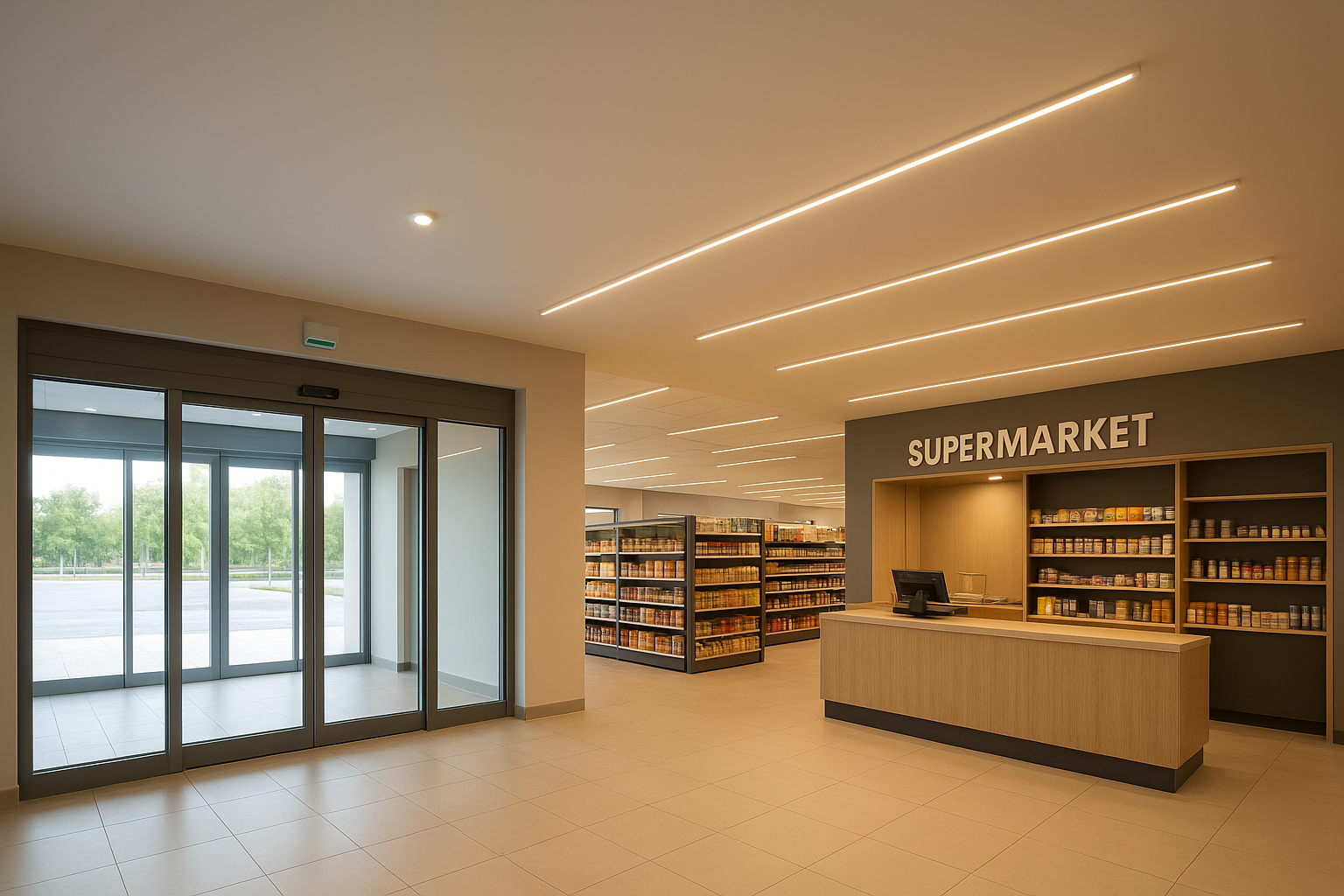
Recommended fixtures: Diffused linear strips or LED panels; shielded downlights as accents. Aim for a smooth luminance transition from outdoors to reduce adaptation discomfort.
Practical notes: 3500–4000K; consider UGR ≤ 19 with micro-prismatic lenses to keep glare low. Daylight sensors near glazing help trim energy when sun is bright. See retail entrance layering ideas in the ConTech guide’s glare section and Alcon’s retail practice notes.
Recommended fixtures: Adjustable track spotlights (15–40°) or linear accents to pop promos without washing adjacent aisles.
Practical notes: 3500–4000K; CRI ≥ 90 for accurate colors. Keep beams off shoppers’ sightlines; honeycomb or deep reflectors help. Accent ratios of roughly 150–500 fc are common in retail feature areas per supermarket lighting guides.
Recommended fixtures: Continuous linear strips or LED panels at 3.5–5 m; at 5–6 m consider low-bay/linear high bays with wide 90–120° distribution for shelf face coverage.
Practical notes: About 30–50 fc (≈320–540 lx); around 4000K is common for crisp, neutral visibility. Target low glare (UGR ≤ 19) with batwing optics or micro-prisms to avoid hot spots on glossy packaging.
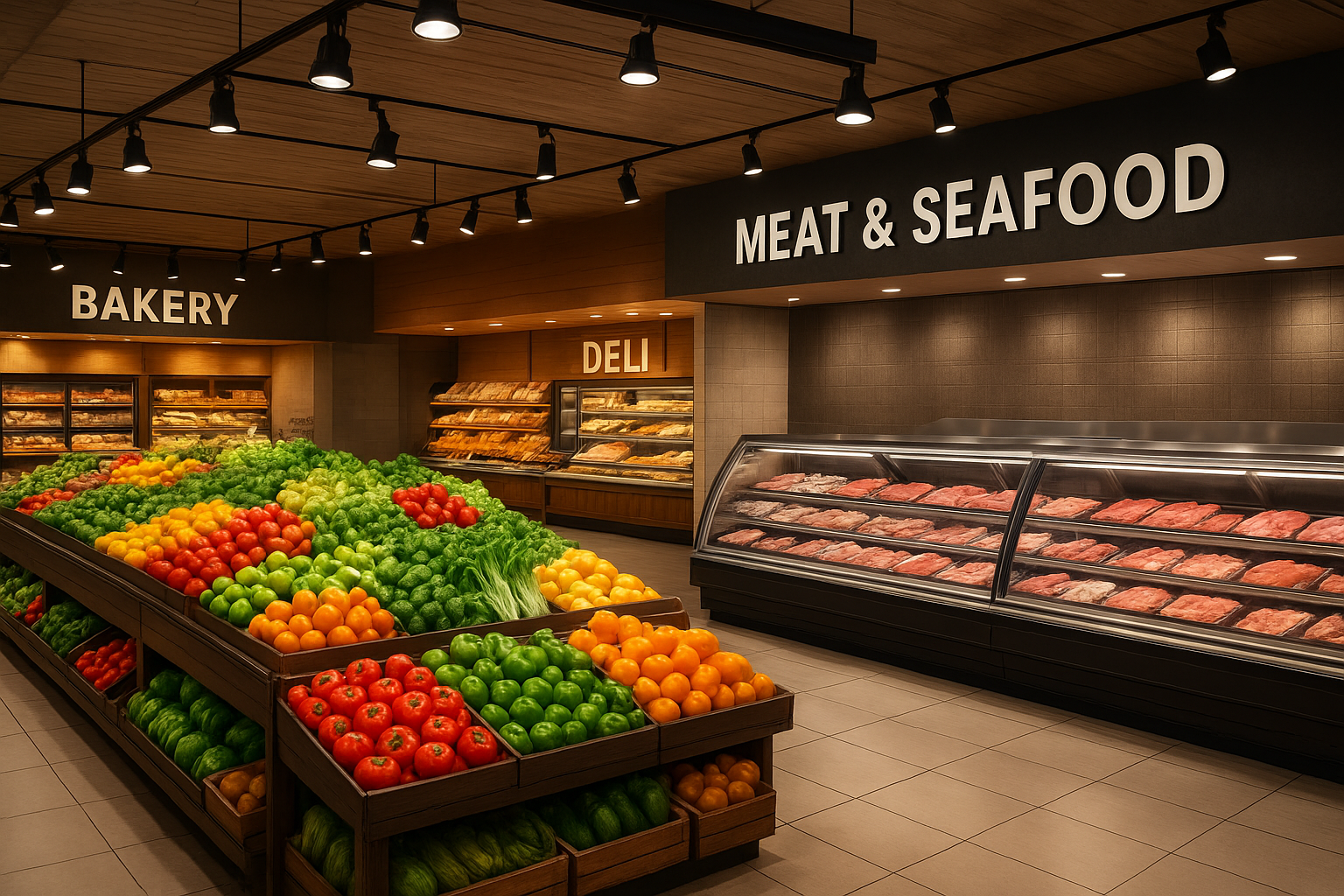
Recommended fixtures: Track accents plus linear ambient; add wall-wash for vertical freshness on stacked displays.
Practical notes: 3000–4500K depending on look (warmer 3000–3500K for cozy, neutral 4000–4500K for crisp); CRI ≥ 90. Aim beams to avoid harsh specular reflections on waxed fruit.
Recommended fixtures: High-CRI spot/downlights over service cases; linear case lights for horizontal runs.
Practical notes: About 3000–4000K; CRI ≥ 90–95 with strong R9 for reds; keep shadows off the cutting area. Use shielded optics to limit glare through curved case glass.
Recommended fixtures: Warm-toned downlights/track with soft edges; linear under-shelf lights for display tiers.
Practical notes: 2700–3500K; CRI ≥ 90 to bring out browns and golden crusts. Control reflections on sneeze guards by aiming at 30–40°.
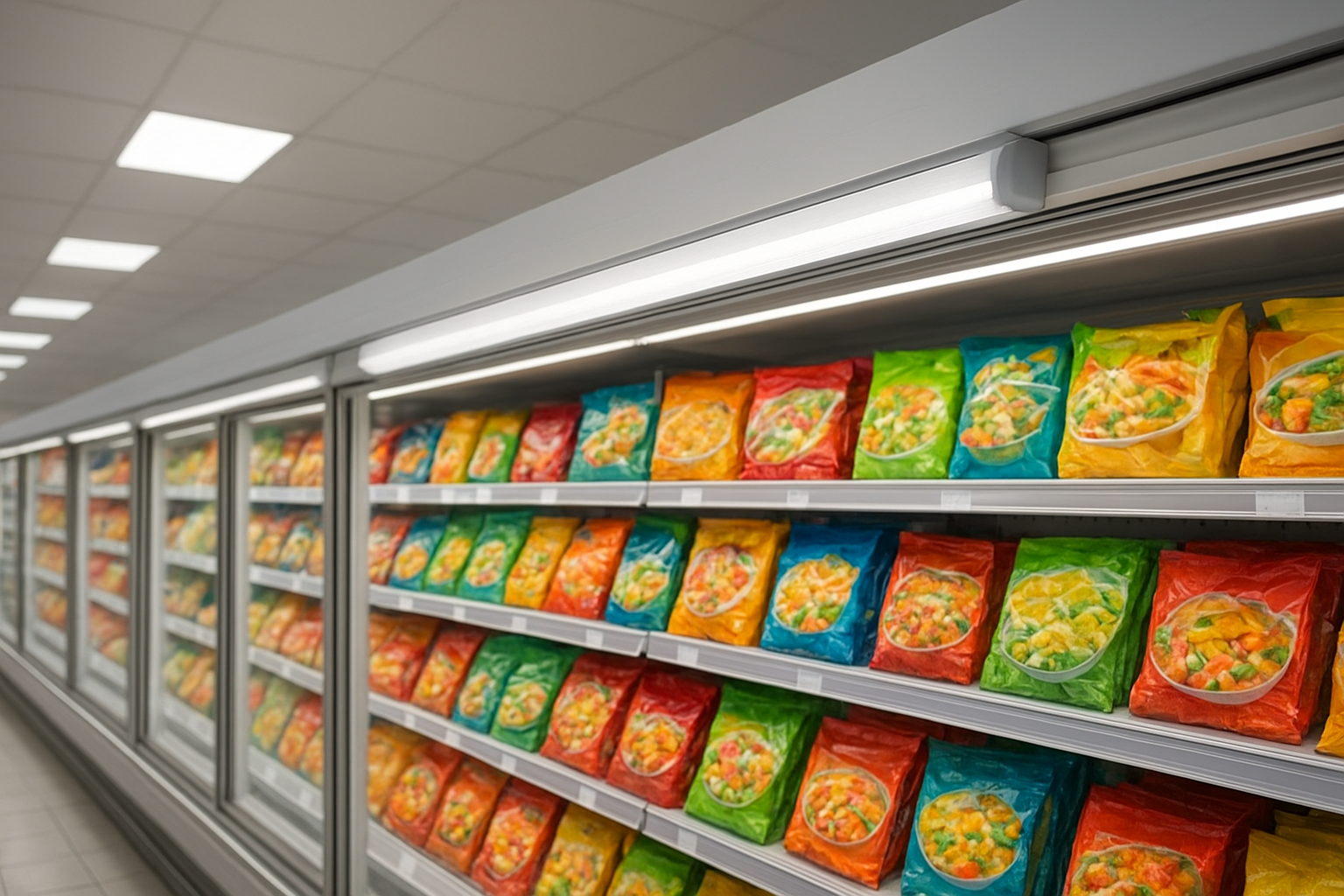
Recommended fixtures: Case-rated LED bars/strips with shatter-resistant covers; vapor-tight (often IP65+) for humid or splash zones. Verify cold-start performance.
Practical notes: 4000–5000K looks clean and crisp; typical merchandising levels around 40–60 fc. Check NSF/ANSI suitability for food environments and ensure anti-condensation design on lenses.
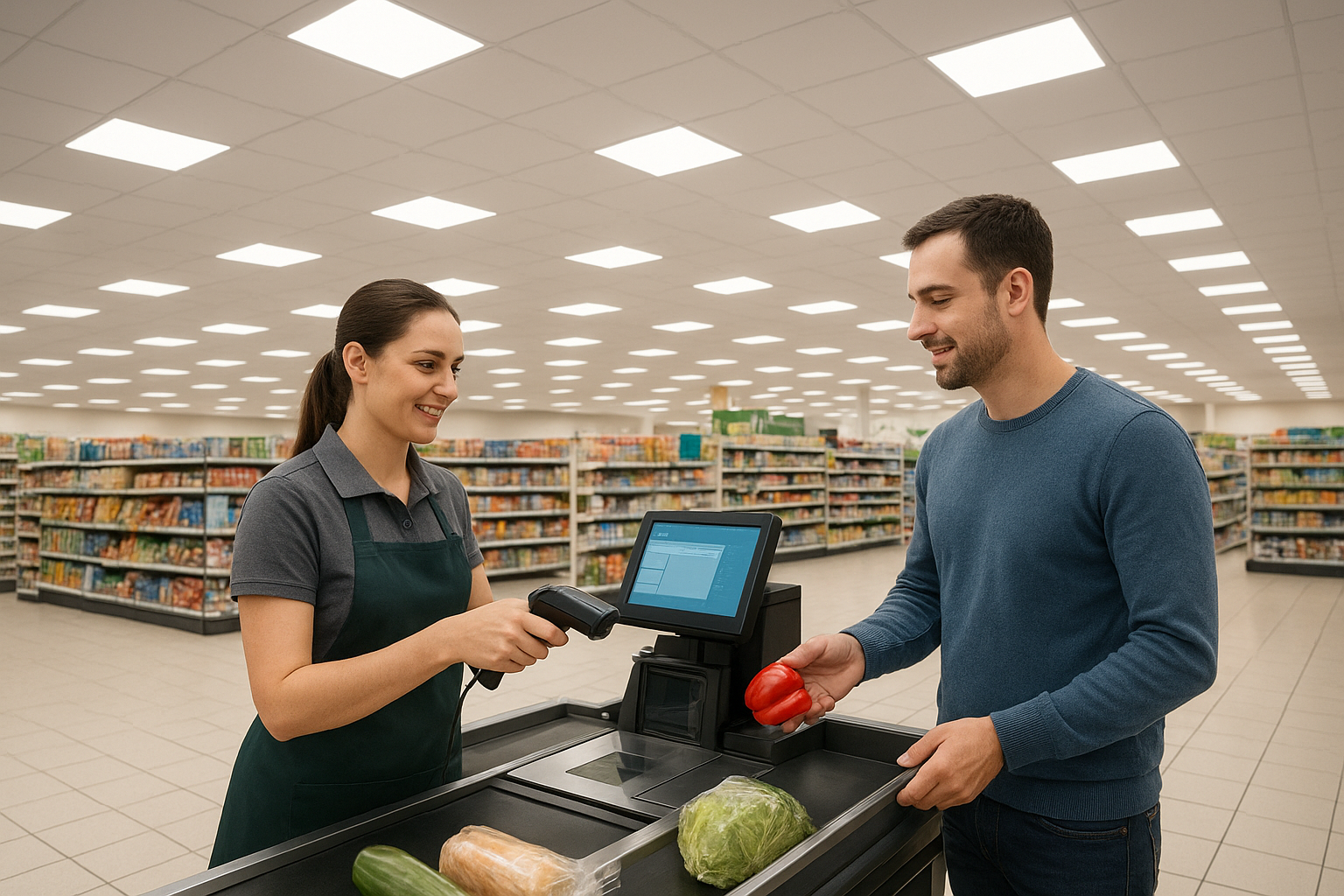
Recommended fixtures: LED panels with micro-prismatic diffusers or linear strips with batwing optics for uniform, shadow-free task light.
Practical notes: Roughly 70–100 fc (≈750–1080+ lx); about 4000K. Keep UGR low to reduce eye strain at POS; add local task lights only if needed to avoid clutter.
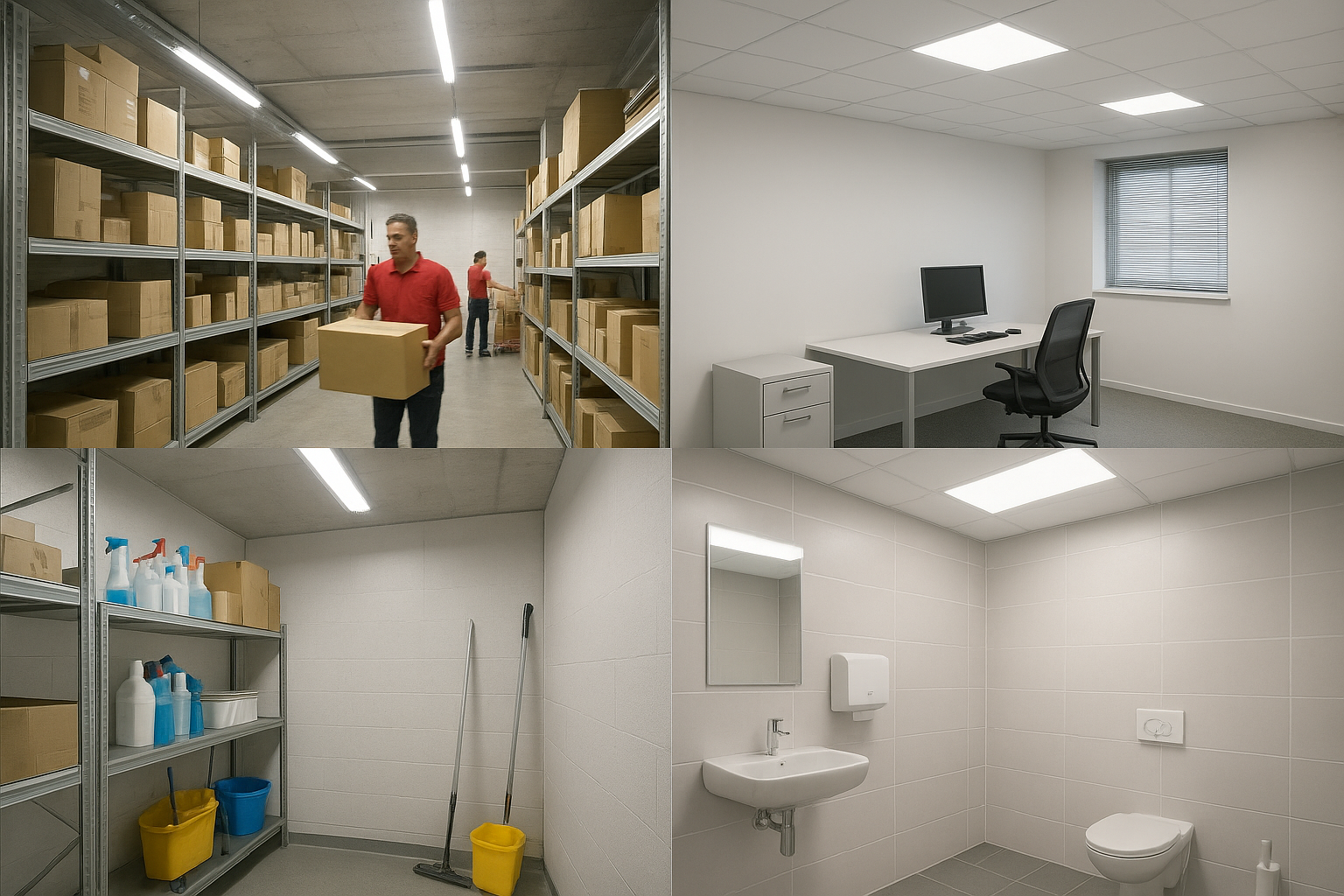
Recommended fixtures: Durable LED battens/strips for stock areas; diffused panels for offices; sealed fixtures in janitorial/restrooms.
Practical notes: 200–500 lx depending on task; 3500–4000K. Occupancy sensors are a quick win in storerooms and restrooms; schedule dimming after hours.
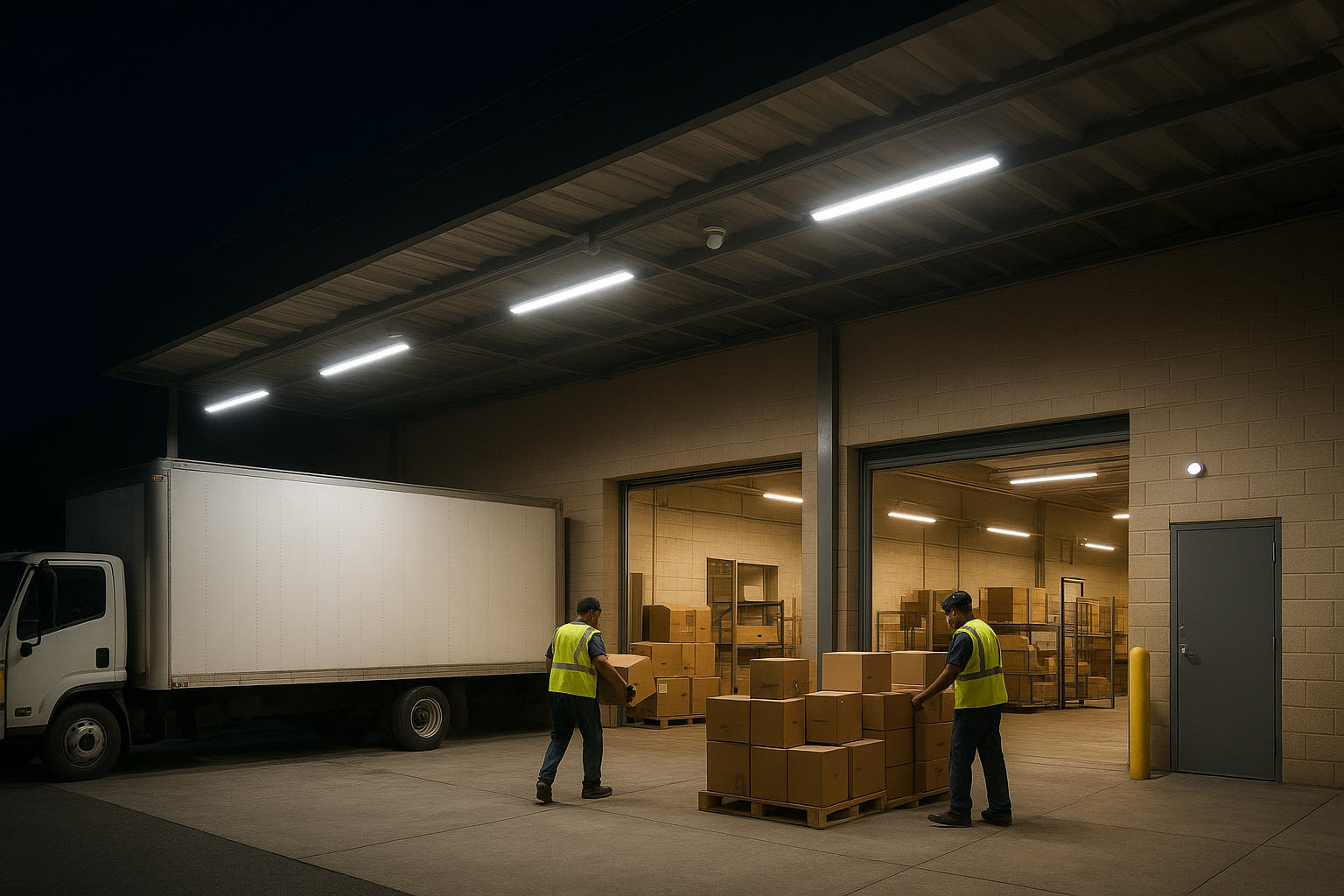
Recommended fixtures: IP65+ linear/wrap fixtures with motion/daylight controls; ensure uniformity for driver safety.
Practical notes: Choose corrosion-resistant housings; photocell + sensor pairing keeps energy down while preserving security visibility.
Controls: In sales areas, use schedules and modest dimming bands for overnight stocking; in back-of-house and docks, deploy occupancy/daylight sensors.
Maintenance: Clean lenses/diffusers and re-aim accents every 6–12 months to maintain output and merchandising intent.
Safety and comfort: In open ceilings, select low-UGR optics (micro-prism, honeycomb, deep regress) and avoid direct sightlines into narrow-beam accents.
Disclosure: KEOU Lighting is our product.
In general aisles at 3.5–5 m, a neutral-white continuous linear system with batwing optics supports even shelf illumination. A vendor like KEOU offers linear strips and panels with anti-glare lens options and customization support; in practice you’d pair a 4000K, high-CRI ambient with a few track accents at endcaps for flexibility. Keep the tone neutral and verify exact specs against your store layout.
| Zone | Fixture family (short why) | Practical CCT/CRI | Target level / tip |
Entrance & lobby | Diffused strips/panels for smooth transition | 3500–4000K; low UGR | Use micro-prisms; add daylight sensor near glazing |
Endcaps/features | Track spots to create pop | 3500–4000K; CRI ≥ 90 | Aim 15–40°; shield with honeycomb/reflector |
General aisles | Linear strips/panels; wide distribution | ~4000K; low glare | ≈30–50 fc (≈320–540 lx); batwing optics |
Produce | Track accents + linear ambient | 3000–4500K; CRI ≥ 90 | Avoid harsh reflections; boost vertical light |
Meat & seafood | High-CRI spots/downlights | 3000–4000K; CRI ≥ 90–95; strong R9 | Minimize glare through case glass |
Dairy/refrigerated | Case-rated bars; vapor-tight | 4000–5000K | ≈40–60 fc; cold-start rated; NSF/IP as needed |
Frozen cases | Case-rated bars (anti-condensation) | 4000–5000K | Verify shatter-resistant covers; uniform doors |
Bakery & deli | Warm downlights/track | 2700–3500K; CRI ≥ 90 | Aim 30–40° to limit glass reflections |
Checkout/front end | Panels with micro-prism or batwing linear | ~4000K | ≈70–100 fc (≈750–1080+ lx); low UGR |
Backroom/storage | Durable battens/strips | 3500–4000K | 200–500 lx; add occupancy sensors |
Offices | Diffused panels | 3500–4000K | Consider dimming for screens/meetings |
Restrooms | Sealed luminaires | 3500–4000K | Vacancy sensors; high-CRI optional |
Loading/receiving | IP65+ linear/wrap with sensors | 4000–5000K | Photocell + motion; uniformity for safety |
Zone light levels and aisle/checkout bands: see the supermarket guidance from LED Lighting Supply, including aisle 30–50 fc and checkout 70–100 fc (2026). According to the summary, aisles translate to roughly 320–540 lx and checkouts to about 750–1080+ lx. Read the details in the LED Lighting Supply overview: https://www.ledlightingsupply.com/commercial-lighting/supermarket-lighting
Accent and glare tactics for retail features: the ConTech Supermarket Lighting Guide PDF discusses accent ranges and glare control for displays (2024): https://contechlighting.com/content/dam/contech/lliterature/Supermarket%20Lighting%20Guide.pdf
UGR background for comfortable sales floors (EN 12464-1 context). A clear explainer of UGR table method and practical limits appears on Trilux: https://www.trilux.com/en/lighting-practice/indoor-lighting/quality-criteria-of-lighting/limitation-of-glare/
Refrigerated case suitability: ASTM/NSF/UL contexts summarized by NSF and UL pages on food equipment and sanitation (accessed 2026): https://www.nsf.org/nsf-standards/standards-portfolio/food-equipment-standards and https://www.ul.com/services/lighting-sanitation-food-service-equipment
Controls strategies in commercial/retail environments: DesignLights Consortium overview (2025): https://designlights.org/news-events/news/lighting-control-strategies/
Q1:What’s the main difference between 3000K and 4000K in grocery lighting?
3000K reads warmer and cozy—great for bakery/deli and some produce presentations. 4000K is neutral and crisp, typical for general aisles and checkouts. Many stores mix both to balance warmth and clarity.
Q2:Why does CRI—and specifically R9—matter in fresh food zones?
CRI indicates color fidelity; R9 tracks saturated reds. Meat looks dull if R9 is weak. Aim for CRI ≥ 90 with strong R9 in meat/seafood so reds appear natural without over-saturation.
Q3:I’m retrofitting a standard store—do I need new wiring/layouts to upgrade to supermarket LED lighting?
Often, no. In many cases you can replace panels/strips one-for-one and add a few track accents for endcaps. For refrigerated/frozen cases or controls (sensors/dimming), check compatibility and ratings before installation.
—
If you need tailored fixture selections or custom lengths, you can request a neutral design brief through KEOU’s customization page: KEOU Lighting — Customization.