Author: Huang Publish Time: 08-02-2026 Origin: Site


If you’re planning a campus-wide LED upgrade, the fastest way to get it right is to specify by area. Different spaces have very different visual tasks, glare risks, and control needs. This guide gives practical, standards‑aware ranges you can take straight into design or procurement.
We focus on two priorities: visual comfort (keep glare low and flicker minimal) and controllability (0–10V/DALI/wireless with occupancy/daylight/scenes). To keep things actionable, we provide ranges for illuminance (lux/fc), UGR guidance, CRI/CCT suggestions, fixture types, and controls per area. Where helpful, we point to authoritative, recent references.
Soft CTA: Need a quick classroom/corridor spec? You can reference low‑glare panel and linear options from established vendors. For example, KEOU Lighting offers control‑ready panels/linears with microprismatic or honeycomb optics; see the internal guide link in Section 3.1.
Facility managers and procurement leads in K–12 and higher education
Electrical designers, ESCOs, and maintenance teams responsible for upgrades
Administrators preparing budgets and RFPs
Jump to Section 3.0 for per‑area specs. Use the comparison table (Section 4.0) as a quick reference.
Apply the pricing/caveats (Section 5.0) when assembling budgets and selecting supply models.
Use controls and commissioning steps (Section 7.0) to lock in savings and comfort long‑term.
We synthesized practical ranges from recent technical guidance and standards summaries, then weighted decisions using the following criteria: visual comfort and glare control; controls readiness and system integration; illuminance efficacy and uniformity; customization and project fit; build quality and durability; value and TCO; evidence transparency.
Key references include the U.S. Department of Energy’s 2024 Lighting Specification Guidance for Schools and recent summaries of EN 12464‑1 for interior lighting. For outdoor and gym spaces, we referenced credible industry guidelines and university standards where appropriate.
Visual comfort & glare control — 24%
Controls readiness & system integration — 18%
Illuminance efficacy & uniformity — 16%
Customization & project fit — 16%
Build quality & durability — 12%
Value & TCO — 9%
Evidence transparency — 5%
Representative sources: the U.S. DOE’s schools guide (Nov 2024) and an EN 12464‑1 update explainer by ETAP. See specific citations in Sections 3–4 and 8–9.
Disclosure: KEOU Lighting is our product. We evaluated it using the same criteria and weights as other solutions in this list.
Each item uses the same quick spec fields. Ranges are practical references; verify local code and project conditions.
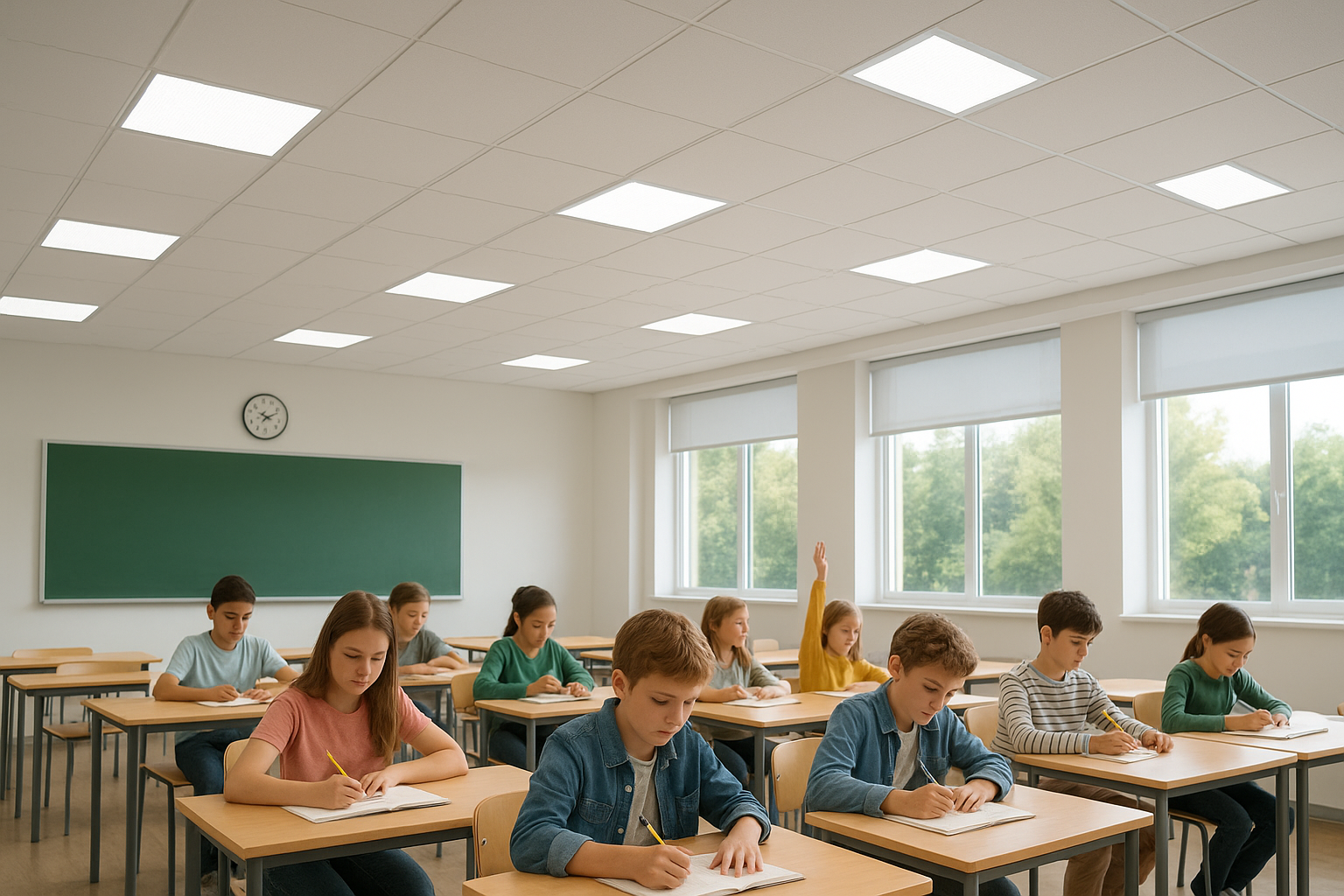
Fixture types: 2×4 (or 2×2) LED panels/troffers; linear slot fixtures
Illuminance: 300–500 lux (30–50 fc) at desks
UGR guidance: Aim for ≤19 using microprismatic diffusers or honeycomb/UGR optics; avoid direct view of bright sources
CCT: 3500–4500K (tunable optional)
CRI: ≥80
Controls: 0–10V or DALI dimming; vacancy mode; daylight zones by windows; 2–3 scenes (lecture, discussion, AV)
Uniformity: Target smooth workplane distribution; check spacing‑to‑mounting‑height (SMH)
Evidence: DOE’s 2024 schools guide recommends roughly 30–50 fc for classrooms; EN 12464‑1 summaries emphasize 500 lux maintained and glare control. See the DOE guidance in the Lighting Specification Guidance for Schools (Nov 2024) and EN context via ETAP’s EN 12464‑1 update explainer (2024).
Internal note: For panel selection basics (optics, sizes, controls), see KEOU’s guide LED panel lights — where to use them and how to choose.
Natural vendor example: KEOU emphasizes low‑glare panel options and control‑ready drivers suitable for classroom scenes; treat this as one candidate among many.
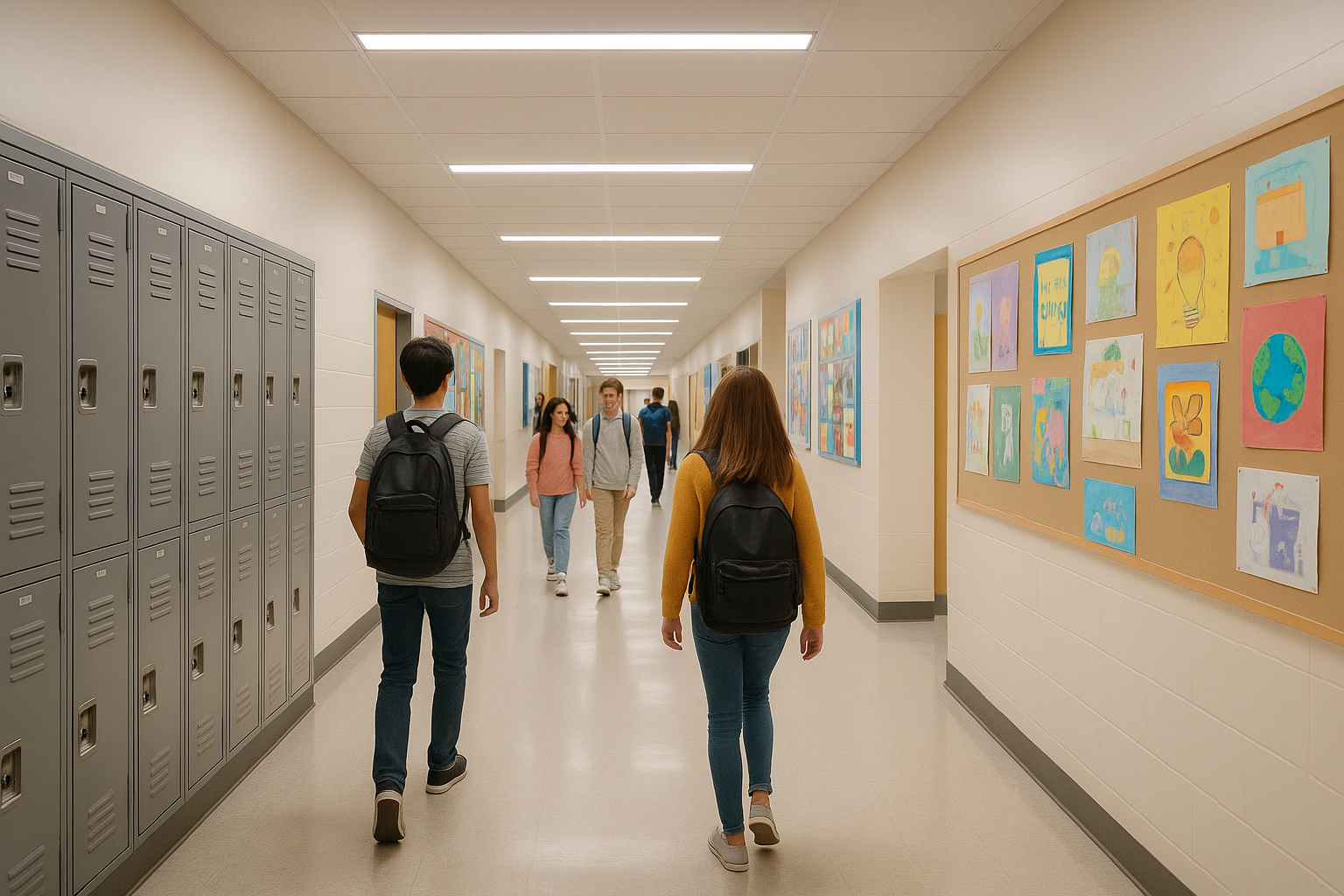
Fixture types: Slim linear strips; retrofit troffers; wall‑mounted sconces (as needed)
Illuminance: ~100–200 lux (10–20 fc)
UGR guidance: Minimize direct view; choose diffused optics and shielded wall packs in stairwells
CCT: 3500–4000K
CRI: ≥70–80
Controls: Occupancy sensors with auto‑reduce to ~50% when vacant; short timeout
Uniformity: Avoid dark patches at turns and landings
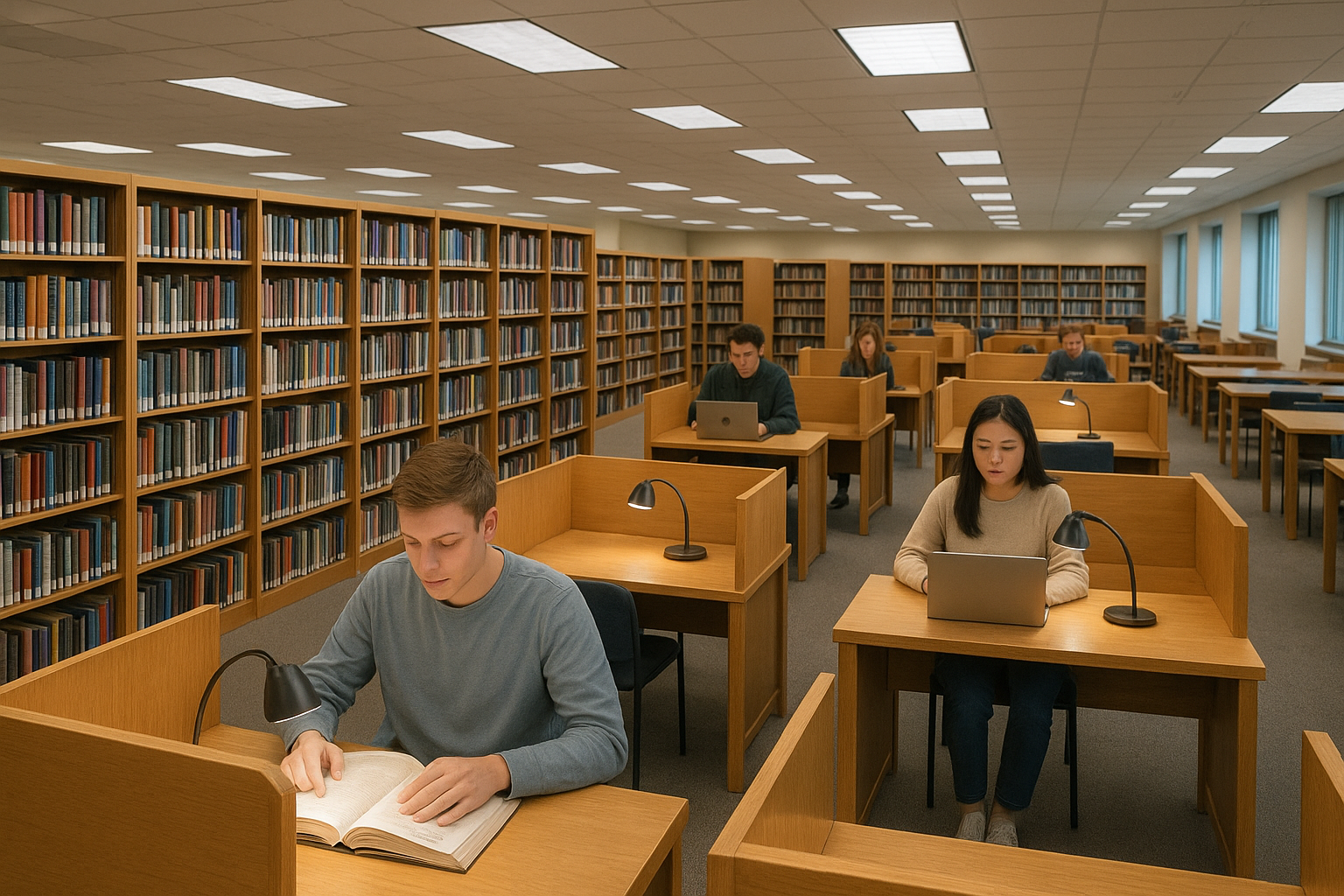
Fixture types: Recessed panels/linear slots; localized task lighting at desks/shelves
Illuminance: 300–500 lux (30–50 fc) general; add task accent where needed
UGR guidance: Keep ≤19 in reading zones; avoid veiling reflections on tablet/laptop screens
CCT: 3500–4000K
CRI: ≥80
Controls: 0–10V dimming and daylight response; zones for reading rooms vs stacks
Uniformity: Smooth horizontal illuminance at desktops and shelves
Soft CTA: Want a one‑page spec pack comparing panels vs linear slots for classrooms, corridors, and libraries? Request a free template; we’ll send a fillable version you can adapt to your rooms.
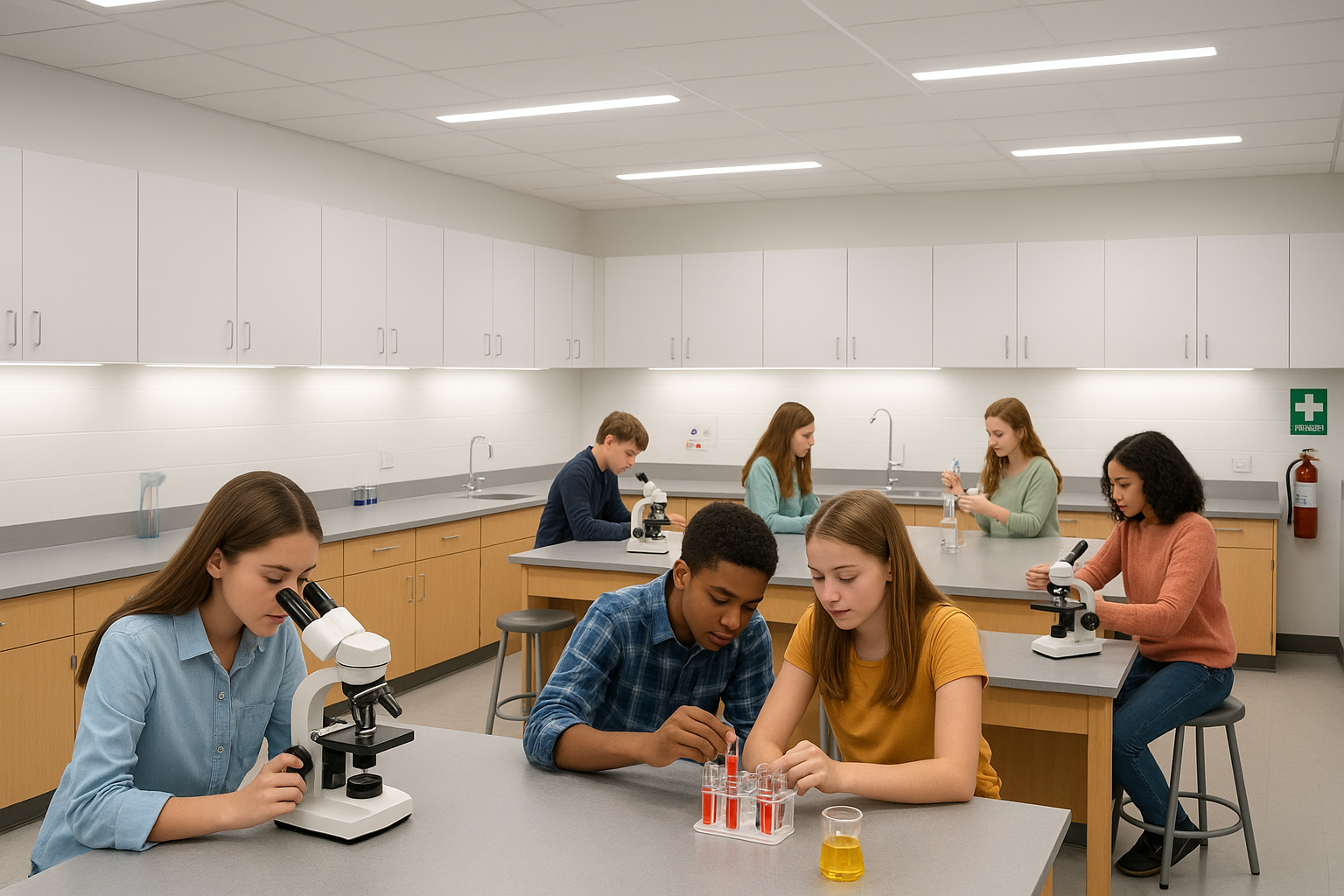
Fixture types: Sealed linear; high‑output panels; under‑cabinet/task lights
Illuminance: 500–750 lux (50–70 fc)
UGR guidance: Shield bright sources in reflective benches; use microprismatic lenses
CCT: 4000–5000K
CRI: ≥80–90 (90 for color‑critical art)
Controls: Local dimming; task zone control; daylight response
Uniformity: Emphasize even coverage along benches/easels
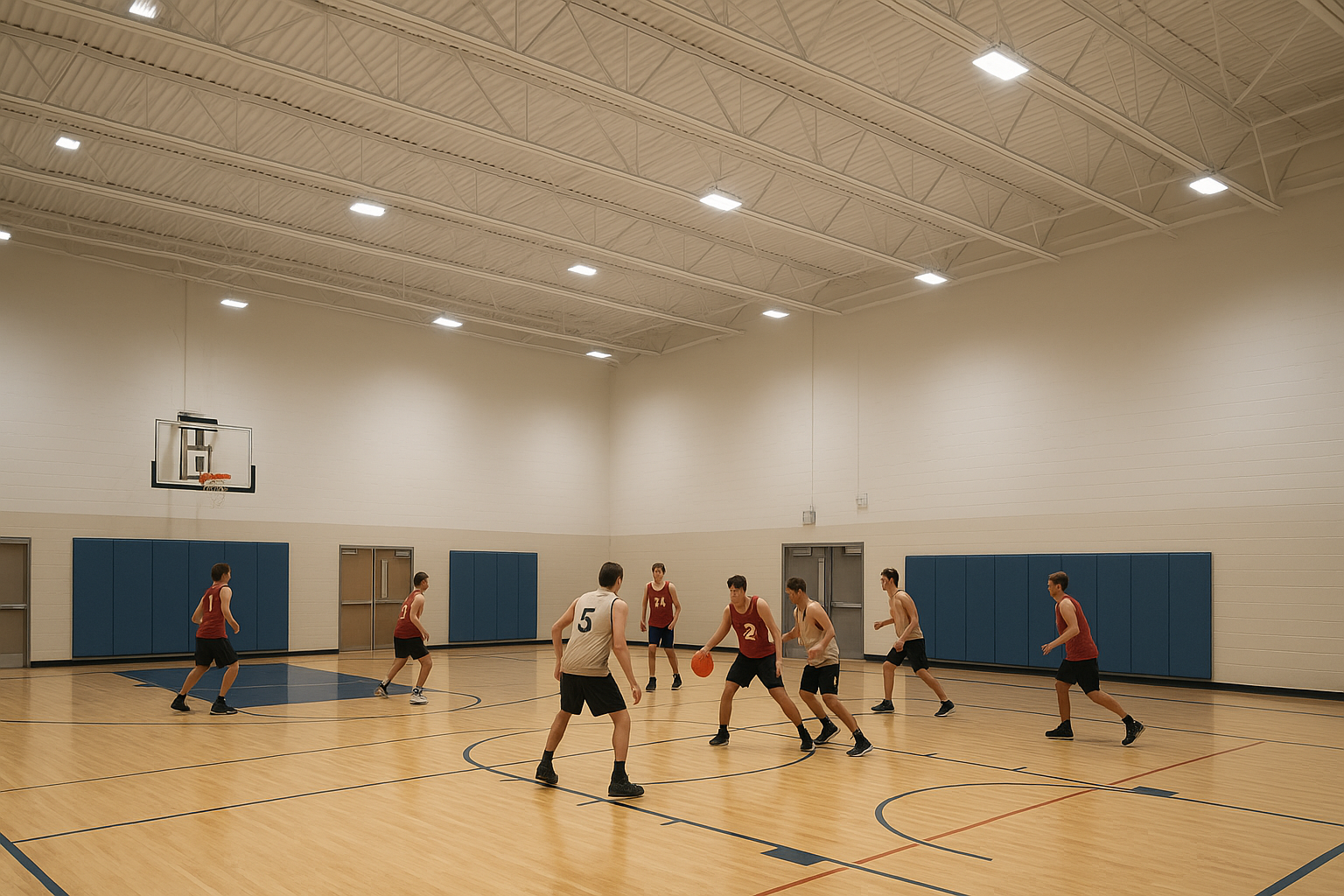
Fixture types: High‑bay luminaires; sports floods with shielding
Illuminance: 300–1,000+ lux (30–100+ fc) depending on competition class
UGR guidance: Use cut‑off optics and shields to limit high‑angle glare
CCT: 4000–5000K
CRI: ≥70–80
Controls: Scene presets (practice, competition, cleaning); scheduling
Uniformity: Tight uniformity required for safety and visual tracking
Evidence: Example space-level values and uniformity considerations appear in the LACCD Lighting Levels per Space (2024).
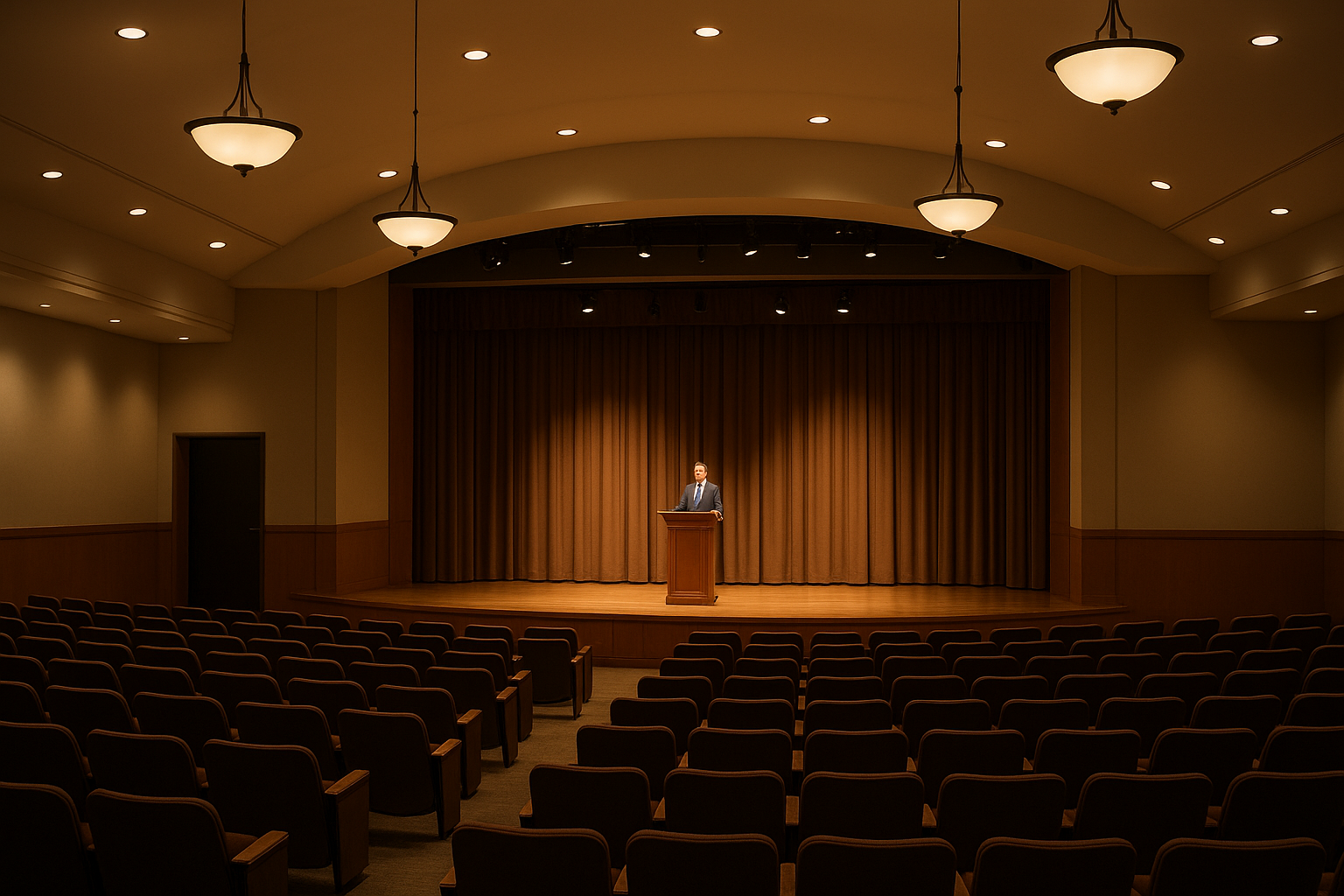
Fixture types: Pendants; downlights; track for stage/lectern
Illuminance: Ambient 100–300 lux (10–30 fc) with higher levels for lecture modes
UGR guidance: Choose distributions suitable for higher mounting heights; avoid direct view from audience
CCT: 3000–4000K
CRI: ≥80
Controls: Deep dimming; zoned scenes (stage/house/aisle)
Uniformity: Ensure aisle illumination for egress; coordinate with AV
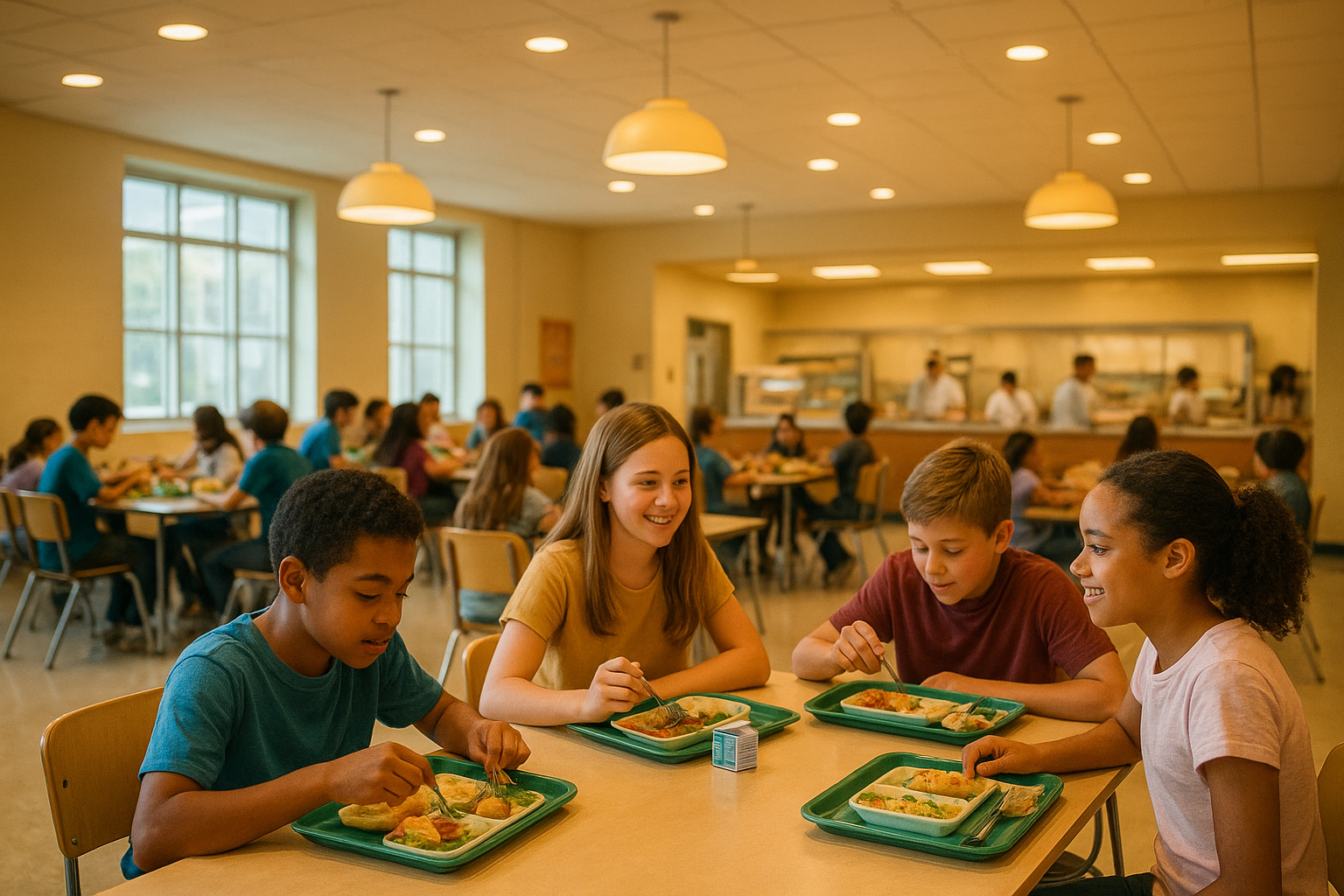
Fixture types: Panels; downlights; decorative pendants (as accents)
Illuminance: 200–300 lux (15–30 fc equivalent)
UGR guidance: Diffused optics to avoid sparkle on glossy tables
CCT: 3000–4000K
CRI: ≥80
Controls: Occupancy/daylight; scheduled reductions after hours
Uniformity: Avoid over‑bright patches that cause discomfort
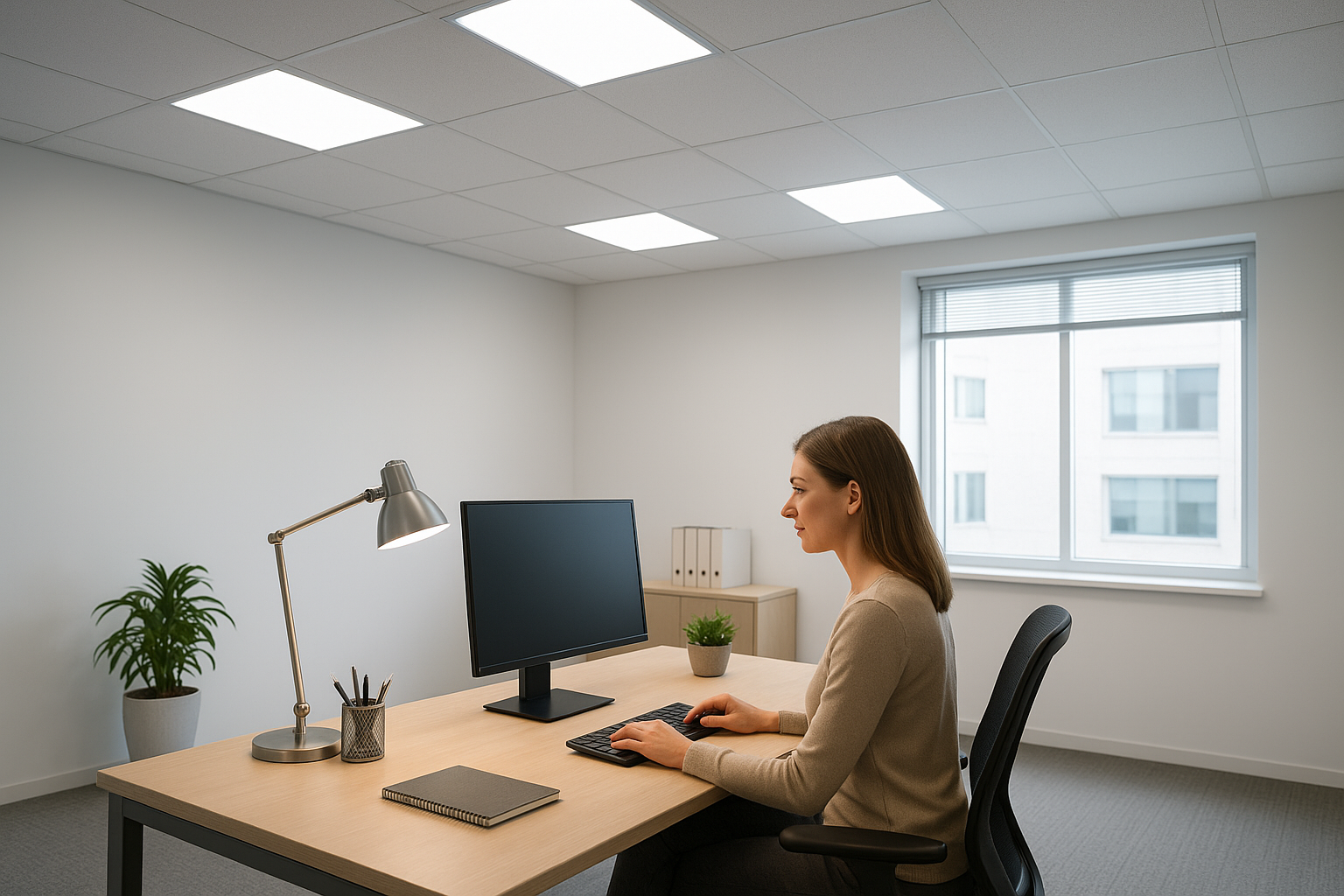
Fixture types: Panels/troffers; linear slots; task lamps
Illuminance: 300–500 lux (30–50 fc)
UGR guidance: Target ≤19; consider lower luminance lenses and proper spacing
CCT: 3500–4000K
CRI: ≥80
Controls: Vacancy (manual‑on/auto‑off); daylight zones; personal dimming where possible
Uniformity: Balanced luminance around monitors to reduce eye strain
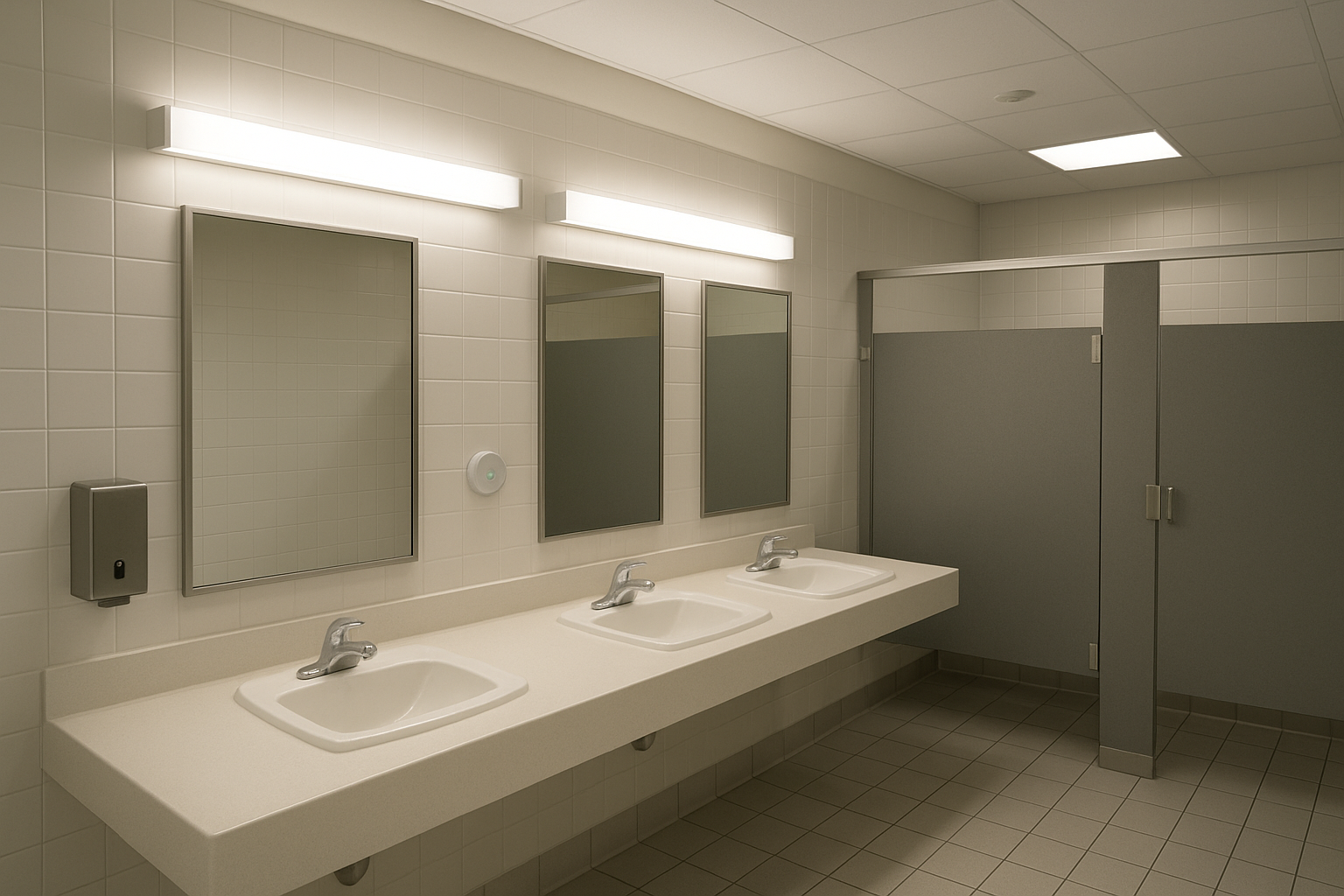
Fixture types: Damp‑rated downlights; enclosed strips
Illuminance: 100–300 lux (10–30 fc)
UGR guidance: Use diffusers and thoughtful placement to avoid mirror glare
CCT: 3500–4000K
CRI: ≥70–80
Controls: Occupancy with short timeouts; bi‑level if feasible
Uniformity: Emphasize even vertical light at mirrors and entrances
Fixture types: Ceiling lights; desk/task lamps; corridor downlights
Illuminance: 100–300 lux ambient; 300–500 lux at desks
UGR guidance: Soften luminance in small rooms; favor diffused shades
CCT: 2700–3500K ambient; 3500–4000K at desks
CRI: ≥80
Controls: Quiet vacancy; low‑level night modes; daylight response where feasible
Uniformity: Avoid bright hotspots that disturb roommates
Evidence: For campus standards context, see the University of Toronto’s Lighting and Lighting Controls Design Standard (2024).
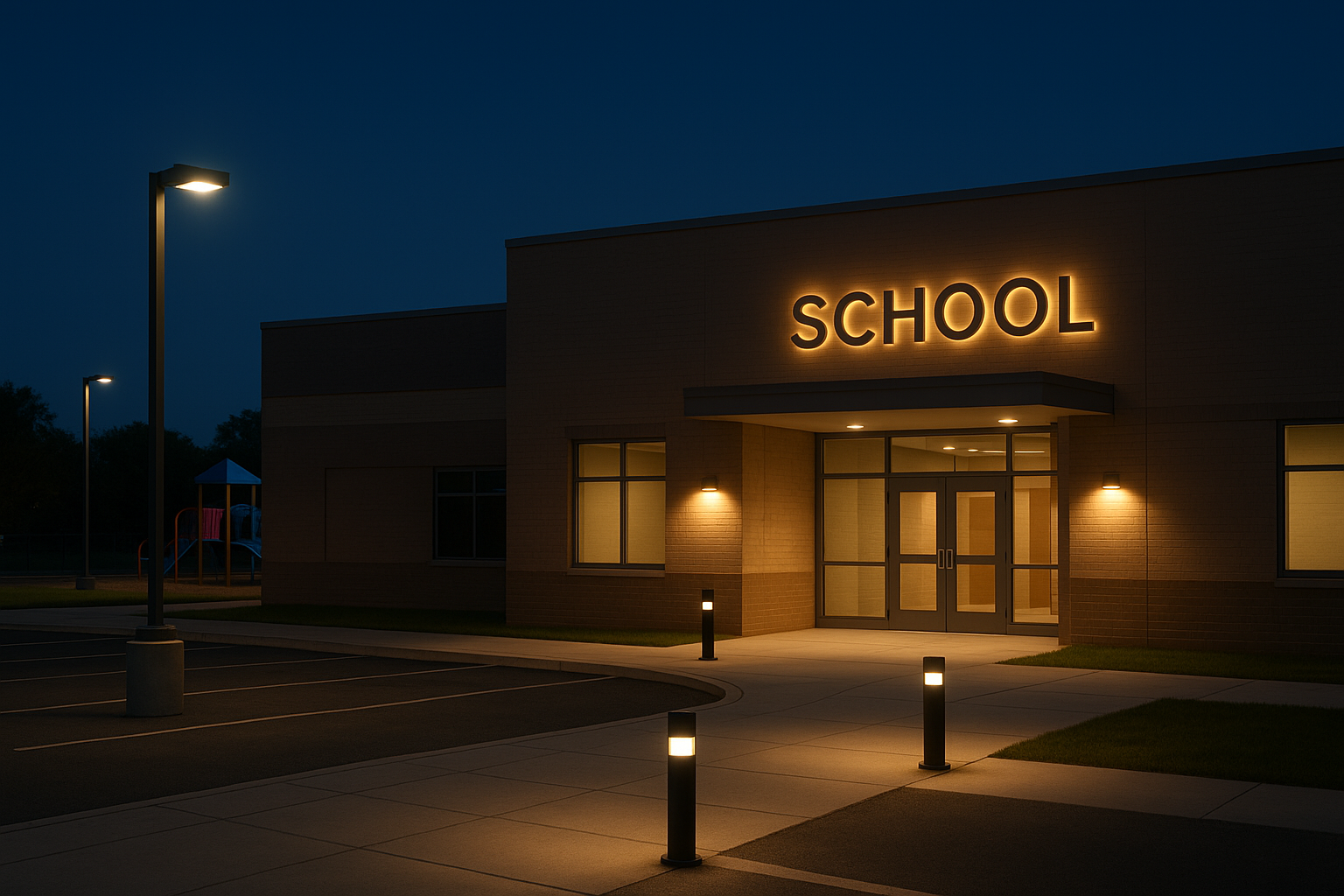
Fixture types: Full‑cutoff wall packs; shielded floods
Illuminance: Code‑appropriate, targeted illumination at doors/signage
UGR guidance: Use cutoff optics; avoid high‑angle glare and trespass
CCT: ≤3000–3500K recommended to reduce skyglow
CRI: ≥80
Controls: Schedules and motion‑based reduction during low use
Uniformity: Ensure safe vertical illumination at faces/doors
Evidence: See strategies to minimize outdoor impacts by the DesignLights Consortium (2024) and the DarkSky principles for responsible outdoor lighting.
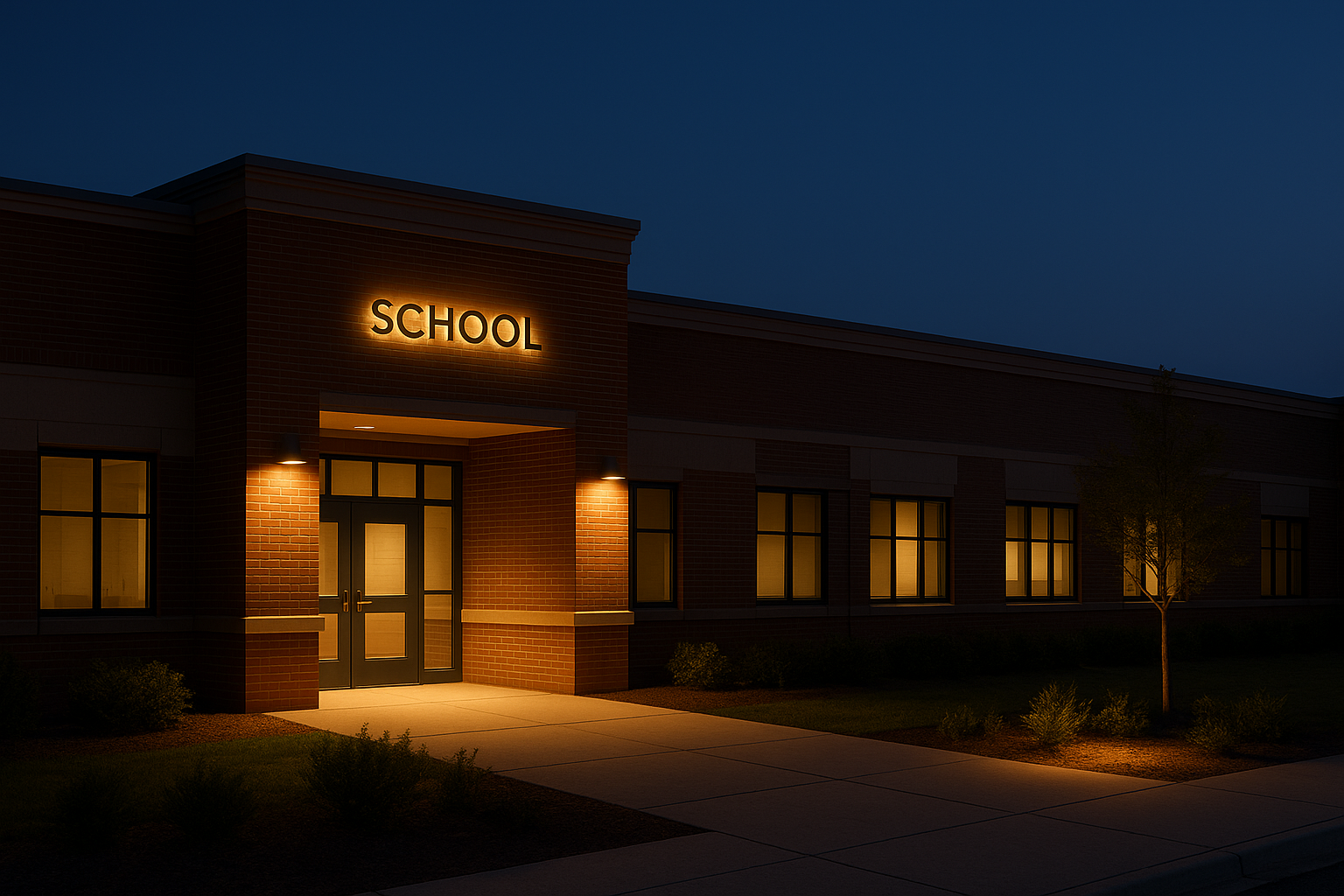
Fixture types: Area/site lights; full‑cutoff floods; bollards where appropriate
Illuminance: Parking ~0.2–1.0 fc average; paths ~0.5–2.0 fc; meet local safety standards
UGR guidance: Favor low high‑angle luminance and glare‑limiting optics
CCT: ≤3000–3500K
CRI: ≥70–80
Controls: Photocells; schedules; motion/bi‑level after hours
Uniformity: Prioritize uniformity over sheer brightness
Evidence: For evolving exterior practice and references to roadway/area standards, see the IES standards index.
Area | Illuminance (lux/fc) | UGR | CRI | CCT (K) | Controls | Typical fixtures | Notes |
Classrooms & Lecture | 300–500 (30–50) | ≤19 | ≥80 | 3500–4500 | 0–10V/DALI; vacancy; daylight; scenes | 2×4 panels, linear slot | DOE schools guide; EN 12464‑1 summary on glare/500 lux. |
Corridors & Stairs | ~100–200 (10–20) | — | ≥70–80 | 3500–4000 | Occupancy bi‑level | Linear strips, troffers | Keep wayfinding uniform; short timeouts. |
Libraries & Study | 300–500 (30–50) | ≤19 | ≥80 | 3500–4000 | Dimming; daylight | Panels + task | Favor neutral CCT for reading comfort. |
Labs & Art | 500–750 (50–70) | ≤19 | ≥80–90 | 4000–5000 | Dimming; task zones | Sealed linear, high‑output panels | Higher CRI for color‑critical tasks. |
Gyms | 300–1,000+ (30–100+) | — | ≥70–80 | 4000–5000 | Scenes; scheduling | High‑bays, sports floods | Tight uniformity; add shielding. |
Auditoriums | 100–300 (10–30) ambient | — | ≥80 | 3000–4000 | Zoned scenes; deep dim | Pendants, downlights, track | Coordinate with AV and egress. |
Cafeterias | 200–300 (15–30) | — | ≥80 | 3000–4000 | Occupancy; daylight | Panels, downlights | Low‑glare optics over glossy tables. |
Admin Offices | 300–500 (30–50) | ≤19 | ≥80 | 3500–4000 | Vacancy; daylight | Panels/troffers | Monitor‑friendly luminance balance. |
Restrooms | 100–300 (10–30) | — | ≥70–80 | 3500–4000 | Occupancy; bi‑level | Damp‑rated downlights/strips | Even vertical light at mirrors. |
Dormitories | 100–300 ambient; 300–500 desks | — | ≥80 | 2700–3500 amb; 3500–4000 task | Vacancy; dimming | Ceiling lights, desk lamps | Quiet controls; avoid hotspots. |
Entrances/Façades | Targeted per code | — | ≥80 | ≤3000–3500 | Schedules; motion | Full‑cutoff wall packs/floods | Limit skyglow and glare. |
Parking/Paths/Play | ~0.2–1.0 fc avg (parking) | — | ≥70–80 | ≤3000–3500 | Photocell; motion | Area/site lights | Prioritize uniformity over brightness. |
Scenario: A 900 ft⊃2; (≈84 m²) classroom, 9‑ft mounting height, retrofitting from four aging 2×4 troffers to LED panels with low‑glare optics.
Target: 350–400 lux average at desks with ≤19 glare feel, daylight zone along windows, two scenes (lecture, AV).
Selection: Four 2×4 panels at ~4,000–4,800 lm each with microprismatic lenses; 0–10V drivers; one photocell/daylight sensor in the window zone; vacancy sensors.
Result (modeled): ≈370 lux average with good uniformity; dim to 150–200 lux for AV; daylight zone reduces output ~20–40% on bright days.
Energy: From ~4×64 W T8 troffers (≈256 W) to ~4×38 W panels (≈152 W) before controls; additional savings from vacancy/daylight.
Commissioning notes: Define scenes at handover; set vacancy timeout to 10 minutes; verify no flicker at low dim levels.
Choose protocols early: 0–10V for simplicity; DALI‑2 or wireless ecosystems for granular scenes and monitoring.
Zoning: Separate teaching walls, window rows, and back rows in classrooms; bi‑level with auto‑dim in corridors; scene zones in auditoriums/gyms.
Sensor placement: Mount occupancy sensors to see entry paths without false trips; place daylight sensors in representative daylight zones.
Commissioning checklist: Verify max/min levels, timeout settings, and scene recalls; test emergency lighting and egress illumination; document setpoints for maintenance.
According to the U.S. DOE’s 2024 schools guidance, vacancy mode (manual on, auto off) with daylight zones is a practical default in classrooms and offices, while corridors benefit from automatic bi‑level reduction when vacant. See details in the DOE Lighting Specification Guidance for Schools (2024).
Achieving UGR ≤19 in classrooms/offices: Favor microprismatic or honeycomb optics; avoid high‑brightness cutouts in sightlines; increase spacing or lower output per luminaire and add more units if needed to keep luminance down.
SMH rules of thumb: Start with manufacturer SMH guidance; check uniformity at desk height and along whiteboards; adjust row spacing if bright scallops appear.
Retrofit mounting: For old fluorescent grids, choose panel/troffer sizes that match openings; confirm driver clearance and ceiling plenum access before ordering.
Outdoor glare/pollution: Use full‑cutoff optics and ≤3000–3500K CCT; schedule reductions after hours to protect neighbors and the night sky. For principles and strategies, see the DarkSky outdoor lighting principles and the DLC’s strategies to minimize impacts at night (2024).
Aim for 300–500 lux (30–50 fc) on the desk plane with dimming and scenes to suit activities.
It’s a widely used comfort target for classrooms/offices. If screens or glossy surfaces dominate, push glare even lower with better optics and layout.
Neutral white (3500–4000K) is a good balance for focus; tunable white can support different activities if commissioning is done well.
Vacancy/occupancy with short timeouts and daylight zones routinely cut runtime; corridors can auto‑dim to ~50% when vacant. Quality commissioning is the key to realizing savings.
2×4 or 2×2 LED panels/troffers are the usual drop‑in choices. Verify opening size, plenum clearance, and driver location; choose low‑glare optics to maintain comfort.