
Author: Huang Publish Time: 09-02-2026 Origin: Site


A high-end office doesn’t happen by accident—it’s designed by layers of light that feel comfortable, look refined, and guide people effortlessly. This guide breaks your building into zones and recommends simple fixture types for each, prioritizing visual comfort and ambience over specs.
If you’re planning a rollout or refresh, use this as a practical checklist. For a deeper rationale by zone, see the step-by-step explainer in the Ultimate Guide: Office Lighting Fixtures by Area.
We selected fixture types to support a premium, comfortable look across zones, prioritizing: 1) high-end image and visual comfort (soft vertical light, controlled brightness, low‑glare distributions), 2) cohesive design language across areas, 3) control readiness (dimming, occupancy/daylight), and 4) durable, commercial‑grade construction and support. For context, see the International WELL Building Institute’s overview on visual comfort in the WELL certification site, the IES standards index for office practice in IES standards resources (2025), and control expectations summarized in ASHRAE 90.1-2022 lighting changes. For exterior and parking guidance, see DOE’s FEMP exterior lighting purchasing guidance.
Disclosure: KEOU Lighting is our product. We evaluated it using the same criteria as other options in this list. First mention: KEOU Lighting.
| Area | Primary fixtures | Mounting | Control tip | Ambience note |
Lobby/Reception | COB downlights; linear wall wash; selective pendants | Recessed; surface/suspended | Scene-based dimming | Layered focal points with soft vertical light |
Open Office | Low-glare panels; direct‑indirect linear | Recessed; suspended | Occupancy + daylight | Calm, uniform ambient; avoid bare bright sources |
Executive/Meeting | Recessed linear + downlights; wall wash | Recessed/surface | Scene presets | Reduce contrast near screens; dimmable layers |
Corridors | Continuous linear or batten | Surface/recessed | Occupancy sensors | Clear wayfinding; consistent brightness |
Restrooms | Sealed IP-rated luminaires | Surface/recessed | Occupancy sensor | Comfortable, uniform light; easy maintenance |
Stairwells | Stairwell luminaires with step-dimming + emergency | Surface | Vacancy/bi-level | Safe yet efficient egress illumination |
Elevator Lobbies | Recessed COB + linear accents | Recessed | Time/scene | Balanced vertical light; avoid harsh highlights |
Pantry/Break Areas | Decorative pendants + soft ambient | Surface/suspended | Dimming | Hospitality cues without glare |
Underground Parking | Garage luminaires + motion/networked control | Surface | Occupancy + scheduling | Uniform visibility; reduced runtime |
Outdoor Canopy/Entrance | Canopy or wall-pack + photocell/timer | Surface | Photocell + time | Welcoming vertical light; down‑shielded optics |
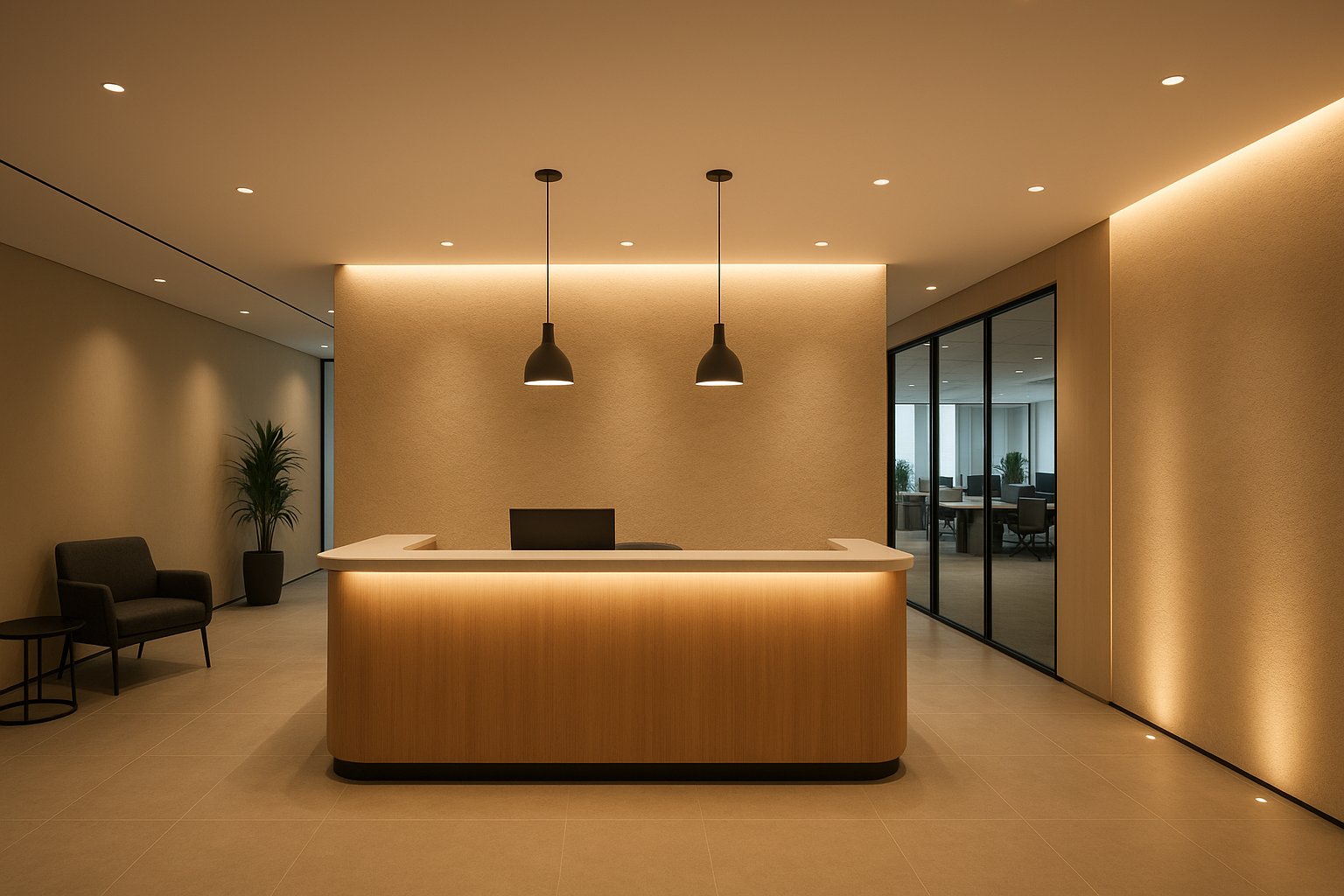
Purpose: Create a polished first impression with layered light that flatters materials and faces.
Recommended fixtures: Recessed COB downlights; linear wall washers; selective decorative pendants (sparingly).
Mounting & controls: Recessed ceiling plane; wall washers close to the wall; scene presets for arrival/day/evening.
Recessed downlights and wall washers keep bright points out of sightlines to reduce perceived glare, provide soft vertical illumination that flatters faces and finishes, and let you add focused accents (reception desk, artwork) without clutter.
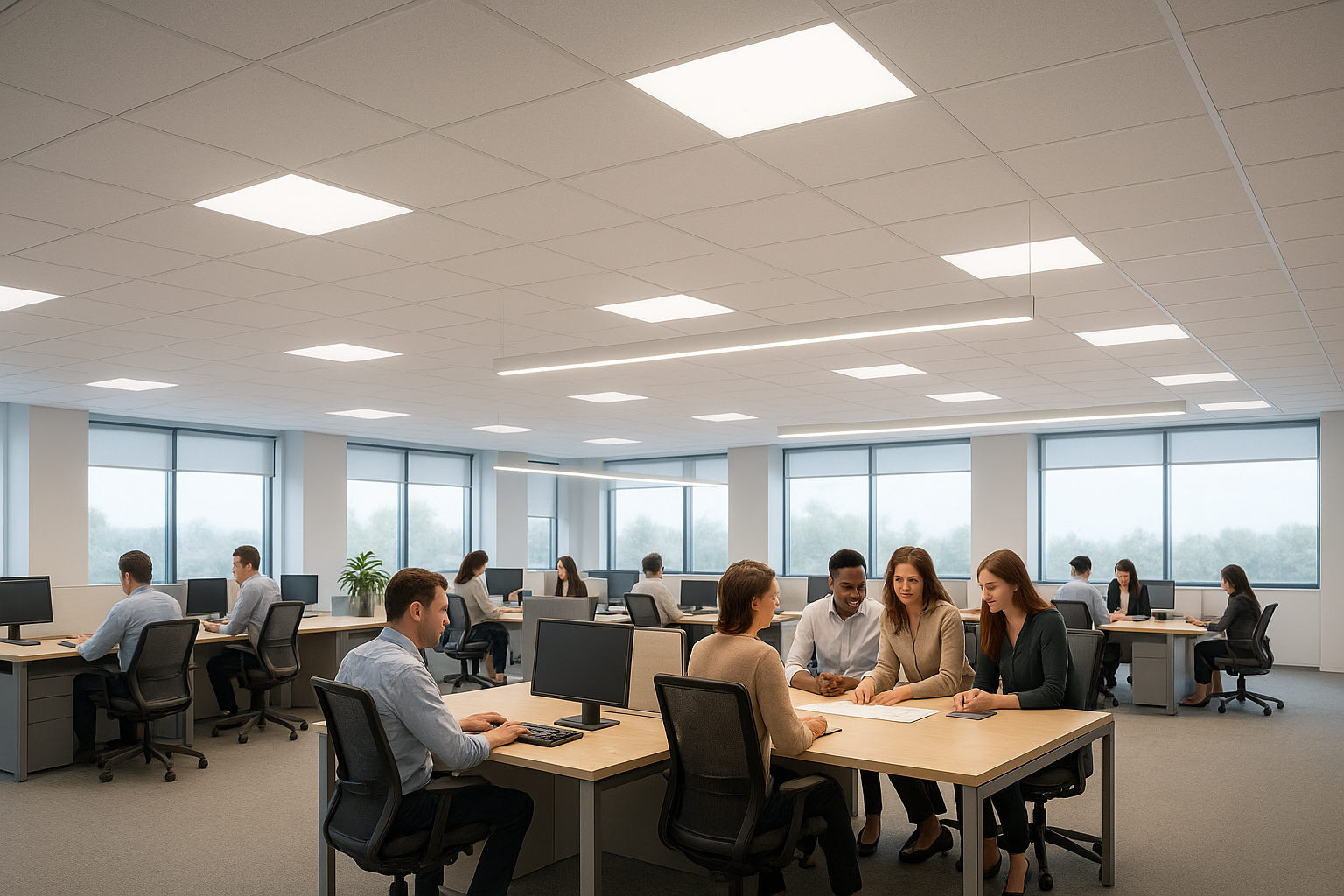
Purpose: Provide calm, uniform ambient lighting that supports screens and collaboration without glare.
Recommended fixtures: Low‑glare LED panels; direct‑indirect linear luminaires in continuous runs.
Mounting & controls: Recessed panels for T‑bar ceilings; suspended linear for exposed ceilings; occupancy and daylight‑responsive dimming.
Diffused panels and indirect uplight reduce bright spots in workers’ sightlines and create even ambient light that supports VDT work and collaborative zones while enabling clear visual order.
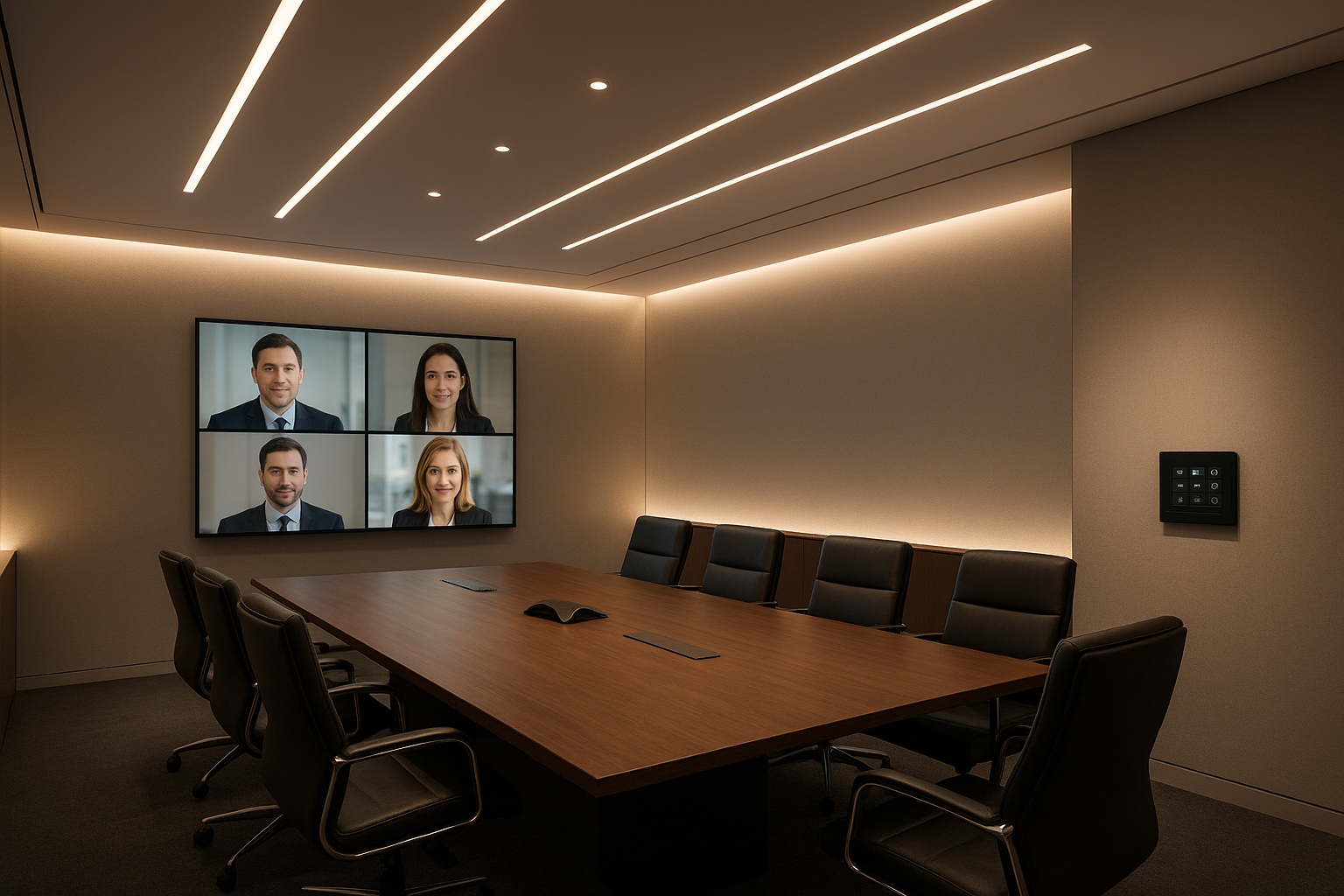
Purpose: Enable presentations, video calls, and focused discussions with controllable layers.
Recommended fixtures: Recessed linear ambient; COB downlights for accents; perimeter linear wall wash where useful.
Mounting & controls: Recessed linear as base; small downlights for table accents; scene presets for presentation/video modes.
Layered ambient plus targeted downlights keeps faces readable on video, reduces distracting contrast near screens, and supports hospitality‑grade scene changes for different meeting modes.
▋Soft CTA : For a quick reference on panels and mounting, see LED Panel Lights: Where To Use Them and How To Choose.
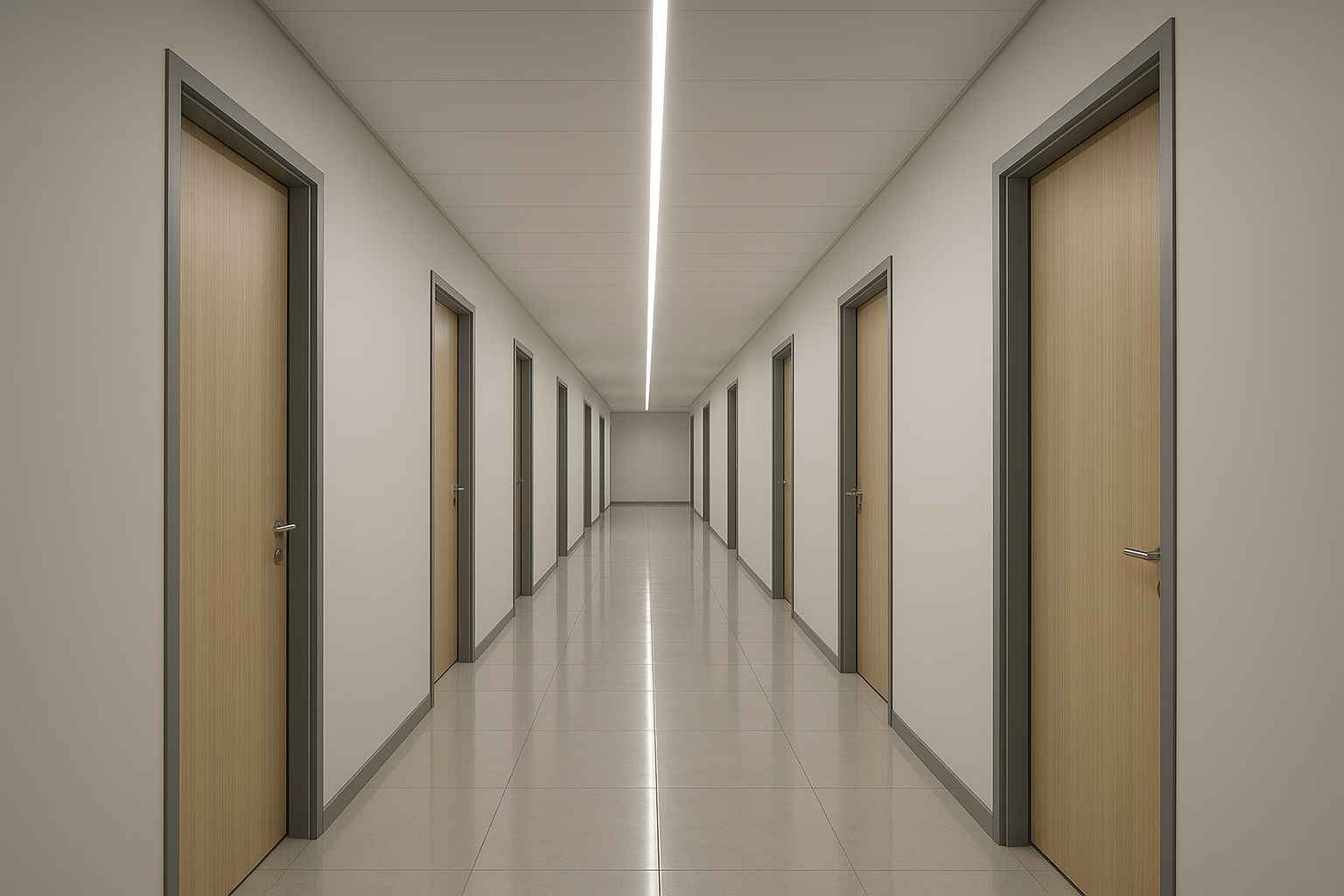
Purpose: Guide movement with consistent, legible light.
Recommended fixtures: Continuous linear runs or surface batten luminaires.
Mounting & controls: Surface or recessed runs down the centerline; occupancy sensors with conservative timeouts.
Continuous linear lighting provides even wayfinding illumination, minimizes abrupt light/dark transitions, and improves perceived safety and circulation clarity.
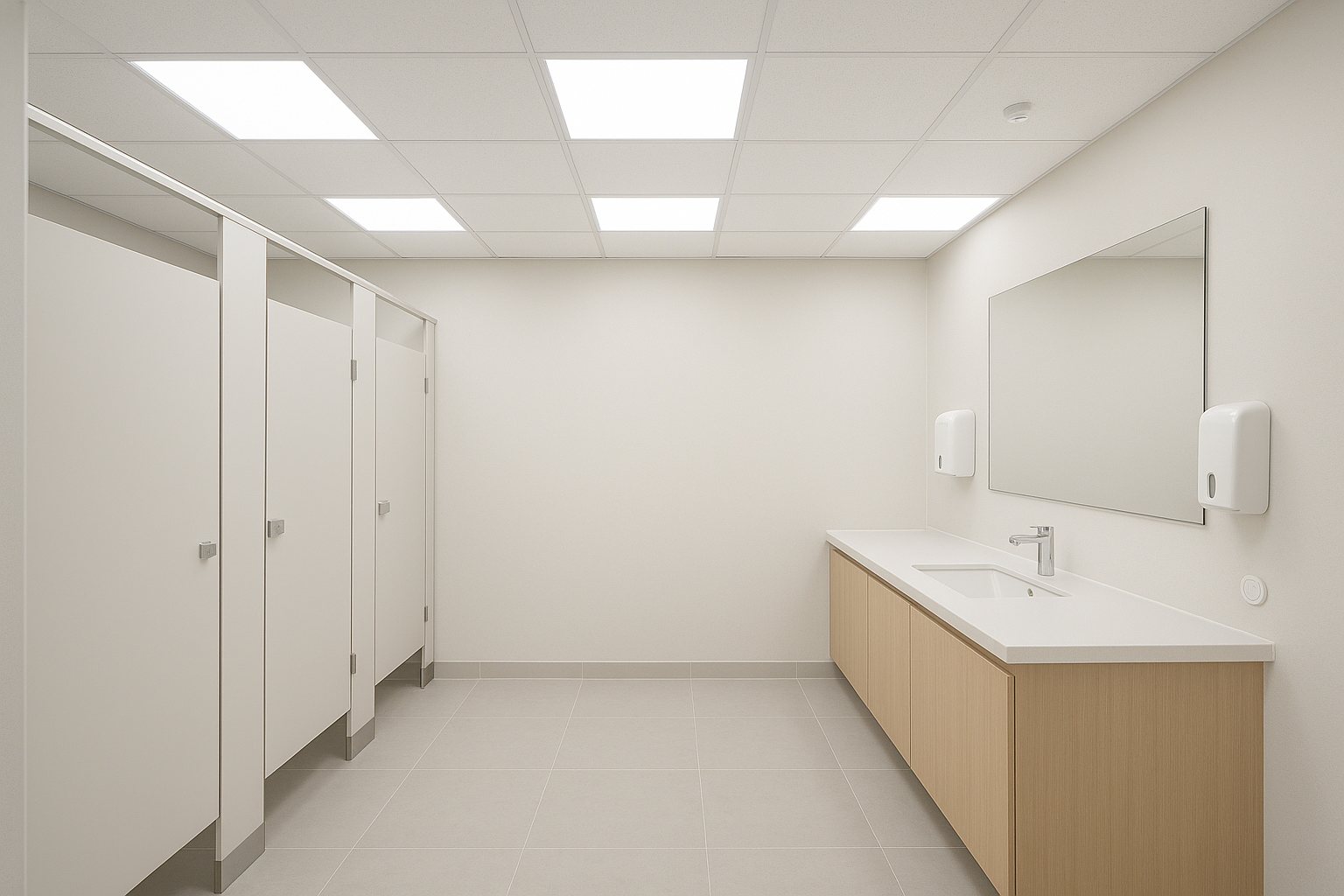
Purpose: Deliver clean, uniform light in a damp‑prone space with easy maintenance.
Recommended fixtures: Sealed IP‑rated luminaires (surface or recessed).
Mounting & controls: Surface for retrofit; recessed where cavity allows; short‑interval occupancy sensors.
Sealed fixtures resist condensation and cleaning regimes, keep mirror/vanity zones even and comfortable, and reduce maintenance cycles while pairing well with occupancy controls.
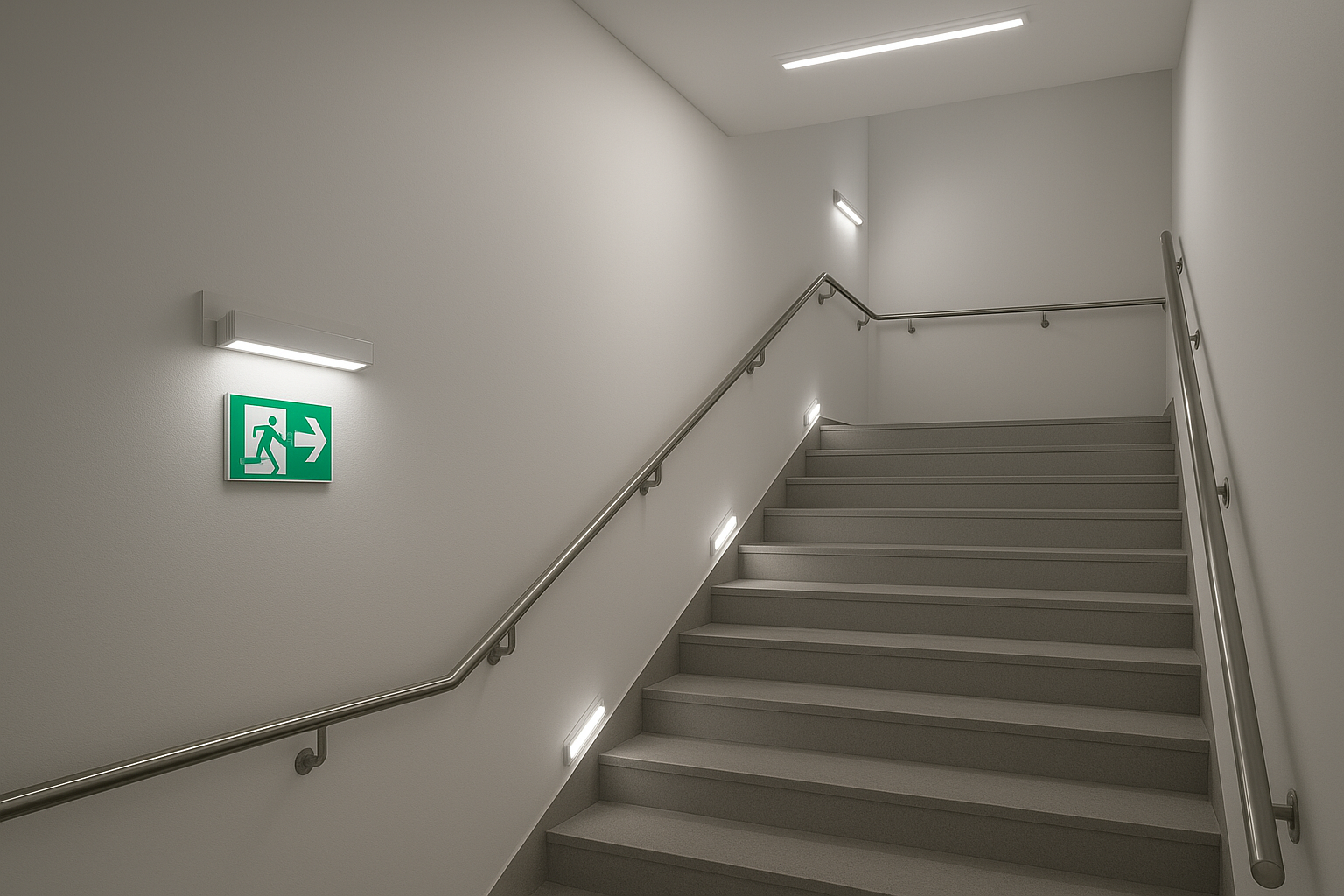
Purpose: Provide safe, consistent illumination with sensible energy use.
Recommended fixtures: Stairwell luminaires with step‑dimming; emergency‑ready units or battery backup.
Mounting & controls: Surface wall or ceiling placements at regular intervals; vacancy/occupancy sensors with conservative timeouts.
Bi‑level/step dimming preserves visibility when occupied and saves energy when vacant; emergency‑capable fixtures ensure egress illumination continuity during outages.
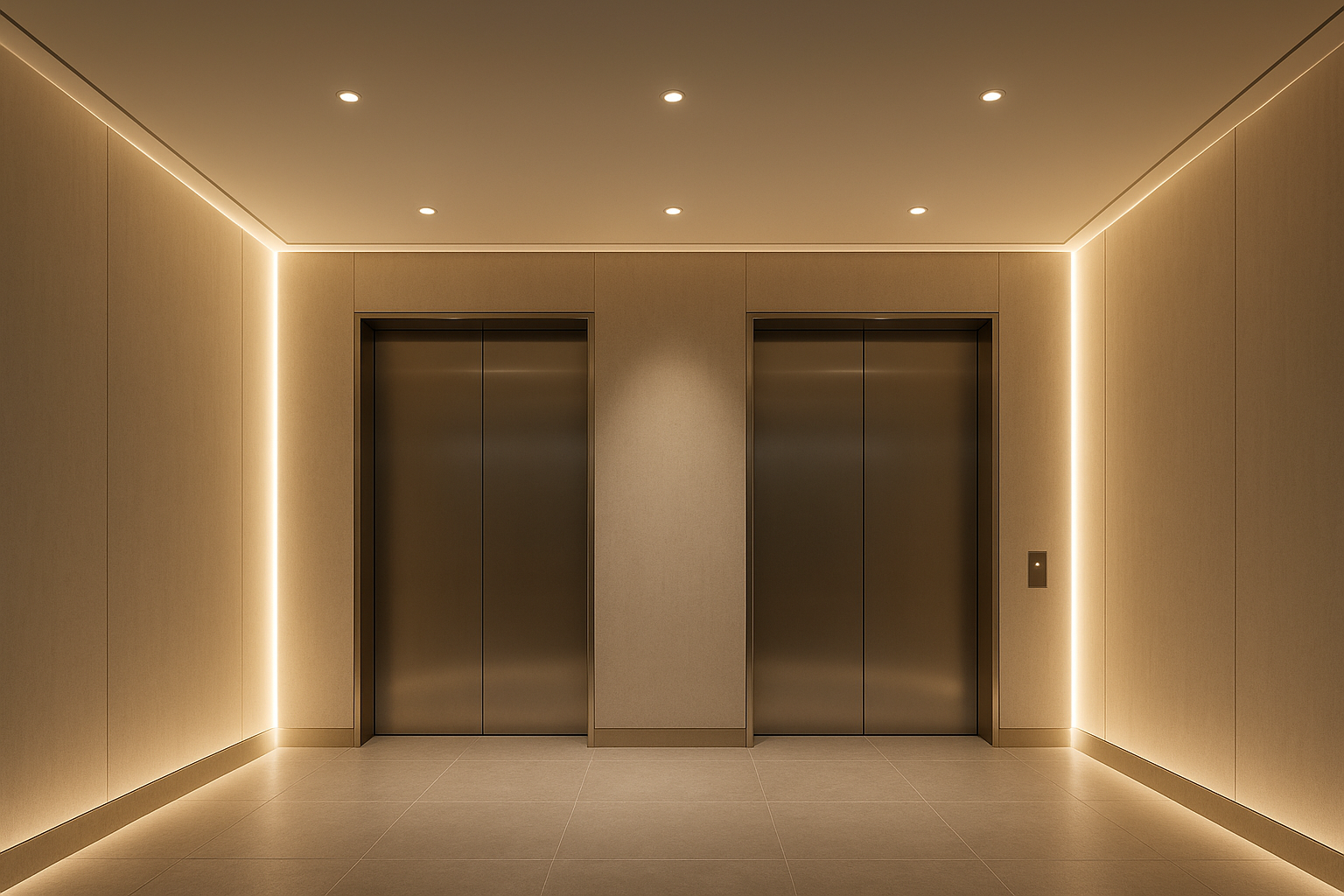
Purpose: Create a calm pause point with balanced vertical light.
Recommended fixtures: Recessed COB downlights; linear accents washing elevator surrounds.
Mounting & controls: Recessed field downlights; linear accents in perimeter slots; tie scenes to adjacent circulation.
Balanced vertical illumination reduces reflections on metal doors, keeps waiting areas comfortable, and enables subtle accenting of finishes without harsh highlights.
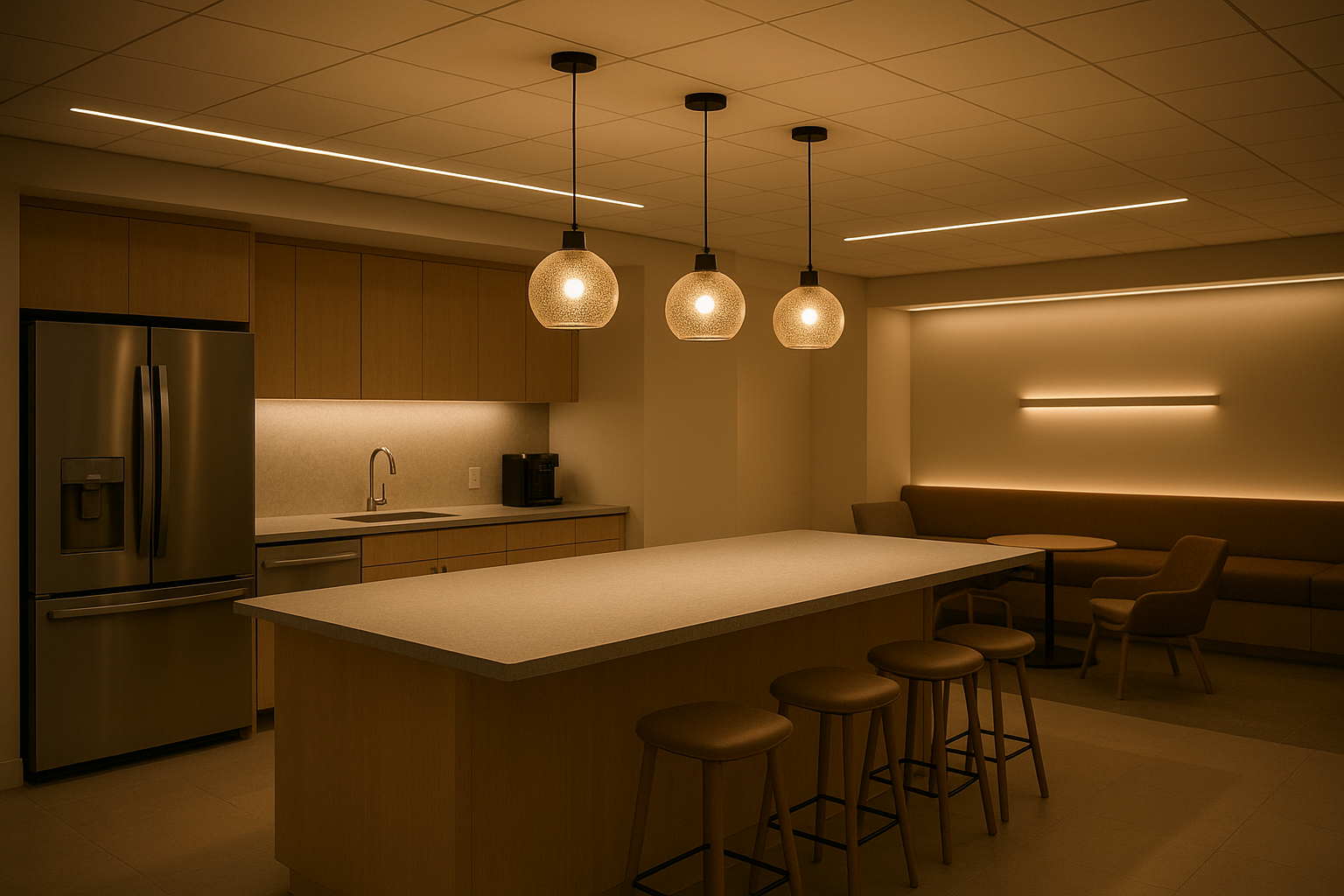
Purpose: Blend hospitality cues with task‑ready light for counters and seating.
Recommended fixtures: Decorative pendants over islands/counters; soft ambient layer (panel or linear).
Mounting & controls: Suspended pendants for identity; recessed/surface ambient for general areas; simple dimming.
Pendants provide focal identity and task illumination for counters while ambient layers keep the room readable and sociable without glare for seated occupants.
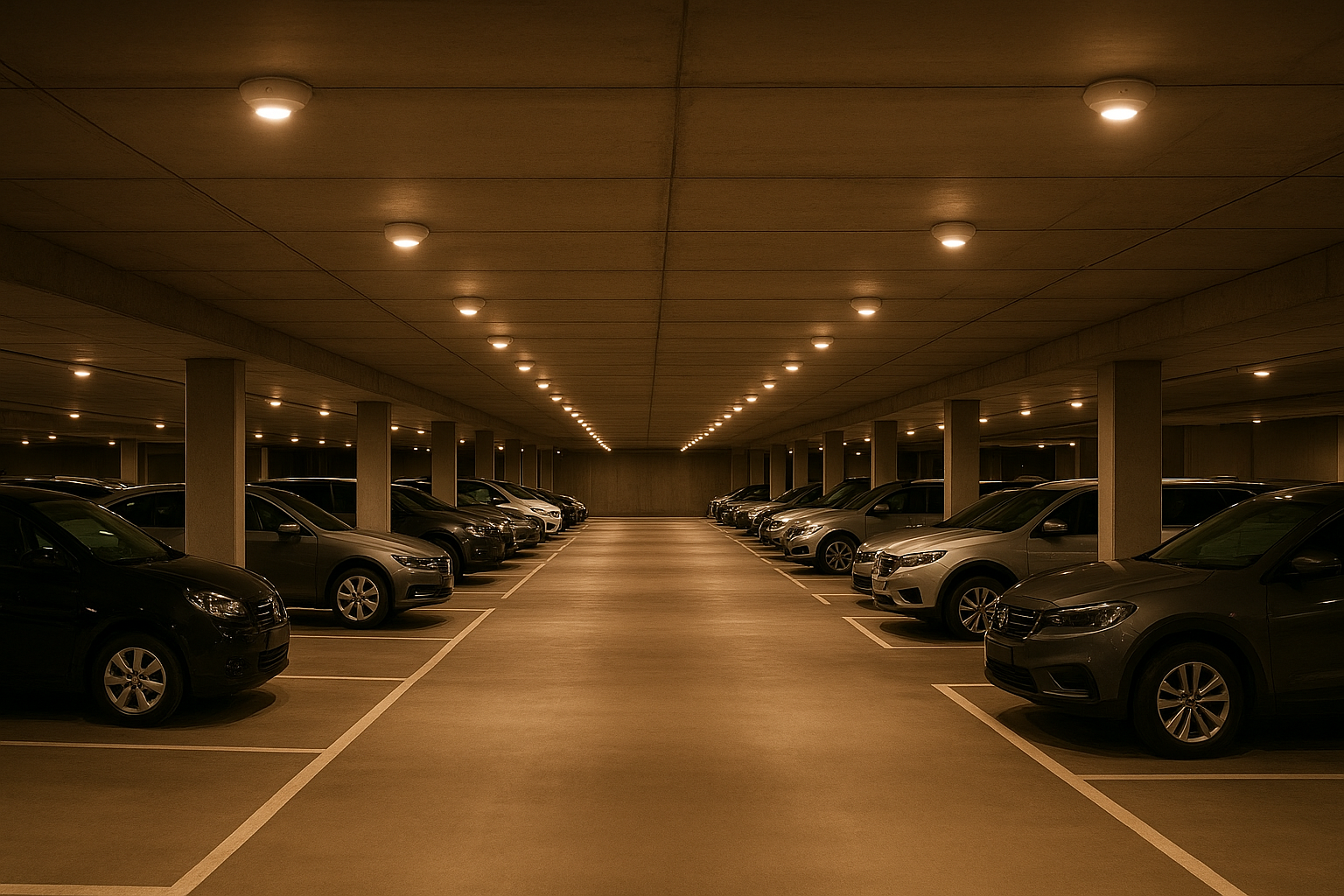
Purpose: Maximize visibility and comfort while trimming runtime when unoccupied.
Recommended fixtures: Garage luminaires with motion or networked controls.
Mounting & controls: Surface/ceiling‑mounted aligned with drive aisles; occupancy zoning and scheduled dimming.
Downward‑focused distributions improve contrast for drivers and pedestrians; motion or networked zoning reduces runtime while ensuring rapid return to full output when needed.
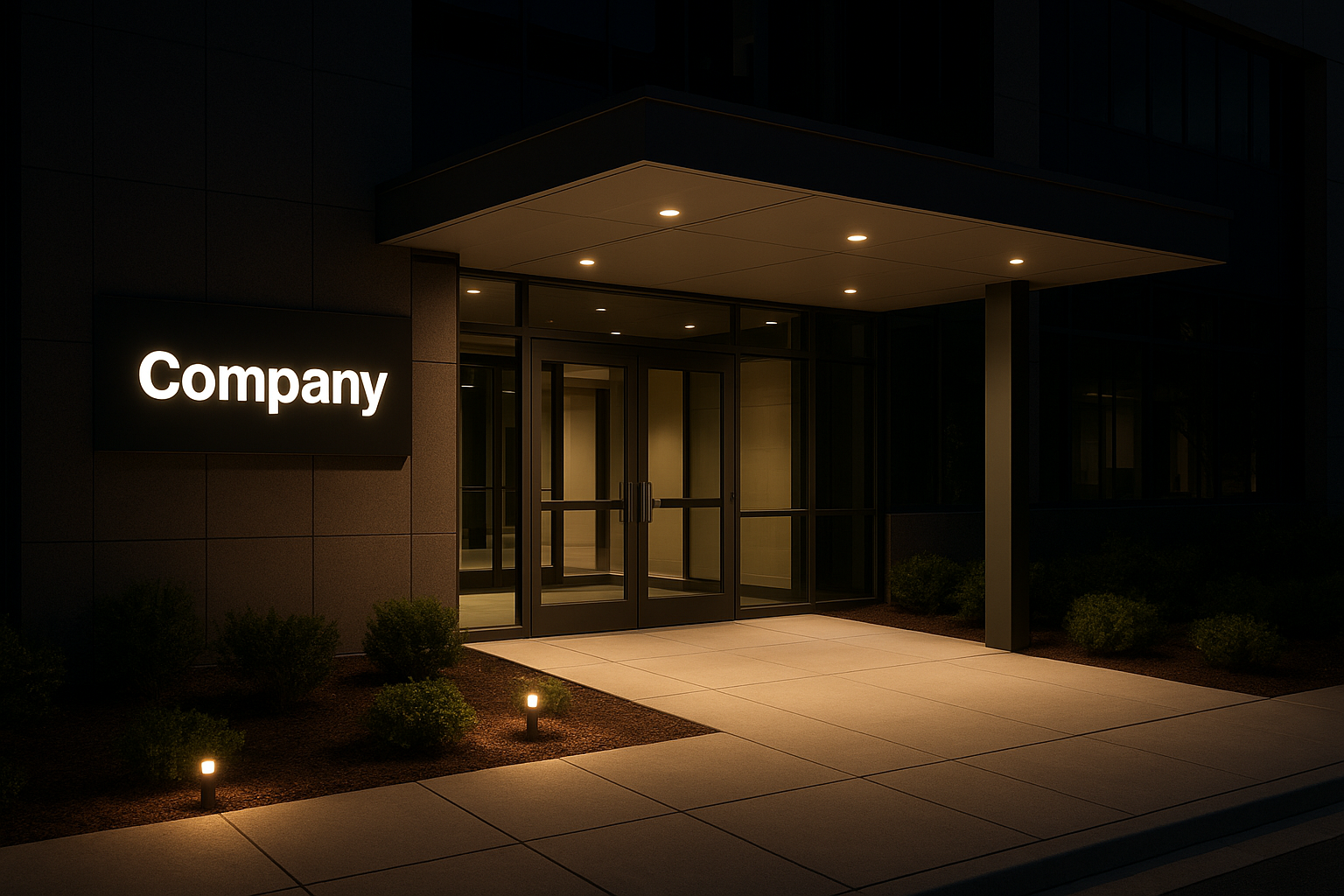
Purpose: Welcome visitors with comfortable, down‑shielded light and clear wayfinding.
Recommended fixtures: Full cut‑off canopy luminaires or down‑shielded wall‑packs.
Mounting & controls: Surface‑mount under canopies or on adjacent walls; photocell plus time scheduling and optional late‑night dimming.
Down‑shielded canopy light provides even vertical illumination at doors to improve face and signage visibility while minimizing spill and glare to neighbors.
Occupancy and daylight: Use occupancy/vacancy sensors liberally in open offices, corridors, restrooms, stairwells, and parking. Add daylight-responsive dimming by windows to keep levels steady.
Scene presets: In lobbies and meeting rooms, scene-based dimming makes it easy to shift mood and balance between ambient and accents.
Emergency: Provide code-compliant egress illumination and signage; coordinate battery/inverter strategies with your engineer and local authority having jurisdiction. For exteriors and parking, align operation to dusk/dawn and activity patterns.
Recessed COB downlights plus linear wall washing create a layered, premium feel; add a statement pendant only as a focal accent, not the sole light source.
Favor low-glare LED panels or direct-indirect linear runs, avoid exposed bright points in sightlines, and pair with daylight-responsive dimming to keep levels balanced.
A neutral, consistent tone across zones reads refined; pair with soft vertical light so materials and faces render comfortably (choose exact values with your designer).
Use recessed linear or panel ambient for baseline, add perimeter wall wash to soften contrast near screens, then layer selective downlights for tables and art—controlled by scene presets.
Yes—egress paths typically require dedicated emergency capability. Coordinate fixture selection and circuits with your electrical engineer and the local authority having jurisdiction.


