Author: Huang Publish Time: 05-02-2026 Origin: Site


If you’re choosing fixtures room by room, you’re already thinking the right way. The most reliable results come from matching light to what each zone must do—welcome, guide, relax, delight, or focus.
This 2026 guide keeps specs light and decisions simple. For each area we name the fixture archetypes that work, why they work, and only the ranges you need to brief vendors fast—CCT, CRI, UGR, and controls. Think of it as hotel LED lighting by area, distilled for usability and guest comfort.
▍Soft CTA: Prefer a quick explainer before you dive in? See the practical overview LED Panel Lights — Where To Use Them And How To Choose on our site for control and spec basics.
We scored each recommendation against seven dimensions: zone usability fit, glare and visual comfort, installation or retrofit ease, controls and tunability, efficiency and compliance, build quality and warranty, and total cost of ownership and availability. We prioritized anti-glare comfort and the zone’s purpose first, with minimal parameters to speed procurement.
Standards context: For illuminance and UGR concepts used by practitioners, see the EN 12464 overview in Helvar’s guide under the page EN 12464 — lighting of indoor work places. For glare reduction methods such as honeycomb baffles and deep-regressed trims, ERCO’s UGR knowledge page offers a concise explanation. For color temperature choices across commercial spaces in 2026, review the Action Services Group commercial color temperature guide.
Controls context: Digital addressability and sensor strategies are well summarized by the DALI Alliance on its DALI at a glance page.
▍Internal resource for buyers: For a primer on panel types, drivers, and use cases, read LED Panel Lights — Where To Use Them And How To Choose on our site.
▍Disclosure: KEOU Lighting is our product. We evaluated it using the same criteria and evidence standards as every other option in this list.
External sources cited in this guide:
EN 12464 overview — Helvar: EN 12464 — indoor lighting and UGR concepts
UGR method and glare reduction — ERCO: How UGR works and ways to reduce glare
CCT choices in 2026 — Action Services Group: Commercial color temperature lighting guide
Digital controls — DALI Alliance: DALI at a glance
Below is a quick selector to brief suppliers and align your team. Price ranges are indicative for 2026 and vary by region, volume, and specification.
Zone | Primary fixture | CCT range | UGR or CRI note | Controls | Install type | Approx. price range |
Lobby or reception | Anti-glare recessed downlight with decorative pendant or cove | 2700–3000K | UGR ≤22 in circulation, ≤19 at desks; CRI ≥90 | Scene presets on DALI‑2 or 0–10V | Recessed plus suspended | $25–$120 per downlight; $150–$1,200+ per pendant |
Corridors and elevator halls | Continuous linear or recessed downlights with sensors | 2700–3000K | UGR ≤22 | Presence detection with DALI‑2 or wireless | Recessed or surface | $20–$60 per ft linear; $20–$80 per mini downlight |
Guestrooms | Anti-glare recessed ambient with bedside reading | Ambient 2700–3000K; task 3500–4000K | UGR ≤19 near beds and desks; CRI ≥90 | Wall dimmer or DALI‑2 groups | Recessed plus surface | $25–$120 per downlight; $30–$150 per reading head |
Restaurant or bar | Table pendants with dimmable accents | 2700–3500K | CRI ≥90 for food and materials | Scene dimming on DALI‑2 or 0–10V | Suspended plus recessed or track | $150–$1,200+ per pendant; $60–$250 per track head |
Meeting rooms or ballrooms | Low‑UGR panels or linears with sceneable downlights | 3500–4000K | UGR ≤19 | Scenes, daylight and occupancy via DALI‑2 | Recessed or suspended | $40–$180 per panel; $30–$100 per ft linear |
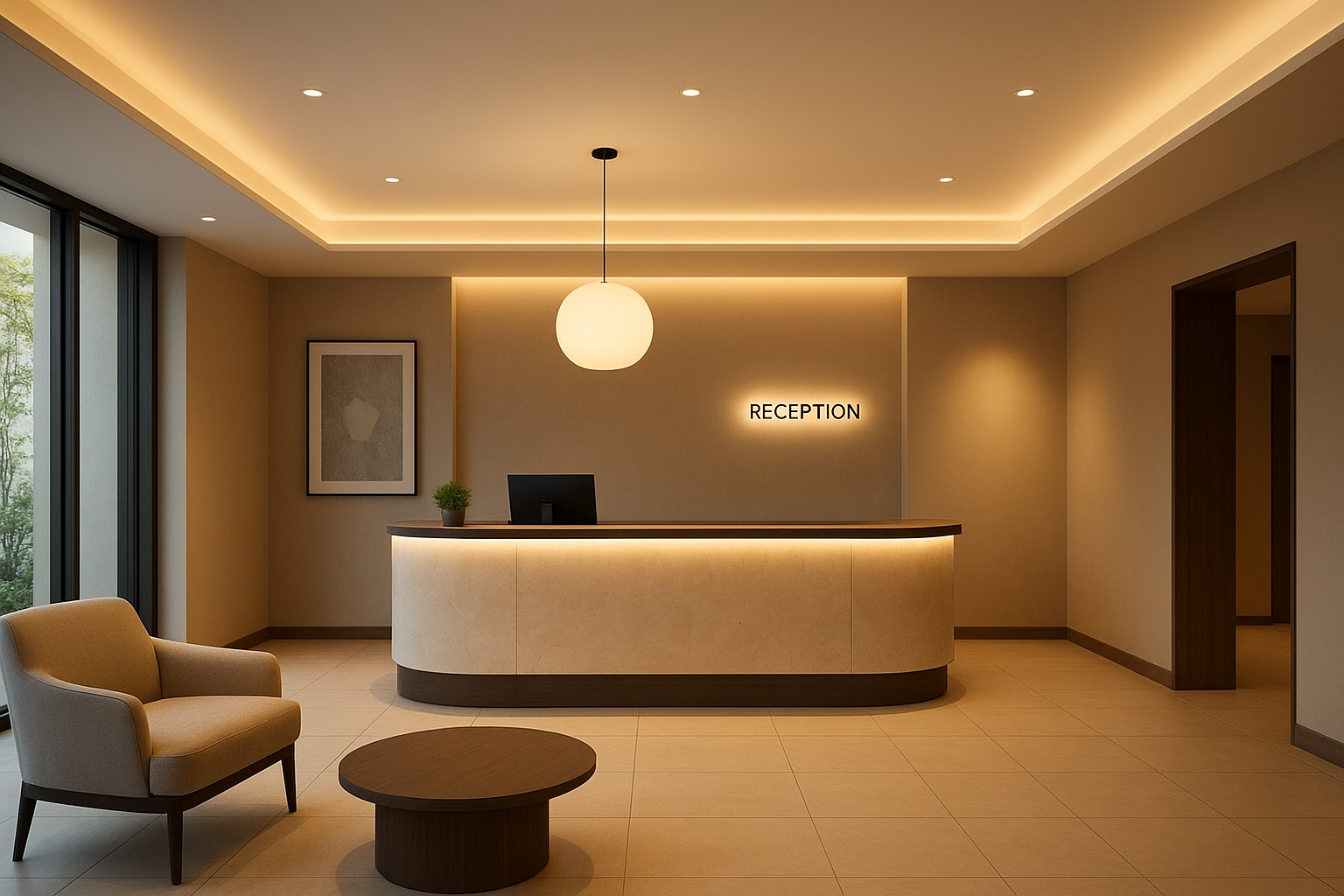
The lobby has to look inviting from a distance and feel comfortable up close. Combine glare-controlled recessed downlights for safe wayfinding with decorative pendants or coves that set brand tone. Warmer color temperatures help the welcome feel, and scene control lets you shift between day, event, and night.
Use anti-glare recessed downlights to create a uniform base layer, then add soft coves to brighten ceilings and balance vertical light at the reception. This pairing reduces harsh contrasts so guests’ eyes adapt smoothly when they step inside.
Why it works: Honeycomb baffles or deep trims cut direct line-of-sight brightness for comfort while coves provide a gentle halo that enlarges the space visually.
Ranges to brief: 2700–3000K, CRI ≥90, UGR around ≤22 for circulation and ≤19 for the reception desk.
Choose a statement pendant over reception and complement it with discrete accents on art and signage. You get a memorable focal point without losing practical visibility.
Why it works: The pendant defines the brand moment; accent lights guide foot traffic and add sparkle when dimmed for evening.
For retrofit ceilings, 3CCT downlight kits keep cutouts and drivers simple while giving you on-site color decisions.
Why it works: You avoid re-plastering and can match brand warmth property by property.
Where to explore: See anti-glare downlights options in our downlights catalog.
CCT range: 2700–3000K warm hospitality tone.
Glare target: UGR ≤22 in open circulation; ≤19 at task counters per common practice.
Controls: DALI‑2 scenes or 0–10V, with a simple day‑evening‑night preset set.
Price orientation: Downlights $25–$120; decorative pendants $150–$1,200+ depending on design and finish.
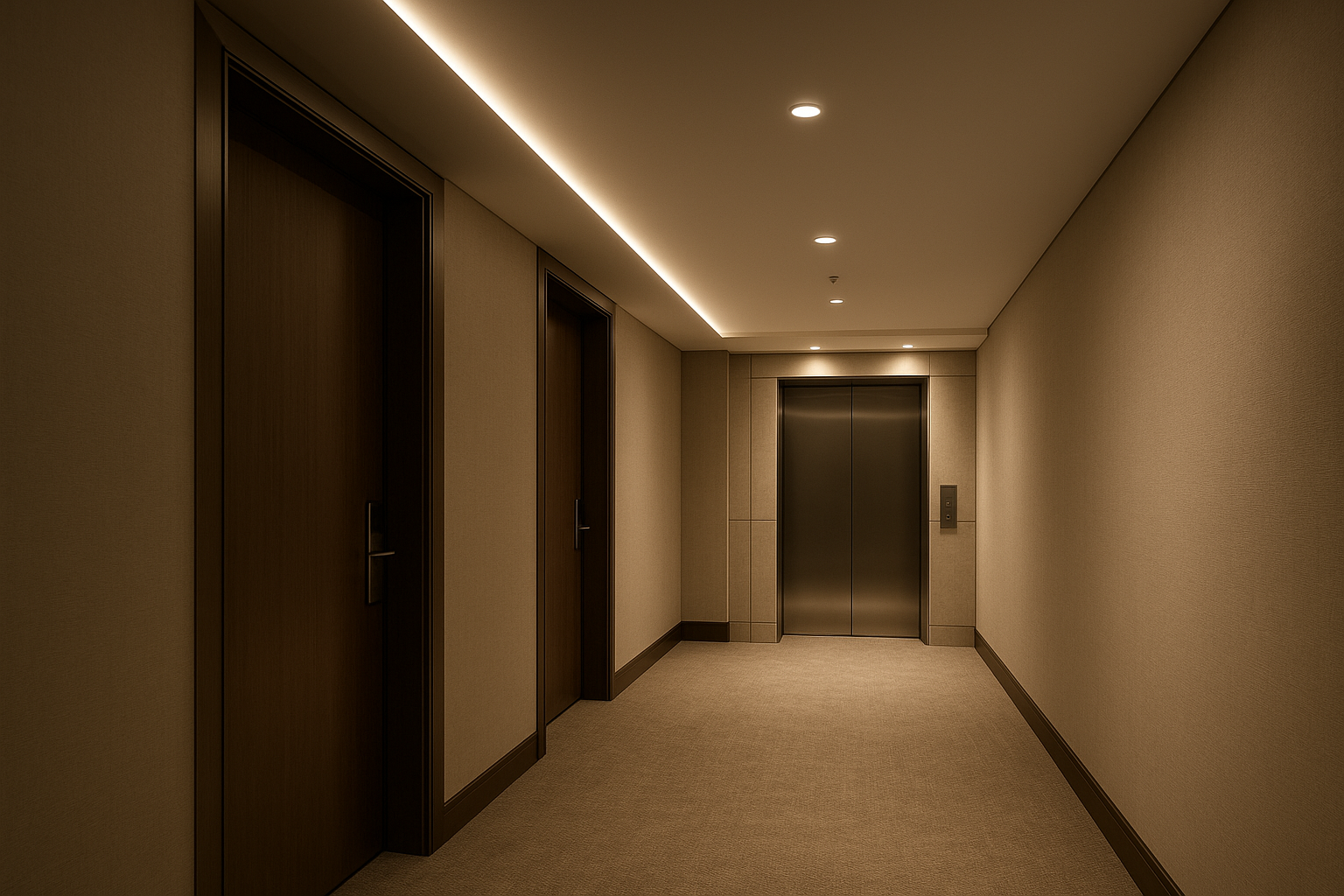
Circulation lighting should feel calm and never patchy. Continuous linears or well‑spaced recessed downlights provide even guidance, and sensors reduce energy without sacrificing safety.
2.1 Primary pick — low‑profile linears with sensors
A continuous or regularly spaced linear provides consistent ceilings and avoids scallops on carpet and walls. Add presence detection to dim to a safe background when empty and step up on approach.
Why it works: Uniformity eases navigation and reduces shadows; occupancy control cuts wasted burn hours.
2.2 Runner‑up — recessed mini downlights
If the ceiling design favors points of light, mini downlights with proper spacing can deliver similar uniformity.
Why it works: Small apertures disappear into the ceiling while still giving enough light for egress.
For ceiling constraints, surface strips avoid plenum work and still allow sensor grouping.
Why it works: Minimal disruption and fast install on long runs.
CCT range: 2700–3000K for comfort.
Glare target: UGR ≤22 typical for circulation.
Controls: Presence detection and corridor hold levels via DALI‑2 or wireless nodes.
Price orientation: Linear $20–$60 per ft; mini downlights $20–$80 each.
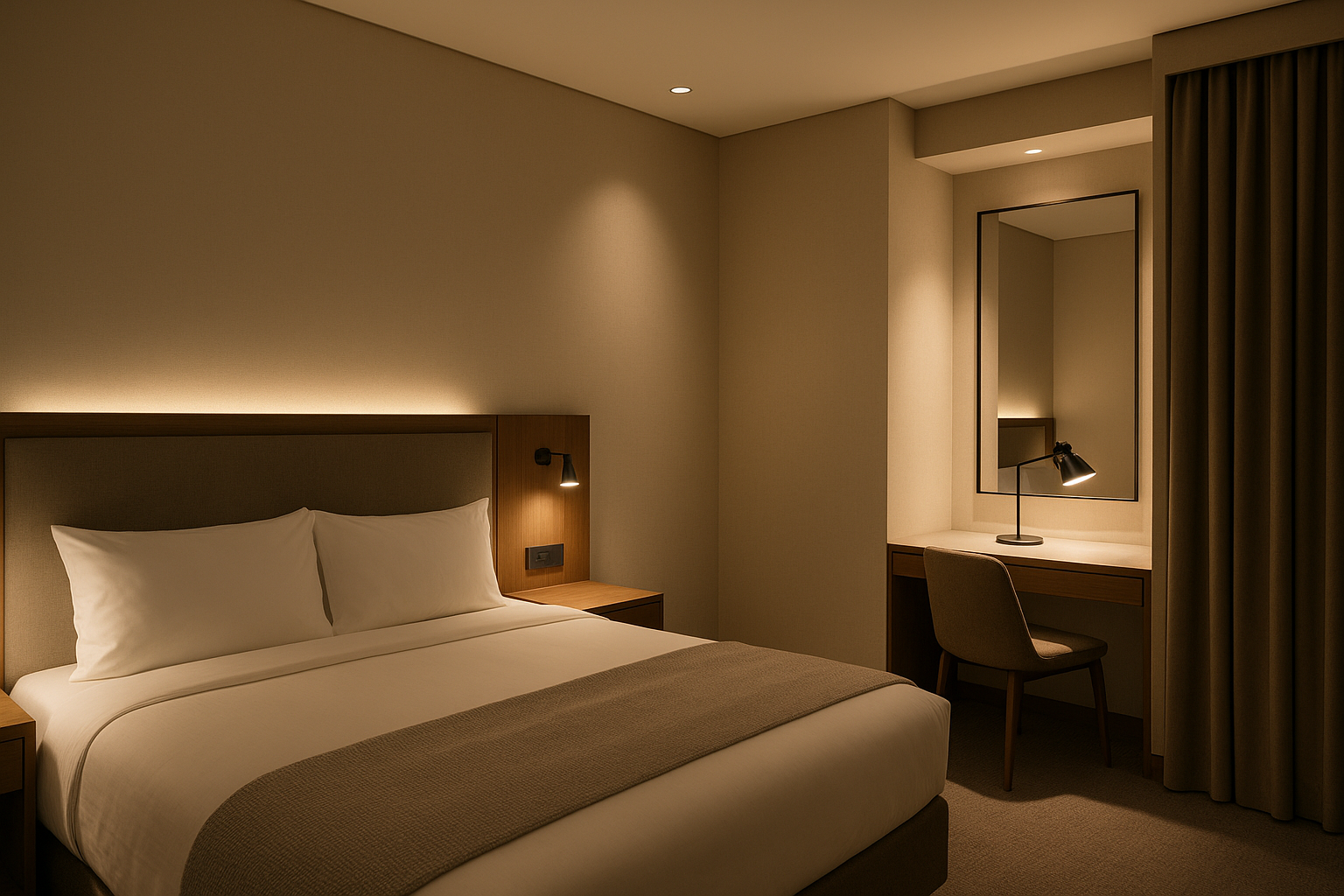
Guests need a space that winds down easily but supports reading, grooming, and desk tasks on demand. Build layers: soft ambient recessed light, focused bedside reading, and a crisp vanity task source. This is where anti‑glare discipline shines.
Use deeper-trim or honeycomb downlights for ambient light, paired with flexible reading heads at the bed and a high-clarity vanity luminaire.
Why it works: Reduced glare avoids eye fatigue when lying down; targeted task sources improve usability without flooding the room.
Ranges to brief: Ambient 2700–3000K, task 3000–4000K, CRI ≥90, UGR ≤19 near beds and desks.
Decorative wall lights add a cozy layer; add a couple of tight-beam micro-accents to pick up art or textures.
Why it works: Visual variety with less ceiling work, while maintaining reading and grooming performance.
Where ceilings are shallow or cutouts are irregular, slim 3CCT panels give broad ambient coverage with minimal depth.
Why it works: Clean look, fast install, and on‑site tuning of warmth.
Where to explore: Browse 3CCT panel choices in our panel lights catalog.
CCT range: 2700–3000K ambient; 3500–4000K for task.
Glare target: UGR ≤19 at task areas.
Controls: Simple wall dimmer scenes or DALI‑2 groups; bedside controls for reading.
Price orientation: Downlights $25–$120; reading heads $30–$150; vanity bars $40–$200.
▍Soft CTA: Need glare‑controlled retrofit picks fast? KEOU Lighting supports simplified retrofit workflows with anti‑glare downlights and 3CCT panel fixtures. Confirm specs and documentation with our team during quoting.
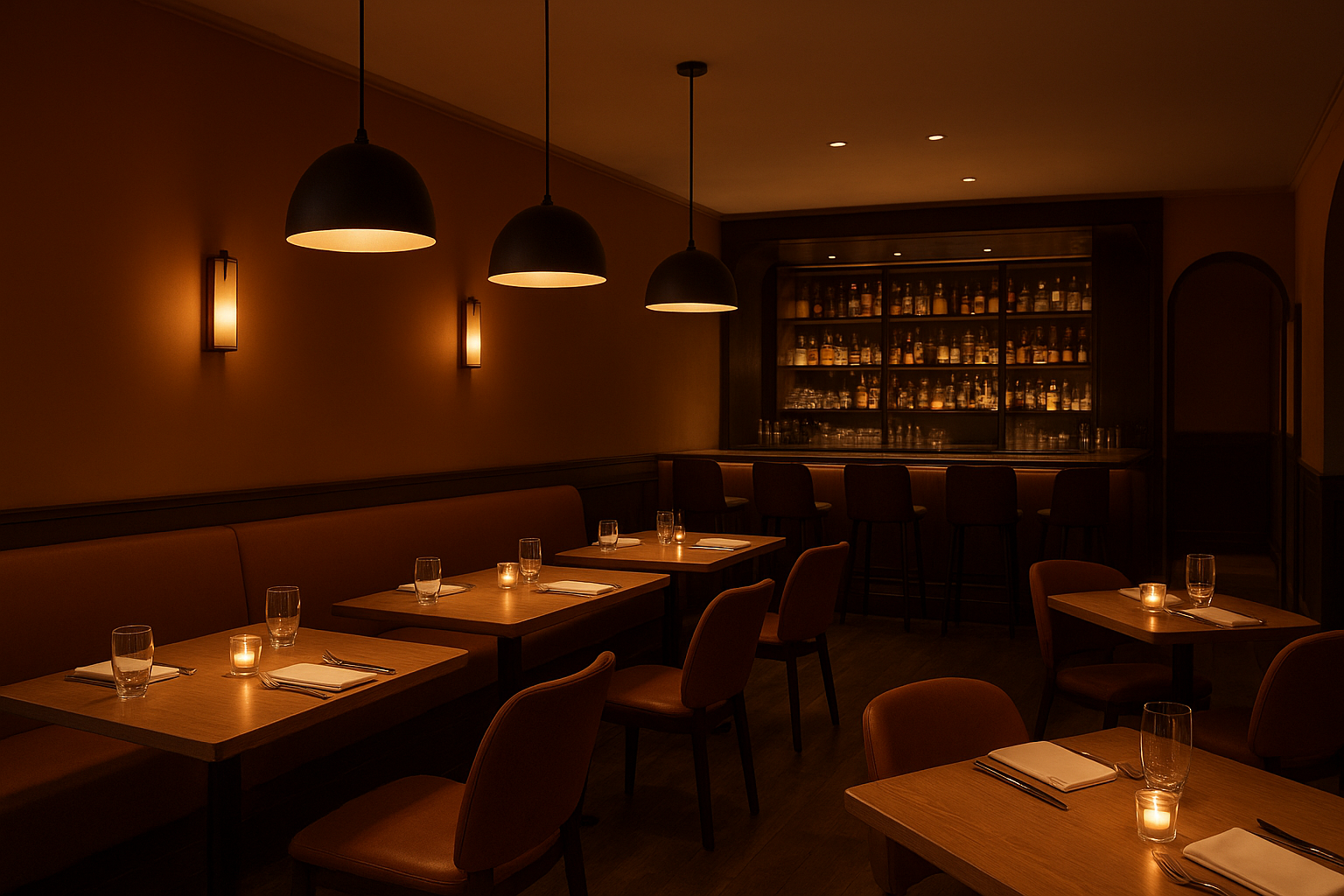
Dining areas lean on color quality and dimmability. Table pendants, discrete accents, and warm ranges create intimacy while keeping menus readable. Control scenes carry you from lunch brightness to evening glow without fuss.
Place pendants centered over tables and add a light layer of accents for sparkle.
Why it works: Guests look great, food looks better, and spill light is controlled for comfort.
Ranges to brief: 2700–3500K with CRI ≥90.
A soft cove around the perimeter with a few spot accents delivers a calm envelope with focal points on artwork or bottles.
Why it works: Even background light with flexible highlights for feature walls and displays.
Track lets you reuse existing circuits and re‑aim easily after layout changes.
Why it works: Adaptable for seasonal rearrangements or events.
CCT range: 2700–3500K.
Color quality: CRI ≥90.
Controls: Scene dimming on DALI‑2 or 0–10V; keep minimum levels consistent to avoid flicker.
Price orientation: Pendants $150–$1,200+; track heads $60–$250; recessed accents $40–$180.
Teams need alertness for presentations and softer looks for workshops or banquets. Pair low‑UGR panels or linears for the base with sceneable downlights and, where needed, tunable white to shift tone by activity.
Start with microprismatic or louvered optics that keep UGR at or below 19, then add downlights zoned to the stage, screen, or round tables.
Why it works: Crisp, wide beams reduce hotspots; scenes snap between Present, Discuss, and Dining modes.
If budgets are tighter, troffers with good diffusers can achieve comfortable luminance.
Why it works: A familiar form factor with lower upfront cost and decent comfort when specified well.
Use 0–10V panels and add wireless scene controls or daylight sensors where pulling new control wire isn’t feasible.
Why it works: Retrofits faster while still achieving practical scenes.
CCT range: 3500–4000K for focus.
Glare target: UGR ≤19.
Controls: DALI‑2 scenes and daylight harvesting where possible; wireless add‑ons for retrofits.
Price orientation: Panels $40–$180; architectural linears $30–$100 per ft; downlights $40–$180.
Lobby snapshot: A 300‑room city hotel shifted to anti‑glare downlights with warm coves in the lobby. The team set day‑evening‑night scenes on DALI‑2 and reported fewer guest complaints about glare at the reception desk. Install occurred floor by floor with minimal front‑of‑house disruption.
Guestroom snapshot: A resort upgraded guestrooms using slim 3CCT panels for ambient light, plus deeper-trim reading downlights. The design team tuned rooms to 2700K ambient and 3500K at task, noting better guest reviews for bedtime comfort and makeup clarity at vanities.
Lobby: Add a couple of 15–30° accents for sculpture and signage pop.
Corridors: Consider wall‑washer optics for art corridors where even vertical light matters.
Guestrooms: A bedside control keypad that toggles all layers keeps UX simple.
Restaurant: A small pool of uplight over bars lifts ceiling mood without dazzling patrons.
Meeting rooms: Add an occupancy‑based energy scene that holds a safe minimum level when empty.
Use 2700–3000K for ambient relaxation and 3000–3500K for task light at desks and vanities. Keep CRI at or above 90 for accurate colors.
Q2:How do I reduce glare in guestroom downlights?
Specify UGR near or below 19, use honeycomb baffles or deeper trims, and avoid direct sight lines from the bed. Aim accents carefully or offset them from the headboard.
Q3:Can I retrofit LED panels into existing hotel ceilings?
Often yes. Verify ceiling depth, driver location, and existing cutouts. Slim panels and COB downlights are common retrofit‑friendly options.
As a starting point: lobby downlights $25–$120 and designer pendants $150–$1,200+; corridors linear $20–$60 per ft; guestrooms reading heads $30–$150 and vanity $40–$200; meeting room panels $40–$180. Confirm with quotes.
Use tunable white where you need flexible scenes or circadian cues, especially in meeting rooms. 3CCT is a cost‑effective alternative for brand‑consistent warmth in lobbies and guestrooms.