Author: Huang Publish Time: 06-01-2026 Origin: Site


 You need to understand LED light certifications if you want to succeed in the Middle East and South America in 2026. These certifications help you open new markets, keep your products safe, and meet local rules. If you ignore them, you may face fines or have to recall your products. Early preparation brings many benefits:
You align your led products with the latest standards and boost your market access.
You lower your risk of breaking new rules and improve your compliance rates.
You save money by avoiding penalties and costly recalls.
You build trust with buyers and enter tough markets with confidence.
Learn about LED certifications to enter new markets and keep products safe.
Keep up with local rules so you do not get fined or have products taken back.
Get Product and Shipment Certificates to sell in the Middle East.
Test your products for energy use and safety to meet world standards.
Team up with local partners to follow rules and make products better.
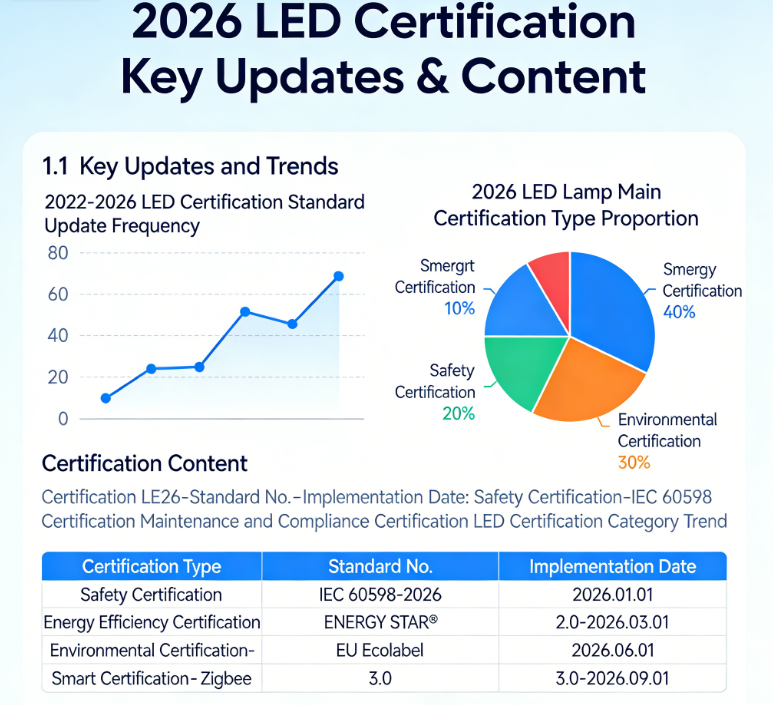
Big changes are coming for led light certifications in 2026. The rules are now tougher than before. You need to check certifications like CE, RoHS, FCC, IC, IEC, ISO, REACH, SASO, and BIS. These certifications help you follow safety and environmental rules.
Global trends affect the led lighting market. Smart lighting is growing fast. AI, IoT, and cloud connections help this growth. More than 36% of smart homes use adaptive lighting now. Standards are not the same everywhere. About 42% of makers have delays because rules are different. This slows down new products and market entry. People want energy-saving solutions more. Around 29% of commercial buildings use lighting automation to save energy.
Certification rules for led products are stricter
Smart lighting and adaptive systems are growing
Different standards in regions slow down market entry
Energy efficiency and automation are more important
Led light certifications help you sell in global markets and keep your business safe. These certifications show your led products meet strict rules. You build trust with buyers and keep products safe.
Tip: Certified makers get into new markets faster and avoid costly delays.
The table below shows how certifications help your products:
| Aspect | Evidence |
|---|---|
| Safety | Certifications like UL Listed show LED lights meet safety rules and lower risks of burns and electrocution. |
| Quality Assurance | Certified products prove they work well and protect buyers from fake products. |
| Environmental Considerations | Certified products save more energy and help the planet. |
You make quality better and support the environment when you follow certification rules. You also follow compliance rules and help led light strips work better. Led light strips must meet rules for safety, energy saving, and environmental impact. You protect your name and keep your products selling.
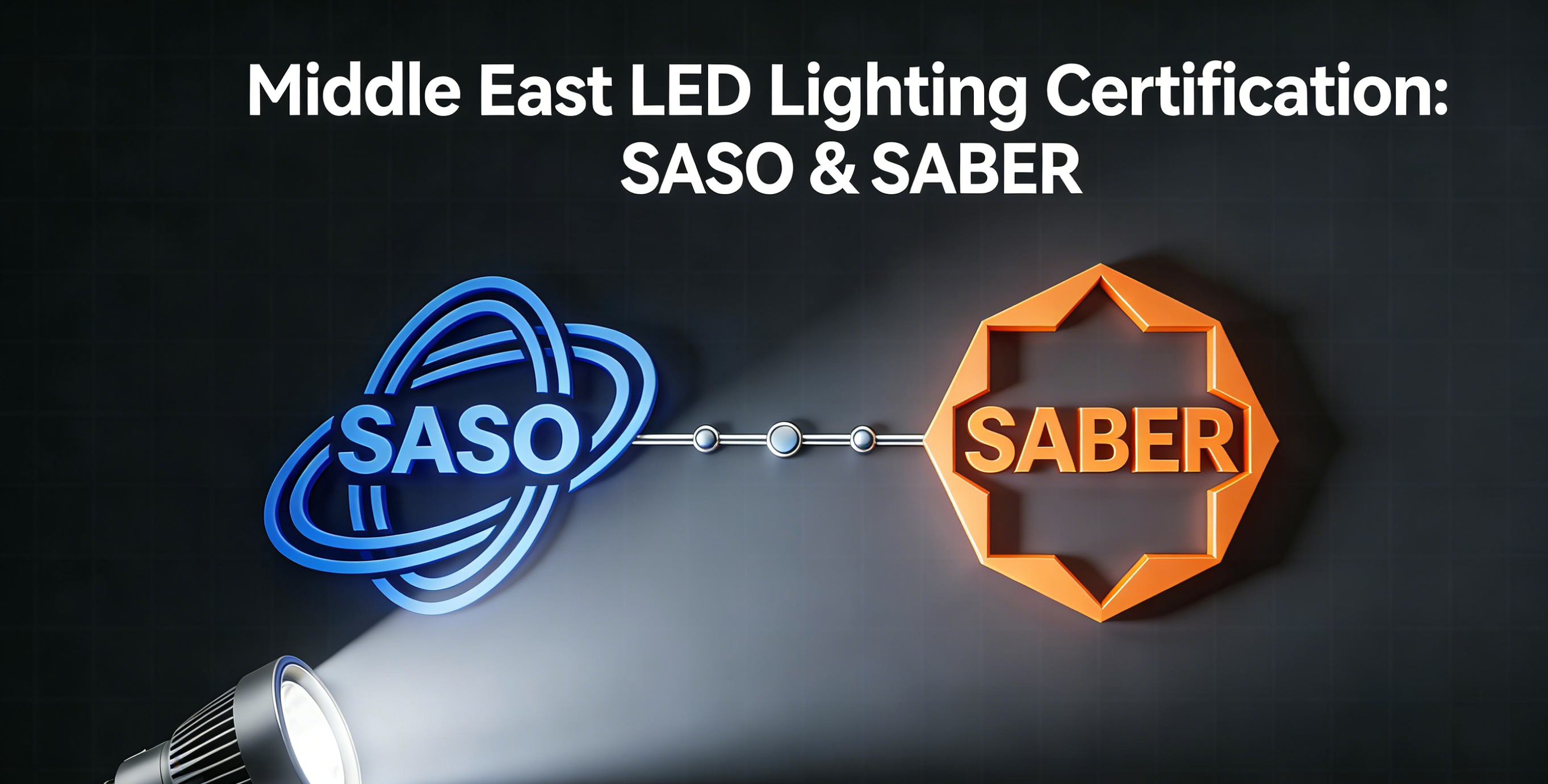
You need to know about SASO and SABER to sell led lighting in the Middle East. SASO is the group that sets safety and quality rules. SABER is a website that helps you get your products checked. These certifications make sure your led products are safe and good quality before selling.
Getting led light certifications in Saudi Arabia has two steps. First, you put your led lighting products on the SABER website. Next, you get a Product Certificate of Conformity (PCoC) for each product. After that, you need a Shipment Certificate of Conformity (SCoC) for every shipment. This checks if your led light strips and other lights follow all safety and rule requirements.
| Certification Stage | Description |
|---|---|
| Product Certificate of Conformity (PCoC) | Needed for every product, showing it follows the right rules. |
| Shipment Certificate of Conformity (SCoC) | Given after checking a valid PCoC for each shipment. |
You must do these steps for all led lighting, like led light strips, bulbs, and fixtures. The rules cover many things, such as:
Low Voltage Electrical Equipment and Appliances
Lighting & Renewables (including led bulbs and led light strips)
Building Materials
Fire Fighting Equipment
Telecommunications Devices
Auto Spare Parts
If you miss any step, your products may not get sold. You could also get fined or have to take back your products.
The GCC Mark is another important certification for led lighting in the Middle East. You need this mark to sell led products in GCC countries. The GCC Mark shows your led lighting meets safety and energy rules.
You must test your led light strips and other lights for energy use and safety. The GCC Mark checks for energy saving, electrical safety, and environmental impact. You need to show your led products save energy and keep people safe. This helps you follow rules and meet green goals.
Many Middle Eastern countries care about saving energy now. For example, Saudi Arabia’s Vision 2030 plan wants 30% local content from green sources. The UAE uses Estidama, which sets green building rules. Dubai uses Al Sa'fat, which links green rules to energy and resource use.
| Compliance Strategy | Key Requirements |
|---|---|
| Vision 2030 (Saudi Arabia) | 30% local content from green sources, cost checks, fair work rules |
| Estidama (UAE) | At least 1 Pearl for new buildings, 2 Pearls for government projects, follow 79 green rules |
| Al Sa'fat (Dubai) | Green rules that help save energy and resources |
You need to check which rules fit your led lighting in each country. This helps you avoid problems and keeps your products selling.
You must make sure your led lighting matches local voltage and rules. Most Middle Eastern countries use 220-240V for lights. If your led light strips or bulbs do not fit these voltages, they may not work or could be unsafe.
Each country may have its own led lighting rules. You need to check rules for safety, energy saving, and environmental impact. Some places want extra tests for led light strips to make sure they work locally. Always look at the newest rules before you send your products.
Note: Always test your led lighting for the right voltage and follow local rules. This keeps people safe and helps you follow the law.
You can do well in Middle Eastern markets if you follow these tips:
Put your led lighting products on the SABER website early.
Get both the Product Certificate of Conformity (PCoC) and the Shipment Certificate of Conformity (SCoC) for each product and shipment.
Check if your led light strips and other lights need the GCC Mark.
Test your products for energy saving and safety.
Match your led lighting to local voltage and rules.
Stay updated on new rules and green goals in each country.
Work with local partners to learn market needs and quality checks.
Certified makers who follow these steps can sell in new places faster and avoid big mistakes. You build trust with buyers and keep your led lighting safe and strong. Meeting all rules helps you grow and support green goals.
You have to meet INMETRO rules to sell led lighting in Brazil. INMETRO is the top group for certifications in Brazil. It checks if your led products are safe and work well. You need to test your led light strips in special labs. You must pass these tests before you can sell.
The table below shows which led lights need INMETRO and where you use them:
| Product Type | Certification Status | Application Area |
|---|---|---|
| SafeSite High Bay | INMETRO Certified | Zone 1 and Zone 2 |
| Area Light | INMETRO Certified | Zone 1 and Zone 2 |
| Wallpack | INMETRO Certified | Zone 1 and Zone 2 |
| Emergency Wallpack | INMETRO Certified | Zone 1 and Zone 2 |
You must follow Brazilian rules like NBR IEC 62560. These rules focus on safety and saving energy. You need to check voltage because Brazil uses 127V and 220V at 50Hz or 60Hz. If your led light strips do not match, they may break or be unsafe.
You need NOM certification to sell led lighting in Mexico. NOM is the main rule for safety and how products work. You must test your led light strips in labs approved by Mexico. You must pass these tests to get certified.
The table below lists the main NOM rules for led lighting in Mexico:
| Standard Code | Description |
|---|---|
| NOM-030-ENER* | Luminous Efficiency of Integrated Light Emitting Diode (LED) Luminaires for General Lighting |
| NOM-031-ENER* | Energy Efficiency of Light Emitting Diode (LED) Luminaires for Roadways and Public Outdoor Areas |
You must follow NOM-030-ENER-2016 for general lighting. This rule covers led lights with voltages from 100V to 277V and 50Hz to 60Hz. You need to check color temperature, light efficiency, luminous flux, and shock resistance. These things help your led light strips work well and last longer.
The new rule NOM-030-ENER-2016 tells how to test LED lights.
It is for LED lights with voltages of 100 V to 277 V AC and 50Hz to 60Hz.
Important things are color temperature, light efficiency, luminous flux, and shock resistance.
You must check local rules and voltage in each South American country. Each country has its own rules for led lighting and led light strips. You need to match your products to local voltage and frequency. If you ignore these, your products may not work or be unsafe.
| Country | Voltage (V) | Frequency (Hz) | Certification Required |
|---|---|---|---|
| Brazil | 127/220 | 50/60 | INMETRO |
| Argentina | 220 | 50 | Required |
| Chile | 220 | 50 | Required |
| Mexico | 127 | 60 | Required |
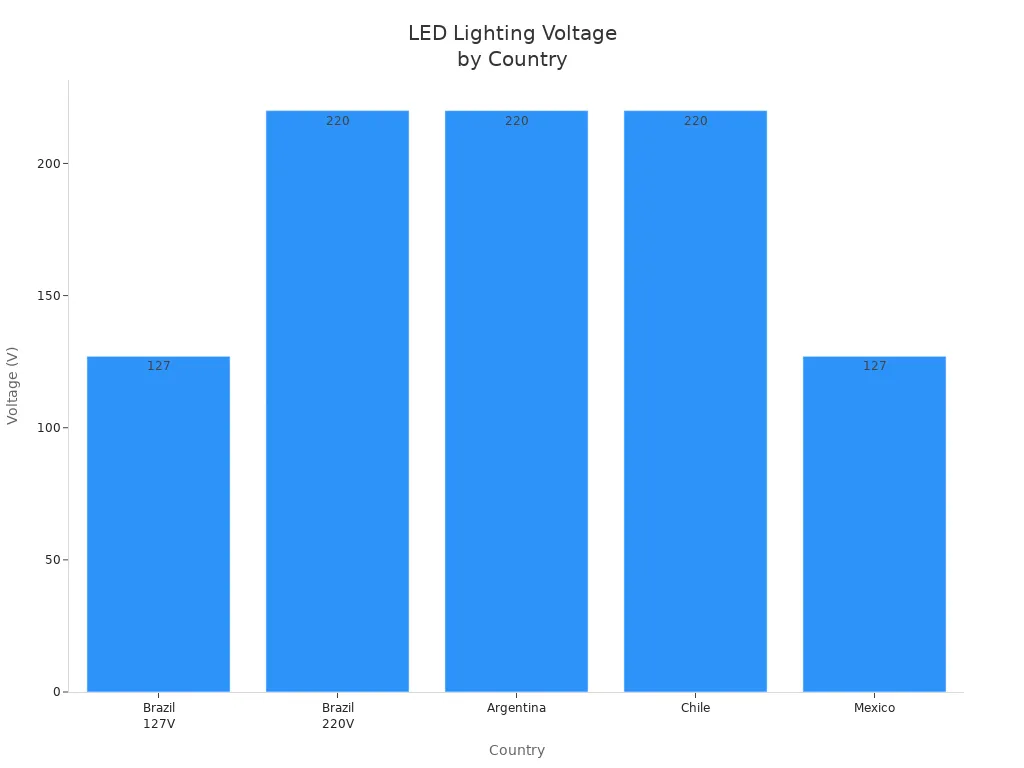
You must follow local rules for led light certifications. You need to check if your led light strips match the voltage and frequency for each place. This helps you avoid problems and keeps your products safe.
The table below shows the main differences between NOM and INMETRO:
| Aspect | NOM Certification | INMETRO Certification |
|---|---|---|
| Regulatory Body | Mexican government | Brazilian authorities |
| Focus | Safety, quality, and performance standards | Safety, quality, and energy efficiency standards |
| Mandatory in | Mexico | Brazil |
| Specific Standard | NOM-001-SCFI-2018 | NBR IEC 62560 |
| Testing Requirements | Testing in accredited labs for compliance with NOM-001-SCFI-2018 | Testing in accredited labs for compliance with NBR IEC 62560 |
| Certification Process | Must pass tests to obtain NOM certification | Must pass tests to obtain INMETRO certification |
You can do well in South America if you follow best practices for led light certifications. You need to follow world rules to make sure your led light strips are safe. You should check if your suppliers have ISO 9001. This helps you keep good quality.
You need to look for regional certifications like INMETRO in Brazil. You should set up quality checks like Incoming Quality Control (IQC), In-Process Quality Control (IPQC), and Final Quality Control (FQC). You must do factory audits to check how things are made. You need to review quality papers like ISO certificates and test reports. This helps you avoid problems from bad products.
Tip: Always use certified photocells and sensors for your led light strips. Non-certified parts can break fast because of voltage changes and high humidity. You need basic certifications like UL773 and CE to join government projects and grants.
Certifications such as UL Listed, ETL, RoHS, and FCC help you meet safety and environmental rules. These certifications lower energy use and pollution. You help the planet and support a cleaner future. You need to follow these rules to keep your led lighting strong in world markets.
You must avoid common mistakes. Many problems happen because makers use cheap photocells that cannot handle voltage changes. These parts burn out fast and need to be replaced often. Cheap sensors do not work well in high humidity. You need to use certified makers and follow all rules for led light strips and lighting.
Note: Always check local rules and voltage before you enter a new market. This helps you meet all requirements and keeps your products safe.
You must follow some steps to get led lighting certifications. First, check what each market needs. Gather all technical papers for your led light strips and lights. Register your products with the right group in each area. Fill out your application and pay the fees. Next, send your led light strips to approved labs for testing. Wait for the results and look at any feedback. If your products pass, you get the certification. Certified makers can then sell their led lighting in new places.
Here is a simple checklist for your application:
Check the newest rules for led lighting.
Gather all technical papers for your led light strips.
Register your products with the right authority.
Fill out your application and pay the fees.
Send your led light strips for testing.
Wait for test results and fix any problems.
Get your certification and start selling.
Tip: Always keep copies of your papers and test reports. This helps with quality checks and renewals.
You need the right papers to meet certification rules. For 2026, include the newest technical standards for led light strips and lights. The table below shows the main papers you need:
| Document Type | Effective Date |
|---|---|
| SSL V6.0 Technical Requirements | January 5, 2026 |
| LUNA Technical Requirements V1.0 | January 5, 2026 |
Testing is very important. Labs will check your led light strips for safety and energy use. They also test how well your products work. You must meet strict rules for light, color, and how long they last. The table below lists the main tests:
| Testing Protocols | Description |
|---|---|
| Luminous efficacy | Measures how much visible light comes out compared to power used (lm/W). |
| Color characteristics | Checks color temperature (Kelvin) and color rendering index (CRI). |
| Lifetime and reliability | Tests how long products last using fast aging tests. |
| Electrical safety | Checks if products follow electrical safety rules to stop hazards. |
| Thermal management | Looks at how well heat moves away to stop overheating. |
| Environmental and energy efficiency | Tests energy use and checks if products follow green rules. |
| Performance tests | Includes IES rules like LM-79, LM-80, and IEC rules like IEC 62612. |
| Certification services | Offers Energy Efficiency Testing, Performance Testing, and Fast Reliability Testing. |
You must follow these steps and have all papers ready to follow the rules. This helps you meet world standards, protect the planet, and keep your led light strips safe and strong in every market.
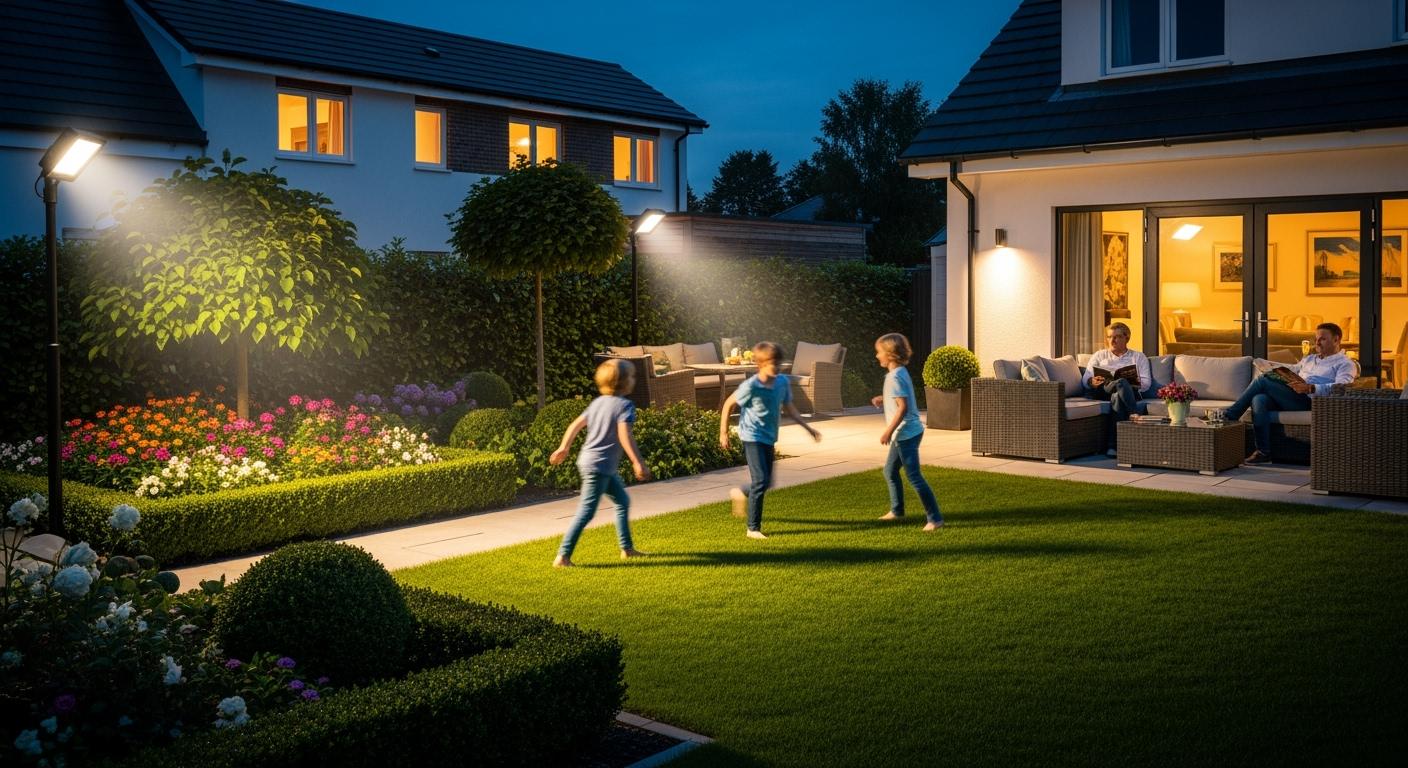
You can stop many problems if you follow the right steps for led light strips and lighting. Many makers have trouble when getting certifications. Some common mistakes are:
Led driver problems that make lights stop working.
Lights flicker because they do not match the circuits.
Electromagnetic interference that bothers other devices nearby.
Fixtures get too hot from bad setup or not enough air.
Not following local building codes for commercial lighting.
Missing energy rebates or tax breaks by not meeting rules.
Certification and labeling can seem hard. The process may cost a lot and take time. Every region has its own rules and standards. These differences make it tough to sell in new places fast. You need to check all rules for led light strips, safety, and saving energy before you begin. Good quality checks help you find problems early and keep your products safe.
Tip: Always check local rules before sending led light strips to new places. This helps you avoid waiting and keeps your products following the rules.
You can do better with compliance if you work with local partners. Luminate Lighting Group is a good example of this. They work with ISO-certified makers to meet rules and help the planet. This keeps led lighting safe and high in quality.
You should talk often with architects, builders, and rule makers. Talking early helps you find problems before you build. When everyone works together, you get new ideas for led light strips and lighting.
Here is an easy way to work with local partners:
Work with ISO-certified makers for energy-saving led retrofits.
Change your designs to fit each market’s rules.
Do energy checks to make sure your led light strips meet all standards.
You build trust and make your products better by doing these things. This helps you meet safety, energy, and efficiency rules everywhere. You also help the planet and keep your led lighting strong in world markets.
You need to check led light certifications for each country. Every country has its own rules for led light strips and lighting. Some places care most about safety. Others care more about saving energy or helping the planet. You must follow the right standards to sell everywhere.
Here is a simple checklist for big regions:
Middle East: Get SASO and SABER for Saudi Arabia. Make sure your led light strips have the GCC Mark and fit local voltage.
Brazil: Pass INMETRO tests for led lighting. Match your led light strips to 127V or 220V.
Mexico: Follow NOM rules for led light strips and lighting. Test for energy use and safety.
Argentina and Chile: Check local rules and voltage for led light strips.
Always check the newest compliance updates for each country. This helps you avoid problems and keeps your led products safe.
You must remember when to renew led light certifications. Most certifications last three years. You need to do continuing education to renew. This helps you learn about new standards and quality checks.
| Certification Type | Renewal Period | Continuing Education Required |
|---|---|---|
| CALT and CSLT | Every three years | 9 hours CE |
| CLCP | Every three years | 24 hours CE |
| CLMC | Every three years | 40 hours CE |
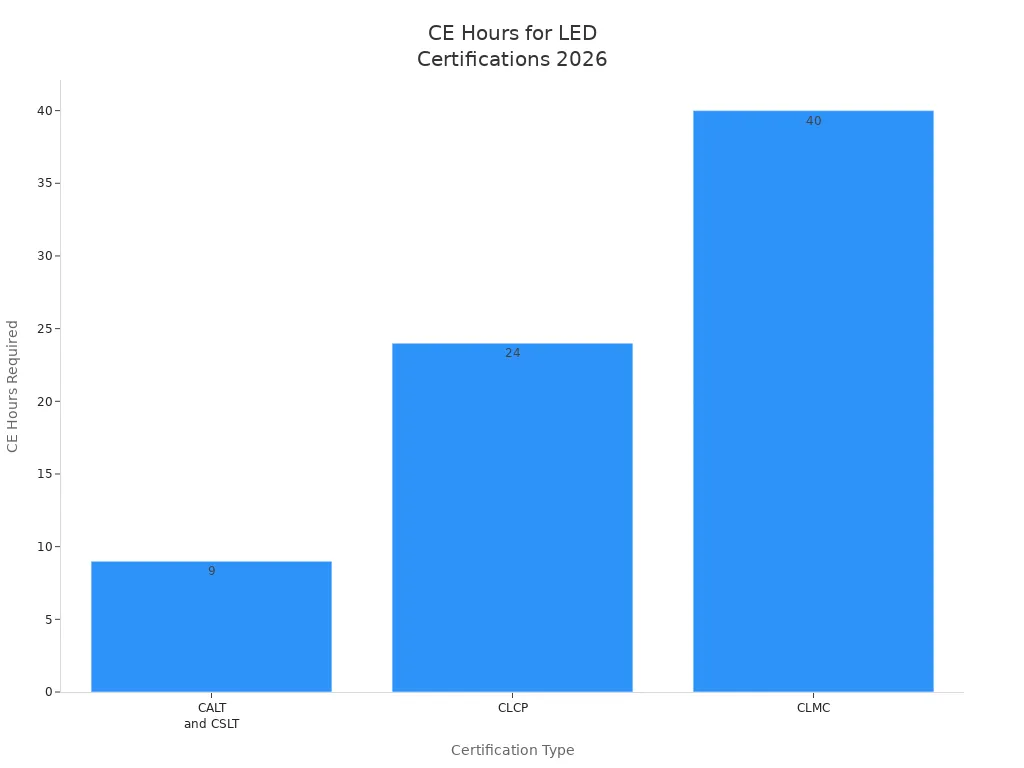
You should set reminders for renewal dates. If you miss a deadline, your led light strips may not be sold. You also need to update your compliance papers and test results. This keeps your led lighting ready for new rules and helps you meet energy and green goals.
Tip: Keep all your led light, compliance, and quality records together. This makes renewals and audits much easier.
You can follow each country’s rules to get 2026 led light certifications. Prepare your documents and test your products. Always check for new rule changes. This keeps your products safe and lets you sell them. Work with local experts to learn about new standards. Check these standards often.
LED certifications show your products are safe and work well.
Knowing the rules helps you avoid fines and make good choices.
Following local rules is important for selling in new places.
If you want more help, use these resources:
| Certification | Description | Key Requirements |
|---|---|---|
| DLC | Checks LED performance for horticulture. | High efficacy, long life, strong warranty. |
| CE | Confirms EU safety compliance. | Low voltage, safe materials, EMC. |
| CSA | Verifies safety for horticultural lights. | PAR output, photon flux. |
| cETLus | North American safety mark. | Meets CSA, safe for North America. |
| RoHS | Reduces hazardous materials. | Needed for California sales. |
| IP65 | Dust and water resistance. | Must meet IP65 rating. |
Be proactive and check your compliance steps often. This helps your business stay strong.
You should check the latest rules for your target country. Gather all technical documents for your products. Register your application with the correct authority. This helps you start the process quickly and avoid mistakes.
Most certifications last three years. You need to renew them before they expire. Set reminders for renewal dates. Update your documents and test results to keep your products ready for new rules.
Each country sets its own safety and energy standards. These rules protect people and the environment. You must follow local laws to sell your led products and avoid fines or recalls.
If you skip a test, your products may not pass certification. You could face fines or have to recall your products. Always complete all required tests to keep your business safe.
No, you cannot use one certification everywhere. Each country has its own rules and tests. You need to get certified for each market where you want to sell your products.