Author: Huang Publish Time: 11-03-2026 Origin: Site


If you’ve ever stepped into a store that felt crisp and inviting by day but cozy by evening, you’ve experienced color temperature (CCT) working behind the scenes. Get it right, and you guide emotion, dwell time, and even basket size. Get it wrong, and the space can feel harsh, flat, or off‑brand.
In this guide, we translate lighting jargon into simple, zone‑by‑zone recipes you can brief to designers and contractors. You’ll see where warmer or more neutral whites make sense, how to tune CCT by time of day, and when color quality and glare control matter most.
▌Soft CTA: Want a one‑page buyer’s checklist that summarizes the ranges below? Download the “CCT by Zone & Daypart” PDF or ask your supplier to assemble it for your next rollout.
Our recommendations reflect common commercial practice and widely referenced guidance. For color rendering, we reference the Illuminating Engineering Society’s TM‑30 framework, which adds fidelity and gamut beyond CRI; see the IES overview in the IES’s TM‑30 resources at the official site: the IES explains TM‑30’s Rf and Rg metrics in the publication index under TM‑30 (2018 and updates) at the IES Standards page. For glare/visual comfort, Unified Glare Rating (UGR) is defined by the Commission Internationale de l’Éclairage (CIE); see the CIE’s publication landing pages on interior glare and UGR for the canonical definition. For workplace and public interiors in Europe, EN 12464‑1:2021 is commonly used for illuminance and UGR application ranges (obtain the official text from CEN or consult reputable summaries). For health and comfort context, the WELL Building Standard v2 includes relevant electric light quality features.
Links for deeper reading:
TM‑30 overview by the Illuminating Engineering Society: the IES explains TM‑30’s Rf/Rg and why it’s more informative than CRI on its TM‑30 page: https://www.ies.org/standards/technical-memoranda/tm-30/
CIE background on UGR and interior glare publications: https://cie.co.at/publications
WELL v2 Light concept (electric light quality context): https://v2.wellcertified.com/wellv2/light
Disclaimer: Always verify final specs against applicable codes and standards in your jurisdiction. Our ranges are practical starting points, not substitutes for project‑specific design.
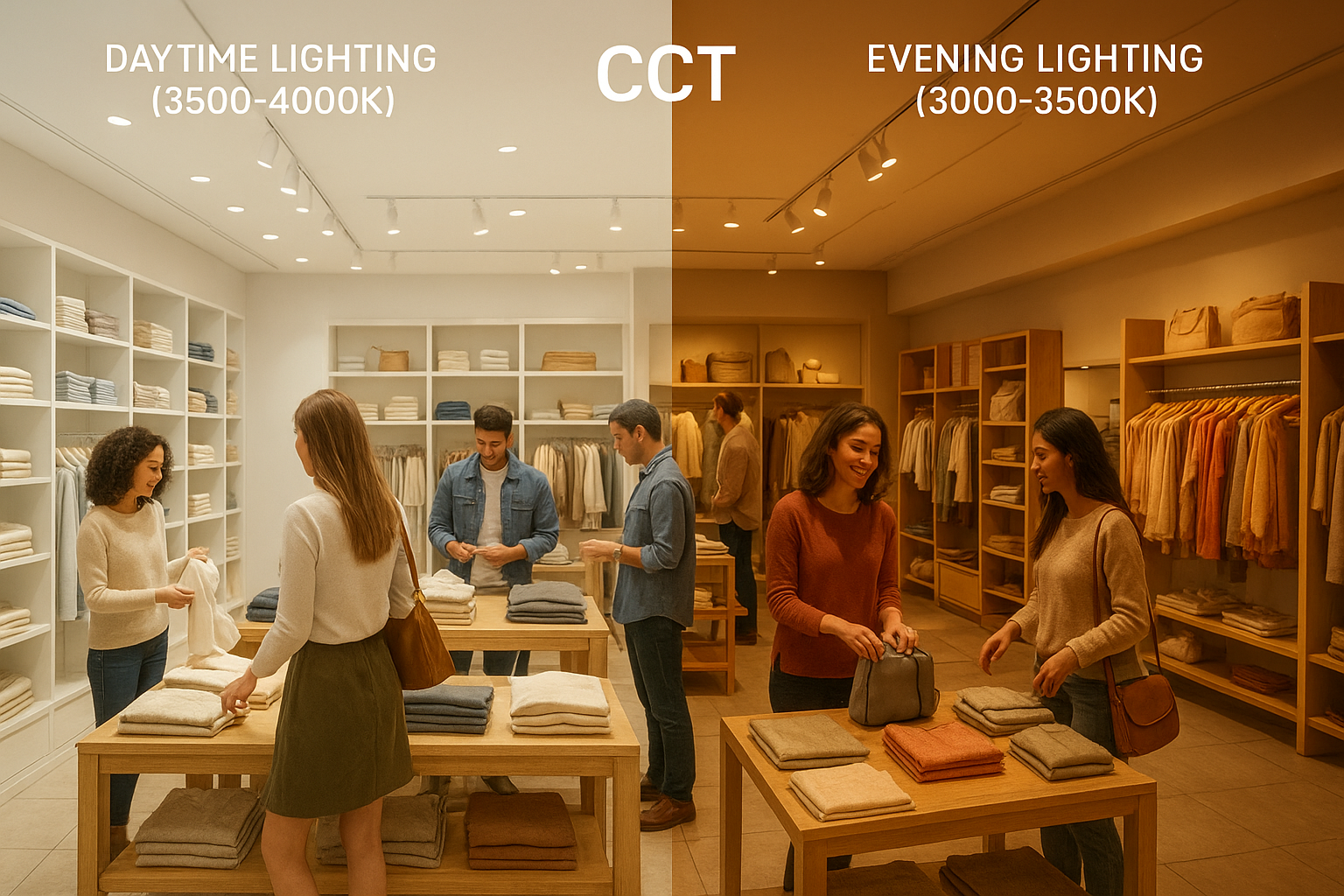
Pro tip: Because searchers often ask “what is the best color temperature for retail stores,” we’ll flag that phrase throughout and give clear ranges you can act on. In general, the best color temperature for retail stores is a neutral‑warm baseline by day (roughly 3500–4000K) and a warmer feel by evening (about 3000–3500K), adjusted per zone and brand mood.
Goal: Signal freshness from the street and draw eyes to hero products.
Recommended CCT (Day/Evening): 3500–4000K by day; 3000–3500K by evening. Keep accents warmer than ambient by ~200–500K for contrast.
Color quality target: CRI ≥ 90; TM‑30 Rf ≥ 90; keep binning tight (≤ 3 SDCM) across stores.
Controls: Simple day/evening scene via 0–10V or Bluetooth mesh; DALI DT8 if you need granular tuning across multiple circuits.
Fixtures: Ambient linear/downlights; adjustable spots for displays.
Glare/UGR tip: Use cutoff optics or louvres; avoid exposed high‑luminance sources near glass.
Pitfall to avoid: Running >4000K at night can feel cold and reduce perceived warmth of materials.
Goal: Clarity for labels and color without fatigue; longer dwell.
Recommended CCT (Day/Evening): 3500–4000K by day; 3000–3500K by evening.
Color quality target: CRI ≥ 90; TM‑30 Rf ≥ 90; consider Rg 95–105 depending on vibrancy goals.
Controls: Daypart scenes tied to store schedule; integrate photocell where daylight contributes.
Fixtures: Low‑glare downlights; wide‑beam linear ambient; accent for endcaps.
Glare/UGR tip: Aim for comfortable UGR in open sales floors; consult UGR tables or manufacturer data. See the CIE publication list for UGR definitions: https://cie.co.at/publications
Pitfall to avoid: Overly narrow beams or shiny trims that create sparkle and complaint‑driven re‑aiming.
Goal: Create pop and texture; highlight seasonal stories.
Recommended CCT (Day/Evening): Ambient 3300–3600K; accents 3000–3500K. Accent‑to‑ambient ratio typically 3:1 to 5:1.
Color quality target: CRI ≥ 90; prioritize strong R9 for reds; TM‑30 Rg around 100–105 if you want a touch more vibrancy.
Controls: Scene presets for “launch,” “sale,” and “evening.”
Fixtures: Adjustable spots with beam control; wallwashers for murals.
Glare/UGR tip: Honeycomb accessories can cut sparkle without killing punch.
Pitfall to avoid: Pushing accents too warm can skew brand colors if fidelity is weak.
Goal: Flattering skin tones and accurate fabric read.
Recommended CCT: 3000–3500K; keep vertical illumination on faces consistent.
Color quality target: CRI ≥ 90; TM‑30 Rf ≥ 90; Rg ~100–105 to avoid looking flat.
Controls: “Try‑on” and “Daylight check” scenes help shoppers judge looks.
Fixtures: Soft frontal/vertical light; shielded trims; avoid hard top‑down only.
Glare/UGR tip: Low‑glare optics (cutoff, louvre, or honeycomb) reduce complaints about “harsh” mirrors.
Pitfall to avoid: Cool top‑down light that exaggerates under‑eye shadows.
Goal: Alertness, legibility, and clean appearance.
Recommended CCT: 3500–4000K; keep reflections off POS screens low.
Color quality target: CRI ≥ 90 is sufficient; consistency across lanes matters more than ultra‑high Rf.
Controls: Keep scenes steady to minimize visual adaptation during transactions.
Fixtures: Prismatic lenses or precise cutoff optics.
Glare/UGR tip: Position luminaires to avoid specular glare on screens.
Pitfall to avoid: Over‑dimming in the evening, which can hurt accuracy and perceived security.
▌Soft CTA: Want to see how your current scenes stack up against “best color temperature for retail stores” guidelines? Ask your lighting partner for a 30‑minute daypart audit and mock scene plan.
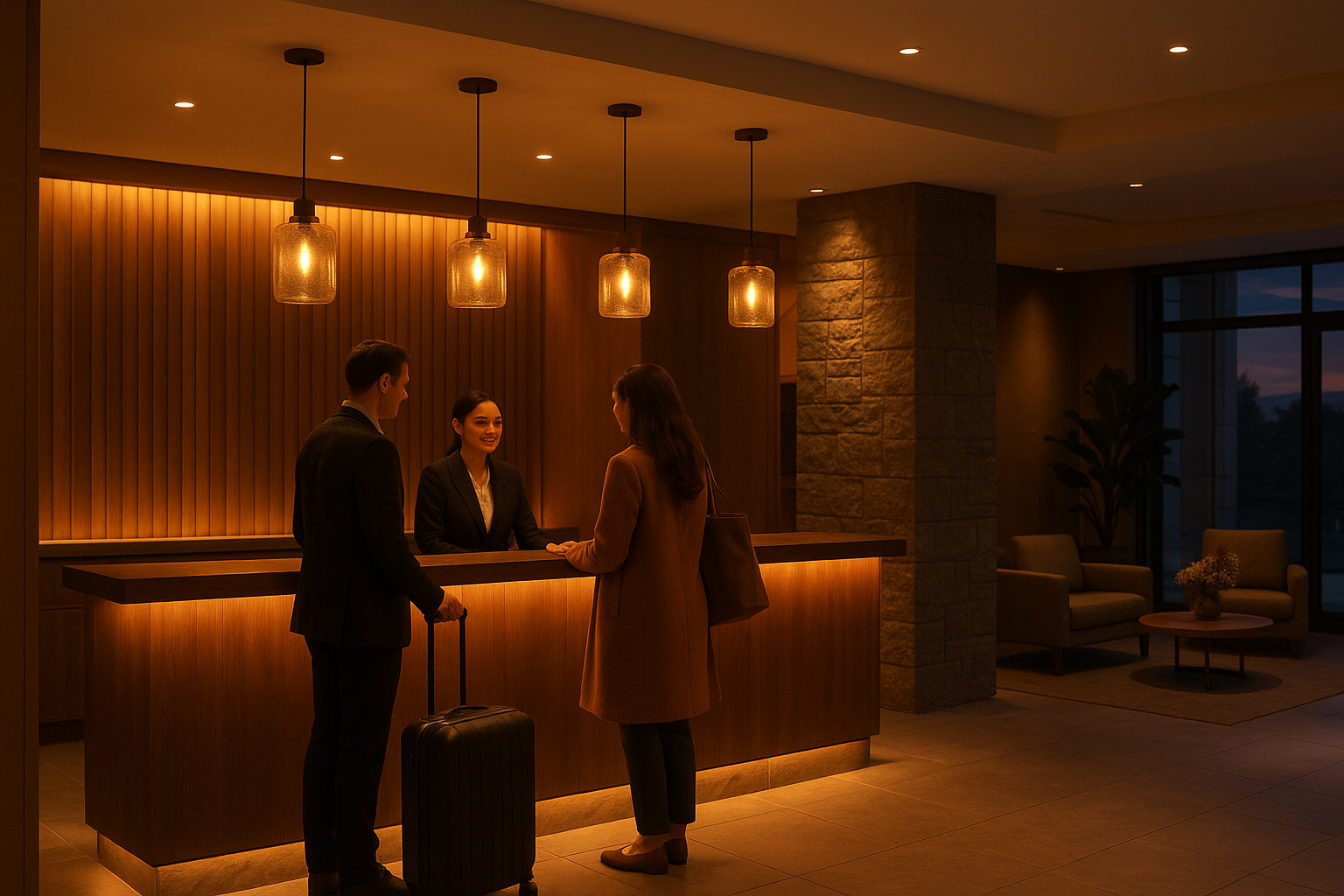
Goal: Daytime clarity; warm evening welcome aligned to brand.
Recommended CCT (Day/Evening): 3000–3500K by day; 2700–3000K by evening; warmer accents on timber/stone.
Color quality target: CRI ≥ 90; TM‑30 Rf ≥ 90; tight color consistency across decorative and architectural layers.
Controls: Preset scenes for morning/afternoon/evening/events.
Fixtures: Layer decorative pendants with cutoff downlights and grazers.
Glare/UGR tip: Downlight cutoff and shielded decorative reduce sparkle on polished floors.
Goal: Comfortable guidance without glare.
Recommended CCT (Day/Evening): 3000–3500K by day; 2700–3000K evenings.
Color quality target: CRI ≥ 80–90; prioritize uniformity.
Controls: Occupancy‑based dimming and late‑night setback.
Fixtures: Shielded wall sconces; low‑UGR downlights.
Goal: Restful ambience with accurate task and vanity lighting.
Recommended CCT: Ambient 2700–3000K; task/desk 3000–3500K; vanity high fidelity.
Color quality target: CRI ≥ 90; TM‑30 Rf ≥ 90 with good skin tone rendering; ≤ 3 SDCM across luminaires.
Controls: Simple scenes (Relax/Work/Evening); low‑flicker dimming.
Fixtures: Layered approach—cove/indirect ambient, bedside, desk task, vanity bars.
Casual/family: 2700–3000K for comfort; dim in evening.
Fast‑casual/QSR seating: 3000–3500K to signal speed and cleanliness; slightly warmer in evening.
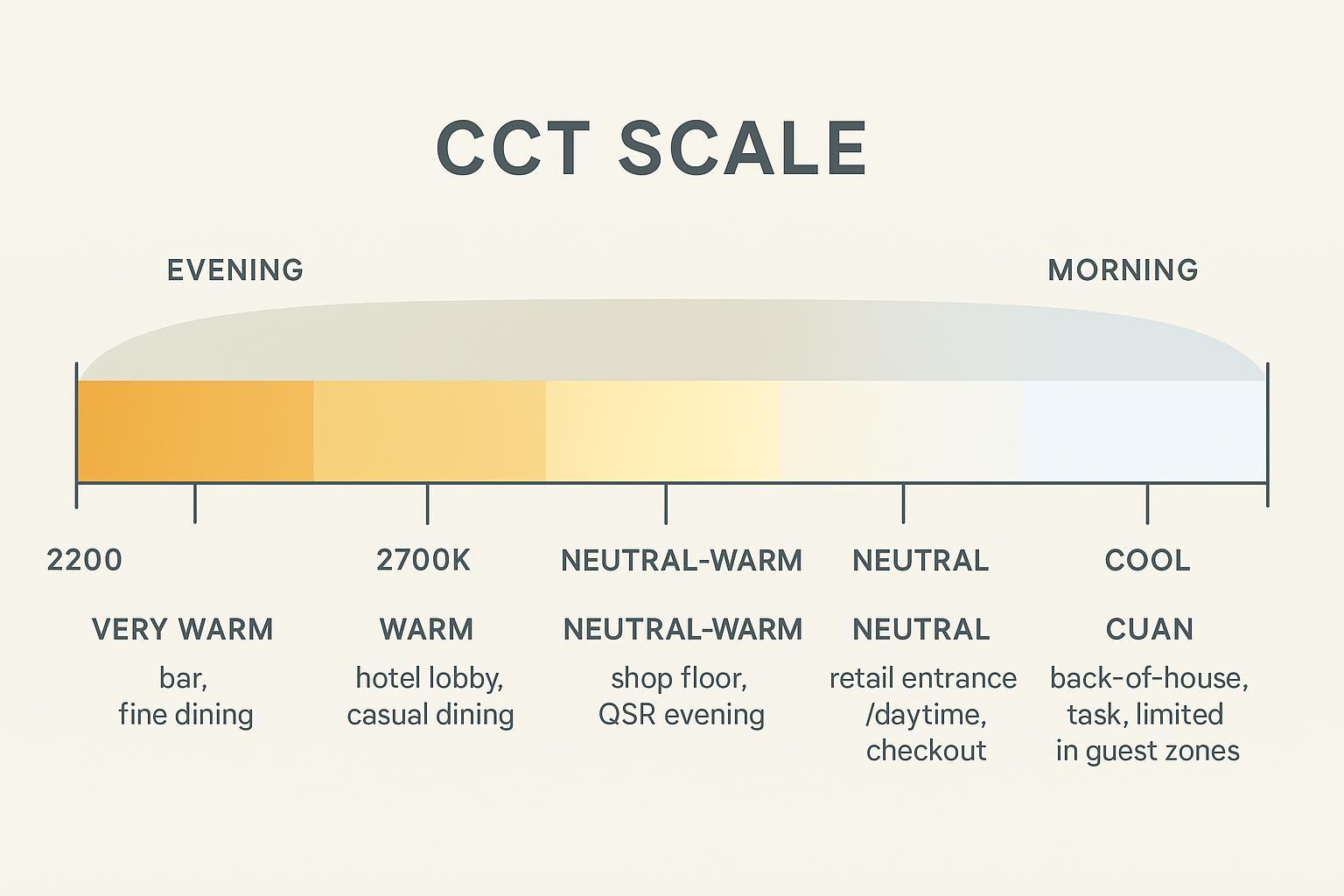
Fine dining: 2200–2700K at night with lower luminance and precise accents.
Color quality target: CRI ≥ 90; strong R9 for appetizing reds; TM‑30 Rf ≥ 90.
Fixtures: Dim‑to‑warm downlights, decorative accents, wallwash for art.
Goal: Intimate warmth with soft verticals for faces.
Recommended CCT: 2200–2700K evenings; keep luminance gradients gentle.
Controls: Scene‑based; consider “service/cleaning” scene at higher CCT post‑close.
Glare/UGR tip: Honeycomb or louvres on downlights help create cozy pockets of light.
Goal: Clean, energetic, and legible.
Recommended CCT (Day/Evening): 3500–4000K by day; 3000–3500K evenings.
Fixtures: Bright, low‑glare ambient; high vertical illuminance on menu boards.
Controls: Basic day/evening schedule; check flicker performance with digital displays.
Bakery: 2700–3000K for golden tones.
Meat: 3000–3300K with strong R9 to preserve rich reds.
Produce: 3000–3500K with balanced gamut (TM‑30 Rg ~100–105) so greens stay lively, not neon.
Fixtures: Directional accents with shielding; avoid glare on glass.
Morning open: Warm‑neutral shifts slightly cooler than evening baseline to support alertness. Example: Shop floor at ~3600–3800K with accents ~3200–3400K.
Midday: Hold neutral‑warm (3400–3800K) for balanced color rendering and legibility.
Evening: Dim and warm by −300–800K from day levels. Example: Hotel lobby ambient from 3400K down to ~2900K; fine dining from 2700K down to ~2200K.
Controls basics: 0–10V for simple scenes; DALI DT8 or Bluetooth mesh (e.g., Casambi) for coordinated CCT tracks and scheduling. See eldoLED’s tunable‑white primer for control strategies: https://www.eldoled.com/technology/tunable-white/
| Zone/area | Goal | Day CCT (K) | Evening CCT (K) | CRI/TM‑30 | Notes (controls/glare) |
Retail entrance & windows | Attention, freshness | 3500–4000 | 3000–3500 | CRI ≥ 90; Rf ≥ 90 | Warm accents; cutoff/louvre near glass |
Shop floor & aisles | Clarity, dwell | 3500–4000 | 3000–3500 | CRI ≥ 90; Rf ≥ 90; ≤ 3 SDCM | Low‑UGR optics; vertical illuminance |
Feature displays | Texture, contrast | 3300–3600 | 3000–3500 | CRI ≥ 90; Rg 100–105 | Accents warmer; 3–5:1 ratios |
Fitting rooms | Flattering evaluation | 3000–3500 | 3000–3300 | CRI ≥ 90; Rf ≥ 90 | Soft verticals; honeycomb/louvre |
Checkout | Alertness, legibility | 3500–4000 | 3300–3600 | CRI ≥ 90 | Prismatic/cutoff; anti‑glare on screens |
Hotel lobby | Welcome, luxury | 3000–3500 | 2700–3000 | CRI ≥ 90 | Scene control; cutoff; warm accents |
Corridors | Comfort, guidance | 3000–3500 | 2700–3000 | CRI ≥ 80–90 | Low glare; occupancy dimming |
Guestroom | Rest vs task | 2700–3000 | 2700–3000 | CRI ≥ 90 | Layered scenes; vanity fidelity |
Dining (casual) | Cozy, appetizing | 2700–3000 | 2700–3000 | CRI ≥ 90; R9 strong | Dim‑to‑warm; cutoff optics |
Dining (fast‑casual) | Clean, brisk | 3000–3500 | 3000–3300 | CRI ≥ 90 | Higher verticals at menus |
Dining (fine) | Intimate, premium | 2700–3000 | 2200–2700 | CRI ≥ 90 | Low luminance, warm accents |
Bar & lounge | Relaxed, intimate | 2700–3000 | 2200–2700 | CRI ≥ 90 | Scenes; honeycomb/louvre |
QSR front | Speed, cleanliness | 3500–4000 | 3000–3500 | CRI ≥ 90 | Flicker control; menu board verticals |
Fresh food | Natural appeal | 3000–3500 | 3000–3300 | CRI ≥ 90; strong R9; Rg 95–105 | Tailored spectra; glass glare mgmt |
Aim for CRI ≥ 90 and TM‑30 Rf ≥ 90 anywhere appearance matters (fitting rooms, fresh food, dining, lobby, vanity). TM‑30 adds a gamut measure (Rg) so you can decide if you want a touch more or less “pop.” For a clear explainer, the IES TM‑30 page above is an excellent starting point.
Keep batch‑to‑batch color variation tight with LED binning at or below 3 SDCM, especially for multi‑site retail rollouts.
For food/fashion, prioritize strong R9 (deep red) so skin and meat look natural rather than sallow.
Ask for low‑glare optics with cutoff; add honeycomb or louvres where viewers see the source directly (low ceilings, bars, fitting rooms). UGR, defined by the CIE, provides a design method for predicting discomfort glare in interiors. Consult manufacturer UGR tables and, where required, EN 12464‑1 application ranges.
Hardware: Tunable‑white luminaires typically carry a premium over fixed‑CCT models. Controls stacks vary: 0–10V is simpler/cheaper; DALI DT8 or Bluetooth mesh (e.g., Casambi) provide finer CCT coordination and scheduling.
Soft ROI logic: The business case often comes from ambience fit by daypart (brand alignment), the flexibility to refresh scenes for seasons/promotions without re‑lamping, and incremental dwell/guest‑satisfaction gains. Validate with pilot A/B tests and POS/guest‑survey correlation rather than assuming a universal sales lift.
Retail fashion flagship (pilot): The team introduced day scenes around 3600–3800K with warmer accents and shifted evenings to ~3000–3200K. Shoppers reported “softer mirrors” in fitting rooms after low‑glare trims were added. The store kept neutral‑warm by day to preserve white apparel contrast.
Casual dining refresh: A chain swapped fixed 3000K downlights for dim‑to‑warm scenes, dropping to ~2300–2500K after 7 p.m. Table photos looked richer, and managers noted fewer glare complaints from corner tables after adding honeycomb to select downlights.
Hotel lobby update: Layering decorative pendants with cutoff downlights and a 3400K→2900K evening shift reduced floor sparkle while keeping the reception desk legible. Staff reported fewer “too bright at night” comments.
▌Note: These are pattern examples. Always measure locally before claiming impact.
CCT ranges here align with common practice and are informed by sources such as the IES’s TM‑30 materials (https://www.ies.org/standards/technical-memoranda/tm-30/), the CIE’s publications library for UGR (https://cie.co.at/publications), and WELL v2 Light concept guidance (https://v2.wellcertified.com/wellv2/light). For European projects, consult EN 12464‑1:2021 via official channels and reputable summaries before finalizing specifications. Your local codes and brand standards may impose additional requirements.
Q1: Does warmer CCT always increase sales in restaurants?
A: Warmer CCT (around 2200–3000K) typically supports intimacy and longer stays, but the “best” setting depends on format and brand; fast‑casual often benefits from slightly cooler 3000–3500K for cleanliness cues.
Q2: What color temperature is best for retail stores during the day?
A: A neutral‑warm baseline around 3500–4000K reads clean and balanced for most sales floors, with warmer accents on feature displays for contrast.
Q3: How does CCT interact with CRI/TM‑30 for true color rendering?
A: CCT sets mood, while TM‑30/CRI describe how true colors appear; aim for CRI ≥ 90 and TM‑30 Rf ≥ 90, and adjust TM‑30 Rg (roughly 95–105) for a little more or less vibrancy.
Q4: Do tunable‑white systems pay back in retail/hospitality?
A: Payback is project‑dependent; value typically comes from ambience fit by daypart, reduced rework, and the ability to adapt scenes seasonally—validate with pilots before scaling.
Q5: What standards constrain CCT choices in hotels/restaurants?
A: Designers commonly reference the IES (for color quality and application practice), the CIE for UGR glare methodology, EN 12464‑1 for interior lighting guidance in Europe, and WELL v2 for electric light quality context.