Author: Huang Publish Time: 02-03-2026 Origin: Site


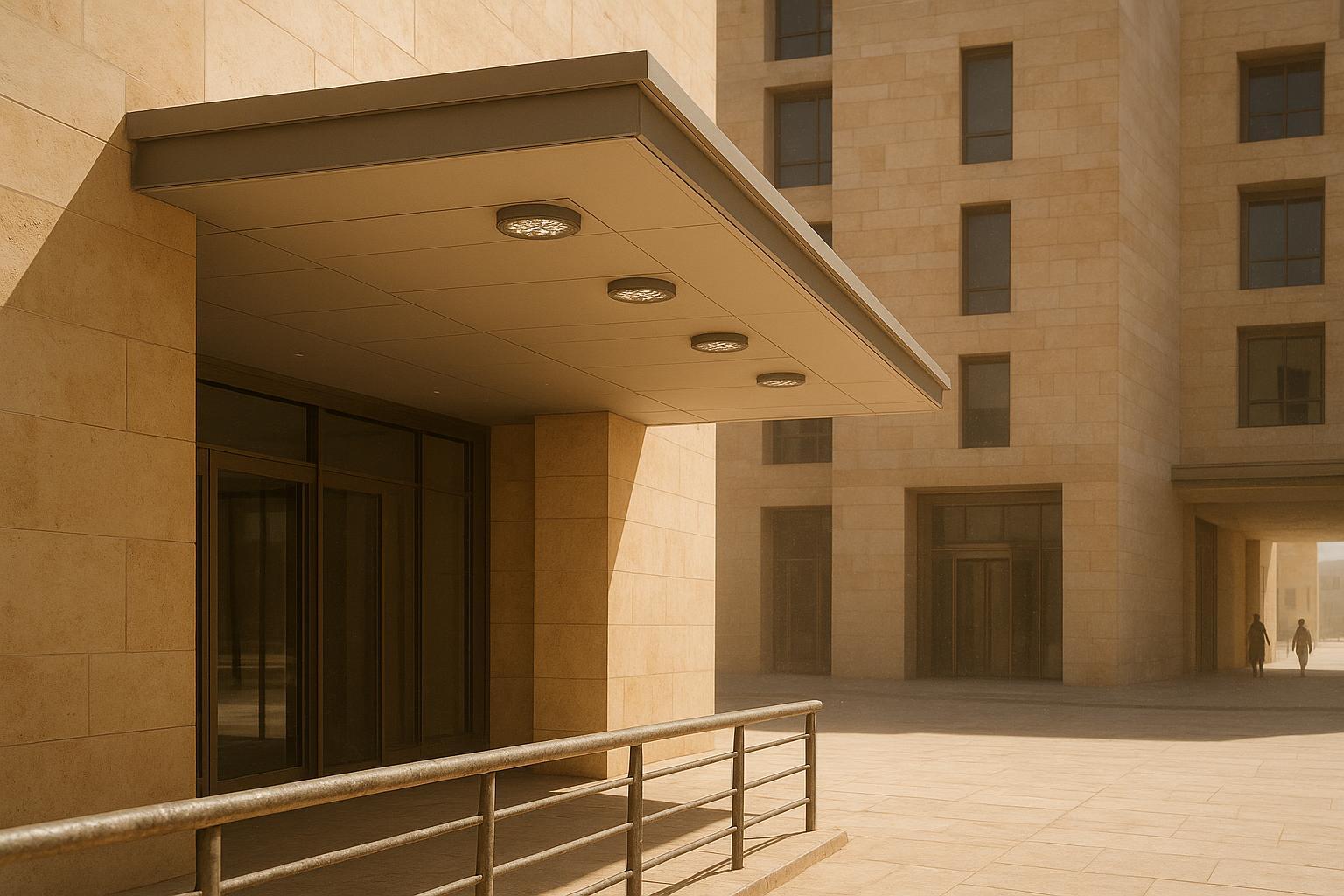
If you manage lighting for hotels, offices, or malls from Riyadh to Baghdad to Alexandria, you’ve likely seen the same pattern: fixtures fade or fail during summer heat, drivers die after power events, and “indoor” areas near entrances behave like semi‑outdoor zones.
This is a short, practical guide to choosing LED luminaires that hold up in Ta 50–60°C conditions, handle unstable mains (often discussed as 6–10 kV surge resilience), and survive dusty or humid transition areas where IP65/66 makes sense. You’ll leave with a simple set of selection rules and supplier questions—not a procurement textbook.
You don’t need a deep standards lesson to make good choices. You just need to recognize the three stressors that show up again and again in KSA, Iraq, Egypt, and Algeria.
In hot seasons, ceiling voids, canopies, and entrance areas can run far hotter than the air you feel at floor level. That’s why you’ll see lumen drop, color shift, and driver failures even when a product looks fine in a catalog.
Two practical terms to know:
Tq: the highest ambient temperature where the manufacturer still claims rated performance/life.
Tc: a case-temperature limit on the driver (or module). If Tc runs too high, the driver’s life shortens fast.
If you remember just one rule: for hot zones, ask for Tq ≥ 50°C (often 55–60°C for the worst locations) and don’t accept “25°C lifetime” marketing.
Unstable mains aren’t just an “electrical problem.” They show up as repeated driver replacements. When you compare options, ask the vendor for a clear surge number (at least 6 kV L–N) and treat higher common-mode events as a system issue that’s handled with protection upstream.
Many failures happen where “indoors” behaves like outdoors: revolving doors, open lobbies, covered drop-off canopies, kitchens, and back-of-house corridors.
Use IP65 when you expect dust plus occasional water jets.
Use IP66 when stronger water jets or frequent cleaning is likely.
One tradeoff to keep in mind: tighter sealing often means higher internal temperature. That pushes you back to the heat rule—make sure the luminaire has real thermal headroom.

If you’re advising a hotel or office owner in KSA, Iraq, Egypt, or Algeria, the conversation usually starts with three pain points:
Heat (fixtures fading early, yellowing lenses, driver failures in sealed ceilings)
Power events (voltage dips, on/off cycling, surges)
“Indoor” areas that behave like outdoors (dusty entrances, humid vestibules, washdown back-of-house)
Below is a practical way to recommend what to buy—without turning the discussion into a standards lecture.

For any space that can realistically sit at Ta 50–60°C (canopies, entrances, hot plenums, ceiling voids above decorative soffits), don’t start from wattage or lumen output. Start from temperature rating:
Ask for a declared rated ambient (Tq) of at least 50°C, and 55–60°C for the hottest zones.
Prefer luminaires with clear derating curves vs ambient, so you can predict output and lifetime at summer conditions.
On installation, you want confidence that the driver case temperature (Tc) stays below its limit with margin (a practical target is at least 5 K below the driver’s Tc max at worst-case conditions).
This single step prevents the most common “looks fine on paper, fails in summer” outcome.

Recommended luminaire type: LED panel lights (office grids, open plan, back offices).
What to look for when you recommend a panel light for Middle East interiors:
Thermal headroom: choose an aluminum-backed design and a driver that is comfortable at elevated ambient (Tq/Tc documentation matters more than slimness).
Power resilience: specify surge immunity of at least 6 kV L–N and a plan to handle up to 10 kV common-mode events via coordinated protection (often via SPDs at distribution boards and, where needed, closer to the luminaire).
Comfort: for work areas and client-facing zones, recommend low flicker, a sensible CCT strategy, and glare control suited to offices.
TCO principle (no pricing): In hotter ceilings, a “cheaper” panel that runs the driver near its thermal limit can cost more in callouts and early replacements than a better-derated option.
Recommended luminaire types: downlights and adjustable spotlights (recessed or surface, depending on ceiling).
When you recommend downlights/spotlights for lobbies and corridors, prioritize:
Anti-glare optics: honeycomb/louver options and deeper beam control help maintain comfort and perceived quality.
High CRI where it matters: reception desks, feature walls, retail corners, and guest-facing circulation benefit from CRI ≥ 90.
Heat + sealing tradeoff: if you need IP65/66 (dusty revolving doors, semi-outdoor vestibules), the sealed housing can run hotter. In that case, insist on higher Tq (55–60°C) or use remote drivers placed in a cooler, ventilated zone.
Impact protection where people can reach it: in public-facing, low-mount areas, recommend higher impact resistance (IK levels) to reduce lens/frame damage from luggage and carts.
TCO principle (no pricing): Spend the “durability budget” where abuse happens—entrances, drop-off canopies, and low-mount accents—rather than overspecifying every ceiling point.
This is where many projects fail because the drawings still say “interior,” but the environment doesn’t behave like one.
Recommended luminaire types:
Sealed utility / vapor-tight style luminaires for kitchens, loading corridors, and washdown-adjacent rooms.
IP-rated linear luminaires for service corridors and areas that see dust or humidity.
Selection rules that keep you out of trouble:
For washdown, drifting dust, or door-to-outside interfaces, recommend IP65 at minimum; step up to IP66 where stronger water jets or frequent cleaning is likely.
In coastal cities and entrances, prioritize corrosion-resistant housings, stainless fasteners, UV-stable gaskets/lenses, and coating systems suited to saline air.
Instead of arguing whether a luminaire is “6 kV” or “10 kV,” recommend a simple, credible approach:
Minimum driver/luminaire robustness: at least 6 kV differential (L–N) immunity.
System-level protection: coordinate protection at the building and sub-board level, and add point-of-use protection where cable runs are long or exposure is higher.
This framing helps buyers understand why a resilient lighting system is a package (driver + wiring + protection), not just a single datasheet line.
Good: rated for the ambient you actually have (Tq documented), basic surge immunity, IP only where needed.
Better: stronger surge strategy (board-level protection + robust drivers), better thermal margins, improved optics for glare.
Best: high ambient headroom (55–60°C where applicable), remote drivers in hot zones, IP65/66 in transition areas, corrosion-ready materials for coastal sites, and a defined maintenance plan.

You don’t need to debate standards in front of a client. You do need the right questions that quickly separate “OK for mild offices” from “built for Middle East summer reality.”
Ask the vendor to provide (in writing):
Temperature proof: declared Tq (and a derating curve if Tq is below your expected ambient).
Driver heat proof: driver Tc limit and how/where Tc is measured on the driver.
Surge proof: tested surge level and mode (at minimum a clear L–N figure; ask what happens in common-mode events and what protection strategy is assumed).
Protection proof: the IP rating for dusty/doorway/washdown zones; and any impact resistance rating if fixtures are reachable.
Coastal durability proof (if relevant): coating/material notes and any salt/UV test references.
| What to request from the supplier |
What to request from the supplier | Why it matters for the buyer |
Ta 50–60°C zones |
Declared Tq (target 50°C+, ideally 55–60°C) + derating curve |
Prevents early lumen drop and driver failures in summer |
Unstable power / surges |
Surge immunity number and the test mode (at least L–N; clarify common-mode assumption) |
Avoids repeat driver replacements after switching and grid events |
Dusty entrances / washdown back-of-house |
IP65 minimum; IP66 where stronger water jets/cleaning is expected |
Reduces downtime from ingress-related shorts and corrosion |
Public areas with luggage/carts |
Impact resistance rating (IK where available) + lens/frame material |
Cuts breakage and avoids safety complaints |
Coastal air / saline humidity |
Housing/coating description + stainless fasteners + gasket/lens UV stability |
Slows corrosion and yellowing that degrade appearance and output |
Lifetime claims that assume 25°C ambient with no mention of high-ambient performance.
“Surge protected” claims without a kV number and without stating whether it’s L–N or to earth.
IP65/66 claims without any credible test reference, or designs that claim high IP but provide no thermal derating information.
If any of these show up, your safest move is to treat the option as not proven for harsh interiors until the vendor supplies clear documentation.
For most commercial, hotel, and office interiors, you don’t need to turn surge protection into a project of its own.
Here’s the buyer-friendly approach:
Ask for a minimum surge number you can compare across vendors: start at 6 kV (L–N) for the driver or luminaire.
Treat higher exposure as a system issue: for sites with frequent switching events, long cable runs, or semi-outdoor areas (canopies/entrances), plan on surge protection at the distribution board and add point-of-use protection where needed.
This keeps the focus where it belongs: fewer driver failures and fewer maintenance callouts, without overspecifying every fixture.
Even the right product can fail early if it’s installed in a “hot box” or sealed incorrectly. These three tips cover most real-world problems:
Don’t trap heat above the fixture. Avoid tight insulation, sealed soffits with no airflow, or driver compartments with no convection path.
Move the driver out of the hottest zone when you can. Remote drivers (placed in a cooler service space) often buy you real lifetime margin in canopies and hot ceiling voids.
After installation, do one quick heat check. Measure the driver at its marked point after it has run at full output. If it’s running near its limit, you’ll see early failures later.
Practical example: in a sealed hotel canopy, a luminaire with a robust die-cast aluminum housing can be paired with a remotely located driver in a cooler back-of-house space to reduce thermal stress. This link is only a material/architecture example, not a product recommendation.
Most projects can stick to the selection rules above. Two “edge cases” are worth calling out because they’re where failures and complaints cluster.
In coastal cities and sea-facing hotel entrances, salt and UV can ruin finishes and seals long before LEDs “wear out.” When you specify these zones, prioritize:
Corrosion-resistant housing and coating (ask for evidence tied to salt-spray and UV exposure testing, when available)
Stainless fasteners and hardware
UV-stable gaskets and lenses
Maintenance note: a simple quarterly inspection (gaskets, lens yellowing, corrosion) prevents most surprises.
Covered drop-off canopies and vestibules often need IP65/66, but sealing raises internal temperature.
A practical configuration that tends to work: choose a luminaire with real thermal headroom (Tq 55–60°C where needed), keep airflow around the housing, and use remote drivers if the ceiling void is heat-loaded.
8.1 Is “Ta 50–60°C” realistic for interiors?
Yes. In semi‑outdoor interfaces, hot plenums, or canopies, air and surface temperatures can reach those levels—especially near dark roofs or sun-heated façades. That’s why it’s safer to tie performance to a declared high-ambient rating.
8.2 What’s the difference between Tq and Tc, and which should I enforce?
Tq is the ambient temperature where the manufacturer still claims rated performance for the luminaire. Tc is a case-temperature limit on a component (often the driver). In hot projects, enforce both: pick a realistic Tq, and keep real-world Tc below the driver limit with margin.
8.3 Do I need 6 kV or 10 kV surge immunity?
Use 6 kV (L–N) as a clean minimum comparison point for drivers/luminaires. Higher common-mode exposure is usually handled by system protection upstream, especially for canopies, entrances, and long cable runs.
8.4 Is IP66 overkill indoors?
Often yes for typical offices. But for entrances, canopies, kitchens, or dusty/wet back-of-house areas, IP65/66 is reasonable. Just remember the tradeoff: more sealing can mean more heat.
Only where fixtures can be reached or hit (luggage, carts, vandalism). For high ceilings and staff-only areas, it’s usually not a priority.
Sources and standards referenced in text:
IEC 62722‑2‑1 (Tq definition and luminaire performance), IEC/EN 61347‑2‑13 (driver Tc marking and thermal tests), IEC 61000‑4‑5 (surge immunity test waveforms), IEC 61643 (SPD types and coordination), IEC 60529 (IP ratings), IEC 62262 (IK ratings), ISO 9227 / ASTM B117 (salt‑spray corrosion), ASTM G154 / ISO 4892 (UV exposure). Publicly accessible explainers and guides were linked inline for each topic.