
Author: Huang Publish Time: 26-08-2026 Origin: Site


Walk into a modern villa living room or a Dubai retail boutique and you will often see something striking: no central chandelier, no overhead pendant — yet the room is beautifully lit. This is main-light-free design (also called no-main-light or layered lighting), and it has become the default choice in contemporary architecture.
Most of the confusion around it comes from the name. The term does not mean the space has no light. It means the space relies on many coordinated fixtures instead of a single dominant lamp, so each functional zone gets the light it actually needs. For specifiers and distributors, understanding how these layers work — and which fixture categories carry each layer — is the difference between a clean installation and one that falls short on light levels or comfort.
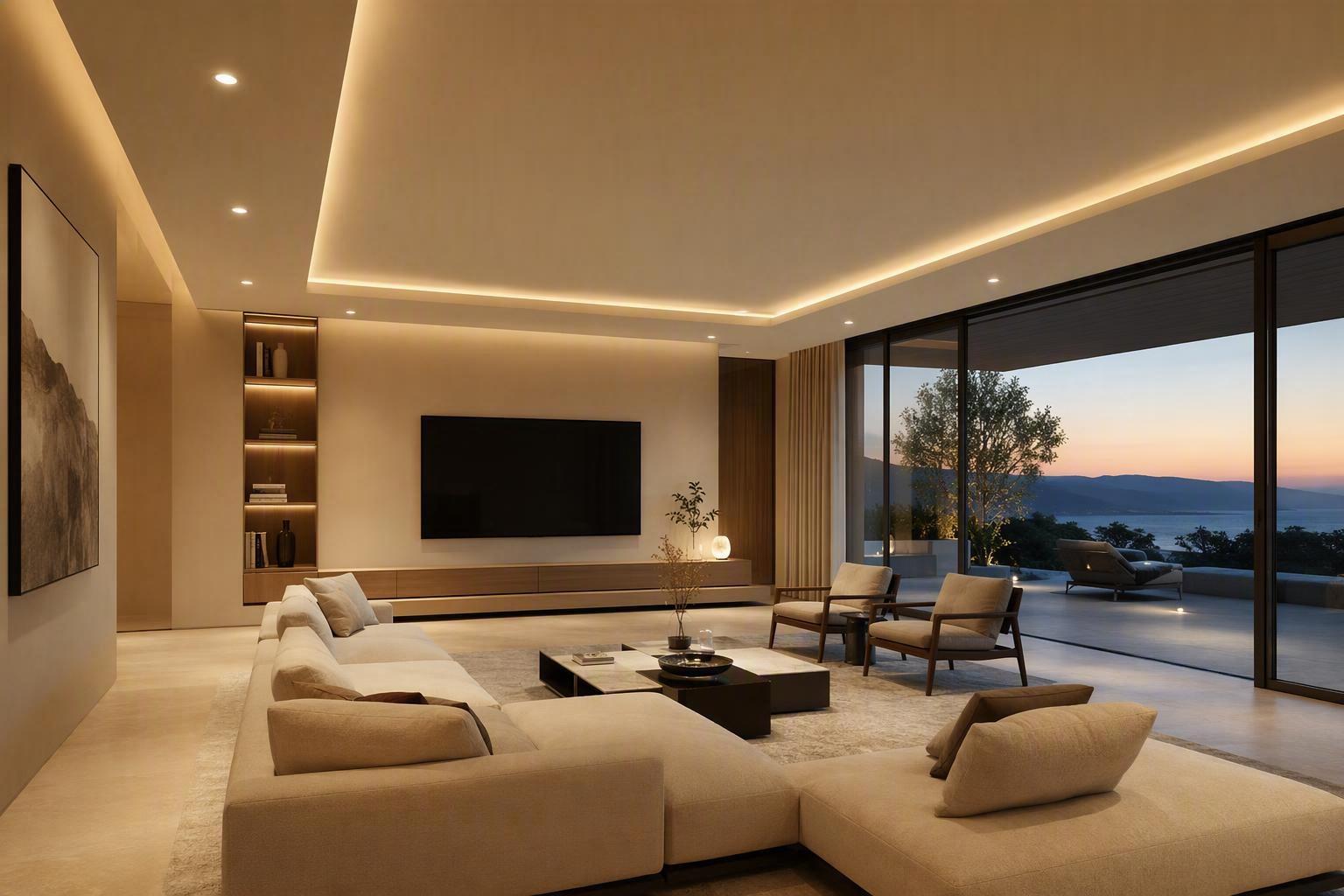
Traditional lighting centers on one large fixture that floods an entire room from a single point. That approach is simple, but it is inefficient. A bedroom office that needs 500 lux at the desk gets the same blanket wash as the sofa that needs only 100 lux of warm ambience.
A main-light-free scheme solves this by lighting distributed, bright and shaded — scattering light across multiple sources so each zone is tuned to its task. The design principle is usually described as combining point, line, and surface light: point sources for focused emphasis, line sources for continuous outline and atmosphere, and surface sources for even general fill. It is the same approach the Illuminating Engineering Society uses across ambient, task, accent, and decorative light, and it is well documented in TJ2 Lighting's guide to no-main-light design as a multi-layer alternative to a single central fixture.
The payoff is twofold. Visually, the ceiling stays clean and architectural, with light appearing to come from nowhere. Functionally, the space is more adaptable: dimming individual layers changes the mood of a room without touching the physical fixtures.
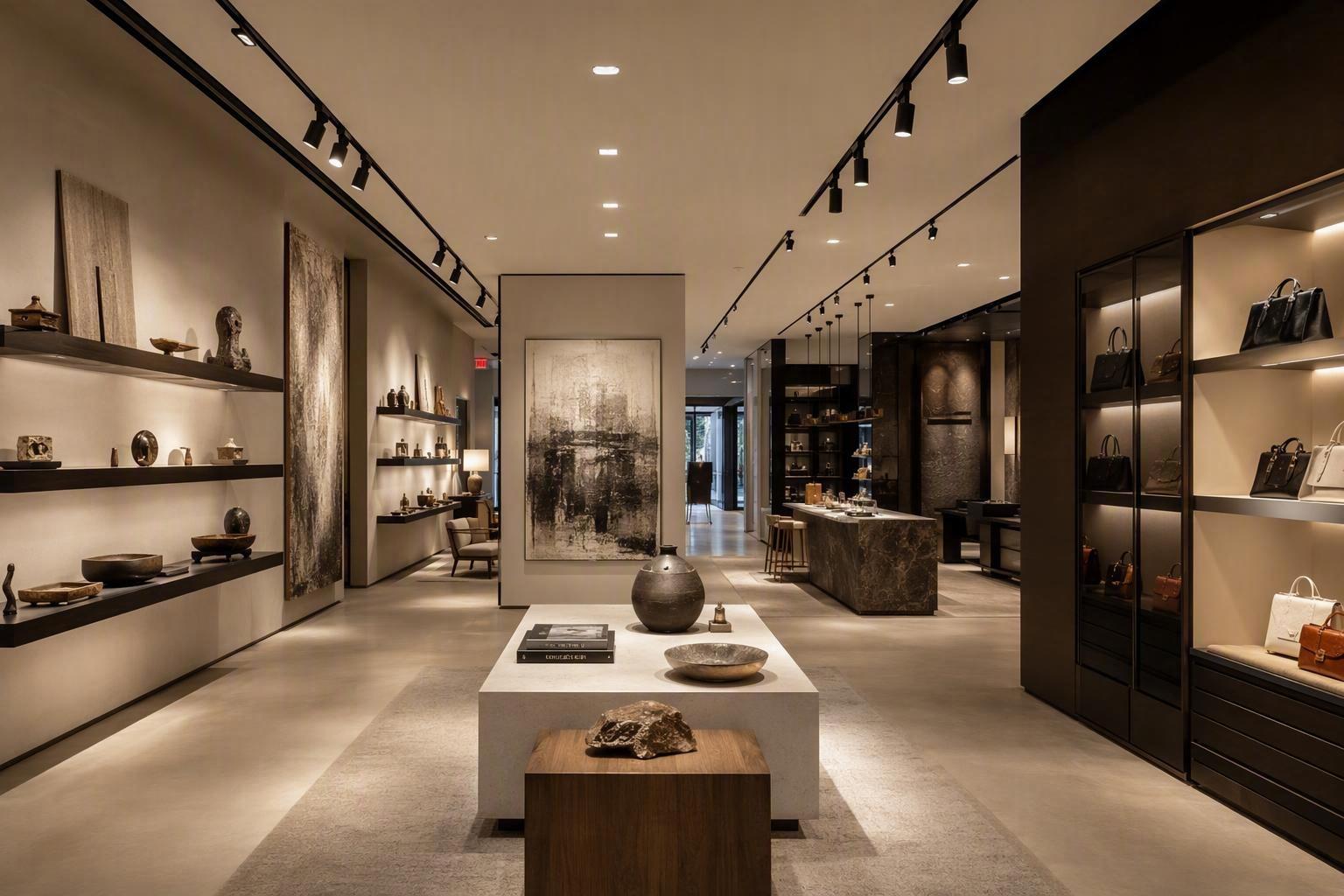
A complete main-light-free scheme rarely uses one fixture type alone. It pairs several, each responsible for a specific layer. The table below summarizes the categories most specifiers work with.
Fixture | Primary role | Typical spec | Best use |
|---|---|---|---|
Recessed LED downlights | Ambient and general fill | 2700–3000K villas/hospitality, 3000–4000K offices/retail; CRI 90+; 40–60° beam | Soft background light across living rooms, corridors, offices |
COB spotlights | Accent | 2700–3000K hospitality, 3000–4000K retail/office; CRI 90+ (95+ color-critical); 10–25° beam | Art, merchandise, feature walls, focal displays |
Track lights | Flexible adjustable accent | 3000–4000K; CRI 90+; 10–40° beams | Changing displays, retail plinths, adjustable focal points |
LED linear lights | Continuous outline / indirect cove | 2700–3000K warm, 3000–4000K office; CRI 90+; wide 90–120° spread | Ceiling coves, under-shelf, perimeter detail |
LED strips | Indirect and decorative | Warm-to-neutral CCT; CRI 90+ | "See the light, not the source" — coves, wardrobes, headboards |
LED panel lights | Area-source ambient | Neutral white; CRI 80+ min (higher preferred); wide uniform distribution | Open offices, lobbies needing even general illumination |
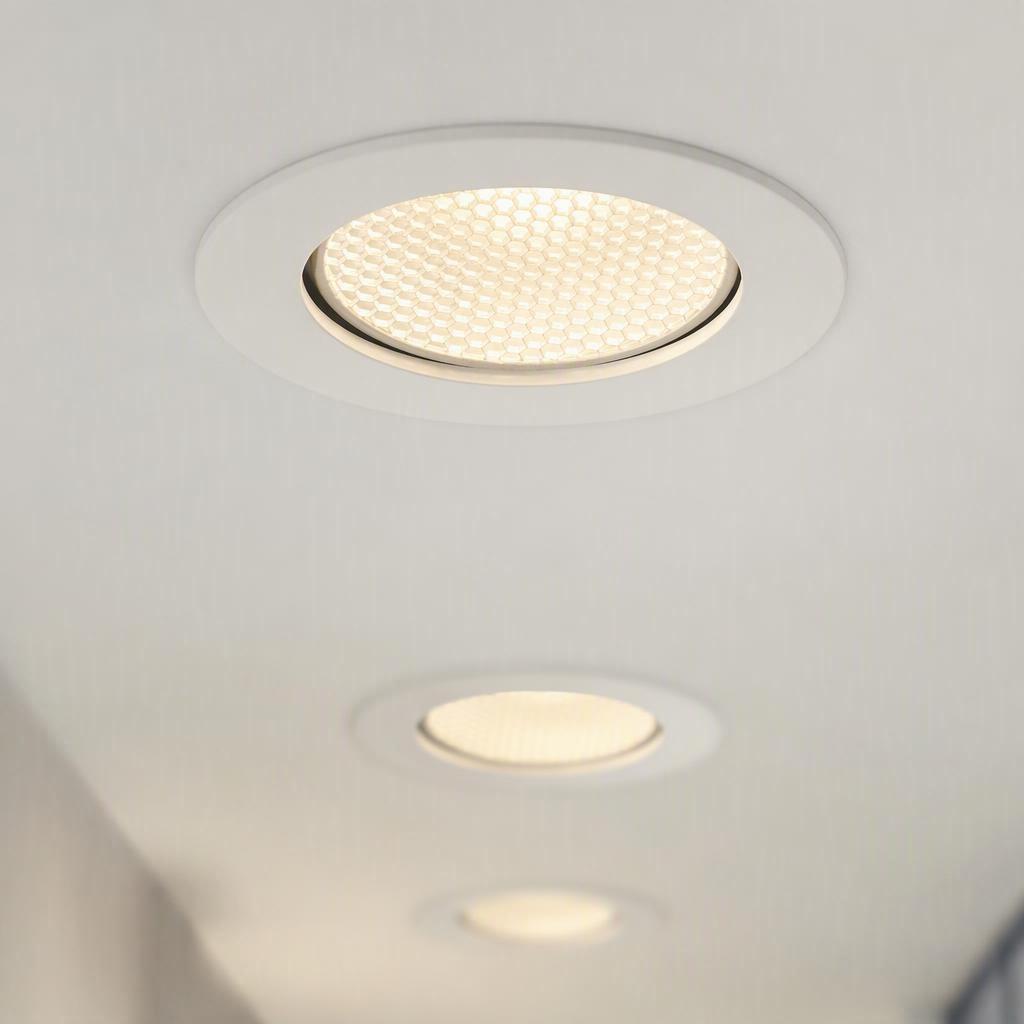
Recessed downlights are the workhorse of main-light-free design because they tuck invisibly into the ceiling and produce even, glare-controlled general light. Because they are the highest-volume fixture in most UAE fit-outs, their efficacy directly governs the lighting power density (LPD) a project must declare — a key metric for DEWA load approval and green-building certification, as Trircle Group's UAE LED downlight guide notes is central to Al Sa'fat and Estidama compliance.
Choose a wider 40–60° beam for ambient fill and a neutral or warm CCT to match the space. For offices, specify low-glare optics so the ambient layer does not introduce ceiling glare. For villas and hospitality, keep it warmer — around 3000K — for a residential feel.
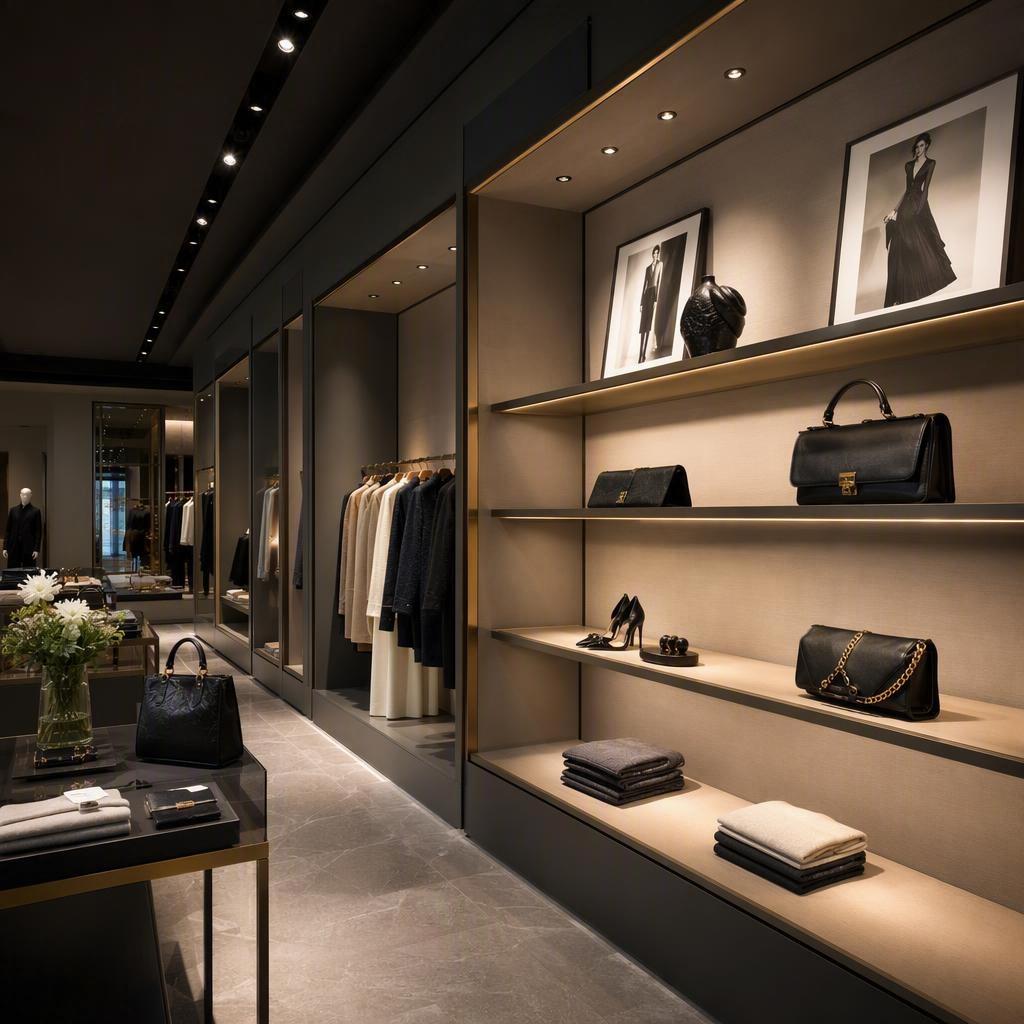
Where downlights fill, COB spotlights emphasize. A COB (chip-on-board) source produces a tight, crisp beam that works well for art, merchandise, and texture. COB optics also support deep recess and cut-off angles of 30–40°, which makes it easier to hit UGR ≤ 19 in offices and premium retail, a threshold examined in XHLUX's comparison of COB and SMD recessed spotlights.
The beam angle drives the result: 10–15° for fast accent on a small object, 15–25° for merchandise, and 25–40° for medium emphasis. Keep CRI at 90+ as a floor and move to 95+ where color fidelity matters — fashion, cosmetics, food, or fabric.
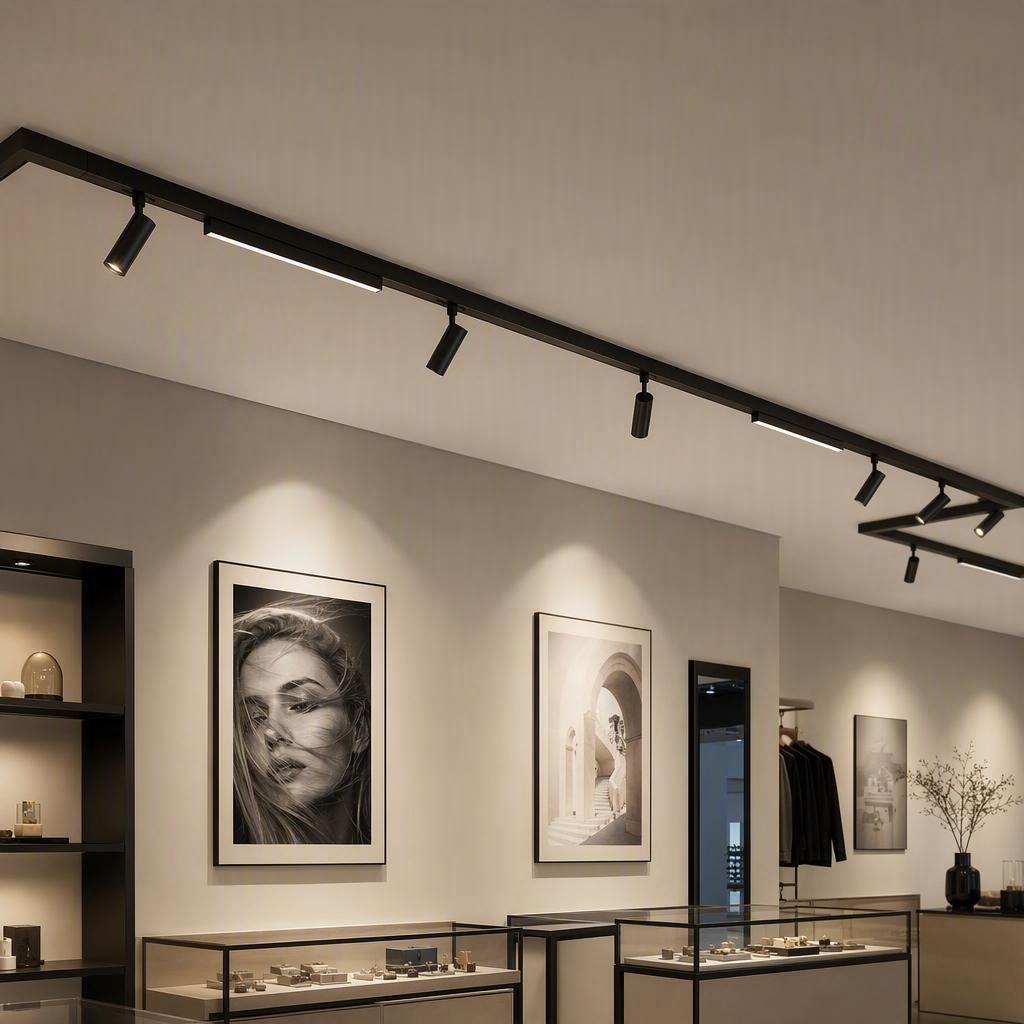
Track light systems let the specifier move and re-angle individual heads without rewiring. That flexibility is valuable in retail, galleries, and showrooms where displays change by season or zone. Magnetic and monorail options keep the rail profile clean, and independent control per head supports scene-based dimming.
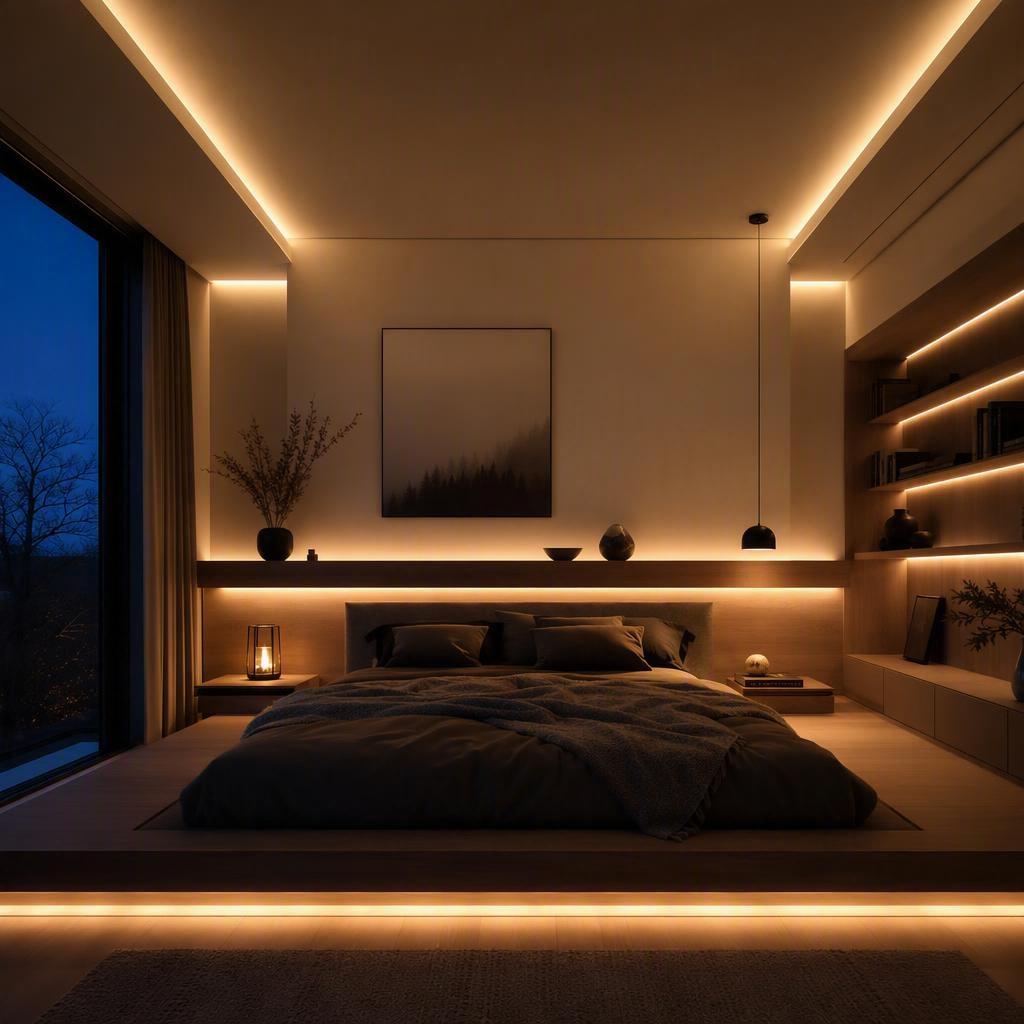
The quietest layer in most main-light-free rooms comes from linear lights and LED strips hidden in coves, under shelves, or behind headboards. They deliver the "see the light, not the source" effect that makes a ceiling look architectural. Linear profiles give a continuous crisp line; tape strips provide softer, concealed glow.
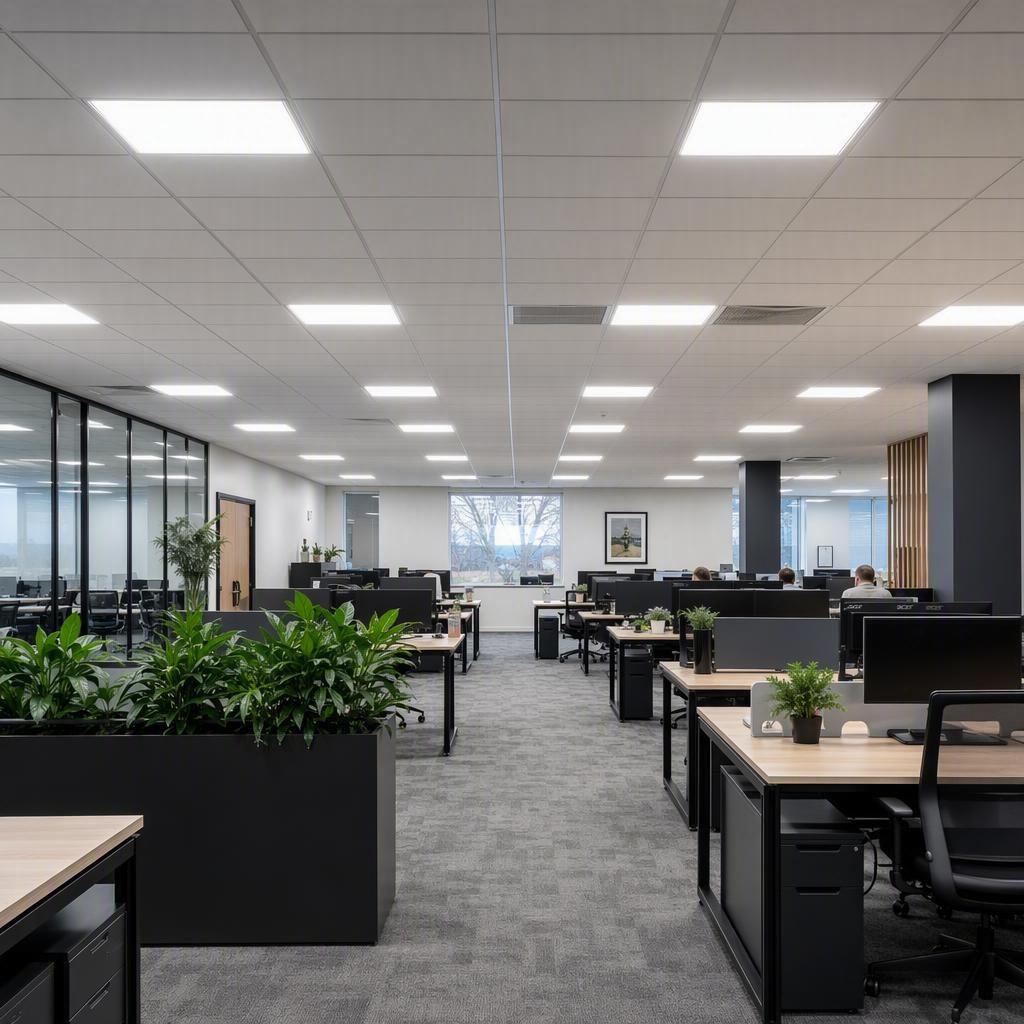
Where a space needs even, broad illumination — open offices, lobbies, circulation — an LED panel light delivers uniform area-source light with low perceived glare. In main-light-free schemes, panels usually replace rows of downlights in larger neutral zones, leaving downlights and spots for the character layers around them.
Layering comes first; fixture choice second. Start with the four layer types — ambient, task, accent, decorative — and assign each to the space's needs before selecting a single luminaire.
A useful rule of thumb for beam angles: the more ambient the role, the wider the beam; the more accent, the narrower. Ambient downlights sit in the 40–60° range, accent COBs in the 10–25° range, and linear strips spread across a wide 90–120° plane.
Two practical rules prevent the most common failures in no-main-light projects. First, keep one CCT family per zone — mixing 2700K and 4000K in the same sightline looks unintentional unless it is a deliberate, controlled contrast. Second, default to CRI 90+, and reserve 95+ for retail, food presentation, art, and fabric-heavy interiors.
Dimming is what makes the layering genuinely useful. For hospitality and offices, DALI gives reliable scene control and individual addressing across zones. 0–10V is a simpler, dependable choice for grouped commercial dimming, while TRIAC suits residential retrofit where the driver is known to be compatible. Avoid treating dimming as an afterthought — a main-light-free space with one dimming profile is only half a design.
The accent-to-ambient relationship matters too. Hospitality guidance commonly targets a strong contrast ratio — around 5:1 accent to ambient — so focal points read clearly against a softer background, a benchmark cited in ConTech's hospitality lighting guide. Flat illumination defeats the purpose of the whole approach.
It is worth clearing up the two misconceptions that cause the most trouble.
First, main-light-free is not the absence of light. Poorly planned schemes that use only a few small spots end up dim and shadowed. The concept works only when every layer is present and balanced.
Second, it is not just for high-end villas. The same layering logic underpins efficient office, retail, and hospitality installations, where glare control and LPD are just as important as aesthetics. The residential application simply made the term popular.
The UAE framing is where most generic articles stop short, and where the practical work happens. Local authorities drive the spec as much as the design does.
In Dubai, projects sit under the Dubai Building Code baseline, with additional Al Sa'fat and DEWA requirements. In Abu Dhabi, Estidama/Pearl rules apply. In both, LPD limits cap the connected lighting load, so high-efficacy fixtures are not optional — they are the compliance path. Ask vendors for UGR tables rather than accepting an "anti-glare" label, and for IES/LDT photometric files you can model in DIALux or Relux with your actual ceiling height and layout.
Product conformity is a separate gate. Non-domestic lighting in the UAE falls under the cabinet resolution on lighting products, which requires ECAS conformity and energy-efficiency labeling before products can be placed on the market, as recorded in the UAE Cabinet Resolution on lighting products. For distributors, this matters before the first PO, not after.
For a no-main-light spec, the design brief should be built around project type, target illuminance, UGR limit, control protocol, luminous efficacy, and the LPD cap — not around the phrase "no main light" on its own.
A main-light-free project pulls together downlights, COB spotlights, panels, and often track and linear fixtures from one specification. Sourcing them piecemeal from different suppliers multiplies the interoperability and compliance risk that distributors already worry about.
KEOU Lighting is a B2B LED manufacturer with more than 13 years of semiconductor and LED factory experience, producing recessed LED downlights, COB anti-glare downlights, and LED panel lights with OEM/ODM support. For distributors consolidating a layered scheme, dealing with one factory that can supply and customize the core fixture set simplifies lead times, quality control, and after-sales support.
For a deeper look at accent fixtures, the LED spotlight guide covers real-life applications and anti-glare optical features in detail.
Main-light-free design is as much an engineering discipline as an aesthetic. Get the layers, beam angles, color temperature, and controls right, and the space feels effortless and bright. Get the compliance and supplier sourcing wrong, and the delays and glare complaints surface long after handover.
If you are building a main-light-free specification for a UAE project, ask for a tailored spec pack, BOM, or engineering review from a supplier that can supply the whole fixture set. Define the target illuminance and UGR first, then let the fixture layers and controls fall into place.


