
Author: Site Editor Publish Time: 10-04-2026 Origin: Site


Outdoor spaces change after dark. Lighting now shapes comfort and use.Exterior ceiling lights guide modern outdoor lighting choices. Trends reflect design, performance, and daily living needs.In this article, you will learn key trends. You will see what lasts and what fades.
Exterior ceiling lights serve as the primary ambient light source in covered outdoor areas such as entryways, porches, patios, balconies, and breezeways. These spaces function as transitional environments, where lighting must support visibility, orientation, and comfort without feeling overly bright or exposed. Because the light is delivered from above, ceiling-mounted fixtures establish the baseline brightness level and strongly influence how enclosed or welcoming the space feels after dark. When thoughtfully planned, exterior ceiling lights help define these zones as usable extensions of the home rather than purely pass-through areas.
In a balanced outdoor lighting plan, exterior ceiling lights operate as the ambient layer that supports, rather than replaces, other lighting types. Wall-mounted fixtures, step lights, and landscape lighting contribute directional cues and visual depth, while ceiling-mounted lights provide consistent overhead illumination. Problems arise when ceiling lights are treated as the only light source, resulting in flat, over-lit spaces that lack hierarchy. A layered approach allows ceiling lights to remain visually quiet while enabling secondary lighting to perform accent and orientation functions effectively.
Many performance issues stem from mismatches between fixture choice and spatial conditions, especially ceiling height, coverage area, and furniture layout. Overly bright fixtures can create glare in seating areas, while insufficient spacing leads to uneven illumination across larger patios or porches. Fixture depth is another frequent oversight; bulky designs on low ceilings visually compress the space and disrupt sightlines. Addressing these issues early ensures that exterior ceiling lights contribute to comfort and usability rather than detracting from them.
Planning Issue | Typical Cause | Impact on the Space |
Over-lighting | High output without layering | Harsh atmosphere, reduced comfort |
Uneven coverage | Too few fixtures for area size | Dark edges, inconsistent use |
Direct glare | Exposed light sources | Visual discomfort when seated |
Poor ceiling fit | Fixture depth too large | Crowded ceiling appearance |
Modern exterior ceiling lighting trends increasingly favor simplified silhouettes and clean geometry, reflecting a broader move toward architectural restraint in outdoor spaces. Rather than functioning as decorative centerpieces, contemporary exterior ceiling lights are designed to visually recede, allowing ceiling planes, rooflines, and surrounding materials to remain the primary visual elements. This approach is particularly effective in modern and transitional architecture, where visual clarity and proportion are prioritized over ornamentation.
Geometric consistency plays a key role in this trend. Circular, rectangular, and softly squared forms integrate naturally with soffits, beams, and flat ceiling surfaces, reducing visual disruption and helping lighting feel intentional rather than added on. When multiple fixtures are required, simplified geometry also improves visual rhythm, preventing the ceiling from feeling cluttered or overly busy. In practice, this design direction supports spaces that feel calm, orderly, and visually balanced, even when illuminated for long periods in the evening.
Design characteristics commonly associated with this trend include:
● Minimal surface detailing that avoids unnecessary texture or ornament
● Clear, repeatable shapes that align with architectural grids
● Balanced proportions that suit both small porches and larger covered patios
● Visual neutrality that allows lighting to support atmosphere rather than dominate it
These simplified forms reflect a shift in how exterior ceiling lights are evaluated. Instead of asking whether a fixture stands out, designers increasingly ask whether it fits quietly and consistently within the larger outdoor composition.
Low profile exterior ceiling light designs have become a defining element of modern outdoor lighting, driven largely by the realities of ceiling height and human comfort. Many porches and patios feature lower ceilings than interior spaces, making bulky or deeply suspended fixtures visually intrusive. Low-profile designs minimize fixture depth, keeping the light source closer to the ceiling plane and preserving a sense of openness below.
This trend has a direct impact on how outdoor spaces feel when occupied. When people are seated beneath ceiling-mounted lights for extended periods, fixture depth and glare become far more noticeable. Low-profile designs reduce visual interruption in sightlines and help control glare by limiting direct exposure to the light source. As a result, spaces feel more comfortable, less oppressive, and better suited to social or leisure activities.
▍Key benefits driving the adoption of low-profile exterior ceiling lights include:
● Improved headroom perception in spaces with limited ceiling clearance
● Reduced visual clutter across the ceiling surface
● Better glare control in seating and dining areas
● Greater flexibility when multiple fixtures are required for coverage
Design Aspect | Standard Fixture | Low Profile Design |
Fixture depth | Visually prominent | Minimal visual intrusion |
Ceiling compatibility | Limited in low ceilings | Well-suited to low or flat ceilings |
Glare perception | Higher risk when seated | Reduced glare exposure |
Spatial feel | Can feel compressed | More open and comfortable |
Beyond physical comfort, low-profile designs also support long-term adaptability. Because they are visually unobtrusive, these fixtures remain compatible with future changes in furniture layout, finishes, or overall outdoor styling. This makes them a preferred choice in exterior ceiling lights intended for frequent use and long-term relevance rather than short-lived visual impact.
Together, simplified geometry and low-profile construction define a modern design approach that prioritizes spatial comfort, visual restraint, and architectural harmony, positioning exterior ceiling lights as supportive elements rather than visual statements.
Finish and material choices play a growing role in how exterior ceiling lights align with contemporary architecture. Current trends favor muted tones, matte or satin metals, and low-sheen surfaces that perform well outdoors and age gracefully. Instead of decorative detailing, subtle material contrasts—such as matte housings paired with diffused lenses—add depth without visual excess. These choices support long-term consistency and reduce glare, making them particularly suitable for frequently used outdoor spaces.
Finish Trend | Visual Effect | Practical Advantage |
Matte or satin metals | Calm, understated presence | Reduced glare and visible wear |
Neutral color palettes | Architectural continuity | Easier coordination with ceilings |
Diffused lens materials | Soft light appearance | Improved visual comfort |
Another important design trend is the shift toward warmer, more comfortable light appearance in exterior ceiling lights. Rather than prioritizing maximum brightness, designers increasingly focus on how light quality affects mood and usability. Warm-toned illumination softens hard surfaces, improves facial visibility, and makes covered outdoor areas feel more inviting. This approach transforms exterior ceilings from purely functional zones into spaces that support relaxation, conversation, and extended evening use.
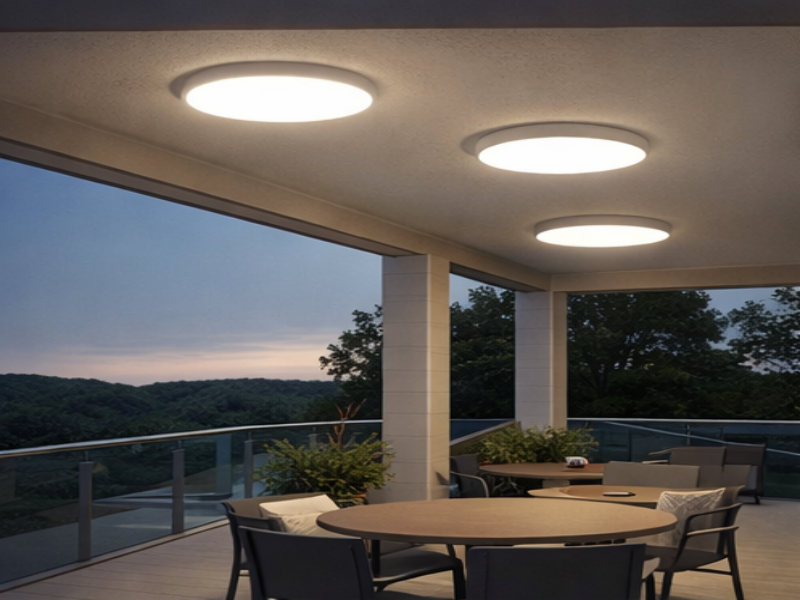
Energy efficiency is no longer positioned as a premium feature in exterior ceiling lights; it has become a baseline expectation shaped by regulatory pressure, long-term operating costs, and user awareness. In outdoor environments where fixtures may operate for extended evening hours or remain on overnight for safety, inefficient lighting quickly translates into higher energy consumption and unnecessary maintenance. As a result, performance-focused exterior ceiling lights are increasingly evaluated on how effectively they deliver usable illumination while minimizing waste, rather than on raw brightness alone.
This shift has also influenced how designers and planners think about lighting quantity. Instead of compensating with higher output, efficient fixtures allow for measured brightness levels, supporting visual comfort and consistency across outdoor spaces. In practical terms, energy efficiency supports better planning decisions by enabling evenly distributed light, longer operating hours, and reduced dependence on frequent replacements or upgrades.
The evolution of LED technology has significantly changed what exterior ceiling lights can deliver in real-world outdoor conditions. Early outdoor LEDs often struggled with inconsistent color, uneven output, or rapid degradation when exposed to temperature swings. Modern LED systems, by contrast, are designed for stability and predictability, maintaining consistent light output and color appearance over extended lifespans. This reliability is particularly valuable in ceiling-mounted outdoor fixtures, where maintenance access may be limited or disruptive.
From a performance perspective, LED-based exterior ceiling lights offer several practical advantages that directly affect usability rather than specifications alone:
● Stable output that maintains visual clarity across seasons
● Consistent color appearance that avoids patchy or mismatched lighting
● Reduced maintenance cycles, especially in hard-to-reach ceiling locations
These characteristics allow exterior ceiling lights to function as dependable ambient sources, supporting daily use without drawing attention to performance fluctuations.
Weather resistance has become a defining performance trend for exterior ceiling lights, but durability extends beyond basic moisture protection. Outdoor ceilings are exposed to a combination of humidity, airborne debris, temperature variation, and ultraviolet radiation, all of which can degrade materials and light quality over time. Effective weather resistance therefore involves both structural protection and material resilience, ensuring that fixtures continue to perform consistently rather than simply surviving exposure.
Durability considerations increasingly focus on how fixtures respond to real-world stressors, such as condensation buildup, prolonged sun exposure, and corrosion risks in certain environments. This broader definition of weather resistance has influenced material selection, lens construction, and sealing methods, aligning performance expectations with the realities of outdoor installation.
Environmental Stressor | Performance Risk | Design Response |
Moisture and humidity | Electrical failure, fogging | Improved sealing and drainage |
UV exposure | Material fading, brittleness | UV-stable finishes and lenses |
Temperature swings | Output inconsistency | Thermal management design |
Corrosive air | Surface degradation | Corrosion-resistant materials |
Performance expectations for exterior ceiling lights vary significantly depending on where and how they are installed. Covered entryways typically demand moderate protection and stable output, while semi-exposed patios require higher resistance to wind-driven moisture and temperature shifts. In coastal or high-humidity environments, corrosion resistance and long-term material stability become critical performance factors rather than optional considerations.
Aligning fixture performance with installation context allows exterior ceiling lights to maintain consistent behavior over time. Rather than over-specifying every fixture, designers increasingly focus on context-aware performance, ensuring that each ceiling-mounted light is suited to its exposure level and usage pattern. This approach supports longevity while keeping lighting plans efficient and proportionate.
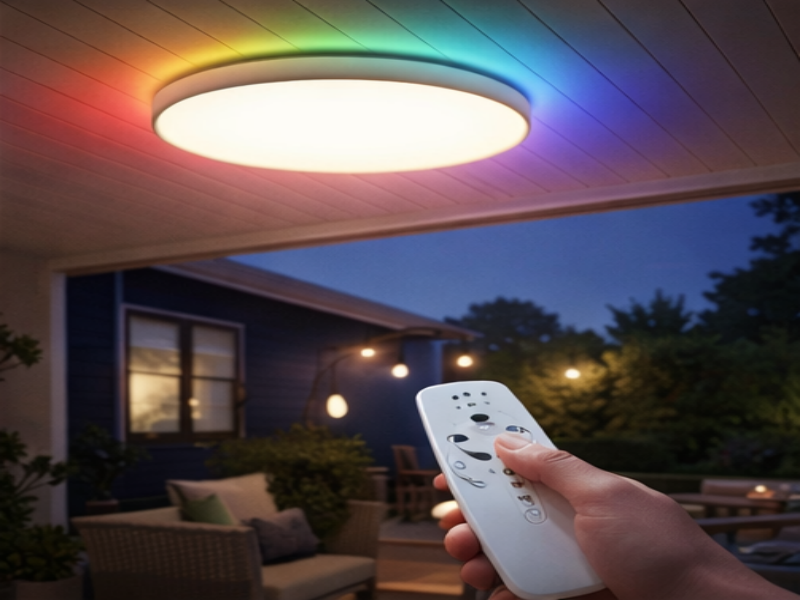
Porches and patios represent some of the most actively used outdoor spaces, and exterior ceiling lights in these areas must respond to a wide range of activities. Arrival zones prioritize orientation and visibility, dining areas require comfortable brightness for face-to-face interaction, and lounging spaces benefit from softer ambient light that encourages relaxation. These varying usage patterns directly influence fixture selection, output levels, and placement strategy.
Rather than relying on a single lighting condition, modern porch and patio lighting plans account for behavioral flexibility. Exterior ceiling lights are chosen to support multiple functions without frequent adjustment, providing adaptable illumination that remains comfortable across different times of day and types of use.
Recent trends emphasize controlled, diffused light distribution over direct or concentrated output in porch and patio applications. Because occupants are often seated beneath ceiling-mounted fixtures, glare control becomes especially important. Diffused ambient light helps maintain visual comfort while ensuring that the space remains evenly illuminated and usable for extended periods.
Comfort-oriented light distribution typically prioritizes:
● Even coverage that avoids harsh contrasts
● Reduced brightness directly below fixtures
● Soft transitions between ceiling light and surrounding areas
These trends reflect a growing awareness that porch and patio lighting is experienced at close range, making light quality just as important as quantity.
Effective placement of exterior ceiling lights in porch and patio spaces depends on scale, ceiling height, and furniture layout. A single centered fixture may work well in compact porches, while larger patios often benefit from multiple fixtures spaced to maintain consistent illumination across the entire area. Height-aware mounting is equally important, as fixtures placed too low can feel intrusive, while those placed too high may reduce usable brightness.
Placement Strategy | Best Use Case | Usability Impact |
Centered single fixture | Small porches | Clear orientation, simple coverage |
Multiple evenly spaced fixtures | Large patios | Balanced brightness, reduced shadows |
Height-aware mounting | Low ceilings | Improved comfort and reduced glare |
By aligning placement logic with how the space is actually used, exterior ceiling lights can support both movement and lingering without dominating the environment. In porch and patio settings, thoughtful placement transforms ceiling-mounted fixtures from basic utilities into key contributors to comfort, usability, and overall outdoor experience.
Modern exterior ceiling lights favor clean forms, low profiles, efficiency, and outdoor durability. These trends support comfort and long-term use.Applying trends requires attention to space. Ceiling height, exposure, and light comfort matter.
Balanced choices create coherent outdoor lighting.Guangzhou Keou Lighting Co., Ltd. supports this shift. Its exterior ceiling lights deliver reliable performance, turning trend awareness into confident decisions.
A: Exterior ceiling lights increasingly focus on low-profile designs, energy efficiency, and weather resistance to support long-term outdoor use in commercial and residential projects.
A: Exterior ceiling lights provide consistent ambient illumination in covered spaces, unlike wall or landscape lighting, which mainly support direction, accent, or perimeter visibility.
A: Exterior ceiling lights are designed for varied contexts, including covered, semi-exposed, and high-humidity areas, when performance ratings match exposure and environmental conditions.
A: When selecting exterior ceiling lights, engineers should evaluate ceiling height, light distribution, durability, and maintenance cycles to ensure reliable performance and user comfort.


