Author: Huang Publish Time: 29-04-2026 Origin: Site


If you sell surface-mounted panel lights at scale, you already know the hidden cost isn’t the fixture.
It’s the install variation.
A “simple” surface-mount panel can turn into a slow, error-prone job when the installer has to hold the luminaire, find side screw points without a clear sightline, manage wiring, and hope everything ends up flush. One small misalignment becomes a call-back. Two call-backs become a return. And returns become a reputation problem.
This article is about solving that specific failure mode.
We’ll walk through a surface mounted frameless LED panel light designed for visual, repeatable installation: align, rotate 90°, and lock—no blind side-screw guessing.
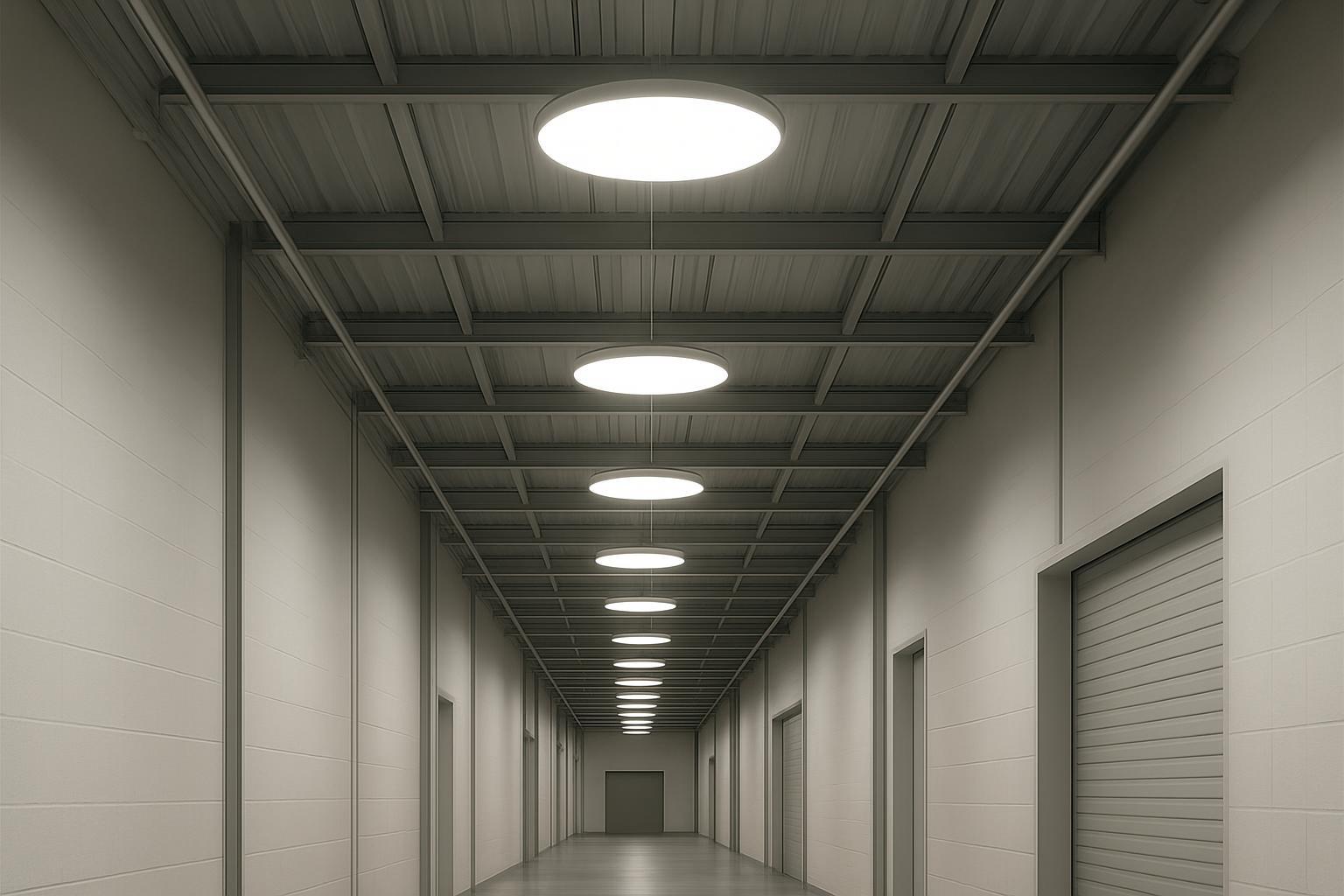
In distributor reality, installation isn’t a single controlled process. It’s:
different skill levels (experienced electricians + junior crews)
mixed ceiling conditions (uneven concrete, old junction boxes, variable wiring space)
time pressure on retrofit projects
Traditional surface-mount panel lights that rely on side screws or multi-point fastening can create predictable issues:
Alignment mistakes: the fixture looks centered until the last screw, then sits slightly off or leaves a visible gap.
Inconsistent torque: over-tightened screws crack plastic parts; under-tightened screws lead to looseness and vibration.
Poor wiring access: installers rush terminations when the cavity is tight, increasing the chance of loose connections.
Longer training time: your customer’s team needs “tribal knowledge” to install quickly and cleanly.
Key Takeaway: Distributors don’t just sell a luminaire—they sell predictable installation outcomes. Anything that reduces variation reduces returns.

A better surface-mount design should make the correct installation path obvious.
On the KEOU Lighting surface-mounted frameless LED panel light (MB026), the core idea is straightforward:
The driver and mounting structure are integrated.
The installer fixes the driver/base first, then aligns the luminaire.
The luminaire rotates 90° to lock into place.
Because the interface is “seen and matched” (rather than “held and guessed”), the installation becomes more visual and repeatable.
Based on the product page installation description, the intended workflow is:
Fix the driver/base to the ceiling (select the hole size for wire diameter, then fasten using a screw).
Align the luminaire with the driver/base.
Rotate the luminaire 90° to complete the installation.
KEOU’s product page describes the overall install as taking about three seconds in ideal conditions—treat that as a best-case demonstration rather than a guaranteed jobsite time.
Distributors usually don’t want “one more accessory bag” per box.
When the driver and mount are designed as a two-in-one structure, it can reduce:
missing parts in the field
installer improvisation (which often creates quality disputes)
warehouse picking mistakes
And just as important: it simplifies how you explain the product in your catalog and to your reseller channels.
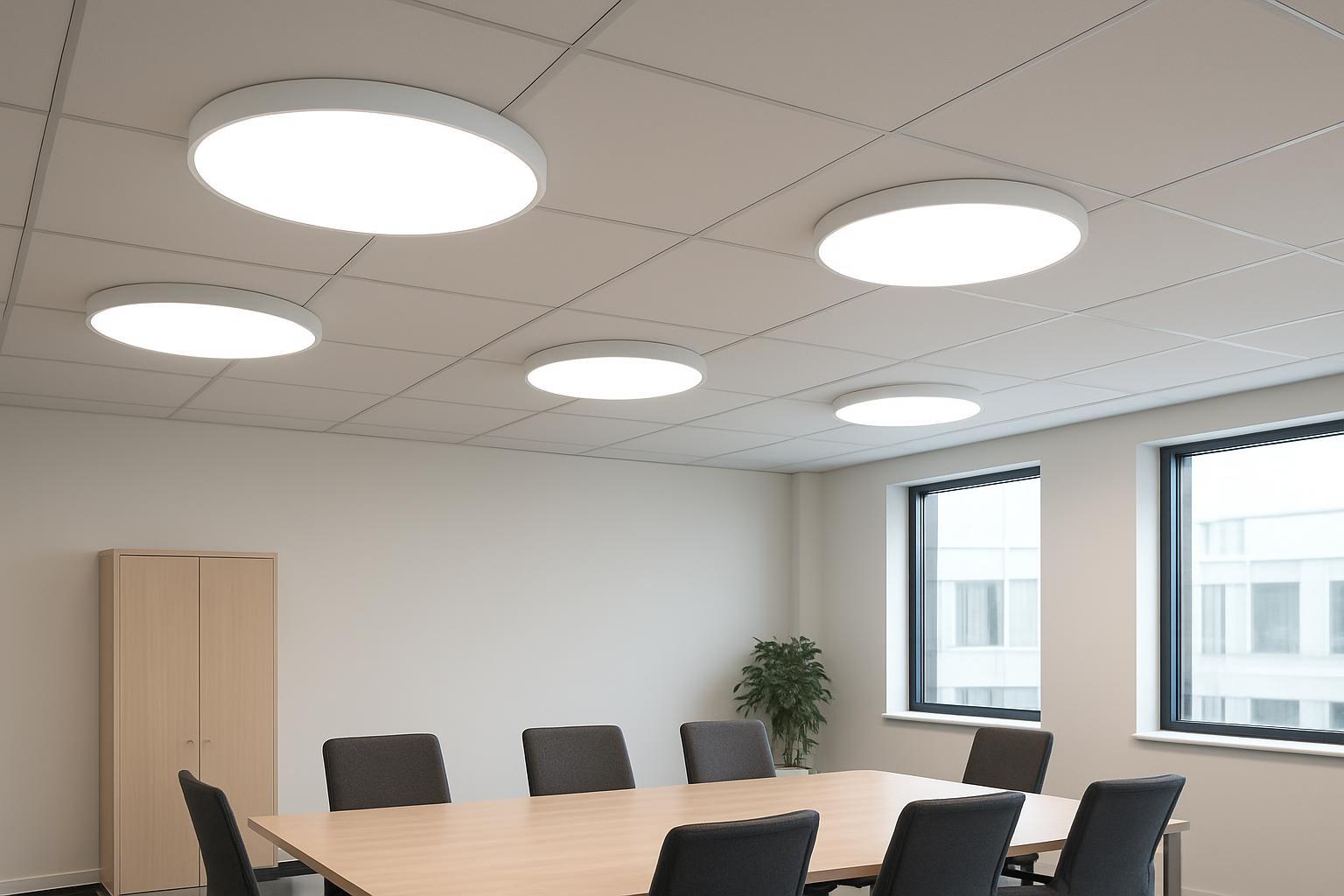
This model is positioned as a surface-mounted, frameless, round LED panel light for projects where:
there’s no ceiling grid to recess into,
the ceiling is solid (concrete/board) and you need surface mounting,
the buyer values speed and consistency over complex trim details.
It’s not trying to be a deep-spec “architectural micro-baffle” product. The win here is the installation workflow.
For distributor sales, two things matter:
quote only what’s verifiable, and
turn “unknowns” into a clean confirmation checklist.
From the MB026 product page:
Spec item | Value (from product page) |
|---|---|
Wattage options | 24W / 36W / 48W |
Input voltage | 110–265V |
CRI | Ra 80 |
Luminous flux | 24W: 2400 lm; 36W: 3600 lm; 48W: 4800 lm |
Efficacy claim | 100 lm/W |
Dimensions (Ø × thickness) | 24W: φ180 × 47 mm; 36W: φ225 × 46 mm; 48W: φ280 × 53 mm |
Material | plastics + aluminum |
The page references “multiple color temperature options” via an “intelligent driver,” but does not list exact CCT values. It also doesn’t specify UGR, flicker metrics, IP rating, dimming protocol, or warranty term.
For wholesale orders, that’s not a problem—if you systemize it.
Here’s the confirmation checklist to standardize your RFQs:
required CCT options and whether you want selectable CCT (confirm available settings)
any dimming requirement (TRIAC, 0–10V, DALI, etc.)
target power factor requirement for the project/market
any IP requirement (IP20 vs damp-area needs)
packaging / labeling needs for your channel (barcode, language, master carton count)
The product page lists a PF of 0.5.
In many commercial projects, PF requirements can be higher depending on the tender, local utility expectations, and the driver category used. Low PF is often associated with non-linear current draw and harmonics behavior in power electronics.
If you want a neutral technical explainer to share with customers, Advanced Energy provides a clear overview of how harmonics relate to power factor in “Understanding LED lighting current harmononics for EN61000-3-2”.
Distributor takeaway: treat PF as a spec-matching item, not a marketing bullet. For bid projects, confirm the driver option and PF requirement before you lock the SKU.
Pro Tip: In your quotation template, add a single line: “Driver option / PF per project spec: Confirmed.” It prevents avoidable disputes later.
Distributors rarely win by shaving 2–3 dollars off a fixture. They win by reducing downstream cost and friction.
Here’s what a twist-lock surface mounted LED panel light changes compared with traditional side-screw designs—especially when you’re trying to standardize a quick install surface mount panel light program across many installers and sites.
When the “correct” install is visual, junior crews can hit acceptable quality faster.
That reduces:
training time
call-backs on multi-site rollouts
inconsistent finish quality between teams
Traditional mounts often involve:
multiple screws
brackets that can be installed in the wrong orientation
more opportunities to strip threads or crack housings
A rotational installation LED panel light consolidates the critical steps into a smaller set of actions. Fewer steps is not a marketing line—it’s fewer opportunities for variation.
If a customer complains “the light isn’t seated flat,” you want a troubleshooting path that doesn’t rely on guessing.
With a twist-lock approach, the check is straightforward:
Is the base fixed properly?
Is alignment correct?
Was the 90° rotation fully completed?
That makes after-sales support easier for both you and the end customer.
For a decision-stage buyer (your distributor customer), the product pitch should stay disciplined:
Lead with the installation workflow benefit.
Back it with verifiable specs.
Offer a clear confirmation checklist for the unknowns.
A simple positioning statement that stays honest:
A surface-mounted frameless LED panel light designed for fast, visual installation—align and twist-lock—ideal for retrofit and repeatable projects where reducing install variation matters.
Most distributors don’t sell one panel. They sell a mix.
Use this model when the selling point is repeatable installation and a clean surface-mounted profile.
For customers who are still deciding between surface-mounted and other formats, you can point them to a practical internal reference like the distributor-focused comparison of round vs. square recessed ultra-thin panel lights.

If you’re evaluating this model for distribution, the fastest path is to standardize your request so engineering can confirm configuration quickly.
Send KEOU Lighting:
target wattage (24W / 36W / 48W)
ceiling type + installation scenario
CCT requirement (and whether you want selectable CCT)
driver/dimming requirement (if any)
target PF requirement (if this is a tender/project spec)
Then we’ll confirm configuration availability, samples, and lead time.
Product page: KEOU Surface Mounted Frameless LED Panel Light (MB026)