Author: Huang Publish Time: 05-05-2026 Origin: Site


If you’re building a commercial ceiling package for a client in Saudi Arabia, you’ve probably seen the same tension on every project: lighting designers want layered light (ambient + accent), while installers and buyers want fewer cutouts, fewer circuits, and fewer things that can go wrong.
That’s why 2-in-1 surface mounted spot + downlight fixtures are getting attention. Instead of installing a downlight grid and a separate spotlight system, one luminaire combines a center downlight with a surrounding reflector-style spotlight.
This article helps distributors and spec-driven buyers compare 2-in-1 downlight spotlight fixtures against the traditional approach: separate downlights + separate spotlights. No hype—just a decision framework you can use on your next quote.
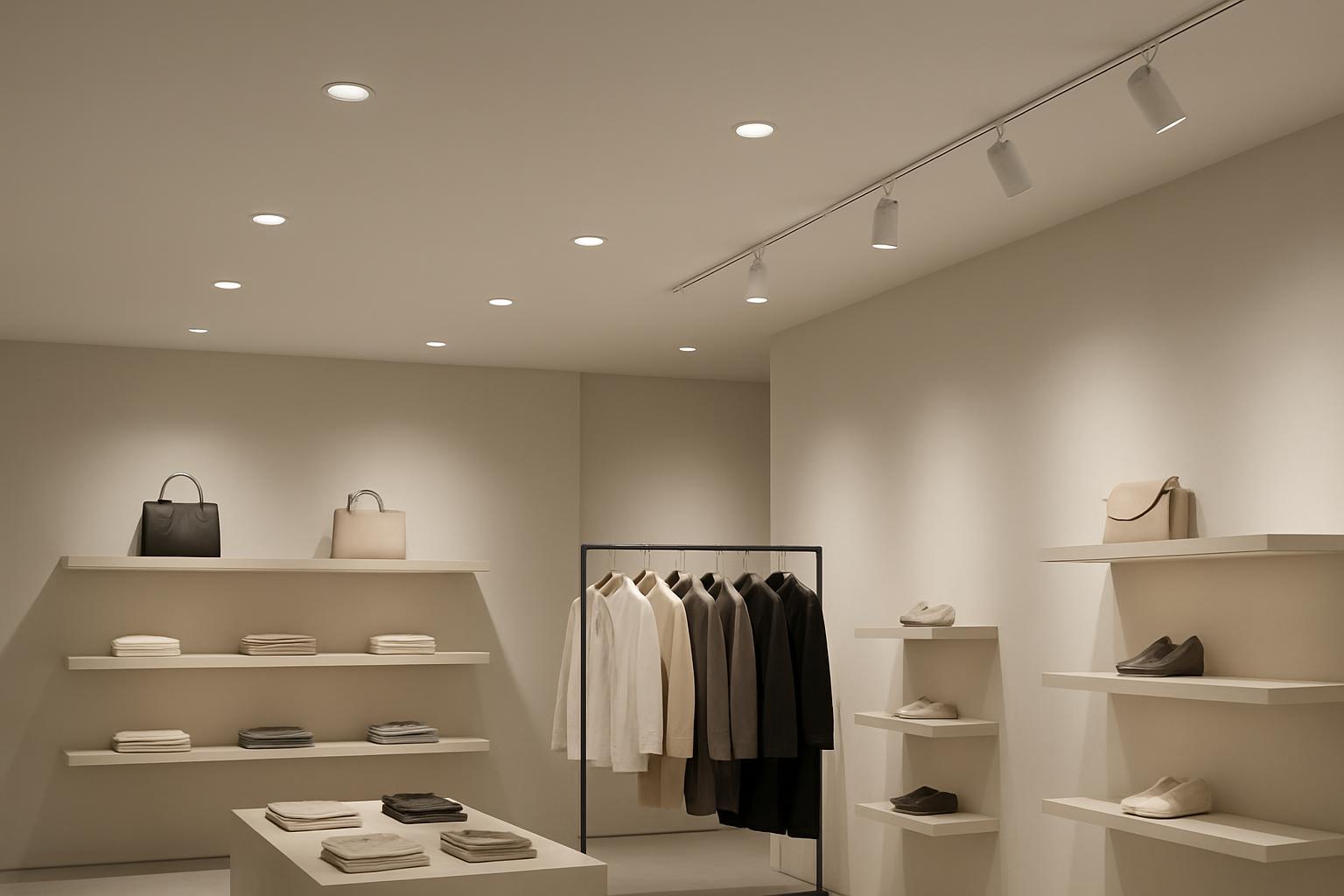
This is a practical guide for spec-driven buyers and distributors who need to quote quickly, reduce installation risk, and still deliver the “layered light” designers expect—without adding extra ceiling coordination work.
Criteria | 2-in-1 surface mounted spot + downlight | Separate downlights + spotlights |
|---|---|---|
Ceiling coordination | Fewer ceiling points to coordinate | More cutouts / mounting points to coordinate |
Wiring & controls | Fewer devices may simplify wiring; zoning depends on driver design | Easier to separate circuits/zones for ambient vs accent |
Lighting flexibility | Integrated—good when you want a “preset” layered effect | Maximum flexibility (aiming, spacing, independent dimming) |
Beam angle strategy | Must choose beam options that work together | You can pick wide downlight beams + narrow spotlight beams independently |
Glare risk management | Depends heavily on the optics and shielding of one unit | You can select low-glare downlights and separate accent optics |
Maintenance touch points | Fewer fixtures to access | More fixtures, but more modular replacements |
Best fit | Standardized commercial packages, fast rollouts, shallow ceilings | High-end retail, galleries, or projects needing frequent re-merchandising |
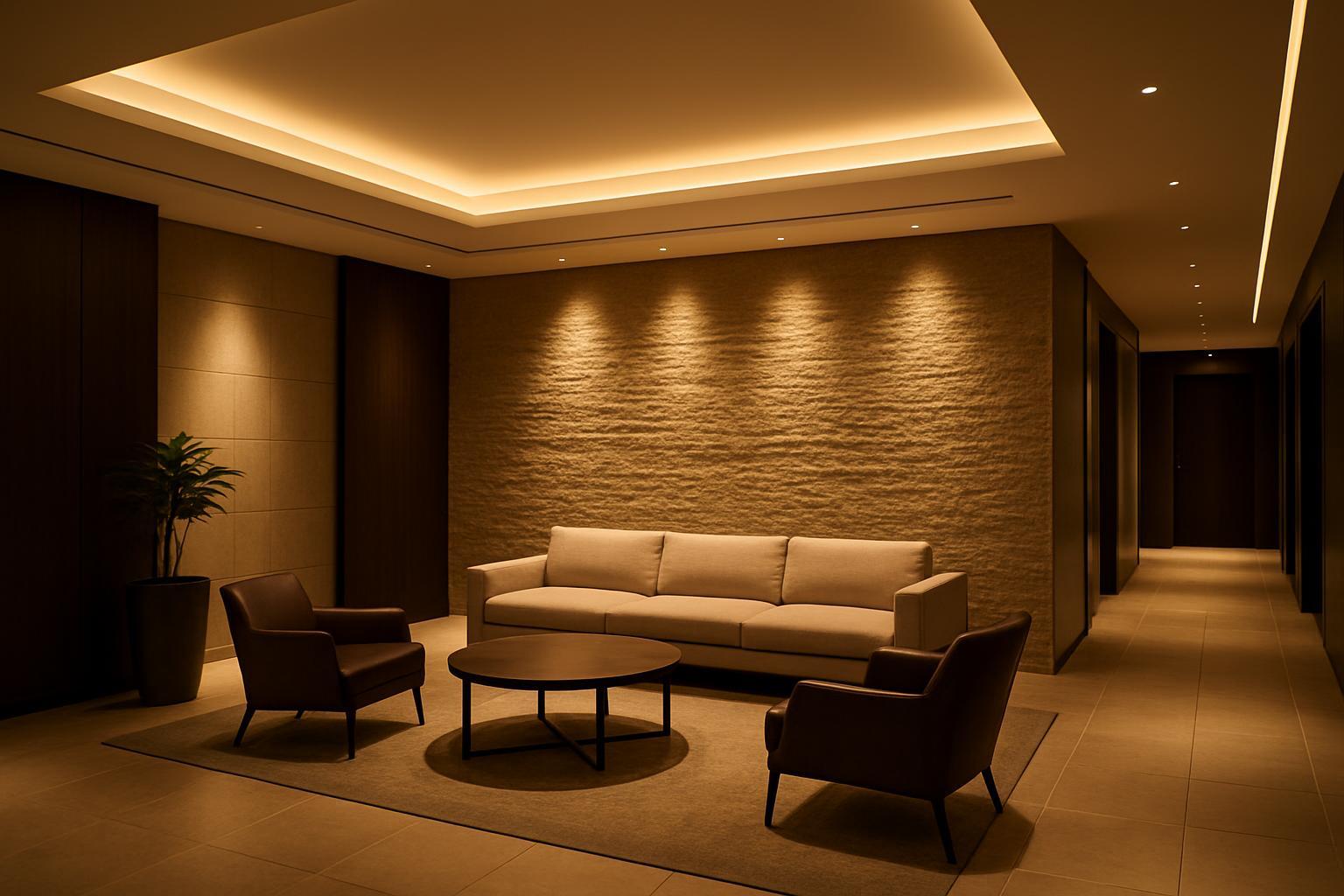
A 2-in-1 luminaire is essentially a “layered lighting shortcut”: a center downlight for general fill and a surrounding reflector/spot element for punch.
In your product concept, the downlight is centered, and the hexagonal reflector wraps around it. The real question isn’t whether the idea is clever—it’s whether it solves the day-to-day headaches your customer actually feels: too many ceiling points to coordinate, too many chances for wiring mistakes, and too many “it looked fine on paper” surprises during commissioning.
Key Takeaway: The best choice is less about “which fixture is better,” and more about whether the project needs independent control of ambient and accent lighting—and how much risk you’re willing to carry in install time, rework, and end-user complaints if the control behavior doesn’t match the spec.
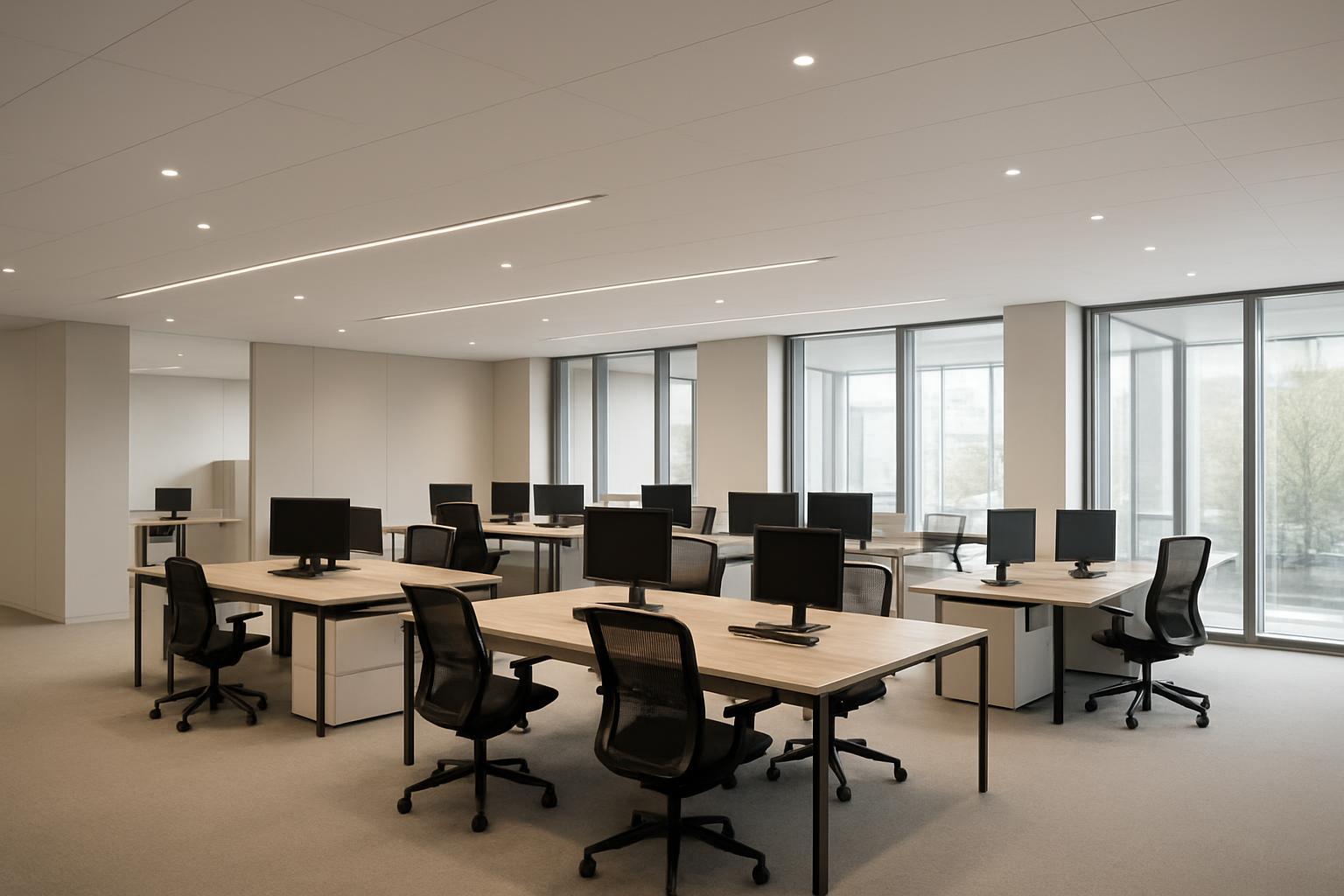
Buyers often start with beam angle selection for downlights and spotlights because it affects uniformity, punch, and the number of fixtures you need.
Most comparisons start here for a reason: beam angle dictates whether a space feels evenly lit or full of hot spots.
Typical guidance is that downlights are designed for wider distribution, while spotlights are designed for narrower, more focused beams. For example, SunroLEDs describes spotlights as often using narrow beams (roughly 8°–45°) and downlights as using wider beams (often around 60°–120°) in its “LED Spotlight vs Downlight” comparison.
You want a consistent, repeatable ceiling layout.
The “accent” requirement is modest (e.g., add depth to the space rather than spotlight a specific object).
You prefer selecting from a small set of beam options rather than designing two separate lighting layers.
The accent targets move (retail displays, seasonal merchandising).
You need different beam families in the same area (very wide ambient + very narrow highlights).
You want to optimize spacing and aiming independently.
Radians Lighting’s overview on beam angle categories for downlights and spotlights is a useful reminder: once you’re mixing “wide ambient” and “narrow accent,” separate fixtures make it easier to keep each role doing its job.
This is where “downlight vs spotlight (commercial)” decisions become real: separate fixtures can give you cleaner zoning, but they also create more ceiling points and more coordination work.
Distributors often discover late in a project that “same fixture” doesn’t always mean “same control.” What matters is how many lighting zones the space needs.
Your concept supports:
Dual control
Dual CCT (e.g., 3000K / 4000K / 6500K)
Three lighting effects/modes
The ability to run both effects together or only one
That’s attractive when the buyer wants a flexible “set of looks” without commissioning a complex control system.
What you should verify before specifying:
Are the modes selected by a wall switch sequence, dual circuits, or a control protocol?
Can the downlight and spot functions be dimmed independently (or only together)?
If the site uses 0–10V, DALI, or smart controls, what interoperability is supported?
If the space needs true separation—ambient lighting on one scene, accents on another—separate fixtures often make the zoning logic clearer:
One circuit (or control channel) for downlights
A second circuit/channel for spotlights
Pro Tip: Ask for a wiring/control diagram early. It prevents “we assumed it could” surprises at the sample stage.
Glare control is where many “looks good on paper” lighting packages get rejected.
A 2-in-1 luminaire can be excellent here if the optical design shields the light source properly. But since both functions live in one aperture, you’re relying on one product’s optical design choices.
With separate fixtures, you can deliberately pair:
a low-glare downlight optic for general lighting, and
a narrower, aimable accent optic for highlights.
If your customer is specifying offices, ask whether they have a comfort target (many projects reference UGR targets such as UGR<19, depending on the application). If you can’t confirm the glare performance, don’t promise it.
For MOFU buyers, CRI is rarely about “higher is always better.” It’s about selecting the right level for the use case and margin.
General guidance is:
CRI 80: often considered a baseline for general commercial lighting.
CRI 90+: preferred for spaces where color accuracy affects perception and sales.
Ledrise summarizes application-driven guidance in its CRI guide, and Hyperlite provides a retail-focused comparison in its CRI 80 vs CRI 90 for retail lighting guide.
Choose CRI≥80 for corridors, back-of-house, and general office lighting.
Choose CRI≥90 for retail displays, hospitality public areas, and any space where skin tones or merchandise color matters.
If the project has both requirements, you can still standardize the fixture family while offering two CRI options in the quote.
When you’re selling into fast-turn fit-outs, install time is a specification feature.
2-in-1 tends to reduce coordination burden:
fewer ceiling points
fewer trim styles to align
potentially fewer drivers/components to manage
Separate fixtures may increase labor, especially when the ceiling is crowded (HVAC, sprinklers, access panels) and each cutout must be coordinated.
Distributors think in returns, warranty friction, and site complaints—not just first cost. The “problem” you’re trying to avoid is simple: a ceiling package that looks great at handover, but turns into repeated call-backs because one area feels too dim, too harsh, or inconsistent from batch to batch.
2-in-1 can reduce service touchpoints (fewer fixtures). But if the customer treats ambient and accent as separate “systems,” they may prefer the modularity of separate fixtures.
Questions to ask the factory either way:
What’s the replacement process (module vs full fixture)?
How is color consistency managed across batches?
What documentation is provided with samples (IES files, driver spec, wiring diagram)?
If you’re deciding between a 2-in-1 downlight spotlight product and separate fixtures, use the scenarios below to avoid over-specifying (or under-specifying) the ceiling plan.
The project needs a clean ceiling with fewer components.
The buyer wants a few selectable looks (CCT + modes) without heavy commissioning.
The accent requirement is “add depth,” not “pinpoint highlight.”
The designer needs independent aiming and frequent layout changes.
The project demands strict zoning and independent dimming.
The space is color-critical (high-end retail, galleries) and the optics must be tuned per role.
If you’re building a standardized package for commercial projects, KEOU Lighting can support a 2-in-1 architecture that combines a center downlight with a surrounding hex-reflector spotlight effect.
For reference, see KEOU Lighting’s main site at KEOU Lighting and the related concept/product page for a surface mounted spot down light.
Sometimes. It works best when the accent requirement is moderate and the goal is a clean, simplified ceiling plan. If you need strong, precise highlights, separate spotlights are usually easier to tune.
Start with the job: wider beams for general fill, narrower beams for accents. Use manufacturer beam options to match ceiling height and target areas, and request photometrics if the project is spec-driven.
No. CRI 80 is common for general areas, while CRI 90+ is most valuable where color affects experience or sales—retail displays, hospitality public spaces, and galleries.
Ask how modes are selected (switching sequence, dual circuits, or protocol) and whether the downlight and spotlight functions can be controlled independently.
A sample should come with a wiring diagram, driver/control options, beam/CCT/CRI choices, and (when applicable) photometric files.
If you’d like to evaluate a 2-in-1 surface mounted spot + downlight for your next SA project, request a sample and quotation with your preferred CCT options (3000K/4000K/6500K), target CRI (≥80 or ≥90), and the beam angle options you want to test.
You’ll get to validate the two questions that matter most before you commit a ceiling package: Does the space feel right to the people using it—and does the control behavior match the spec on day one without rework?