Author: Huang Publish Time: 10-02-2026 Origin: Site


 1. Introduction
Established communities have unique constraints: existing poles and wiring, neighbors sensitive to spill light, and a strong desire for visual unity. The fastest way to win stakeholder approval is to keep CCT consistent (generally 2700–3000K outdoors) and use matching fixture families and finishes across entrances, paths, facades, and parking.
Security expectations have also matured. Teams increasingly expect lights to dim late at night, boost on motion, and, where appropriate, react to security events from access control or CCTV. Think of lighting as a calm baseline that can “wake up” when people or incidents appear.
Visual cohesion & CCT consistency — 18%: same-family finishes; SDCM ≤3 where available; warm CCT options (2200–3000K).
Glare control & optics quality — 17%: full cut-off distributions, louvers/honeycomb/shields, IES files, ≤3000K options, Dark Sky–friendly optics.
Controls & security integration — 16%: photocell, PIR/microwave, 0–10V/DALI, and hooks for CCTV/ACS triggers or networked nodes; documentation quality.
Durability & environmental robustness — 15%: IP/IK ratings, die-cast aluminum and tempered glass, corrosion resistance, warranty length, test reports.
Energy performance & compliance — 14%: efficacy vs. category norms, DLC SSL V6.0/LUNA V2.0 alignment (effective 2026), IES recommendations.
Installation & retrofit ease — 12%: universal mounts/adapter kits, clear wiring diagrams, pre-configured settings, contractor guides.
Total cost of ownership (TCO) — 8%: pricing bands, L70/B50 lifetime, maintenance access, parts availability, control-enabled savings.
Standards and references used: See citations to the DesignLights Consortium’s SSL V6.0 and LUNA V2.0 requirements (effective 2026), the DarkSky Five Principles and program guidance, and IES RP/LP materials referenced later.
Disclosure: KEOU Lighting is our product. We evaluated it using the same criteria and weights as other options in this guide. We include neutral references to its outdoor families where relevant and link to authoritative standards where possible. See the Outdoor Lighting Solution hub on KEOU’s site for a portfolio overview, and consult official standards like the DLC SSL V6.0/LUNA V2.0 technical requirements (2026) and DarkSky’s Approved Luminaires program and Five Principles when building specs.
Below are contractor-ready “spec cards.” Keep parameters practical; use photometric layouts for final aiming and levels.
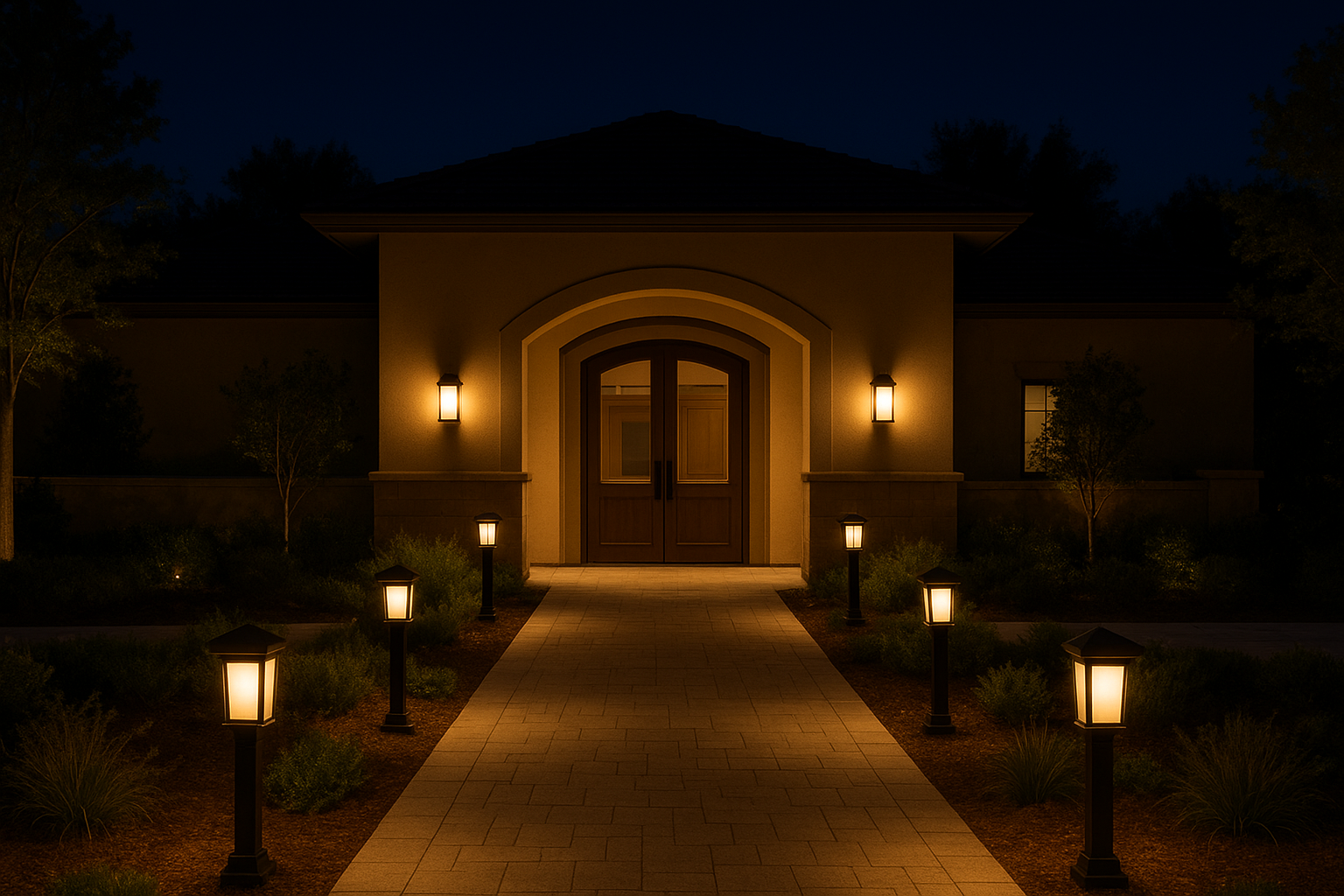
▍ Purpose: Welcome and wayfinding: set the site’s visual tone while avoiding glare and uplight.
Fixtures: shielded wall sconces, small shielded floods, or decorative post-tops with full cut-off. Mounting: 8–12 ft (walls) or 10–15 ft (posts). Light quality: 2700–3000K, CRI ≥80; full-cutoff aiming (U0).
Controls: photocell + scheduled dimming; optional dry-contact scene boosts tied to access events. Commissioning: verify vertical illumination and test camera exposure.
Evidence: follow DarkSky program guidance. Best for hospitality-style entries; not for very long-throw, high-mount applications.
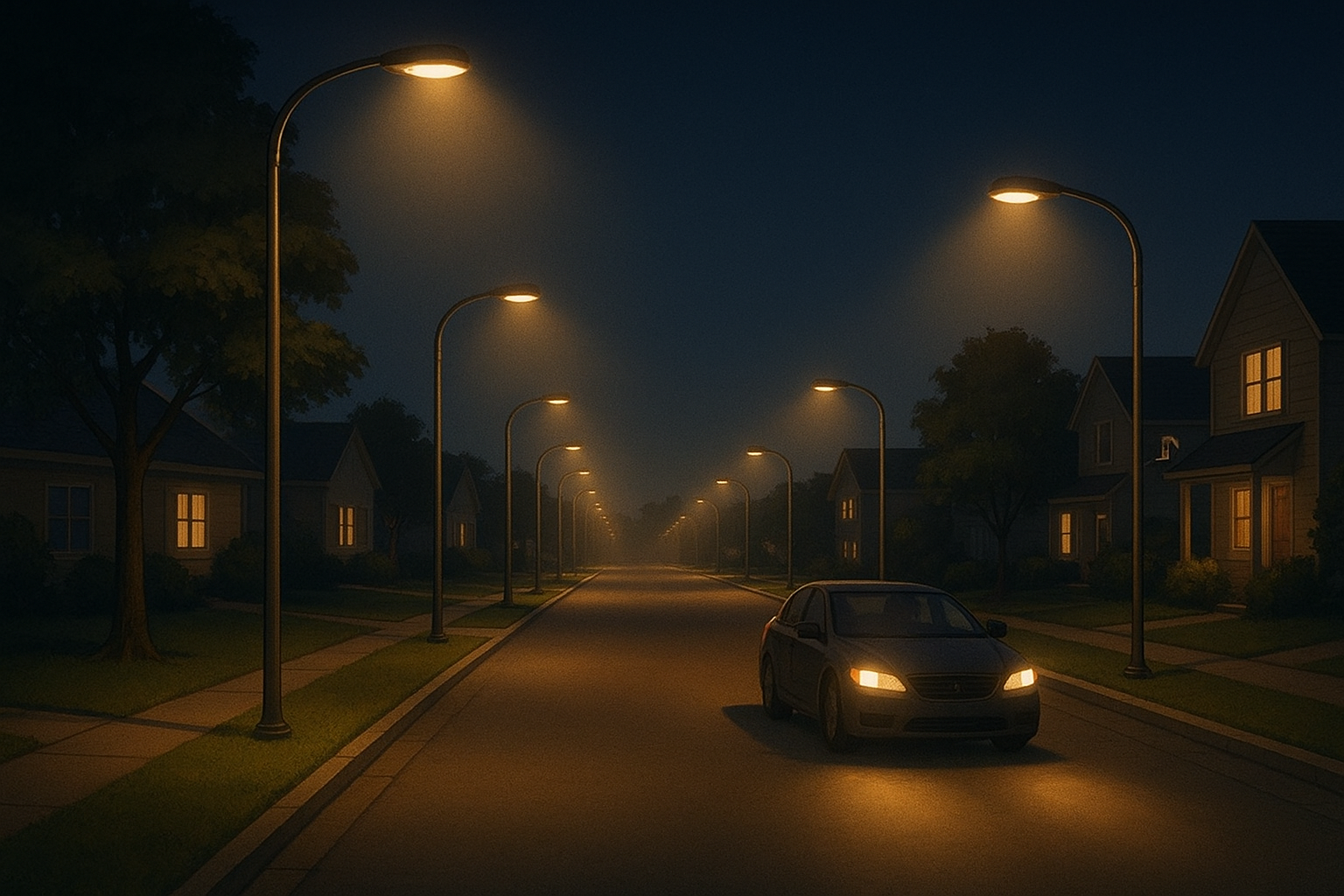
▍ Purpose: Safe, uniform driver and pedestrian visibility with minimal light trespass.
Fixtures: cobrahead/area or shoebox luminaires with Type II/III distribution. Mounting: 15–25 ft (confirm pole spacing). Light quality: 2700–3000K where allowed (up to 3500K at complex nodes); low uplight (U0–U1)
Controls: photocell + dimming profiles; provide network or dry-contact triggers for CCTV/ACS events.
Commissioning: check longitudinal uniformity per IES RP-8. Best for narrow/medium residential streets; not for high-speed arterials.
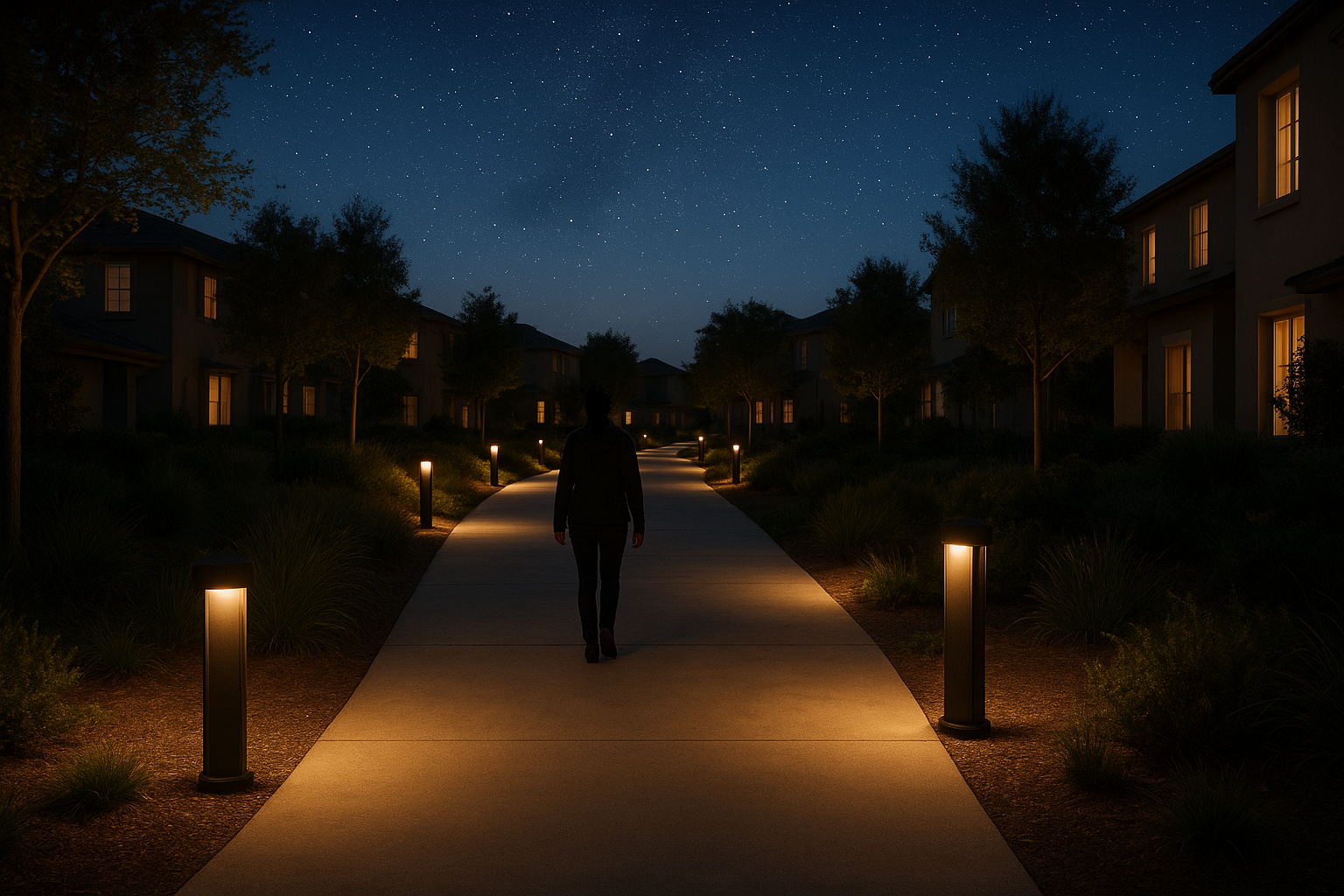
▍ Purpose: Comfort-first guidance lighting with low glare and clear sightlines at key points.
Fixtures: bollards/low posts with asymmetric optics; compact shielded posts for transitions. Mounting: 1.5–4 ft (bollards) or 6–10 ft (posts). Light quality: 2200–3000K; specify IK08–IK10 in public, vandal‑exposed areas.
Controls: photocell baseline with PIR/microwave occupancy boosts and late‑night setbacks.
Commissioning: aim louvers/honeycomb to limit high-angle luminance; test camera glare at crossings. Align with DarkSky principles for low uplight.
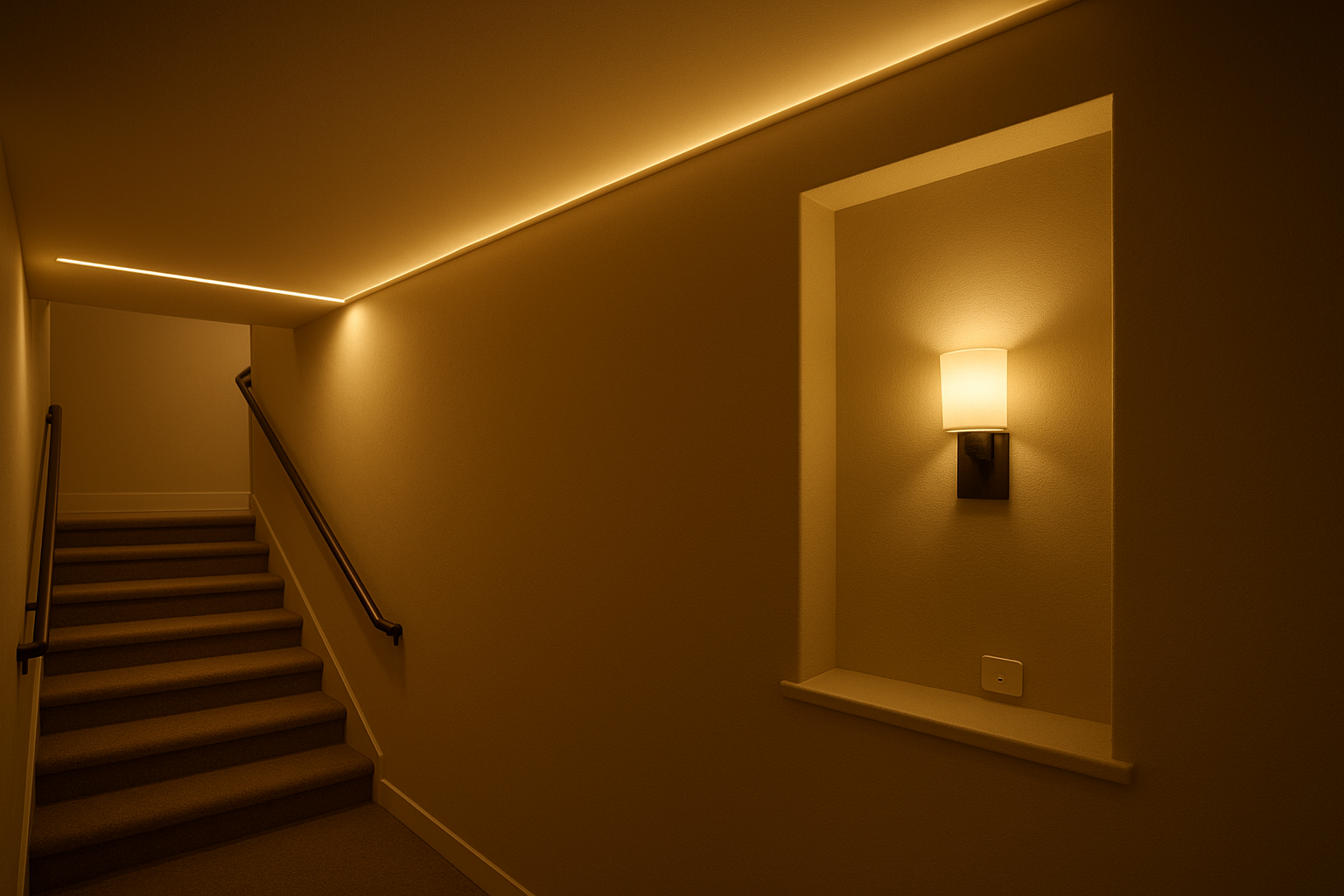
▍ Purpose: Uniform vertical illumination for safe egress and clear CCTV imagery without hotspots.
Fixtures: recessed linear or shallow diffused strips; wall sconces in alcoves. Mounting: ceiling or 7–10 ft wall. Light quality: 2700–3500K; diffuse optics to reduce point-source glare.
Controls: occupancy sensors + schedules; 0–10V or DALI scenes where BMS present.
Commissioning: verify camera exposure with lighting scenes. Follow IES LP-2 guidance for people-centric spaces.
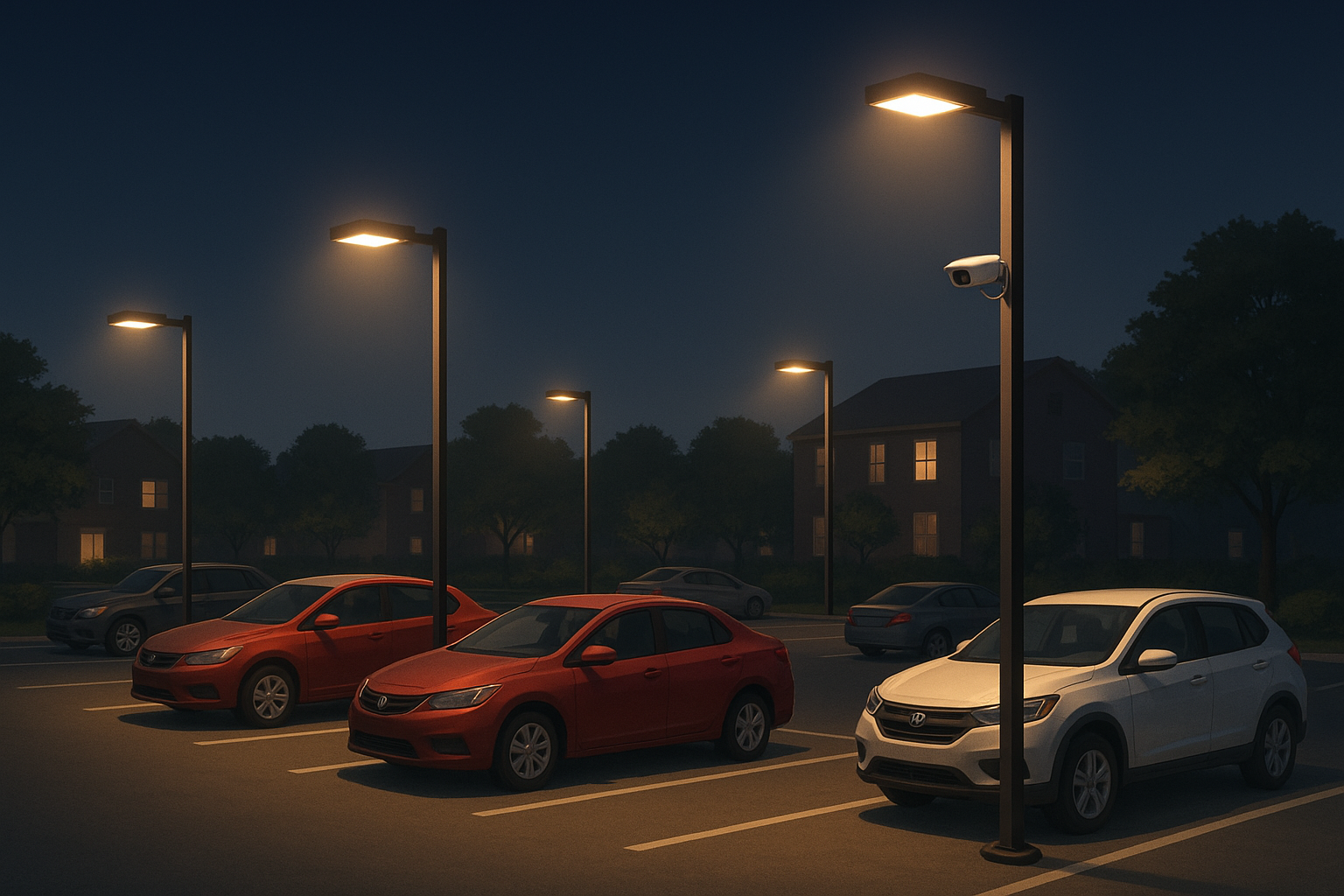
▍ Purpose: Uniform, glare-controlled illumination for safety, navigation, and CCTV compatibility.
Fixtures: pole-mounted area/site lights (Type III/IV/V). Mounting: 20–30 ft. Light quality: 3000–4000K (balance visibility vs. ambiance); full-cutoff optics with low BUG.
Controls: photocell + motion dimming; networked profiles and event boosts via CCTV/ACS triggers.
Commissioning: verify uniformity and surge protection on pole circuits. Best for medium parking fields; not for sports-level illuminance.
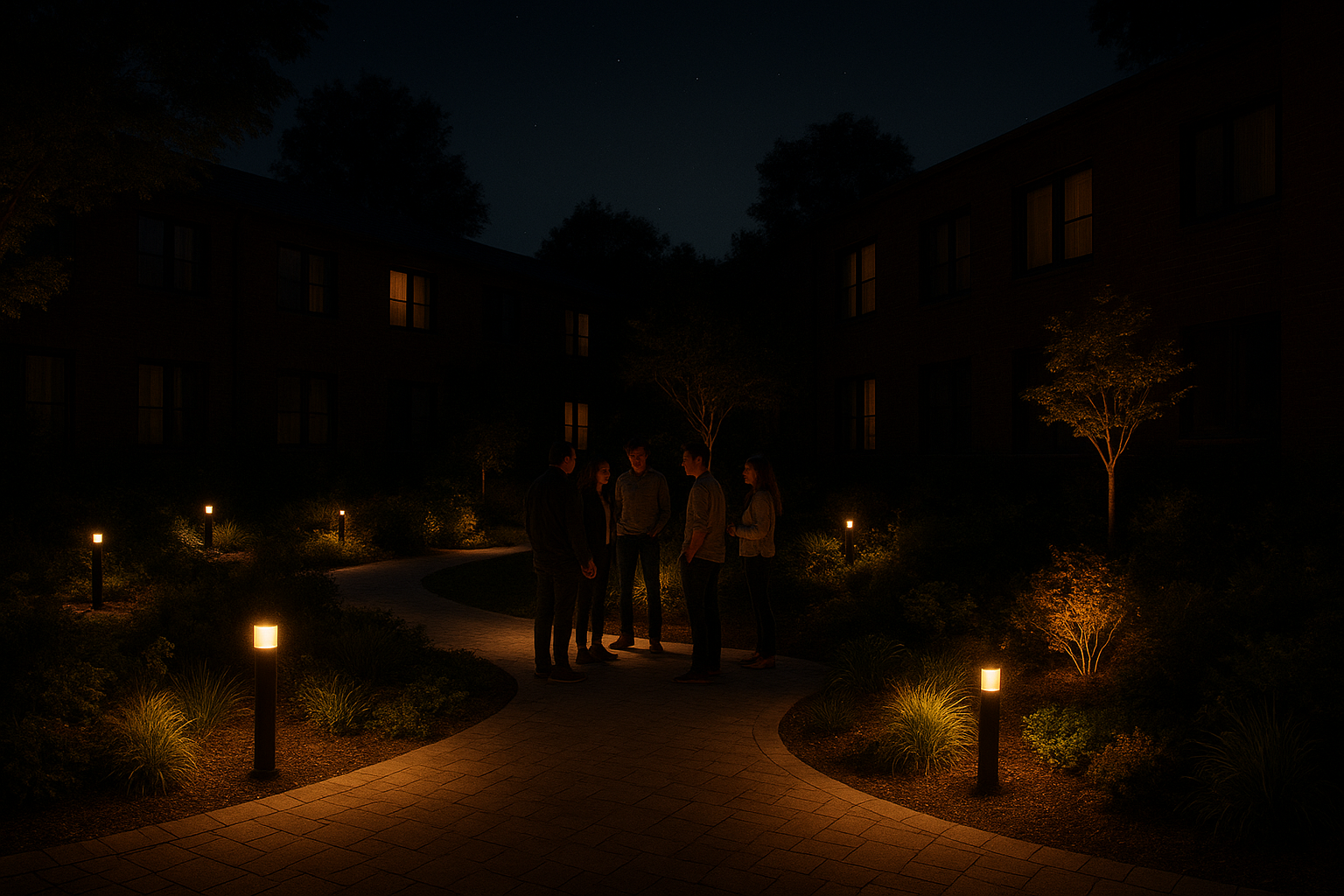
▍ Purpose: Layered low-level ambiance that highlights planting and social nodes while protecting the night sky.
Fixtures: bollards, mini-floods with shields, low-profile accents (amber where wildlife-sensitive). Mounting: 2–12 ft per feature. Light quality: 2200–3000K; precise aiming to avoid uplight.
Controls: low baseline with motion-based scene presets; event scenes for gatherings. Notes: align with DLC LUNA V2.0 wildlife guidance and DarkSky best practices. Best for social nodes; not for broad-area task lighting.
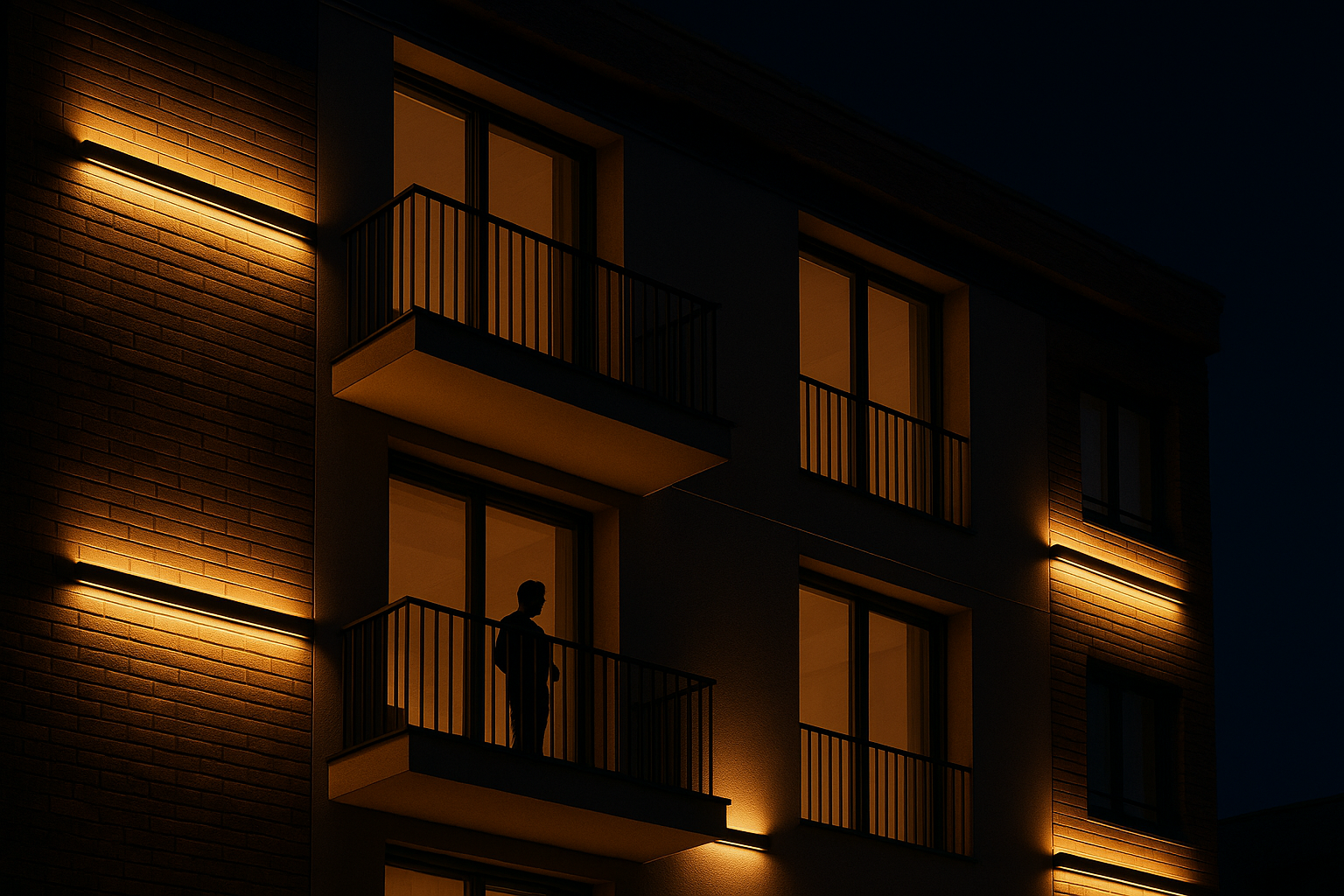 ▍ Purpose: Controlled wall-wash and texture emphasis that preserves neighbor comfort and night-sky goals.
Fixtures: shielded linear wall-washers or compact floods with visors/louvers. Mounting: 10–20 ft or ground-recessed. Light quality: 2700–3000K; aim to prevent light above 90°.
Controls: timeclock + scene control; dim curves for quiet hours.
Commissioning: match facade CCT to adjacent zones for cohesion; avoid uplight. Evidence: DarkSky guidance and project-specific aiming.
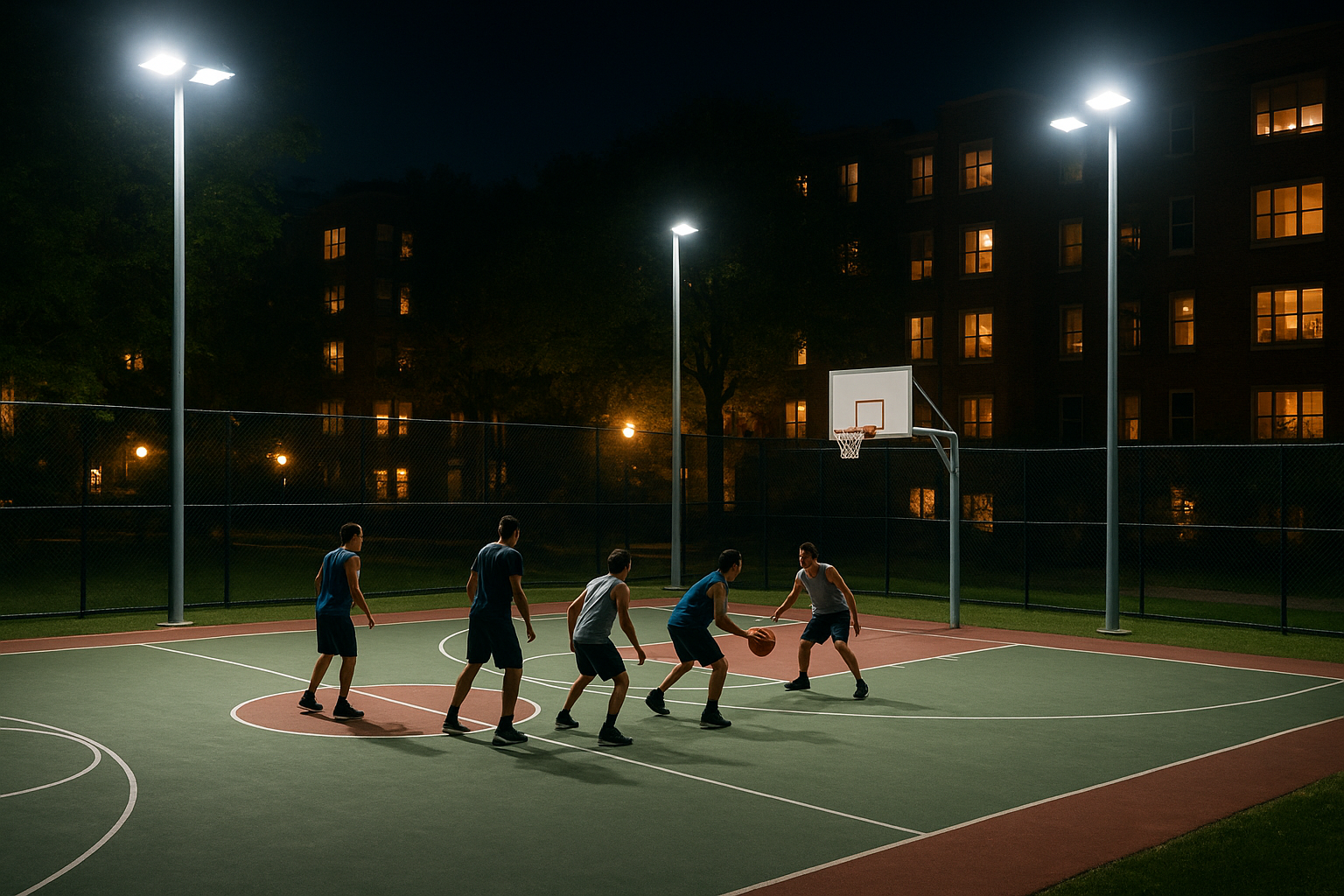
▍ Purpose: Task-level, uniform illuminance for safe play and object tracking.
Fixtures: narrow-beam shielded floods with visors. Mounting: 25–40 ft (site-dependent). Light quality: 4000–5000K for task clarity where acceptable; robust IP66/IK08+.
Controls: timeclock + event scenes; after-hours setbacks and motion triggers.
Notes: reserve higher CCT/output for sport tasks only; use shields to limit spill to neighbors.
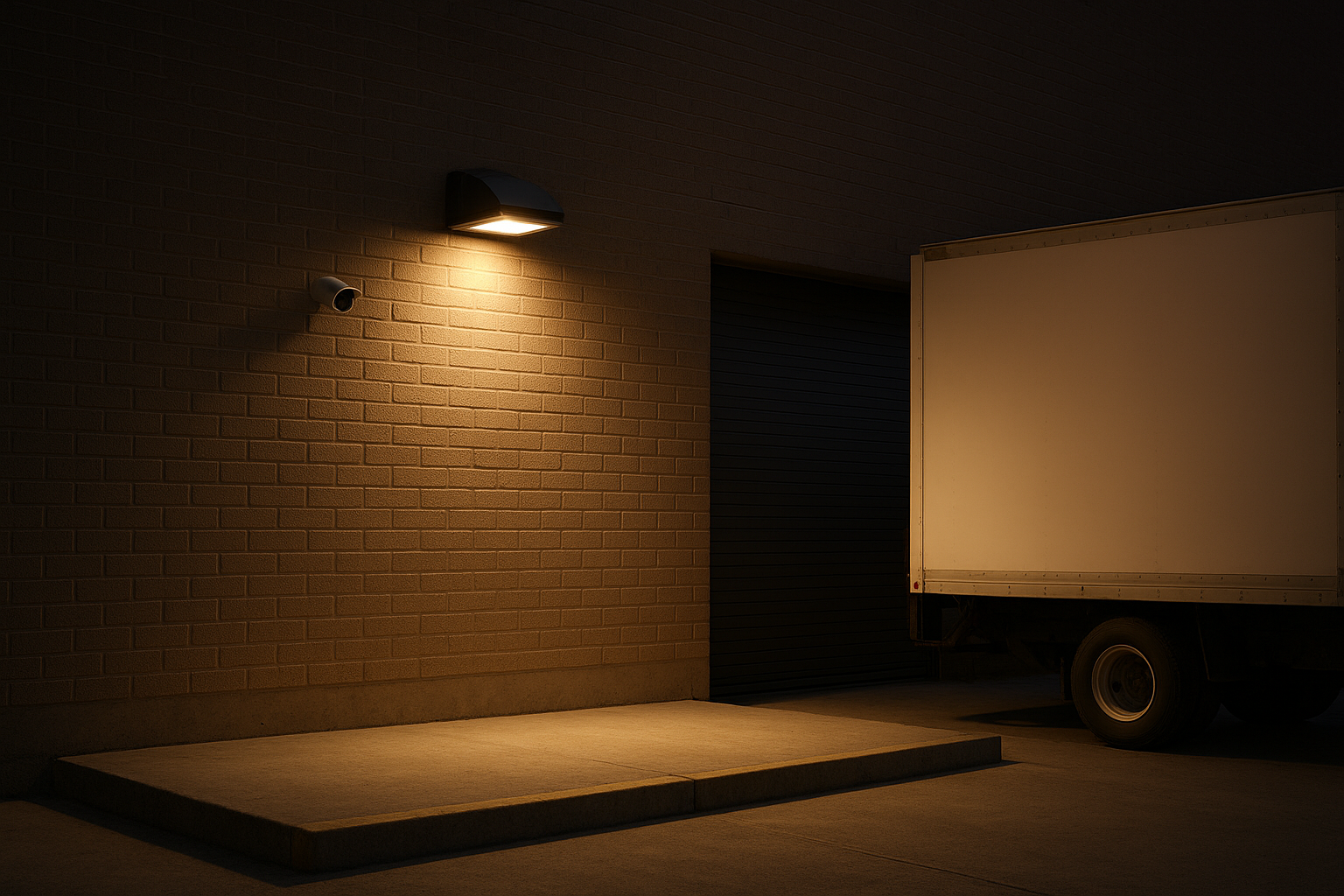
▍ Purpose: Durable, tamper-resistant illumination to support operations and CCTV with minimal nuisance.
Fixtures: full-cutoff wall packs or shielded floods with vandal-resistant housings. Mounting: 8–14 ft. Light quality: 3000–4000K; IP65 and IK08+.
Controls: motion + photocell baseline; dry-contact alarm boosts and camera-triggered scenes.
Commissioning: document dry-contact wiring and aim to avoid camera flare.
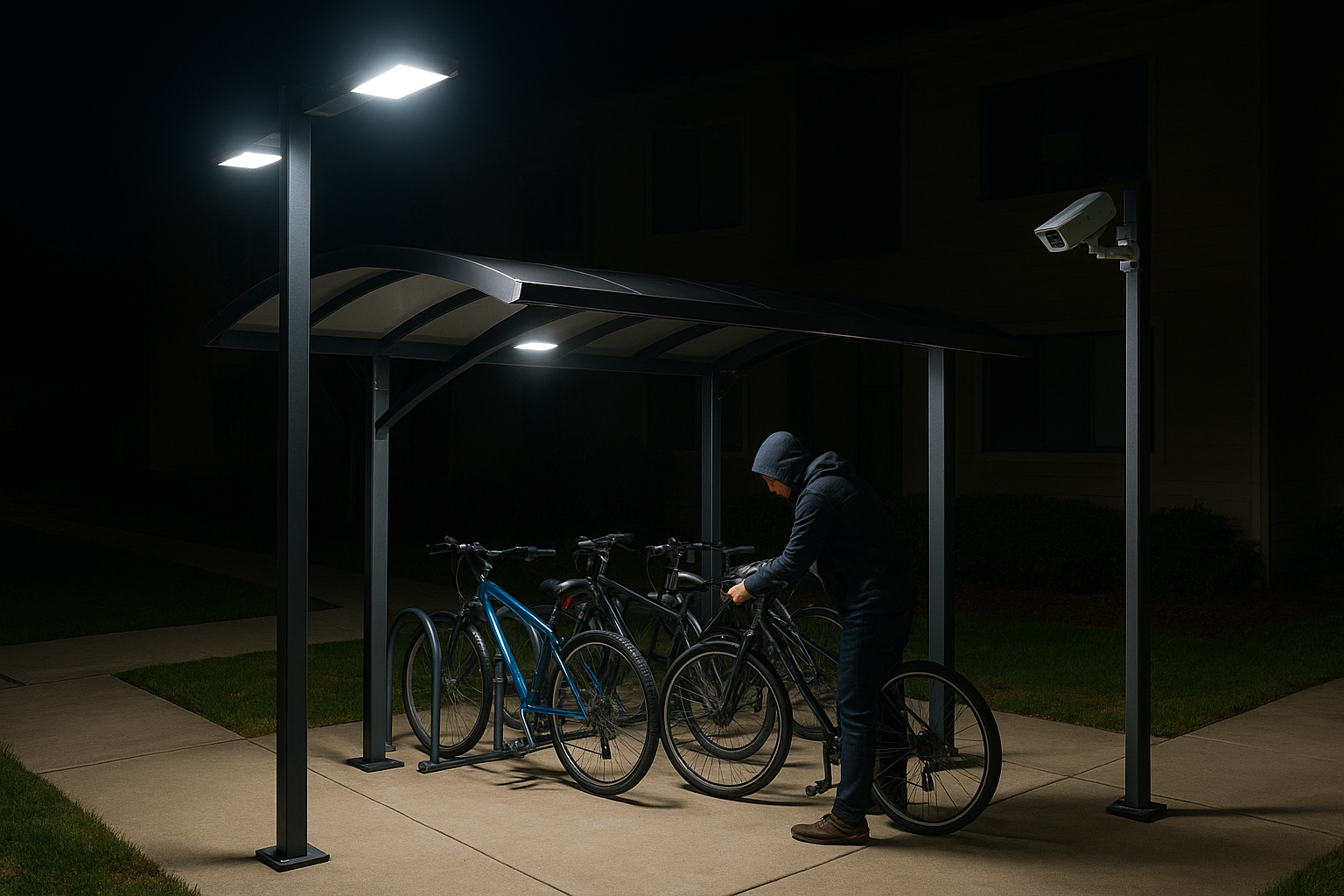
▍ Purpose: Localized, low-glare illumination that improves perceived safety and camera clarity at racks and shelters.
Fixtures: compact wall packs or mini-floods with shields; recessed soffit fixtures inside enclosures. Mounting: 8–12 ft. Light quality: 3000–3500K; shielded optics and IK08+.
Controls: occupancy-triggered lighting with short hold times; avoid continuous high-output baselines.
Commissioning: test camera exposure and facial-recognition needs. Best for bike cages and covered racks.
| Area | Fixture types | Mounting height | Optics | CCT | Controls | IP/IK | Price note |
Entrances | Wall sconces, mini-floods | 8–12 ft (walls); 10–15 ft (posts) | Cut-off shields | 2700–3000K | Photocell + time | IP65, IK07+ | Wall packs ~$37–$300+ (2026-02-06) |
Roads | Cobrahead/area | 15–25 ft | Type II/III | 2700–3000K (AHJ) | Photocell + dim | IP65–IP67, IK07+ | 150–240W $140–$270+ (2026-02-06) |
Pathways | Bollards/low posts | 1.5–4 ft | Asymmetric, louvered | 2200–3000K | Photocell + motion | IP65–IP66, IK08–IK10 | Bollards ~$160–$300+ (2026-02-06) |
Parking | Area/site lights | 20–30 ft | Type III/IV/V | 3000–4000K | Photocell + motion | IP65–IP67, IK07+ | Starts ~$189–$270+ (2026-02-06) |
Courtyards | Bollards, mini-floods | 2–12 ft | Shielded, narrow | 2200–3000K | Motion + scenes | IP65–IP66 | Varies |
Facades | Linear/flood | 10–20 ft | Full cut-off/visors | 2700–3000K | Timeclock + scenes | IP65–IP66 | Quote-based |
Sports | High-output floods | 25–40 ft | Tight beams, shields | 4000–5000K | Motion + scenes | IP66, IK08+ | Often >$589+/set (2026-02-06) |
Back-of-house | Cut-off wall packs | 8–14 ft | Full cut-off | 3000–4000K | Motion + photocell | IP65, IK08 | $37–$300+ |
Bikes | Compact wall/mini-flood | 8–12 ft | Shielded | 3000–3500K | Motion | IP65, IK08 | Overlaps wall-pack band |
Aim for 2200–3000K to maintain a warm, comfortable ambiance while preserving Dark Sky principles. Keep the same family and finish across adjacent zones for visual cohesion.
Use diffused linear fixtures or shielded sconces, prioritize uniform vertical illumination, and avoid exposed point sources. Add occupancy sensors to boost levels only when people are present.
Yes. Many systems can issue dry-contact or network triggers to raise light levels on demand. Use 0–10V or DALI scenes for fast, predictable responses and test with cameras during commissioning.