Author: Huang Publish Time: 02-02-2026 Origin: Site



Becoming an LED agent is less about spreadsheets and more about capacity. The capital requirement matters because supply models, MOQs, and payment rhythms determine how quickly you can turn inventory into repeat sales. Rather than running complex calculations, look for these practical signals that capital helps you succeed:
Ready financing or proven ability to fund initial deposit and order cycles.
A short cash‑cycle tolerance (ability to carry initial stock through a pilot order and sales window).
Access to contingency credit or supplier financing once the relationship scales.
If you can show these abilities, you’re more likely to win favorable terms and be positioned as a preferred partner rather than a high‑risk new account. For background on common MOQ and deposit practices consult resources such as the ShipBob MOQ guide and Maple Sourcing’s supplier negotiation guidance.
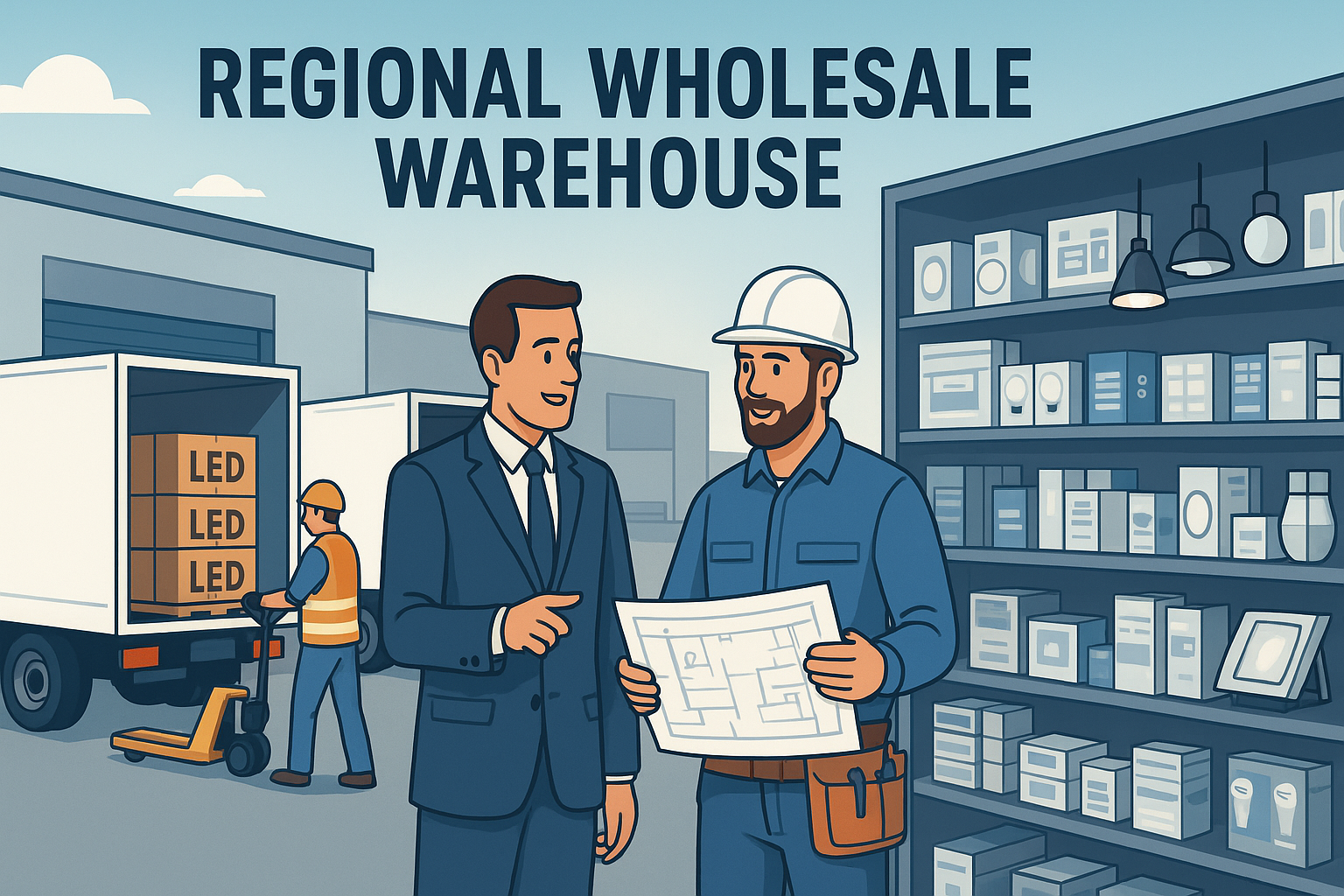
Local wholesalers already serve the retailers, contractors, and small commercial projects that manufacturers need to reach. That built demand and logistics footprint means you can:
Rapidly distribute stocked products to nearby customers.
Offer local service and next‑day fulfillment that online‑only sellers cannot match.
Cross‑sell lighting with related categories (electrical supplies, fixtures, controls) to lift average order value.
Manufacturers prize repeatability. If your operations include basic inventory discipline, reliable pick/pack processes, and documented RMA handling, you’re ahead of peers who only sell opportunistically.
Wholesalers with contractor relationships can convert specification opportunities into orders. That project pipeline—small renovations, local hospitality, or chain rollouts—creates steady, higher‑value deals for LED lines.
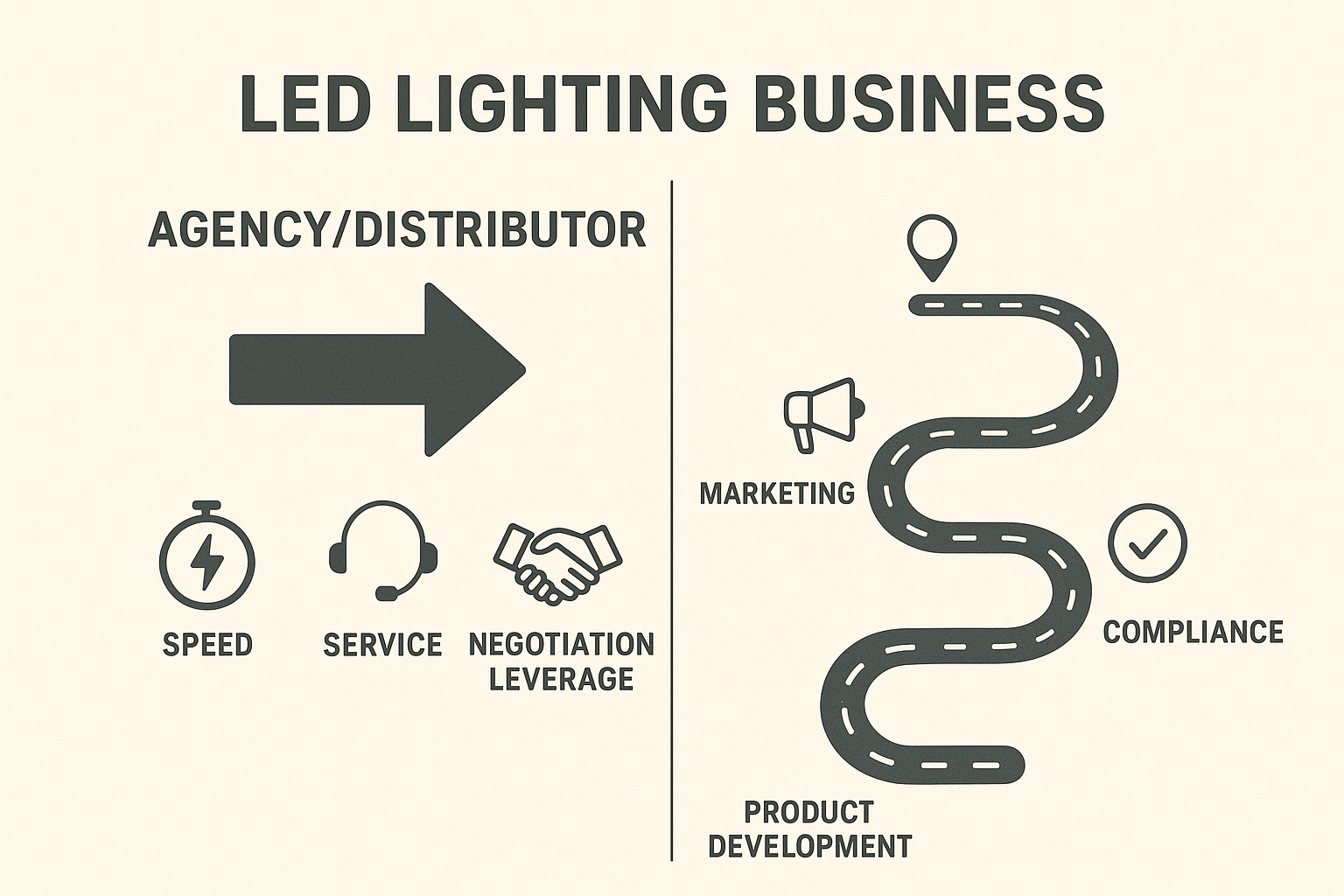
As an agent you can introduce established manufacturer SKUs immediately rather than developing private‑label lines. That reduces time‑to‑market and lets you test demand before making bigger commitments.
Distribution adds value through technical support, local inventory buffers, and warranty management. These services justify healthier margins than commodity resale and build stickiness with customers.
Good performance—on‑time payments, predictable orders, and clear demand plans—earns improved MOQs, better payment terms, and marketing support from manufacturers.
Offering certified, rebate‑eligible products (e.g., DLC‑listed or NRTL‑marked fixtures) positions you as a professional supplier for commercial buyers. Demonstrable compliance reduces procurement friction for your customers; see the DesignLights Consortium QPL guidance for rebate context and UL Product iQ for safety listing checks.
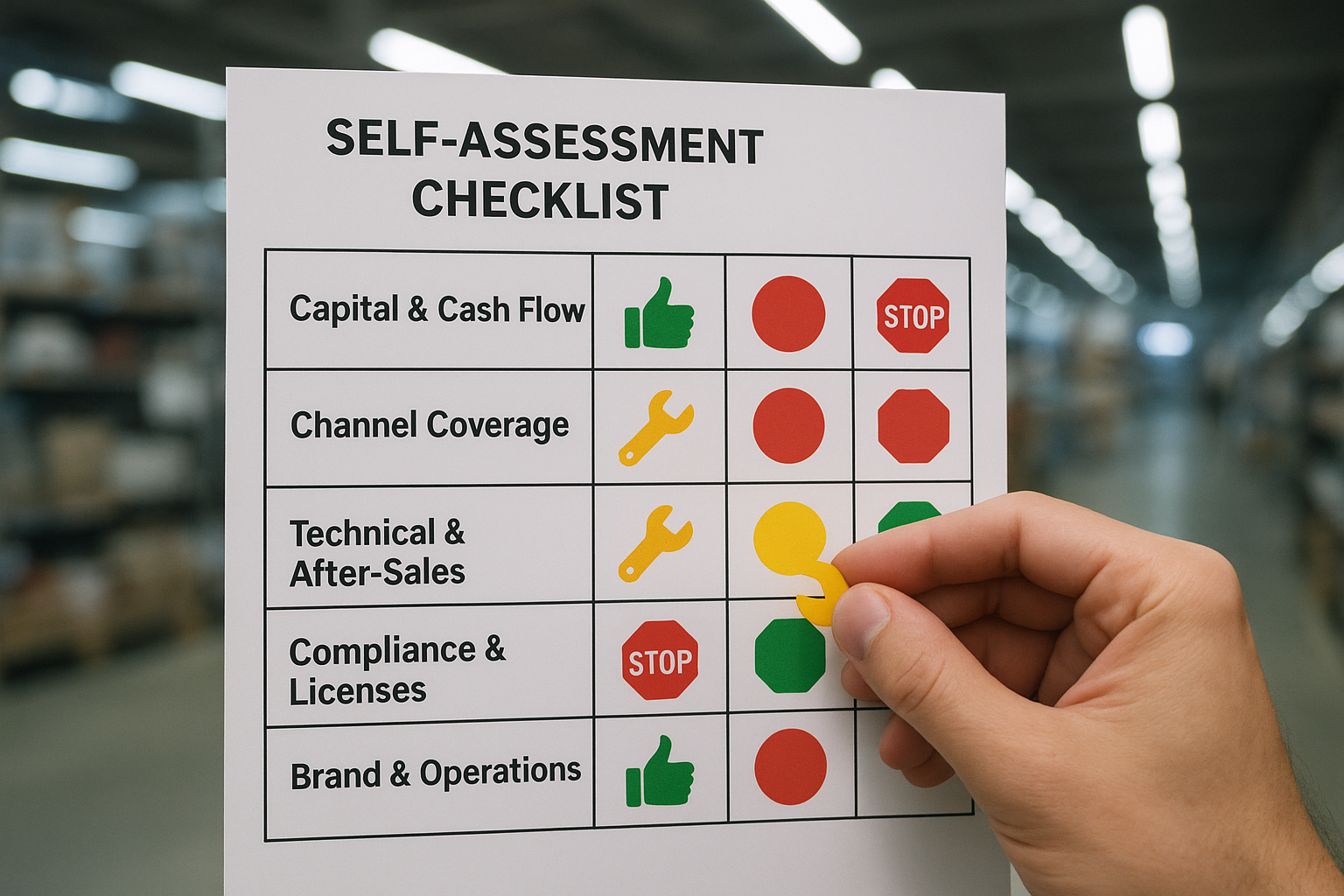
Score each dimension qualitatively (Green = strong, Amber = workable with fixes, Red = needs investment). Favor candid evidence over precise numbers.
| Dimension | Green signal (good fit) | Amber signal (fixable) | Red signal (not ready) |
Capital & Cash Flow | Has documented financing or history of funding pilot buys | Can finance short pilots but needs terms | No reliable funding or repeatedly misses payments |
Channel Coverage | Established retailer/contractor list and local warehousing | Some accounts but limited project access | No regular B2B accounts or logistic reach |
Technical & After‑Sales | Staff can answer basic dimming/installation, defined RMA steps | Limited tech knowledge but access to partners | No RMA process or technical support capability |
Compliance & Licenses | Can validate DLC/UL/CE listings and store certificates | Patchy documentation, can obtain with effort | Cannot verify certifications or lacks local licenses |
Brand & Operations | Clear merchandising, local marketing, repeat order workflows | Basic operations, needs better CRM | No merchandising or account management systems |
If most of your signals are Green or Amber, you’re a strong candidate to pursue agency agreements; if many are Red, prioritize closing those gaps before committing to MOQs or exclusivity.

Rather than drill into payment math, demonstrate these capabilities during outreach:
A short first‑year demand plan by SKU and channel that shows realistic purchase cadence.
A documented RMA and warranty handling process so returns don’t bottleneck the supply chain.
Logistics readiness: warehousing, basic kitting, and last‑mile delivery options.
Manufacturers use these signals to reduce their risk. In turn, your clarity accelerates onboarding, earns better commercial terms, and increases the likelihood of marketing and technical support.
Disclosure: KEOU Lighting is our product.
Start with finished goods (CBU) to validate local demand and service flows. Once you prove steady sales and secure working capital, negotiate SKD kits for top SKUs to lower landed cost and enable quicker field repairs. CKD may follow later for stable, high‑volume items where local assembly or customization adds clear customer value. For definitions and trade‑offs see the KEOU explainer on CKD vs SKD vs CBU.

Prepare this packet to signal readiness—no heavy calculations required, just documented evidence:
Financing proof or a letter from your bank/credit provider outlining available facilities.
A one‑page demand plan showing target SKUs and primary channels for the first 90–180 days.
Copies or references for expected compliance checks (DLC, UL/ETL, CE/RoHS) and how you store certificates.
A short RMA/Warranty procedure: contact points, evidence needed, and handling timeline.
Basic operations sheet: warehouse locations, fulfillment method, and key account list.
Bring this pack to conversations—manufacturers will appreciate the clarity, and you’ll avoid being pigeonholed as a transactional buyer.
A: Strong channel access (retailers/contractors), the ability to fund initial pilot buys or deposits, basic technical and RMA processes, and demonstrated willingness to document demand and compliance.
A: Faster market entry with proven SKUs, manufacturer support (marketing/technical), margin uplift through value‑added services, and lower product development risk.
A: Yes. Many wholesalers partner with local installers or lean on manufacturer technical materials. What matters is a documented RMA path and reliable escalation for field issues.
A: Share the checklist items above: financing proof, a short demand plan, compliance references, RMA steps, and operations details—clear evidence beats complex forecasts.
A: Start with a focused CBU assortment of fast‑moving SKUs to validate demand and preserve cash; use early success to secure better terms or pursue SKD for cost improvements later.