Author: Huang Publish Time: 03-02-2026 Origin: Site


Urban parks in rainy, coastal cities need lighting that keeps people safe and comfortable while minimizing maintenance and resisting salt, water, and glare. This guide lists park lighting fixtures by zone and explains which styles work where and why, with an emphasis on full‑cutoff optics, warmer color temperatures, corrosion‑conscious materials, and serviceability.
We evaluated candidate park lighting fixtures against seven dimensions aligned to rainy/coastal urban parks (weights in parentheses):
Durability & environmental hardening in coastal air (22)
Maintenance burden & serviceability (18)
Glare control & visual comfort for pedestrians (16)
Energy & controls readiness (14)
Photometric fitness for the zone (14)
Installation flexibility (8)
Procurement practicality (8)
Standards and good-practice anchors used in this guide:
DarkSky guidance favors warmer CCT (≤3000K, often 2200–2700K) and strict limits on high‑angle light; full‑cutoff optics reduce skyglow and discomfort. See the program’s criteria in the DarkSky Approved Luminaires guidelines and values‑centered color guidance: DarkSky Approved Luminaires guidelines and values‑centered outdoor lighting.
IES distribution types: Type II/III suit linear paths; Type V suits open plazas and large areas. See manufacturer explainers like Cooper/Lumark’s distribution summary: Lumark Prevail distribution spec PDF and Signify’s area/road brochure examples: Signify HighFocus brochure.
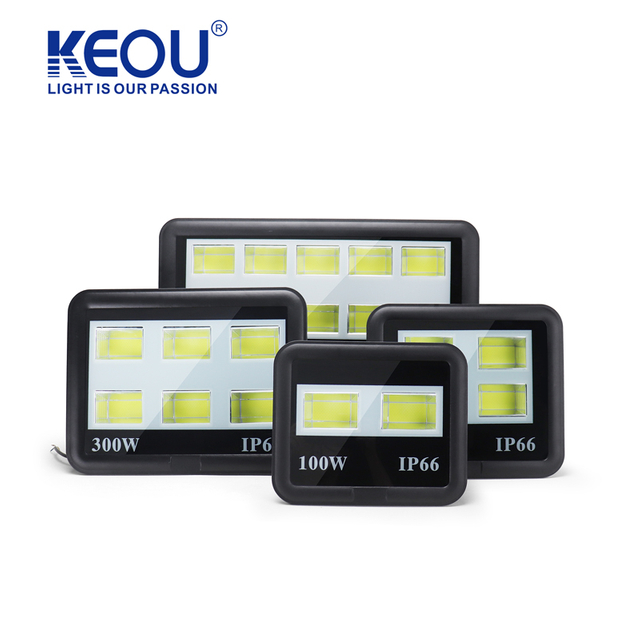
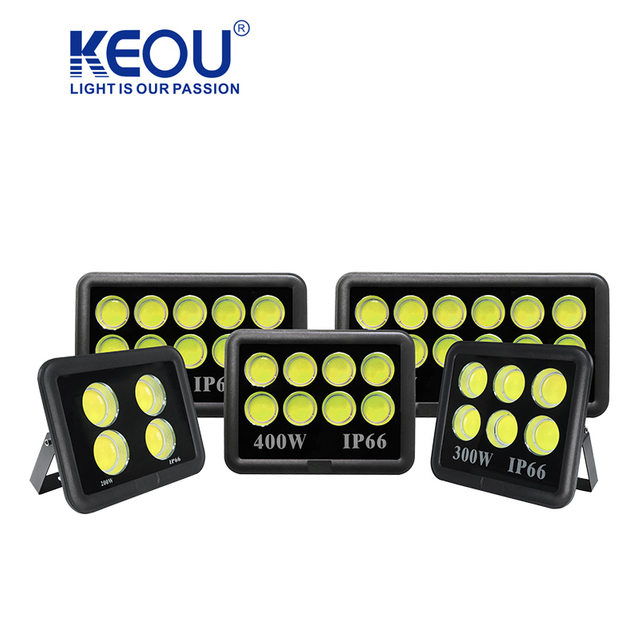
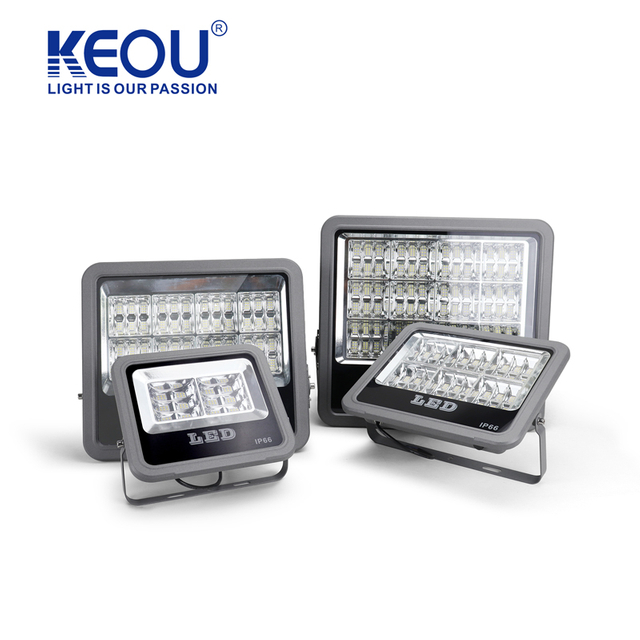
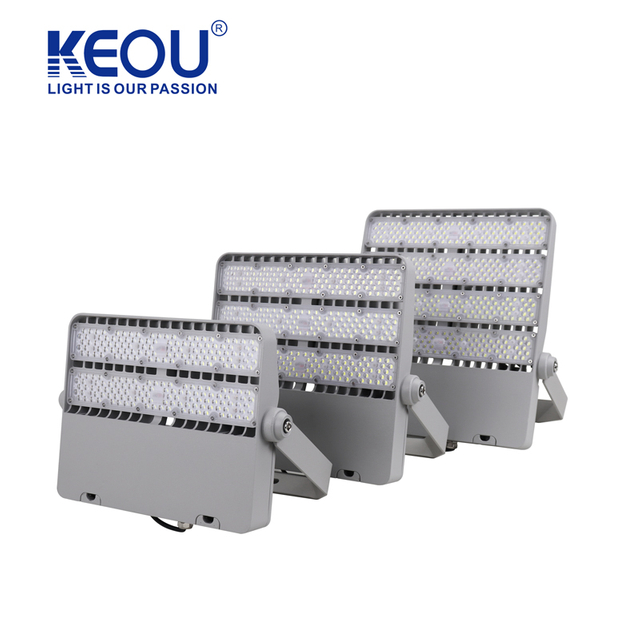
▍Disclosure: KEOU Lighting is our product. We evaluated it using the same criteria as other fixtures in this list. First mention link: KEOU Lighting.
A note on color and comfort: in all pedestrian zones, favor 2200–3000K and use shielding or louvers to keep light out of eyes and the night sky.
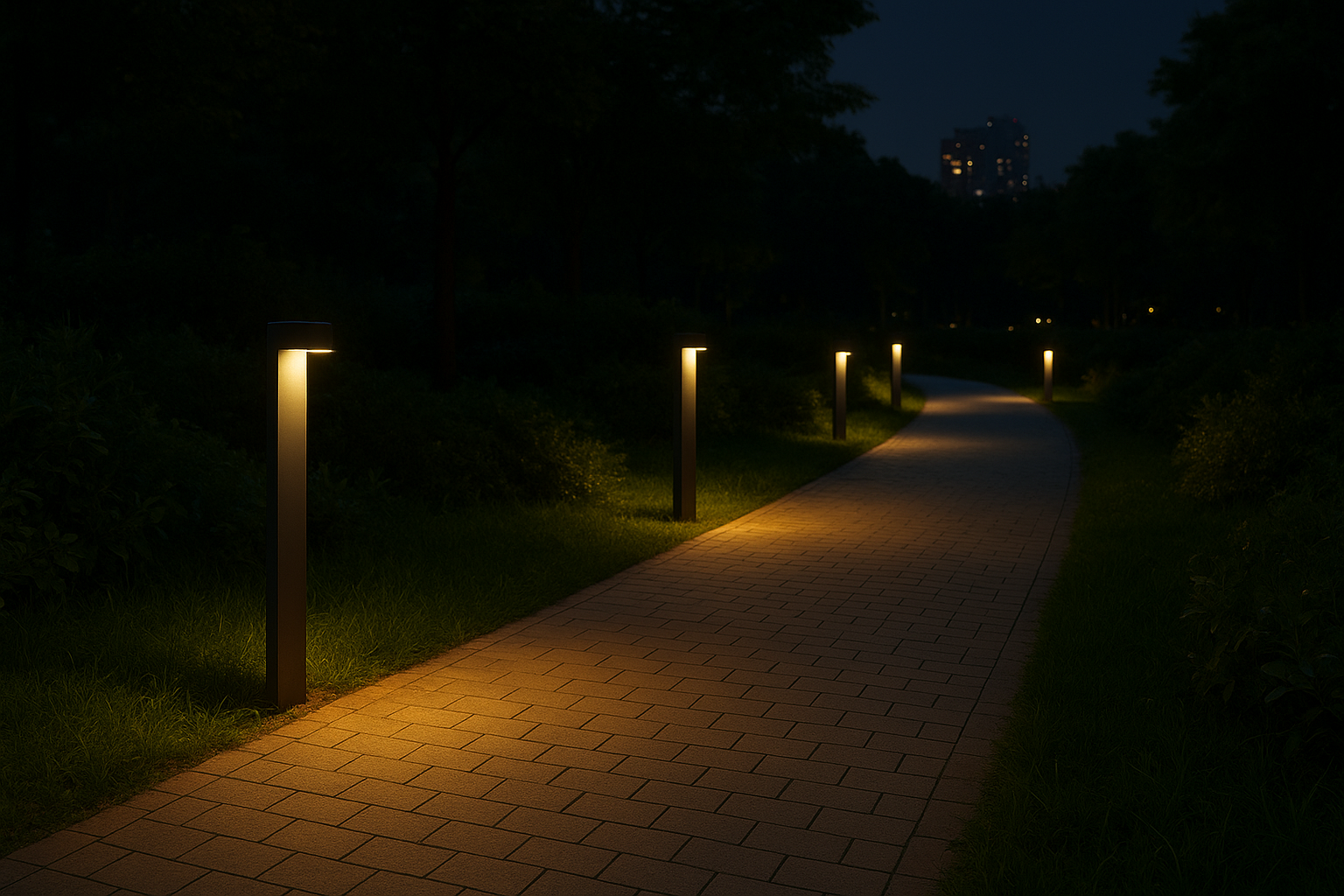
One-line positioning: Field‑selectable bollard that balances output, efficacy, and simple installation for municipal walkways.
Zone & typical mounting: Paths; bollard height ~900–1100 mm; space for uniform edge cues.
2–3 key traits: Selectable wattage and CCT; up to ~135–148 lm/W; long L70 life.
Pros / Cons: Adjustable and efficient; distributor‑friendly. IP/IK and cutoff accessories vary by model—confirm on datasheet for coastal glare control.
Best for / Not for: Best for budget‑conscious path retrofits; not for vandal‑prone areas without verified IK and shielding.
Price band: Quote‑based; subject to change.
Maintenance notes: Anchor‑bolt template and leveling screws simplify swaps; long life reduces relamps.
Evidence link: RAB BLEDS LED Bollard.
One-line positioning: Premium cast‑aluminum bollards with robust coatings and flat‑beam optics for glare‑controlled pathways.
Zone & typical mounting: Paths; ~800–1100 mm.
2–3 key traits: Unidure coating, IP65 families, flat/wide flat‑beam optics; related families demonstrate <1% uplight.
Pros / Cons: Excellent finish and visual comfort; higher upfront cost.
Best for / Not for: Best for coastal promenades seeking durability and comfort; not for ultra‑low budgets.
Price band: Quote‑based; subject to change.
Maintenance notes: Long‑life modules; strong parts availability on related product lines.
Evidence link: BEGA on‑ground luminaires.
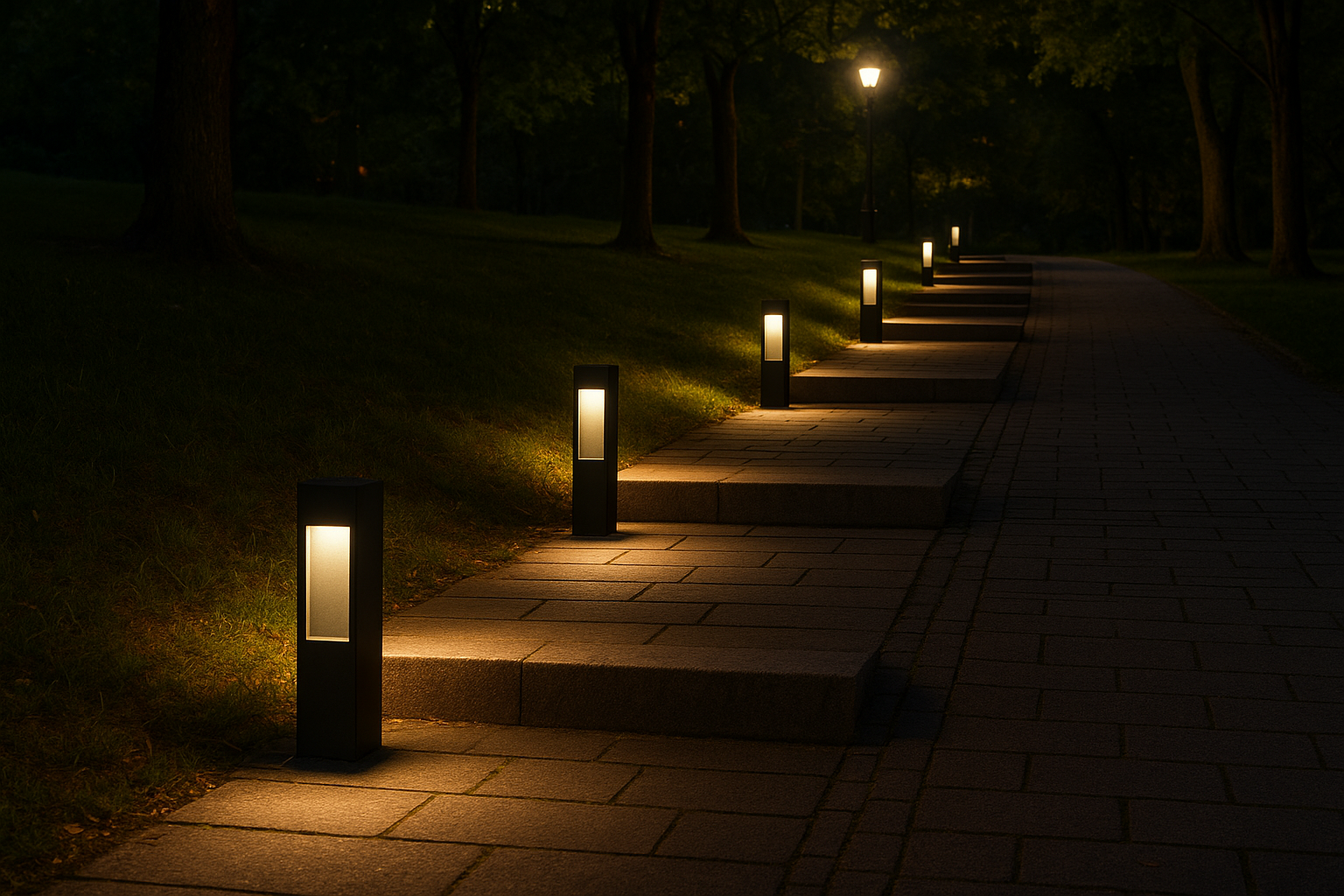
One-line positioning: Rugged recessed step/wall lights with IP65 protection and DALI options for safe, subtle vertical cueing.
Zone & typical mounting: Steps, stair risers, ramp walls at riser height.
2–3 key traits: IP65; DALI or on/off drivers; protective coatings.
Pros / Cons: Discreet and comfortable; verify specific IK and accessories for vandal risk.
Best for / Not for: Best for high‑traffic steps/ramps; not for surfaces lacking recess depth.
Price band: Quote‑based; subject to change.
Maintenance notes: Recessed optics reduce glare and damage; plan periodic lens cleaning.
Evidence link: BEGA recessed walls and staircases.
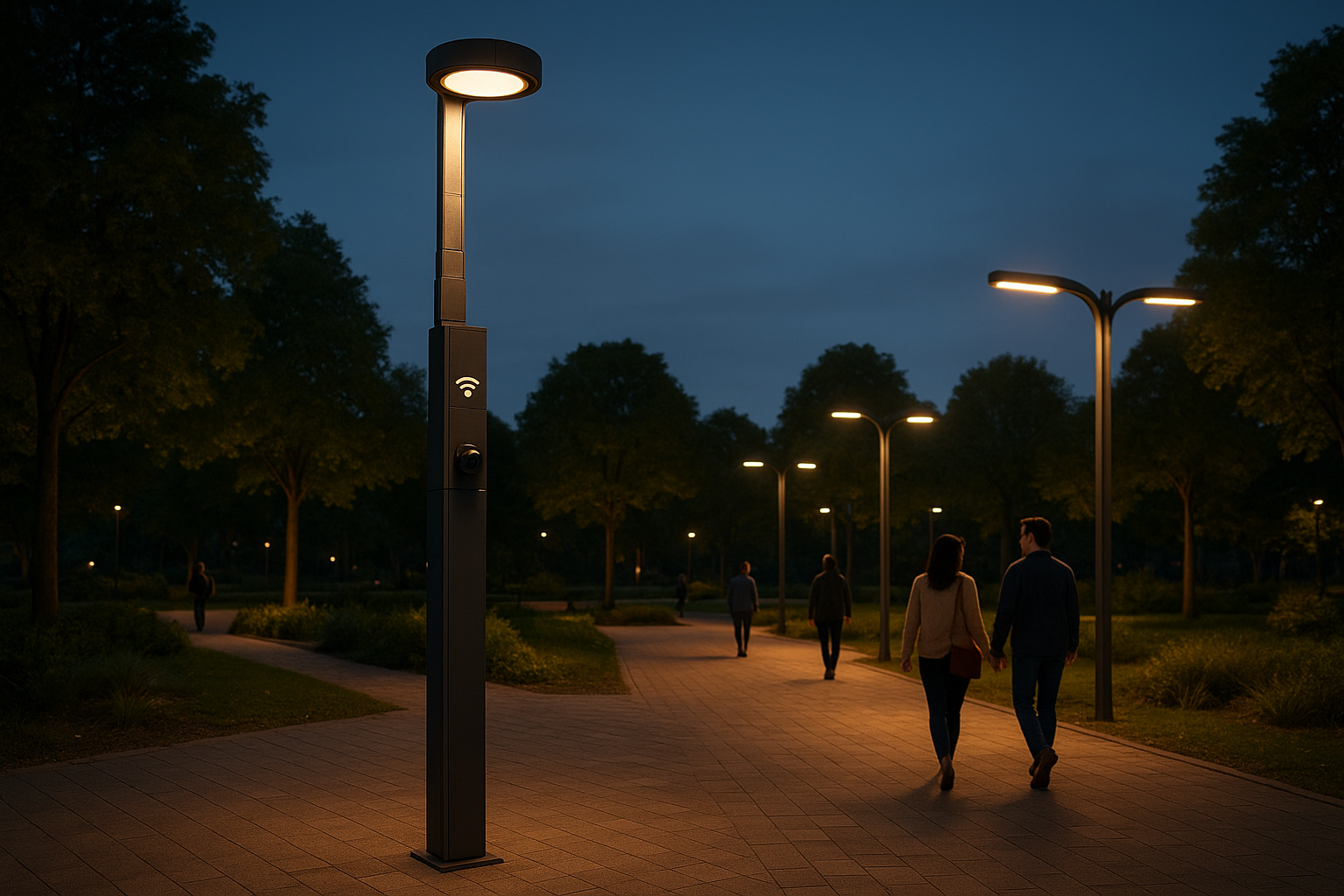
One-line positioning: Modular smart column consolidating lighting plus services (Wi‑Fi/CCTV/EV/audio) with IP66/IK09–10 durability.
Zone & typical mounting: Plazas/rest areas; 3–6 m; 180° or 360° optics.
2–3 key traits: Up to five rotatable modules; full‑cutoff distributions; surge protection.
Pros / Cons: Fewer poles and enclosures to maintain; higher CAPEX and option complexity.
Best for / Not for: Best for city squares needing multifunction infrastructure; not for minimalist parks with simple power.
Price band: Project‑based; subject to change.
Maintenance notes: Remote controls (Owlet) reduce runtime; seal modules carefully in salt spray zones.
Evidence link: Schréder SHUFFLE.
One-line positioning: Controls‑ready area luminaires with reduced‑glare optics for comfortable, efficient plaza lighting.
Zone & typical mounting: Plazas/rest areas; 6–10 m poles.
2–3 key traits: Up to ~171 lm/W; NanoComfort glare‑mitigating optics; DALI/NEMA/Zhaga options.
Pros / Cons: Strong efficiency and controls; confirm BUG rating and coastal finish specifics for seaside installs.
Best for / Not for: Best for municipal plazas needing comfort and control; not for extreme marine splash zones without special finishes.
Price band: Quote‑based; subject to change.
Maintenance notes: Standardized control interfaces simplify lifecycle management.
Evidence link: Cree OSQ Series.
Mid‑list soft CTA: Want a coastal‑ready short list you can tailor to your park? Explore the Outdoor Lighting Solution overview for materials and controls options aligned to municipal specs.
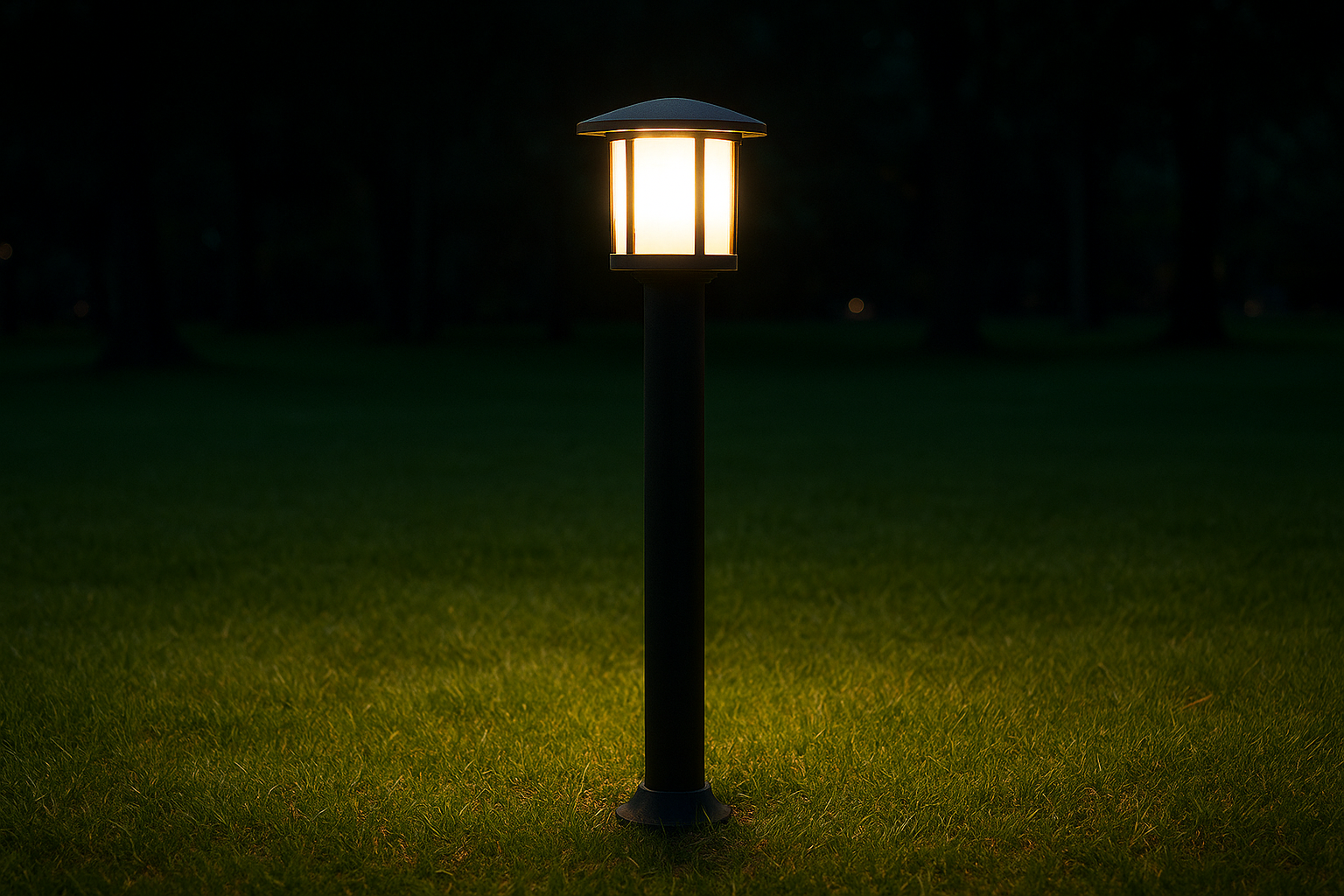
One-line positioning: Stainless, sealed in‑ground units that are mow‑safe and built for lawns and walkways.
Zone & typical mounting: Lawns, edges, and hardscape joints; flush with grade.
2–3 key traits: IP67/68 families; foot‑traffic resistance; stainless construction with tempered glass.
Pros / Cons: Discreet and durable; drainage and load class must be engineered correctly.
Best for / Not for: Best for open lawns with mower traffic; not for vehicle loads without the correct model and base detail.
Price band: Quote‑based; subject to change.
Maintenance notes: Seal integrity is key; schedule gasket checks and seasonal lens cleaning in coastal spray.
Evidence link: BEGA in‑ground (stainless).
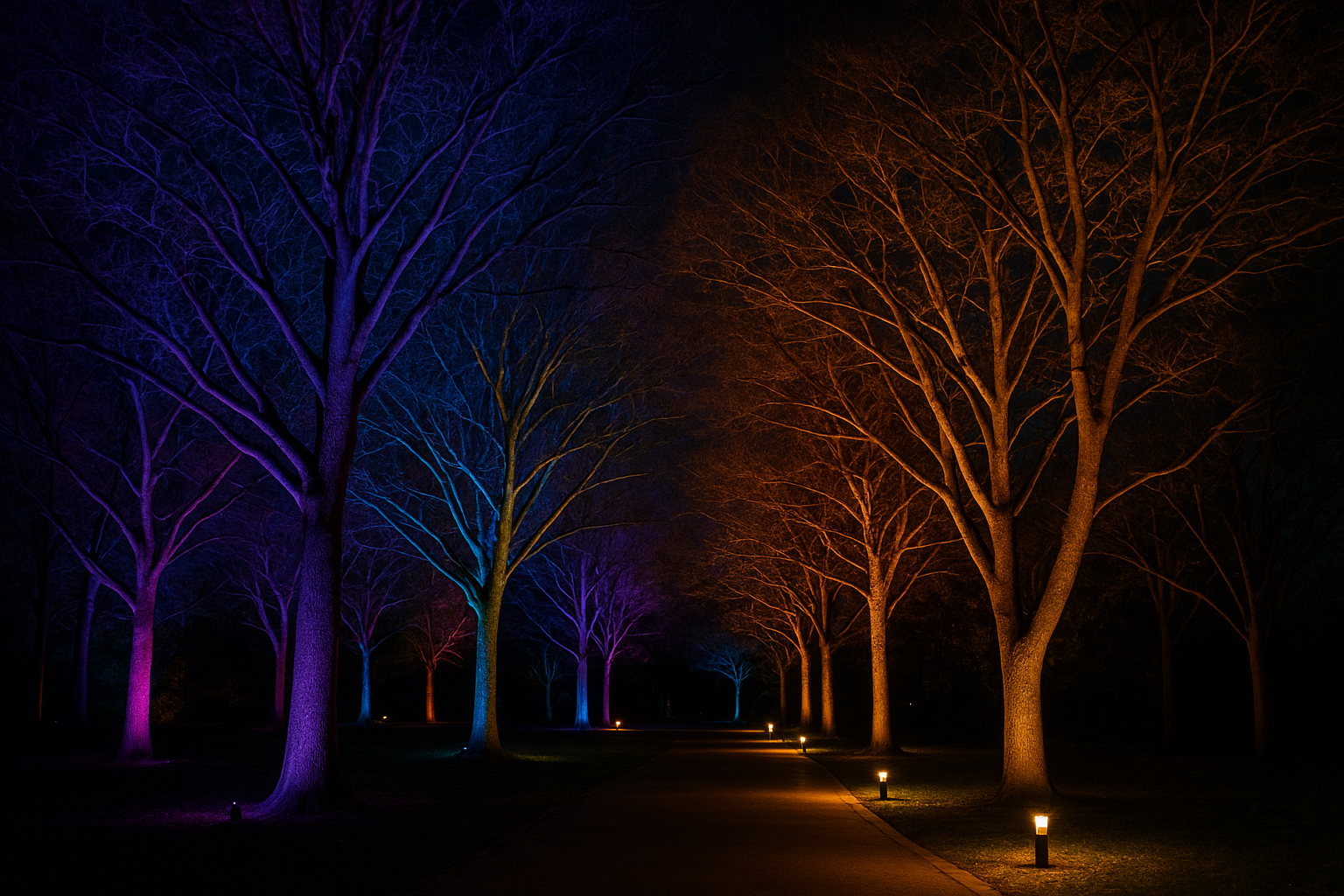
One-line positioning: Precision projectors with strong glare control and beam options to model canopies and art.
Zone & typical mounting: Trees/sculptures; spike stakes aimed ~20–40°; adjust seasonally.
2–3 key traits: Narrow‑to‑wide beams plus oval/zoom; IP65 housings; glare‑control accessories.
Pros / Cons: Highly controllable beams; visible hardware requires careful concealment.
Best for / Not for: Best for specimen trees and artworks; not for heavy vandal zones without robust protection.
Price band: Quote‑based; subject to change.
Maintenance notes: Above‑grade heads are fast to service; protect cabling and stakes from saline soils.
Evidence link: ERCO Beamer projector family.
One-line positioning: Rugged spot or linear in‑ground options with precise aiming and high environmental tolerance.
Zone & typical mounting: Tree bases and beds; spike‑mounted or in‑ground linear.
2–3 key traits: ProAim ratcheting spike (10° increments/360°); TE5 linear rated IP66/67 (passes IP68 test).
Pros / Cons: Flexible aiming and formats; verify IK/materials for vandal‑exposed sites.
Best for / Not for: Best for complex canopies; not for areas needing minimal visible hardware.
Price band: Quote‑based; subject to change.
Maintenance notes: Check gaskets and seals annually in humid/coastal air.
Evidence link: Lumascape dAlta‑5 spec sheet.
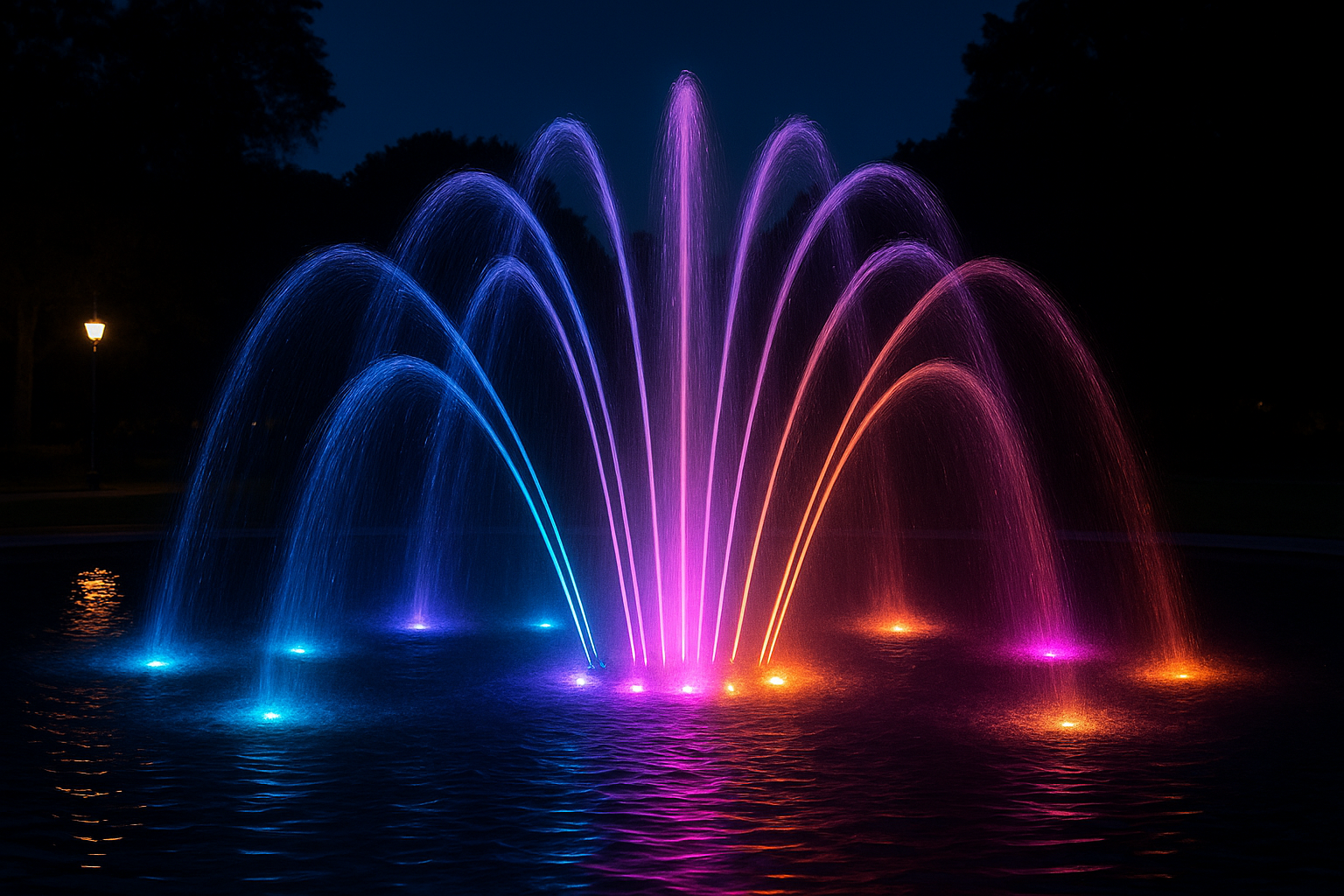
One-line positioning: 316Ti stainless underwater spots with deep IP68/69 protection and adjustable optics for fountains and rills.
Zone & typical mounting: Water features; submerged or splash zones with yoke brackets.
2–3 key traits: IP68 (depth‑rated by model) and IP69; electropolished stainless; multiple beams including narrow, wide, and elliptical; RGBW options.
Pros / Cons: Extremely robust and cleanable; driver/thermal pairing must be correct.
Best for / Not for: Best for premium fountains and rills; not for budget minimal installs.
Price band: Project‑based; subject to change.
Maintenance notes: Plan descaling and inspections in saline conditions; ensure low‑voltage isolation and bonding.
Evidence link: WIBRE collection overview.
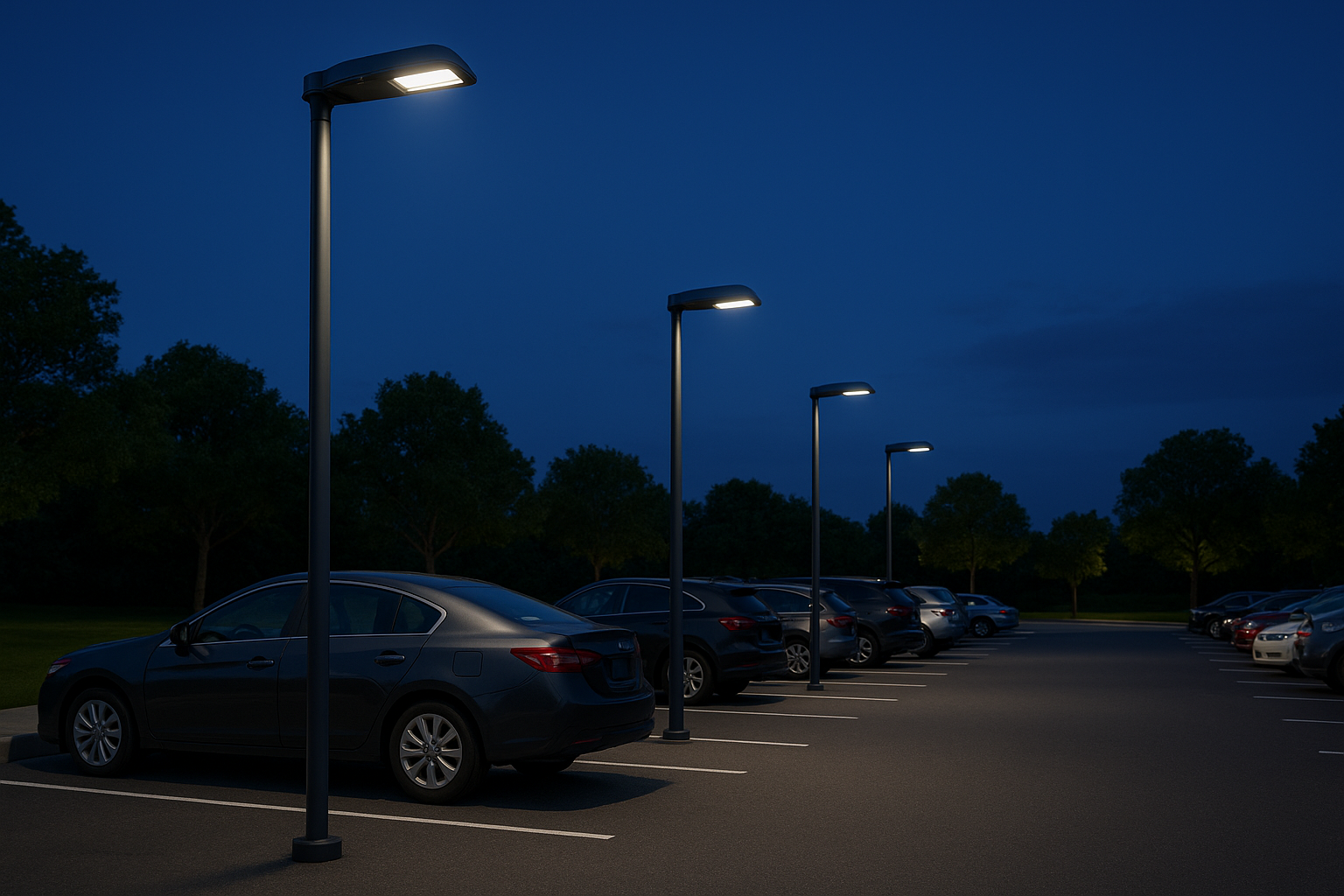
One-line positioning: Controls‑ready, IP66 area lights with multiple distributions and optional wildlife‑friendly amber LEDs.
Zone & typical mounting: Perimeter edges and small lots; 6–12 m poles.
2–3 key traits: Type II–V optics; field‑selectable wattages; 0–10V dimming; IP66 wet‑location; long warranty.
Pros / Cons: Broad range and easy controls; confirm BUG and shield options for strict backlight limits.
Best for / Not for: Best for edges near property lines; not for heavy marine splash without special finish.
Price band: Quote‑based; subject to change.
Maintenance notes: Network scheduling can cut runtime and service calls.
Evidence link: RAB ALED area family.
One-line positioning: Versatile IP66/IK08–09 flood family with broad optic choices and controls‑readiness for entries and monuments.
Zone & typical mounting: Gateways, monument signs, feature walls; yoke or pole mounts.
2–3 key traits: High efficacy; asym/sym beams including low uplight options; Interact controls readiness; surge options.
Pros / Cons: Wide output/optic coverage; specify connected variants for dimming if needed.
Best for / Not for: Best for large features and signage; not for ultra‑compact accents.
Price band: Quote‑based; subject to change.
Maintenance notes: Global parts support; confirm coastal finish specs.
Evidence link: Philips ClearFlood gen2.
Municipal‑grade park lighting is highly configuration‑dependent. Published MSRPs are rare and change quickly. Treat all price bands here as quote‑based and subject to change. For transparent procurement, set up RFQs with alternates and specify finishes, optics, and controls to ensure apples‑to‑apples bids and realistic lead times.
Favor sealed optics and housings with IP65–66 for area heads/columns and IP67–68 for in‑ground/underwater units.
Choose die‑cast aluminum with robust powder coats or stainless steel (A4/316/316Ti) in high‑salinity zones; specify stainless fasteners. Where available, review salt‑spray references (e.g., ASTM B117 practices) in vendor documentation.
Keep color temperatures warm (2200–3000K) for pedestrian comfort and reduced skyglow; pair with full‑cutoff optics and shielding per DarkSky good practice. See: DarkSky Approved Luminaires guidelines.
Build a simple care cycle: quarterly rinse and wipe for exposed lenses and louvers in salt spray; annual gasket checks; 3–5 year driver inspections.
For most park lighting fixtures outdoors: IP65–66 is a solid baseline; recessed in‑ground and underwater fittings often need IP67–68. IK ratings vary by risk—IK08+ for vandal‑exposed areas is common. Always confirm on the model datasheet.
Warmer whites (2200–3000K) are more comfortable for pedestrians and help reduce skyglow, especially with full‑cutoff optics and shields.
Use full‑cutoff distributions, add louvers or honeycombs where people can see the source, keep poles to appropriate heights, and avoid over‑lighting. Controls that dim late at night also reduce high‑angle light.
Prioritize corrosion‑conscious construction: die‑cast aluminum with robust coatings or stainless steel, sealed optics, and stainless hardware. Verify salt‑spray references and warranties where available.
They can be, but only with quality batteries, adequate panel sizing, and conservative autonomy assumptions. In very rainy/coastal sites with frequent overcast, consider hybrid/wired solutions to maintain reliability.
If you’re shortlisting park lighting fixtures for a coastal city, start by matching distributions to zones (Type II/III for paths; Type V for plazas), then lock materials and shielding for durability and comfort. Finally, specify controls to reduce runtime without compromising safety.
Soft CTA: Need a template spec and a coastal‑maintenance checklist? Explore KEOU’s Outdoor Lighting Solution for configuration ideas tailored to municipal parks.