
Author: Huang Publish Time: 23-12-2025 Origin: Site


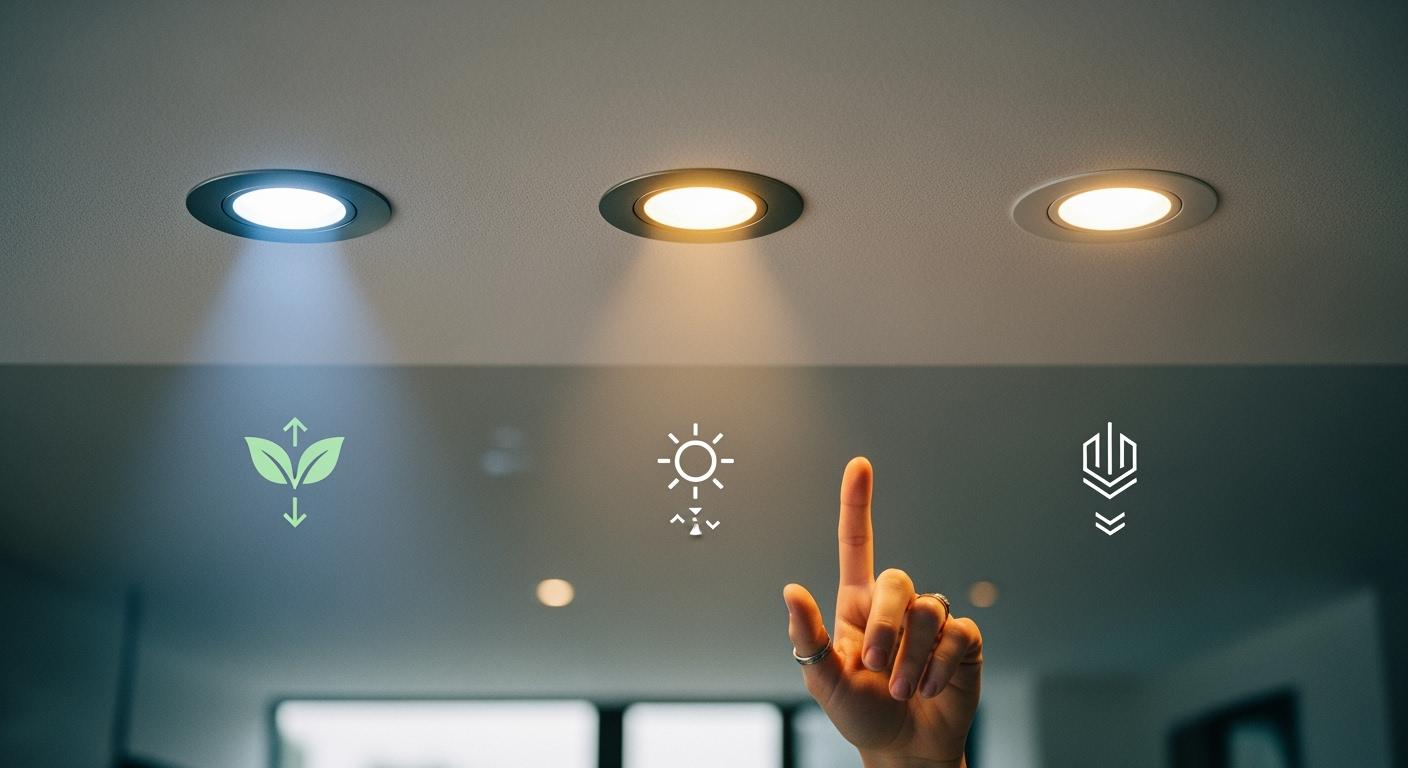
Lighting can take up to 30% of your home’s energy. When you buy a down light, look at three things: application, energy use, and how long it lasts. These choices help you save energy at home, get better light, and save money for a long time.
Tip: Pick fixtures that fit your room and last longer so you do not have to fix them often.
Pick energy-saving LED downlights to help save money and use less energy. They give off more light but use less electricity.
Find certified fixtures such as ENERGY STAR to make sure they are safe and last longer. Certified products are higher quality and save more energy.
Choose the best color temperature and beam angle for every room. This makes your rooms more comfortable and useful.

When you pick a down light, you want it bright but not waste power. Lumens tell you how much light you get. Wattage tells you how much electricity the fixture uses. LED downlights give you lots of light but use less energy than old bulbs. This means you get more light for every watt you use.
Here is a table that shows how different bulbs compare:
| Bulb Type | Wattage | Lumens |
|---|---|---|
| Incandescent 40W | 40W | 450 |
| Incandescent 60W | 60W | 800 |
| Incandescent 100W | 100W | 1600 |
| Metal Halide 400W | 400W | 24000 |
| Metal Halide 1000W | 1000W | 50000-100000 |
| LED Equivalent 10W | 10W | 800 |
| LED Equivalent 150W | 150W | 24000 |
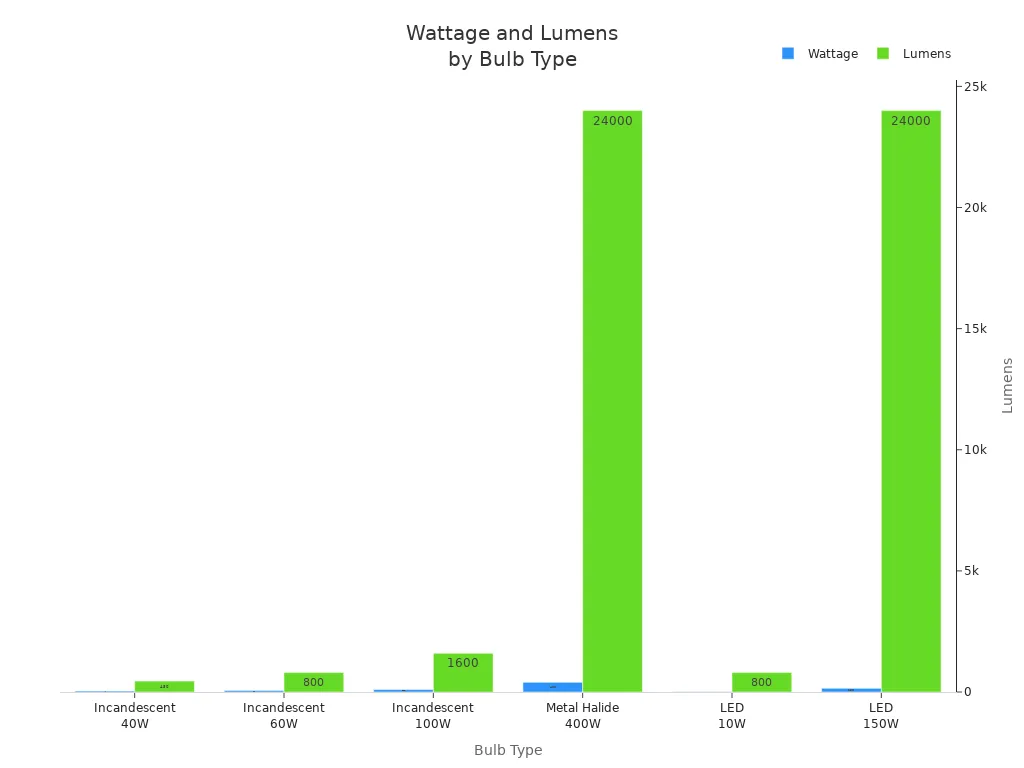
You can see that led downlights use less power and give more light. This helps you save money and energy.
When you buy downlights, look for certifications. These labels show the fixtures are safe and save energy. Certified led downlights last longer and use less power. Here are some common certifications:
| Certification | Description | Importance |
|---|---|---|
| UL (Underwriters Laboratories) | Recognized safety certification for lighting products. | Ensures safety standards for electrical devices in the U.S. and Canada. |
| Energy Star | U.S. government-backed certification for energy efficiency. | Indicates significant energy savings and high quality. |
| CE (Conformité Européenne) Mark | Mandatory for LED products in the EEA. | Confirms compliance with EU safety and environmental standards. |
| RoHS (Restriction of Hazardous Substances) | Limits hazardous materials in electrical products. | Ensures safety for users and the environment. |
| FCC (Federal Communications Commission) Certification | Ensures compliance with electromagnetic interference limits. | Required for all electronic products in the U.S. |
| DLC (DesignLights Consortium) | Focuses on high-efficiency commercial lighting products. | Typically more energy-efficient and qualifies for utility rebates. |
If you choose certified downlights, you get better quality and longer life.
Dimmable led downlights let you change how bright your lights are. You can make them dimmer to save even more energy. If you dim a light to half, you can use up to 40% less power. This is good for saving energy at home.
There are different dimmers like TRIAC, ELV, and smart dimmers. Make sure your fixtures and switches work together. This helps stop flickering or buzzing. With the right controls, you get flexible lighting and save energy every day.
Tip: Always check if your down light supports dimming before you buy.

Color temperature changes how a room feels. You measure it in Kelvin (K). Warm light, from 2000 to 3000K, makes a space feel cozy. You want this in bedrooms and living rooms. Cooler light, from 3100 to 4500K, helps you focus. It works well in kitchens and workspaces. Bright daylight, from 4600 to 5500K, is best for tasks that need clear vision. The color temperature also changes how your furniture and walls look. Warm light can make colors look softer, while cool light makes them look sharper.
Here is a quick guide for choosing color temperature in different rooms:
| Room | Color Temperature Range (K) |
|---|---|
| Kitchen | 2700K - 4000K |
| Bathroom | 3000K - 4000K |
| Bedroom | 2700K - 3000K |
The beam angle tells you how wide the light spreads. A narrow beam angle, about 30 degrees, gives you bright, focused light. Use this for reading corners or to highlight art. A wide beam angle, 60 degrees or more, spreads light across a big area. This is good for large rooms or general lighting. If you want task lighting, pick a narrow beam. For ambient lighting, choose a wide beam.
In large rooms, use wider beam angles for even light.
In small spaces, use narrow beams for focus.
You need to match the light to what you do in each room. Kitchens need strong led downlights with 4,000 to 8,000 lumens and a color temperature between 2,700 and 5,000K. Dining rooms work best with 3,000 to 6,000 lumens and warmer light. Home offices need 3,000 to 6,000 lumens and cooler light to help you focus.
Tip: Use dimmable led downlights so you can change the brightness for reading, cooking, or relaxing. Place downlights 1.2 to 1.8 meters apart for even light. For task areas, put them closer together.
Led downlights give you control and energy saving. You get the right light for every space in your home. Choose fixtures that fit your needs for the best results.
When you choose led downlights, you want them to last for years. High-quality led downlights can work for 25,000 to 50,000 hours or more. This is much longer than old-style bulbs. You can see the difference in this table:
| Type of Bulb | Average Lifespan (hours) | Lifespan Comparison |
|---|---|---|
| Incandescent | 1,000 | Baseline |
| Halogen | 2,000 - 4,000 | 2 - 4 times shorter |
| CFL | 8,000 - 10,000 | 8 - 10 times shorter |
| LED | 25,000 - 50,000 or more | 25 - 50 times longer |
You get better value when you pick led downlights made from strong materials. Die-cast aluminum helps your downlights resist rust and damage. Good heat dissipation keeps the lights cool and working longer. If you install led downlights with poor materials, they can overheat and fail early.
You need to check the size of your ceiling cut-out before you buy new downlights. Most homes use standard sizes. Here is a quick guide:
| Size | Standard Cut-Out Size | Inside Diameter (Trim Removed) |
|---|---|---|
| 4-Inch | 4-3/8 inches | 4 inches |
| 5-Inch | 5-5/8 inches | 5 inches |
| 6-Inch | 6-3/8 inches | 6 inches |
Some retrofit led downlights fit both 5-inch and 6-inch housings. Make sure your fixtures match the cut-out size. When you install led downlights, you may face challenges like working in hot attics or sealing gaps. Always check for proper fit and good sealing to prevent air leaks.
You want led downlights from brands that stand behind their products. Most leading brands offer a 5-year warranty. Some even give you up to 7 years. The warranty often covers fixtures for up to 50,000 hours of use. A good warranty means you get support if something goes wrong. Reliable brands also give you better after-sales service. This helps you feel confident about your choice.
Tip: Always keep your warranty information in a safe place. It can help you get a replacement if your down light stops working early.
You can make good choices by thinking about energy use, light quality, and how long the lights last. Here is a checklist to help you when you shop:
Pick downlights with energy ratings to save money and fix less.
Choose fixtures that fit your room for more comfort.
Buy from trusted brands for longer use and better warranties.
| Metric | Description |
|---|---|
| Customer Satisfaction | Good downlights save energy and make your home nicer for a long time. |
Tip: Look at ENERGY STAR fixtures and read expert guides to find the best ones.
You want warm light between 2700K and 3000K. This range helps you relax and creates a cozy feeling.
Look for ENERGY STAR or DLC labels. These show you the fixture saves energy and meets strict standards.
You can install some models if you follow the instructions. Always turn off power before you start. Ask an electrician if you feel unsure.


