Author: Huang Publish Time: 14-01-2026 Origin: Site


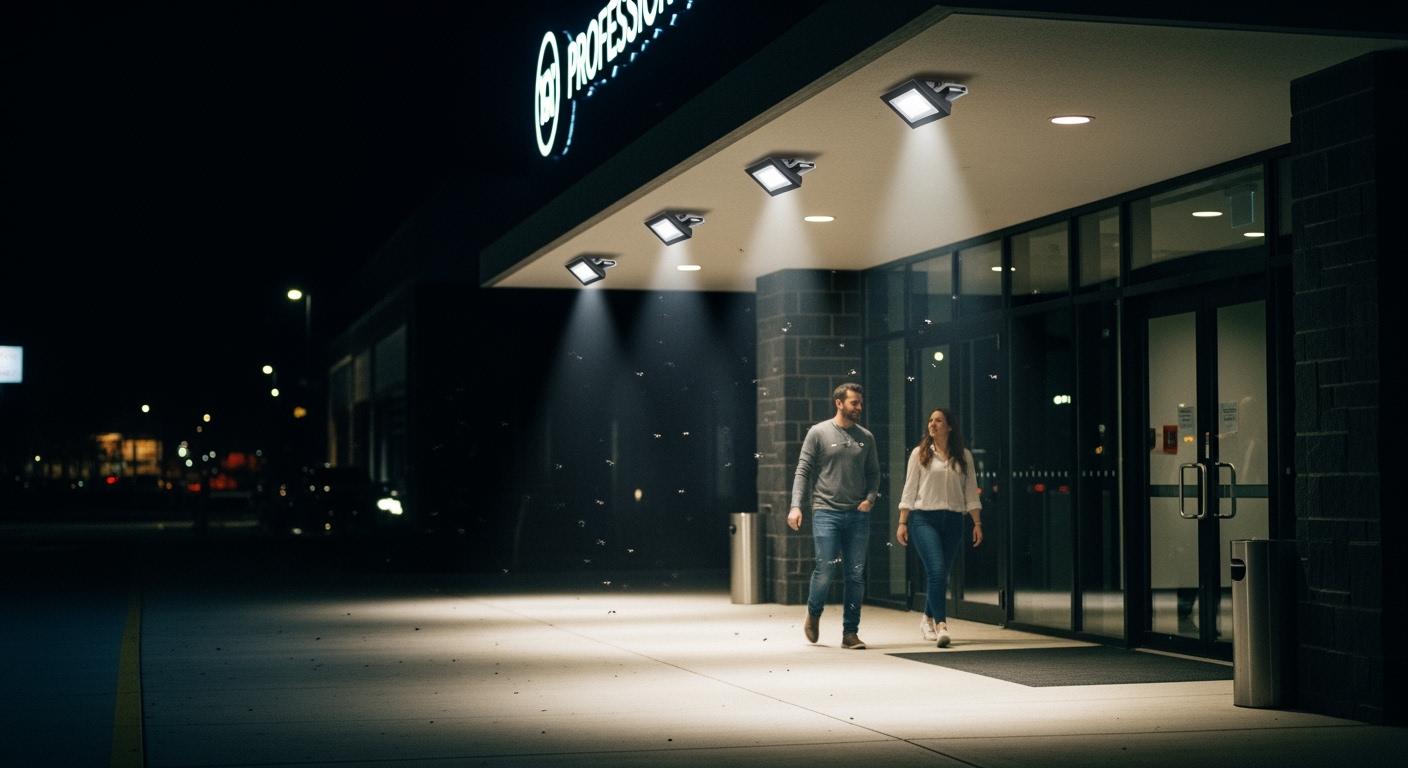
You want your outdoor lights to be smart and easy. Commercial LED floodlights use new technology to stop bugs, glare, and beam problems. These floodlights have great features for businesses:
LED technology uses up to 80% less energy than halogen lights. This makes your lighting cheaper and better for the planet.
You can change the beam angle to shine light where you want. This helps stop glare and keeps light from going where you do not want it.
LEDs last over 50,000 hours, so you do not need to fix them often.
With these new ideas, your lights follow tough rules and keep your spaces bright and nice.
Commercial LED floodlights use much less energy than old lights. They save you money and help the environment.
Picking the right beam angle lets you control where light goes. It cuts down glare and makes outdoor lighting work better.
LED floodlights do not attract as many bugs. They stay cooler and give off less UV light. This makes outdoor spaces nicer.
Shields and hoods help stop glare and keep light from spreading too much. They make sure your lighting is safe and follows local rules.
LED motion sensor floodlights can cut energy costs by a lot. They help you follow local lighting laws. They are a smart pick for outdoor places.
You want your outdoor lighting to work well for your space. Commercial LED floodlights give you many options for beam angle. This means you can pick the best way to light up your area. The right beam angle helps you control where the light goes and how bright it feels.
Narrow beam angles work best when you need to highlight a sign or a special feature.
Wide beam angles help you cover large spaces like parking lots or playgrounds.
When you choose the right beam angle, you make your lighting design more effective. You also help reduce wasted light and save energy.
You need to think about what you want to light up. Each type of beam angle has a special use.
| Application | Recommended Beam Angle | Purpose |
|---|---|---|
| Parking Lots | Wide Beam Angle | Ensures uniform lighting across large areas. |
| Building Facades | Narrow Beam Angle | Provides focused illumination for accents. |
| Sports Fields | Focused Beam Angle | Targets specific areas for optimal visibility. |
Narrow beams focus light on a small spot. You use them for signs, art, or building details.
Wide beams spread light over a big area. You use them for parking lots or sports fields.
The right choice helps you save energy and keeps your lighting design smart.
Tip: Picking the correct beam angle can stop light from spilling into places you do not want, like neighbors’ yards or the sky.
You can adjust the tilt of your LED floodlights. This lets you point the light exactly where you need it. When you tilt the fixture the right way, you avoid shining light up into the sky or into other people’s windows. This keeps your lighting focused and helps stop light pollution.
Always check the tilt to make sure you do not have uplight or backlight.
Use shields or hoods if you need extra control over the light direction.
Many cities have rules about how much light can spill outside your property. You can use photometric contour lines to check if your lighting design meets these rules. These lines show where the light will go and how strong it will be in each spot. This helps you stay within local laws and keep your lighting safe for everyone.
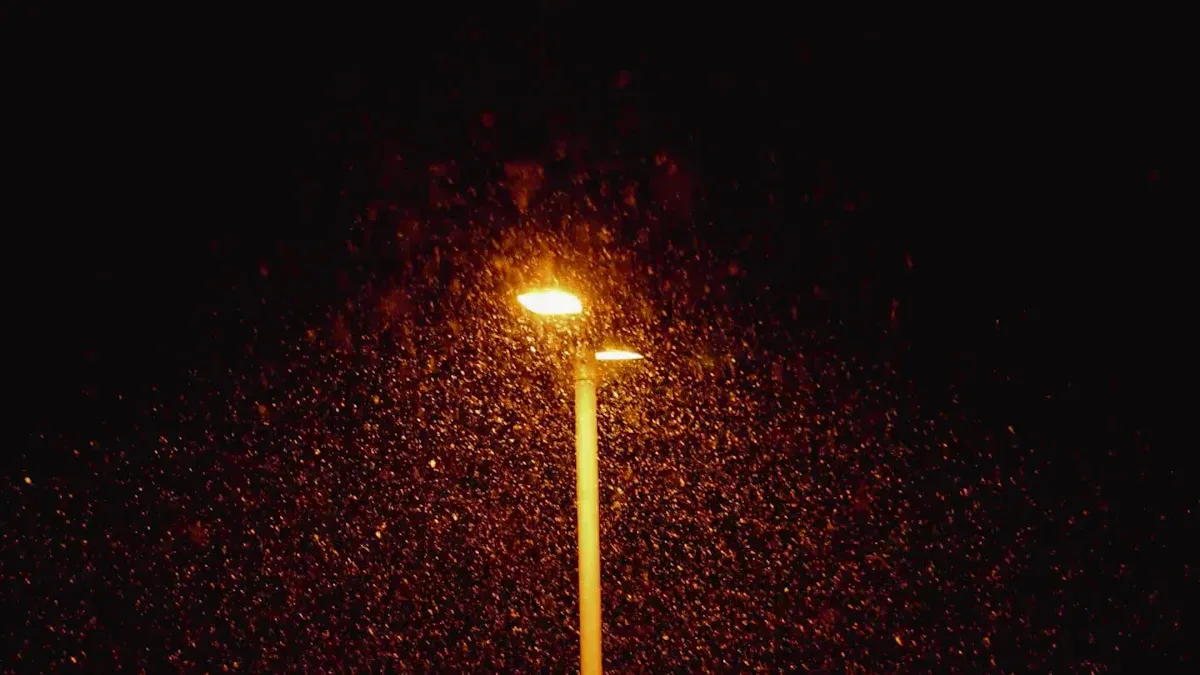
You may notice that led flood lights do not draw as many insects as older types of lighting. This happens for a few reasons. Traditional bulbs, like halogen or incandescent, give off a lot of heat. Bugs sense this heat and fly toward it. Led flood lights stay cool, so insects do not find them as interesting. Many old lights also send out ultraviolet light, which attracts bugs. Led technology focuses on visible light for people, not UV, so you see fewer insects around your fixtures.
The color temperature of your lighting makes a big difference in bug attraction. Warm white led flood lights, which have a color temperature between 2700K and 3000K, attract fewer insects. These lights give off less blue and ultraviolet light. Cooler lights, such as those above 5000K, shine more blue light and bring in more bugs. You should choose warm white options for your outdoor lighting if you want to keep insects away. Yellow and amber tones work best for bug control, while red lights attract the least, but may not be bright enough for all uses.
Tip: Pick warm white commercial led floodlights for outdoor spaces. This simple choice helps you enjoy bright areas without the extra bugs.
You can take a few easy steps to make your lighting even less attractive to insects:
Use commercial led floodlights with a color temperature of 3000K or lower.
Install shields or hoods on your fixtures. These direct the light downward and stop it from spreading out, which keeps bugs away from your building.
Place your led flood lights where you need them most. Avoid putting them near doors or windows.
Add motion sensors or timers. This way, your lights only turn on when needed, so bugs do not gather around them all night.
With these strategies, you can keep your outdoor areas bright and comfortable while reducing the number of insects.
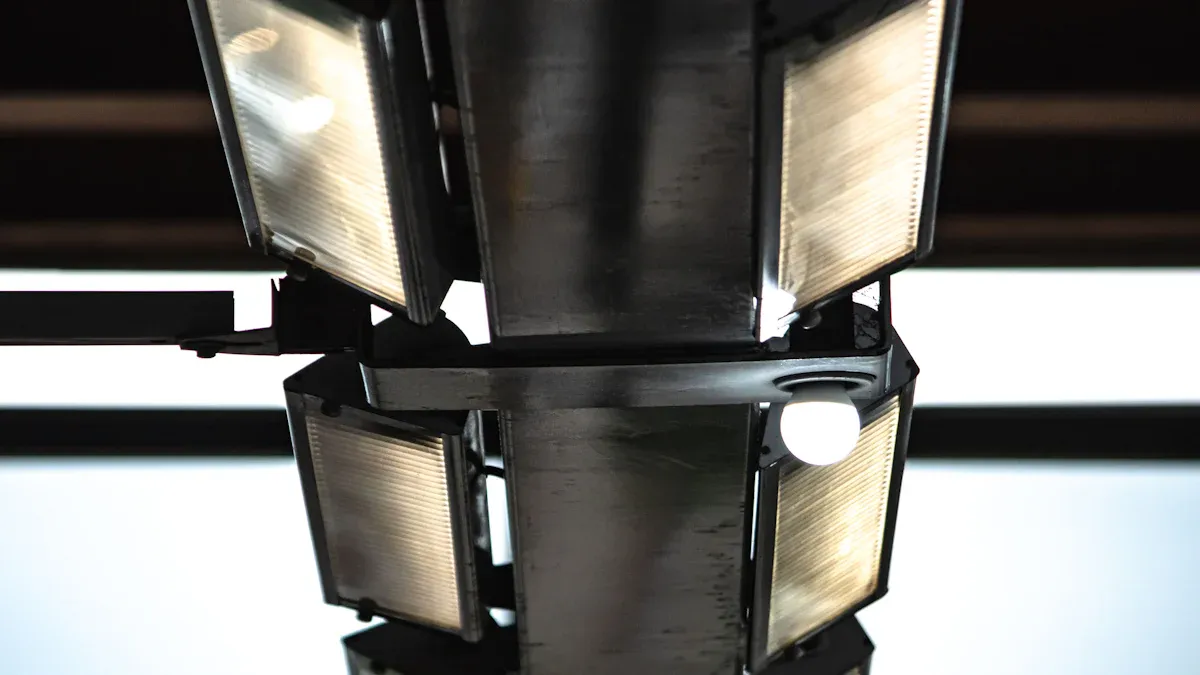
You want your outdoor spaces to feel safe and comfortable. The BUG rating system helps you choose the right led flood lights for your business. This system measures how much light escapes from a fixture in three ways: Backlight, Uplight, and Glare. The Illuminating Engineering Society and the International Dark Sky Association created this system to help you reduce light pollution and improve lighting performance.
The acronym 'BUG' stands for Backlight, Uplight, and Glare, which represent forms of stray light emitted from fixtures. While these types of light can have beneficial uses, they are often considered undesirable as they do not contribute effectively to practical illumination needs.
You can use the BUG rating to compare different led flood lights. A lower BUG rating means less unwanted light escapes. This helps you keep your lighting focused on the areas you want to illuminate. The system became part of the Luminaire Classification System in 2009. It replaced an older method that only measured street lights. Now, you can use the BUG rating for many types of commercial led flood lights.
Here is a table that shows typical BUG rating requirements for commercial outdoor lighting in urban areas:
| Component | Requirement |
|---|---|
| Backlight | B3 |
| Uplight | U3 |
| Glare | G3 |
When you select a floodlight with the right BUG rating, you help your business meet local rules and keep your property well-lit.
You can use shields and hoods to improve glare control in your outdoor lighting. These tools help you direct light exactly where you need it. Shields block direct light from shining into people's eyes. This makes your space safer and more comfortable. Hoods also prevent light from spilling into unwanted areas, like your neighbor's yard or the street.
Shields and hoods reduce glare by blocking harsh light.
They prevent light trespass by directing light downward.
You can use them to help your business follow local lighting laws.
If you want to keep your led flood lights bright but not harsh, add shields or hoods. You will see less glare and more even lighting. This makes your outdoor areas look better and feel safer.
You can control glare by placing your led flood lights in the right spots. Start by choosing the best beam angle for your space. Narrow beam angles focus light on small areas. This works well in places with high ceilings or where you need to highlight a sign. Wide beam angles spread light out for even coverage in parking lots or playgrounds.
You can also mount your floodlight on a wall instead of the ceiling. This helps you control where the light goes and reduces glare. Adjust the light level to avoid harsh spots. Lower light levels with wide beams create soft, even lighting.
Choose the right beam angle for your needs.
Mount fixtures on walls for better glare control.
Adjust light levels to avoid bright spots.
When you use these strategies, you make your outdoor lighting safer and more pleasant. You also help your business meet glare control standards and keep your neighbors happy.
You want to spend less and help the earth. LED motion sensor floodlights do both. These lights turn on only when they see movement. This smart feature can lower your energy use by up to 70%. LED motion sensor floodlights use less power than old bulbs. You still get bright light but use up to 80% less energy. You pay less for electricity and help the planet.
LED motion sensor floodlights last much longer than old lights. You do not have to change them often. This means you spend less on fixing lights. The payback time for switching to LED motion sensor floodlights is short. Many businesses get their money back in less than three years.
| Payback Period | ROI |
|---|---|
| Under 3 years | 35% |
| Under 2.7 years | 37% |
You also save energy with LED motion sensor floodlights. They help you reach your energy goals and support the planet.
You must follow local rules when you put up outdoor lights. LED motion sensor floodlights make this simple. Many cities have laws about light trespass, saving energy, and color temperature. For example, Boulder, Colorado limits light trespass at property lines. Flagstaff, Arizona wants businesses to dim or turn off outdoor lights by 11 PM. Phoenix, Arizona says outdoor lights must have a color temperature of 3000K or less.
| Regulation Type | Example/Details |
|---|---|
| Light Trespass | Boulder, Colorado restricts light trespass to 0.1 foot-candles at residential property lines. |
| Energy Efficiency | Flagstaff, Arizona requires commercial properties to turn off or dim outdoor lighting by 11 PM. |
| Color Temperature | Phoenix, Arizona mandates outdoor lighting to have a correlated color temperature of 3000K or less. |
Photometric contour lines and BUG ratings help you check your lights. Photometric data shows how light spreads and how bright it is. BUG ratings help you control glare and light trespass. You can use computer grids to show light levels and prove you follow the rules.
FAQs
Which beam angle cuts glare and light problems?
Narrow beam angles work best for high places. They keep light strong and cut glare. Wide beam angles are good for low spots but can spill light.
What bug level should I pick?
Fixtures with a U0 rating and low glare ratings help you follow Dark Sky rules and keep bugs away.
Are sunshades or shields at house edges useful?
Yes. Sunshades and shields block extra light and help the planet.
How does the beam angle affect neighbors' glare?
Medium beam angles work well for security areas. Narrow angles focus light and stop glare for neighbors. Do not use wide angles near property lines.
Are there rules about light spilling near homes?
Many cities have rules about light near houses. You may need to keep lights at a certain height and point them away from homes.
LED motion sensor floodlights help you follow these rules, save energy, and support the planet.
You can fix bug and glare issues with commercial led floodlights. These led fixtures save energy and are easy to use. They also make outdoor lighting better for everyone.
You spend less money because led lights use less power.
You make places safer and nicer for people who visit or live there.
You follow local rules by using smart controls and putting lights in the right spots.
| Feature | Benefit |
|---|---|
| Versatile beam angles | You can light any outdoor area just right |
| Durability | They work well in all kinds of weather |
| Advanced controls | They help you use less energy |
Pick commercial led floodlights to make your lighting better and easier to take care of.
You should use a medium or narrow beam angle. This focuses light on entry points and walkways. It helps you see clearly and reduces glare for neighbors.
Shields block extra light. You direct the light only where you need it. This keeps your property bright and stops light from spilling into other areas.
LED floodlights give off less heat and UV light. Bugs do not find these lights as interesting. You see fewer insects around your outdoor spaces.
You can ask for a photometric report. This report shows where the light goes and how bright it is. You use this to make sure you follow city laws.
Yes. Motion sensors turn lights on only when needed. You save energy and money. You also make your property safer at night.