Author: Site Editor Publish Time: 10-11-2025 Origin: Site


Have you ever wondered how large stadiums and parking lots stay illuminated at night? The answer lies in floodlights, powerful, wide-beamed light sources that brighten vast areas. In this article, we’ll explore the key uses of floodlights in various settings. From improving safety to enhancing outdoor experiences, you’ll learn how floodlights play a crucial role in multiple industries. In this article, we’ll explore the different uses of floodlights, how they work, and the types available to help you choose the right one for your needs.

Floodlights are a critical tool in enhancing security. By illuminating dark spaces, they make it harder for intruders to approach undetected, thus reducing the risk of crimes like burglaries and vandalism.
Homes and Businesses: In residential and commercial settings, floodlights are commonly used for security purposes. They are typically placed around the perimeter of a property or near entrances to deter trespassers. This makes floodlights an essential part of home security systems, offering peace of mind for homeowners and business owners alike.
Public Areas: Parking lots, walkways, and other public spaces benefit from floodlights, improving visibility and preventing accidents in poorly lit areas. Areas like these are high-risk for accidents and crime, making floodlighting a vital aspect of urban planning.
Benefits: The main benefit is clear visibility. Floodlights are designed to spread light over a wide area, ensuring that no part of the space is left in the dark. This allows people to move around safely, even in the middle of the night. Whether it's for a commercial property or a residential area, floodlights significantly reduce accidents and increase security.
Tip: Consider adding motion sensors to security floodlights for automatic activation when movement is detected, enhancing the effectiveness of your security system.
Floodlights have revolutionized the way sports are played, allowing matches and events to occur after dark. They’re especially vital for sports that require evening games or have large audiences that can't attend during the day.
Popular Sports: Floodlights are widely used in football, cricket, rugby, and motorsports, illuminating the playing fields and stadiums at night. For example, professional football leagues require floodlit stadiums to allow for evening matches. This also benefits fans who work or have school during the day, making games more accessible to a larger audience.
Television Broadcasts: Nighttime sports events are often broadcasted during prime-time television hours, making floodlighting essential for clear, high-quality broadcasts. The widespread adoption of floodlights has allowed sports to become global events with large television viewership, especially in the evening.
Accessibility: Floodlights also make it possible for people with daytime commitments to attend evening games, helping to increase attendance and viewership. In many sports, this has become a necessary feature, with floodlit games even becoming a staple in major sporting tournaments.
Floodlights aren't just for functionality—they're also an excellent tool for enhancing the beauty of buildings, monuments, and landscapes. They provide a dramatic effect by highlighting architectural features or landmarks at night.
Building Façades: Large commercial buildings often use floodlights to emphasize their architectural details, creating a striking visual presence after dark. These floodlights can highlight columns, entrances, or even logos to create an impactful first impression for visitors or passersby.
Monuments and Landmarks: Floodlighting is commonly used for famous monuments, bridges, and statues, making them more visually appealing and accessible to the public during nighttime. This helps preserve the cultural heritage of a location and adds to the city's ambiance.
Benefits: In addition to their aesthetic function, floodlights can contribute to a city’s ambiance, enhancing the visibility of historic buildings and creating an inviting atmosphere. Architectural lighting with floodlights can also transform a dull cityscape into an inviting one, enriching the public’s nighttime experience.
Tip: When using floodlights for architectural lighting, consider using color-changing LEDs to add more dynamic effects to the façade, which can enhance the visual appeal of the building further.
Floodlights are indispensable in large workspaces, ensuring high visibility in environments where safety and productivity are paramount. From factories to construction sites, floodlights provide the necessary lighting to ensure operations continue smoothly, even during nighttime hours.
| Type of Industry | Primary Use of Floodlights | Benefits |
|---|---|---|
| Manufacturing Plants | Provide illumination for workers in large indoor areas | Prevent accidents, boost productivity |
| Construction Sites | Ensure visibility of work areas at night | Ensure safety, allow round-the-clock operations |
| Warehouses | Light large storage areas and docks | Enhance security, facilitate easier movement of goods |
Industrial Workspaces: Floodlights are used in manufacturing plants, warehouses, and construction sites to keep the work area brightly lit, improving both safety and efficiency. These spaces often require constant lighting for both workers’ safety and the accuracy of their tasks.
Continuous Operations: In industries that operate around the clock, like ports or mining sites, floodlights are crucial for ensuring visibility at night, reducing accidents and downtime. In such operations, floodlights are essential to maintaining 24-hour productivity while ensuring worker safety.
Benefits: A well-lit environment helps reduce workplace accidents and improves the quality of work by enabling workers to perform tasks accurately and safely. Whether it’s an assembly line or a large construction site, floodlights ensure operations can continue uninterrupted at all hours.
Floodlights aren’t limited to commercial or industrial spaces. Many homeowners use floodlights for security and convenience in their yards, driveways, and outdoor living areas. Floodlights are especially helpful in residential areas where outdoor lighting can enhance security and the usability of outdoor spaces after dark.
Yards and Gardens: Floodlights can illuminate large areas, making them perfect for outdoor gatherings, backyard activities, or just improving the security of your home at night. A well-lit yard not only makes it safer but also more enjoyable to use in the evenings.
Driveways and Entrances: Adding floodlights near your driveway or entrances can improve visibility for guests or residents arriving home late at night. This can be particularly useful in suburban homes, where properties may be more isolated.
Benefits: The added security and convenience that come with residential floodlights are significant. They help reduce the risk of accidents, such as trips or falls, and increase the usability of outdoor spaces, whether for relaxation or socializing. Additionally, their security benefits, such as deterring trespassers, make them a valuable investment.

Floodlights are designed to project a wide, high-intensity beam of light over a large area. Unlike spotlights, which focus light on a small, specific area, floodlights disperse light across a broad expanse, making them ideal for illuminating vast spaces.
Floodlights: Typically have a beam angle of 45 to 120 degrees, spreading light across a wide area. This ensures that large outdoor areas, such as parking lots or sports fields, are well-lit.
Spotlights: Have a narrower beam, typically less than 45 degrees, focusing light on a specific area. This makes them ideal for highlighting a small, focused area, such as a stage or a monument.
Floodlights come in various technologies, each with its benefits.
| Technology Type | Advantages | Common Uses |
|---|---|---|
| LED | Energy-efficient, long lifespan, instant on/off | Outdoor, industrial, sports fields |
| Halogen | Bright, clear light | Smaller outdoor spaces, events |
| Metal Halide | High color rendering, bright light | Stadiums, large commercial spaces |
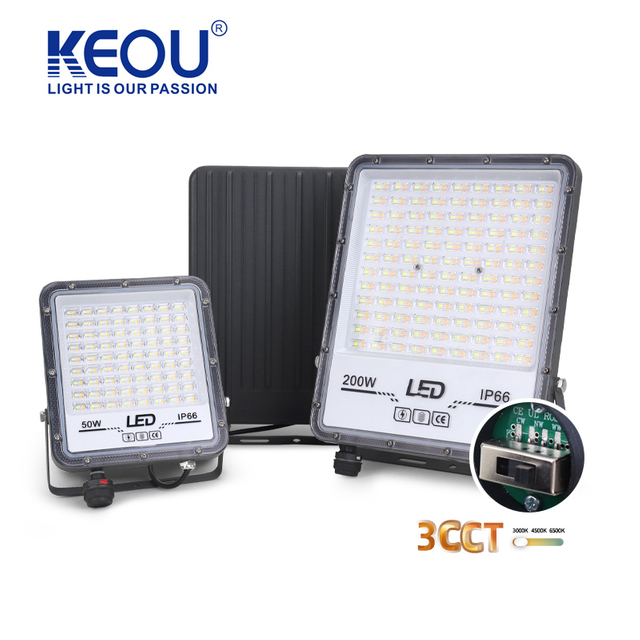
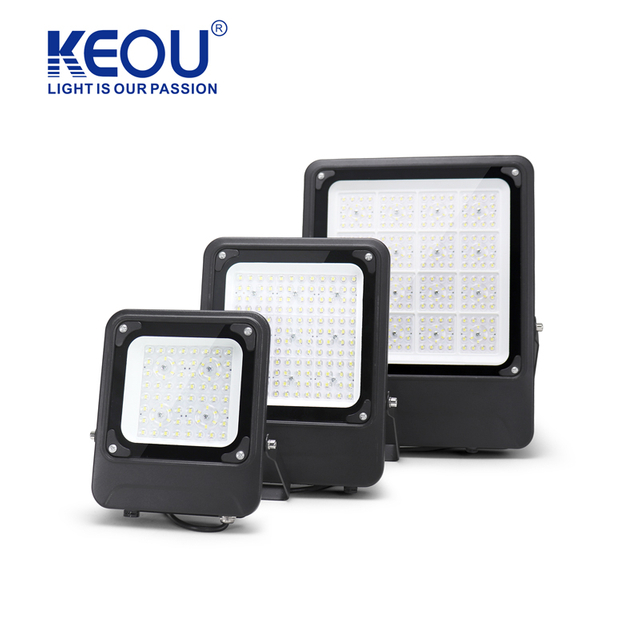
LED: The most modern and energy-efficient technology. LED floodlights consume less energy and have a longer lifespan than older floodlights, making them the best choice for most applications.
Halogen: Provides bright, white light but uses more energy and has a shorter lifespan. Halogen floodlights are often used in smaller applications where high light intensity is needed for short periods.
Metal Halide: Known for their excellent color rendering and high light output, metal halide floodlights are still used in some commercial and industrial spaces. However, they have been largely replaced by LED technology due to energy efficiency concerns.
Tip: If energy efficiency is a priority, choose LED floodlights over halogen or metal halide options. They offer brighter light, lower power consumption, and a longer operational life.
LED floodlights are now the most popular type due to their numerous benefits. They are highly energy-efficient, have a long lifespan, and provide bright, instant lighting. With their advanced technology, LED floodlights can be used for both large-scale outdoor applications and smaller residential needs.
Advantages: Low power consumption, instant on/off, and longer life.
Best for: Large outdoor spaces, sports fields, and security applications. They are also ideal for areas that require constant lighting, such as construction sites or airports.
Although not as energy-efficient as LEDs, halogen floodlights still offer bright, clear light and are often used in older installations or for specific applications where the brightness is prioritized over energy consumption.
Advantages: High brightness, ideal for smaller areas where intense light is needed.
Best for: Outdoor lighting where energy consumption is not a major concern. They are often used for short-term lighting needs, such as outdoor parties or events.
Solar-powered floodlights are eco-friendly and ideal for locations without easy access to electricity. These floodlights use solar panels to charge during the day and provide illumination at night.
Advantages: Cost-effective, environmentally friendly, and low maintenance.
Best for: Off-grid locations, garden lighting, and areas with lots of sunlight. They are perfect for places where traditional power sources are unavailable or impractical.
Security floodlights come with motion sensors to automatically turn on when they detect movement. This adds an extra layer of protection for homes and businesses.
Advantages: Automatically activates when motion is detected, enhancing security.
Best for: Home security and commercial properties that require heightened security measures.
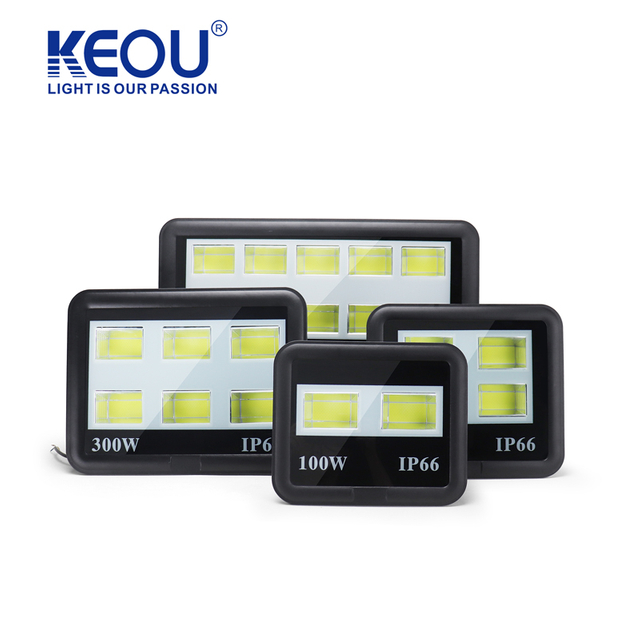
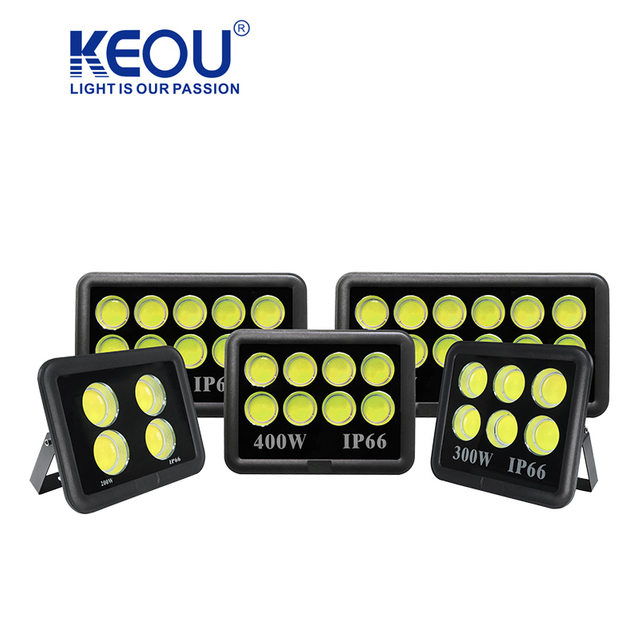
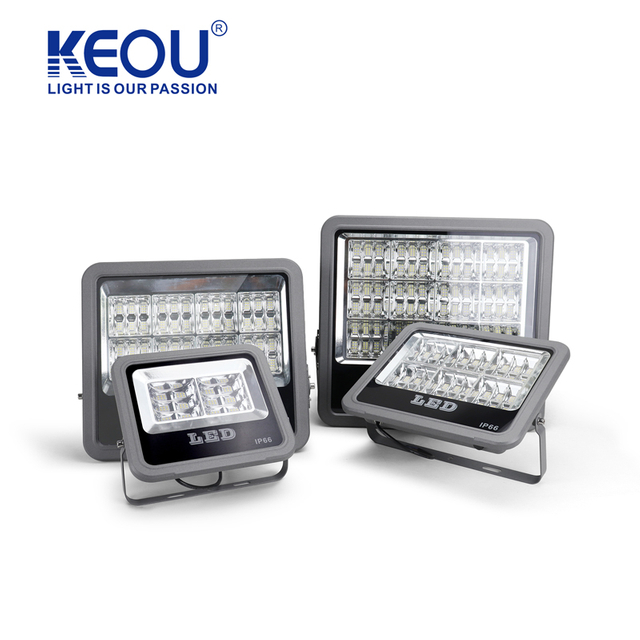
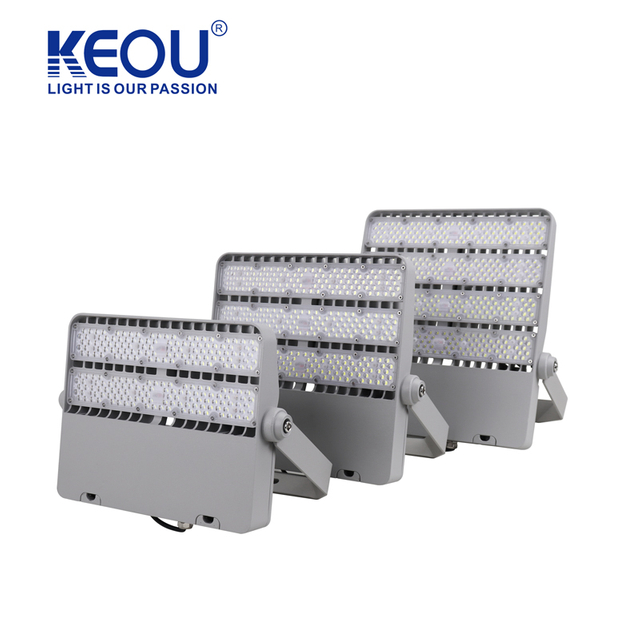
Floodlights are essential in various sectors like security, sports, and industry. They improve safety and enhance the visual appeal of landmarks. LED floodlights, with their energy efficiency and longevity, are becoming the preferred choice. KEOU offers high-quality floodlighting solutions that provide excellent value, whether for security, sports, or aesthetic purposes. Their products combine durability with energy savings, ensuring top performance across various applications.
A: A floodlight is used to illuminate large areas, enhancing security, enabling sports events at night, and highlighting architectural features.
A: A floodlight projects a wide, high-intensity beam, unlike a spotlight, which focuses light on a specific area.
A: LED floodlights are energy-efficient, have a long lifespan, and offer instant lighting, making them ideal for outdoor and security use.
A: Floodlights allow sports to be played at night, providing visibility for players and improving accessibility for spectators.
A: Yes, floodlights are commonly used around homes and businesses to improve safety by illuminating dark areas and deterring intruders.