
Author: Huang Publish Time: 23-04-2026 Origin: Site


Surface-mounted LED panel lights look almost “too simple” to be a top seller. No fancy trimless details, no deep housings, no complicated ceiling work.
For many contractors, that’s exactly why LED panel light wholesale orders for a surface mounted LED panel light format keep moving—because they solve real ceiling constraints without adding installation risk.
But for electrical contractors buying in bulk—especially on retrofit sites—that simplicity is exactly why traditional surface-mounted panels (round and square) still move fast.
According to Wipro Lighting’s 2025 overview of surface-mounted LED benefits, surface-mounted fixtures stay popular largely because they’re easier to install and maintain—two things that directly affect your labor time and call-back risk.
If you’re quoting a refurbishment in South Africa, the ceiling often decides the luminaire more than the spec sheet does.
Surface-mounted panels keep winning because they solve the most common on-site constraints:
No cut-out required. On solid ceilings, concrete slabs, or ceilings you don’t want to damage, surface-mount avoids cutting and patching. That means less mess, fewer surprises, and faster handover.
Cleaner retrofit logic than “making recessed work.” Recessed often becomes a chain of compromises: cut-out size, ceiling depth, unknown obstructions, and rework if the hole is off by a few millimeters.
Maintenance access is simpler. When a driver needs service, surface-mounted designs can be easier to access than recessed housings (depending on the ceiling type). That matters on commercial jobs.
And panel lights remain a practical, cost-conscious choice because the category is designed around efficiency and long service life. For a local framing of why panels are still a mainstream option, see Radiant’s South Africa-based guide to panel lighting benefits.
Key Takeaway: “Traditional” surface-mounted panels keep selling because they reduce ceiling risk, speed up installs, and help contractors control call-backs on retrofit projects.
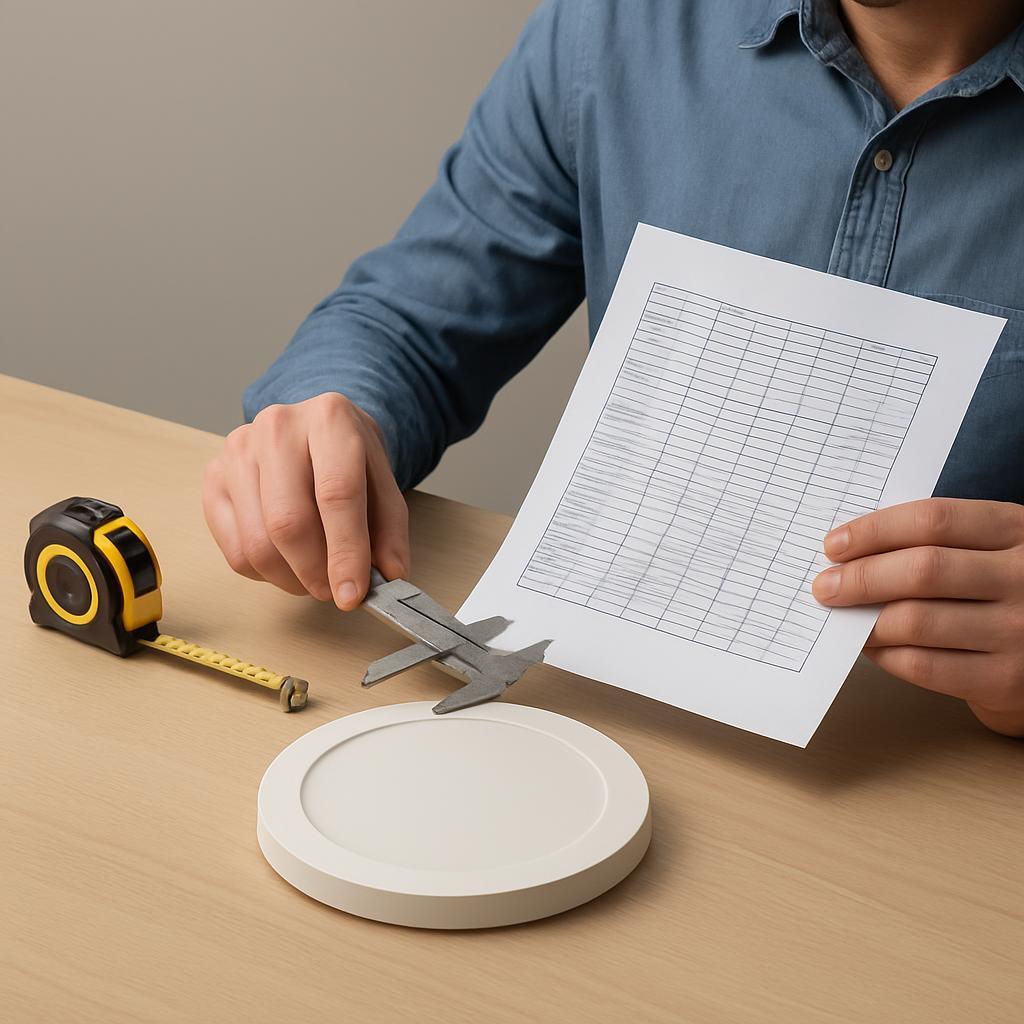
You’ll see both shapes stay hot sellers because each solves a different visual and layout problem.
Round is the contractor’s friend for:
Corridors, small rooms, back-of-house areas where you need evenly distributed general light
Retrofits replacing round bulkheads/downlights without chasing perfect cut-out alignment
A cleaner look on mixed ceilings (different substrates, patched surfaces)
Square tends to fit projects where:
You want visual alignment with ceiling lines, tiles, or modern interior geometry
There are repeated bays (office grids, retail aisles) and you want the pattern to feel intentional
If you need square options for your BOQ, you can reference a surface mounted square panel light range and match dimensions and wattages to the application.
If you’re buying for projects, “LED panel light” is not a complete spec. This is the short checklist that prevents most headaches later.
Mounting condition: confirm you truly need surface-mount (solid ceiling / no grid / no cut-out). If a recessed solution is possible and preferred for aesthetics, compare against a recessed round panel light option before you lock your quantities.
Size vs illumination plan: choose diameter/shape to suit room spacing and ceiling height. Don’t assume “bigger panel = always better”; bigger can mean glare issues if the diffuser and optical design are poor.
Driver quality expectations: in bulk jobs, driver consistency matters more than one unit’s performance. Ask about driver options and QC approach.
Heat management and materials: aluminum housings and sensible thermal design reduce long-term degradation risk.
Glare control requirement: if the space is office-like or customer-facing, ask for glare-control solutions (diffuser design, optics, and UGR targets if available).
Documentation and labeling: for project work, confirm what documentation the supplier can provide for your region and tender requirements (spec sheet, packing label, test reports where applicable).
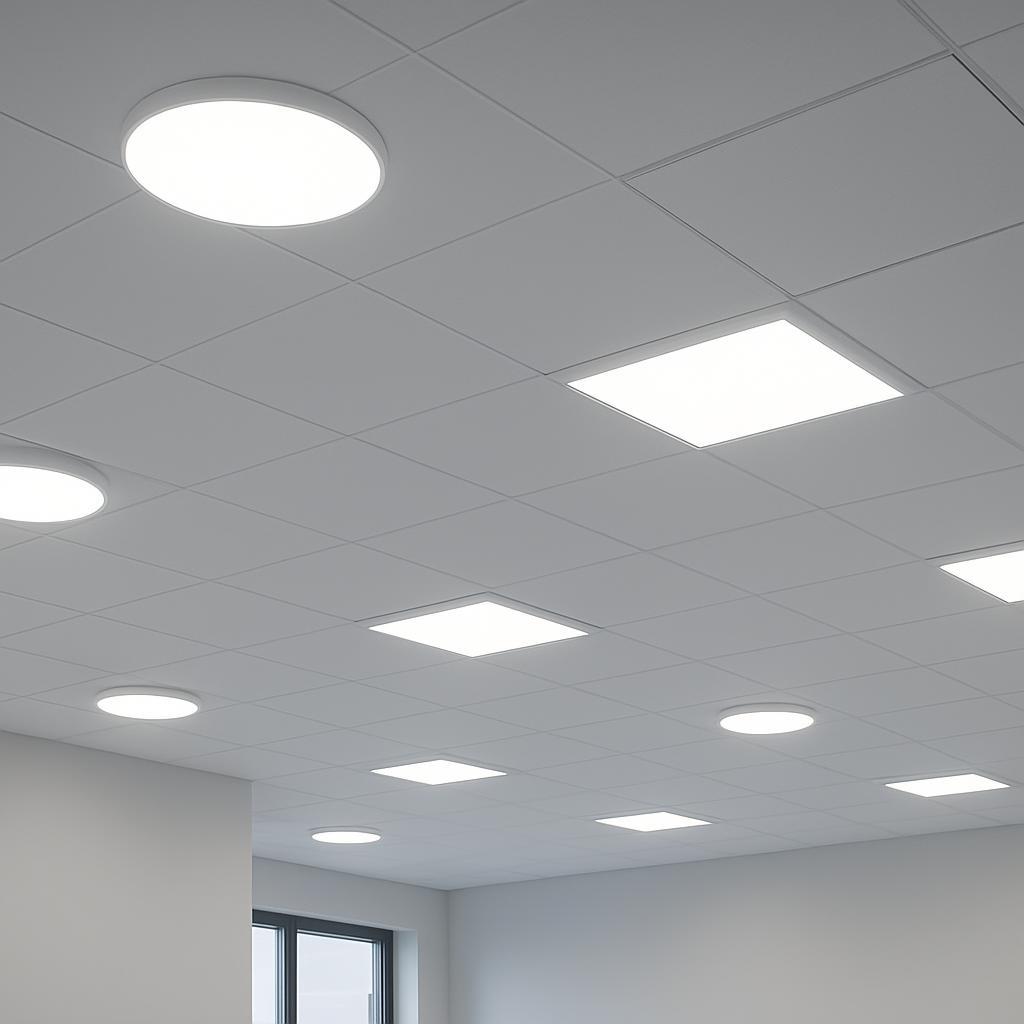
A practical way to evaluate a supplier is to start with a standard, traditional model you can use across multiple project types.
The KEOU-MB006 surface-mounted round panel light is a classic surface-mount format designed to help contractors avoid ceiling cut-outs while still delivering a clean finished look.
Material: Aluminium
Wattage options: 6W / 12W / 18W / 24W
Design intent (from product description): appearance upgrade to help prevent light leak and promote even distribution; aluminum radiator with convection design; simple ivory border.
Power | Size (mm) | Luminous flux |
|---|---|---|
6W | Φ120 × 35 | 420 lm |
12W | Φ172 × 35 | 960 lm |
18W | Φ225 × 35 | 1440 lm |
24W | Φ300 × 35 | 1920 lm |
This range makes it easier to build a consistent bill of materials: smaller wattages for compact rooms and circulation areas, larger sizes where you need more output without changing the mounting method.
Surface-mounted panels sell well—but contractors also know the category’s failure modes. If you’re buying wholesale, these are the issues worth screening out before the container lands.
Vague specs: no clear wattage, size, or lumen numbers. If the supplier won’t commit to basic performance parameters, don’t commit to volume.
Inconsistent driver supply: driver changes without notice lead to mixed performance across batches (and mixed complaints across units).
Poor thermal design: heat is a long-term reliability enemy. Materials and heat-sinking choices matter.
Uneven diffusion: visible hot spots and edge shadows make a job look cheap—especially in retail and office spaces.
One practical approach is to qualify a standard model first, then scale. Start with samples, check finish quality, and confirm the same build will be supplied across your bulk order.

If you’re specifying surface-mounted panels for an upcoming project, treat the bulk order like a project component—not a commodity.
Use the KEOU LED panel lights manufacturer page to request:
your estimated quantities and mix (6W / 12W / 18W / 24W)
preferred shape (round focus + any square quantities)
your target delivery window and destination
any project requirements you need to align on (driver preference, glare control, packaging/labeling)
If you want a fast quote, include your BOQ and ceiling type notes—then the supplier can confirm the closest match and reduce back-and-forth.


