Author: Huang Publish Time: 30-03-2026 Origin: Site


Round, slim “panel-style” downlights are everywhere—from new-construction apartments to retail refreshes. But the two mistakes that cause most headaches are still the same:
treating watts like a brightness rating, and 2) assuming “6-inch” means the same cutout for every brand.
This guide gives you a repeatable way to pick round LED panel light sizes (6/8/10/12-inch class) and wattage ranges for brighter new-build scenarios—without inventing specs or pretending there’s one universal answer.
It’s an LED panel light wattage guide first, and a product pitch never.
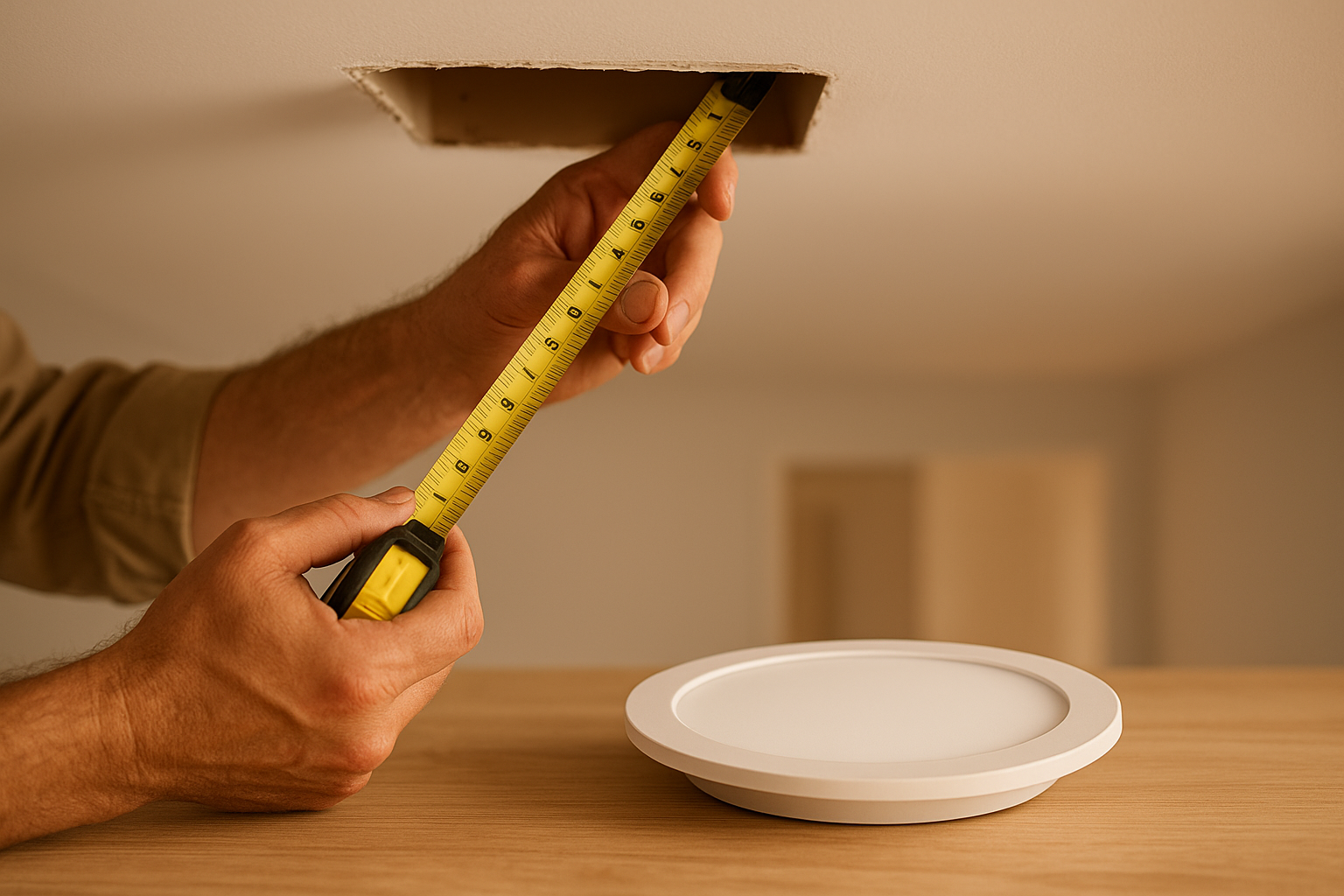
Lumens (lm): the light output. This is what you’re really buying.
Watts (W): power draw. Useful for energy planning, but not a brightness label.
CCT (correlated color temperature): the “warm vs cool” look of the light (e.g., 3000K warm, 4000K neutral, 5000K+ crisp).
CRI (color rendering index): how naturally colors appear under the light. CRI 80 is common; CRI 90 is preferred for retail and design-forward spaces.
Edge-lit panel: LEDs sit on the edge of the frame and shine into a light guide plate (LGP), which spreads light evenly. A good edge-lit design is often chosen for a slim profile and a clean, uniform look. For a plain-English explanation, see NVC UK’s “difference between edge-lit and back-lit LED panels”.
That difference is why edge-lit vs backlit panel light comparisons usually come down to profile, cost, and efficiency—not “which is always better.”
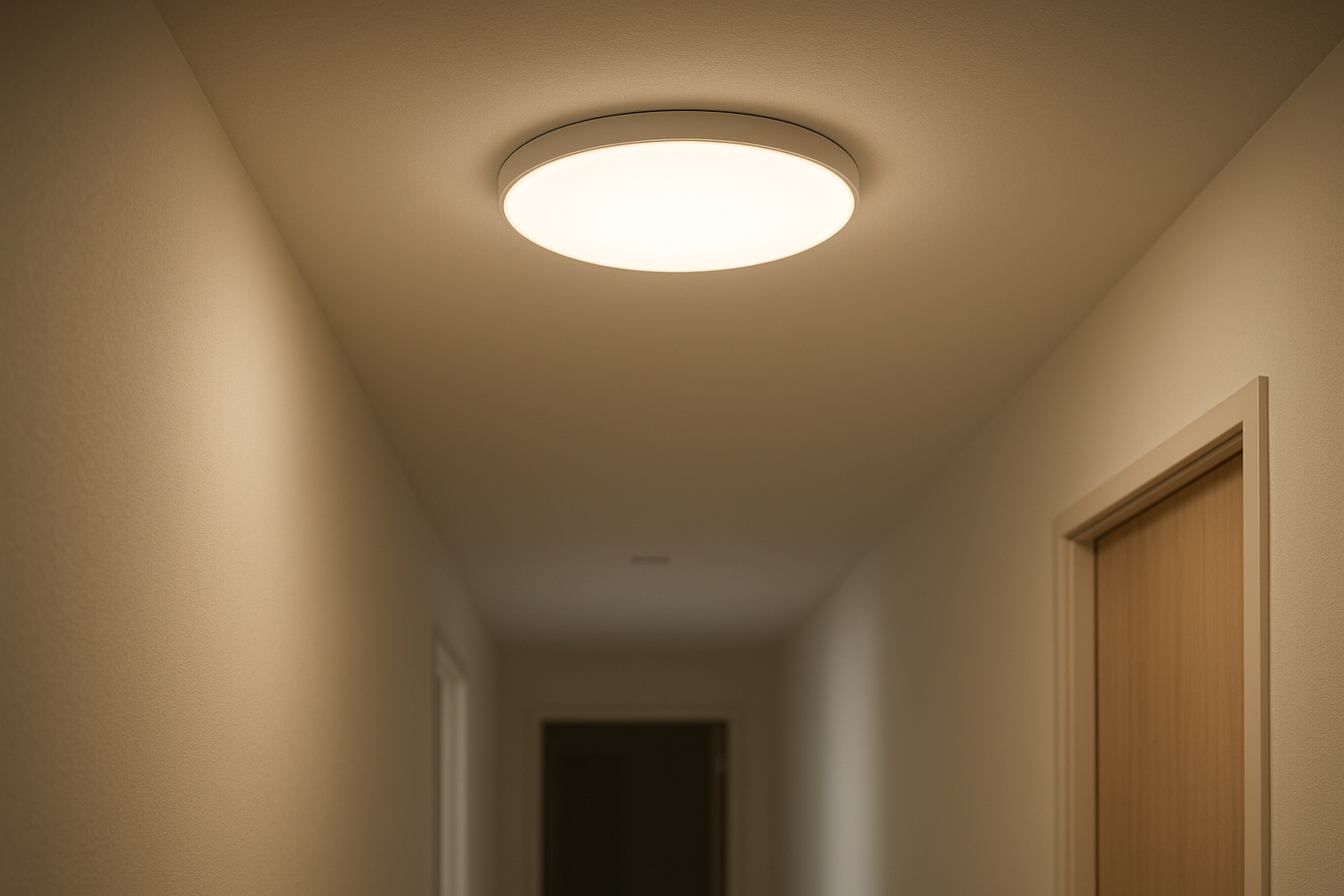
This matters most for one common install risk: recessed panel light cutout size mismatch.
For round panel/wafer lights, the outside trim might be close to the nominal size, but the cutout (the hole you cut in drywall) varies by manufacturer.
As a reference point, traditional recessed housings often use a 6-3/8" ceiling cutout for 6-inch class fixtures, as explained in RecessedLighting.com’s measuring guide (updated 2026). Canless panels frequently publish their own templates.
⚠️ Warning: For new builds, don’t rough-in cutouts from a “standard” chart. Always confirm the exact cutout from the fixture template or spec sheet before drywall.
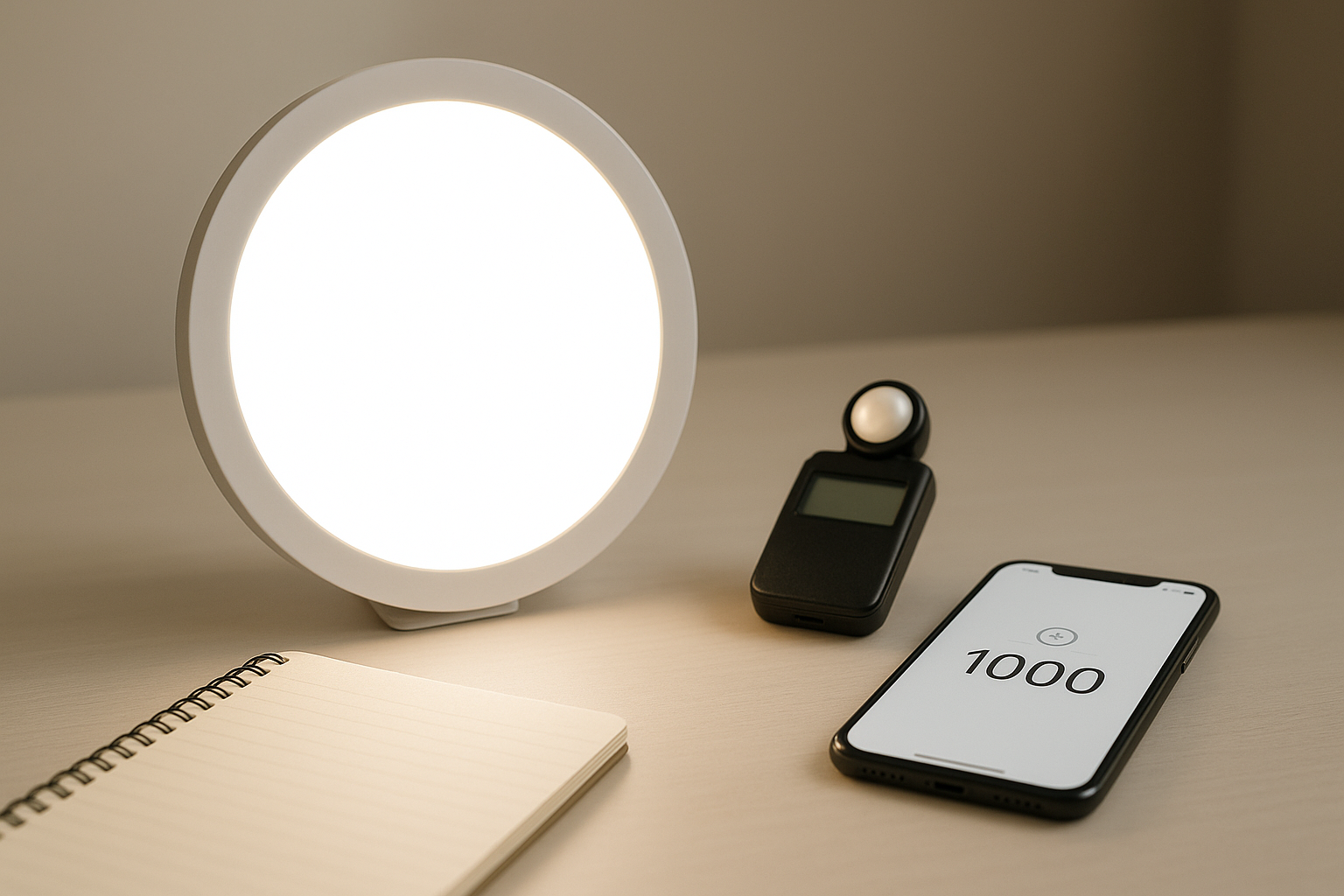
Below are the sizes you’ll see most often in specifications and catalogs. Think of these as planning sizes—final selection should still be validated against cutout, lumen package, and spacing.
Best when ceilings are low, ceiling planes are busy (sprinklers, diffusers), or you want more fixtures at lower output each.
Typical uses:
corridors and small rooms
hospitality where you want tighter spacing for visual rhythm
retail perimeter or display zones (when paired with accent lighting)
If you only stock one round size, this is often it.
Typical uses:
apartments and condos (living areas + bedrooms)
offices with standard ceiling heights
hotel rooms and lobbies
Gives a larger luminous surface—helpful when you’re trying to reduce fixture count or create a more modern “panel” look.
Typical uses:
open offices
retail aisles
conference rooms
These are often used when the ceiling is higher, the space is wider, or the goal is a more architectural look.
Typical uses:
large living areas and basements
big retail zones
hospitality public spaces (when glare control is good)
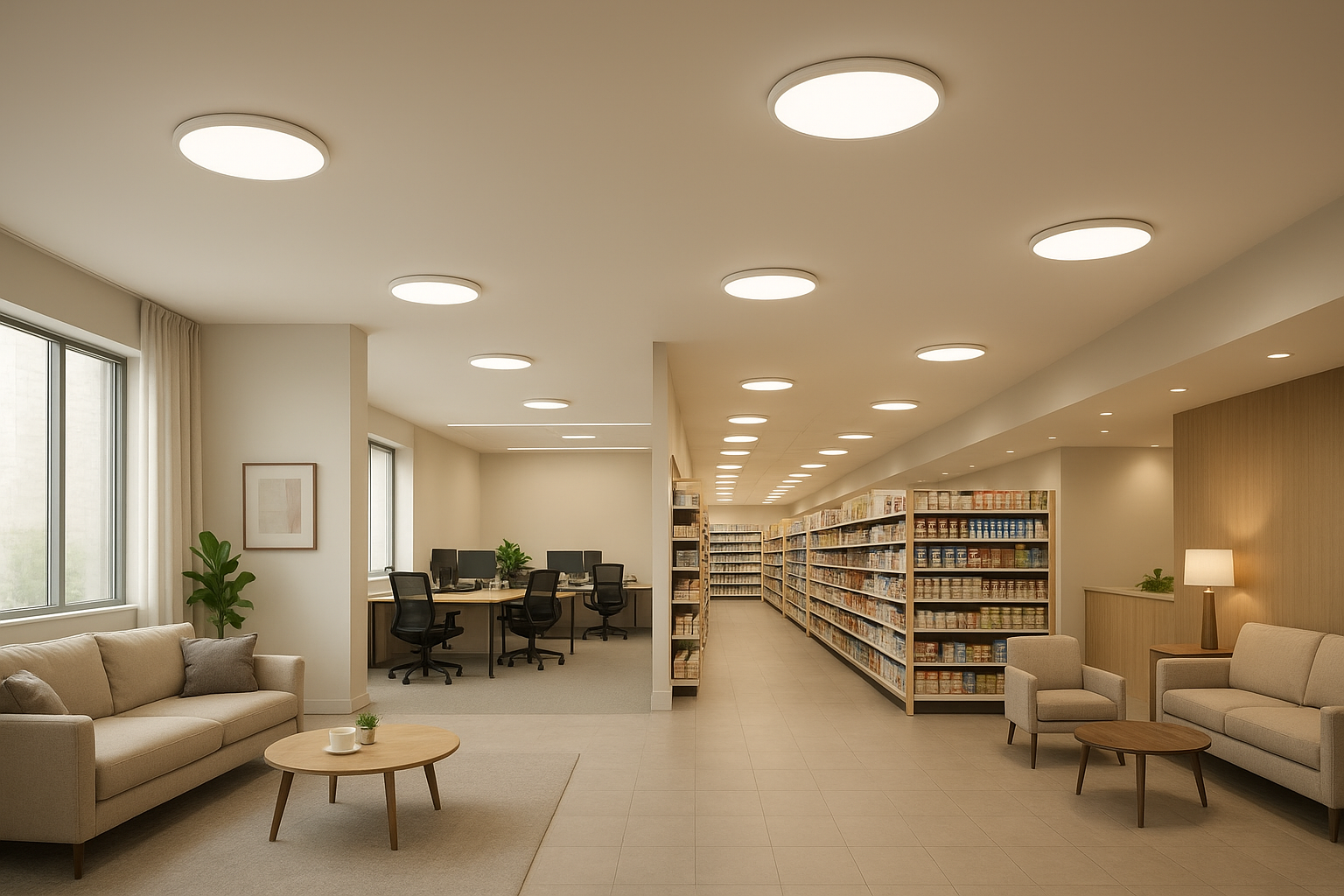
Edge-lit round panels vary a lot in efficacy and optics. Still, there are common market clusters. Many smaller round edge-lit panels land roughly in the single-digit to teens wattage range, while higher-output “architectural” products can be significantly higher depending on driver and lumen package.
Use this as a starting point for higher-brightness/new-build planning:
Nominal size | Typical wattage band | “Brighter” new-build band | Where it tends to land |
|---|---|---|---|
4-inch | ~6–10W | ~10–15W | Small rooms, corridors, layered lighting |
6-inch | ~8–12W | ~12–18W | General lighting, apartments, offices |
8-inch | ~10–18W | ~18–24W | Open areas, retail, conference rooms |
10-inch | ~12–20W | ~20–30W | Larger rooms, higher ceilings, fewer fixtures |
12-inch | ~15–24W | ~24–36W | Architectural look, large spaces |
Pro Tip: For commercial specs, ask for the delivered lumens and the beam distribution (or photometric file). A high-watt panel can still disappoint if the optic is wrong for the ceiling height.
Because watts don’t include:
the fixture’s efficacy (lm/W)
diffuser losses
CCT/CRI tradeoffs
ceiling height and surface reflectance
Two 20W panels can look completely different in the same room.
If you need a reference example of how much output variation exists even within “flat panel” families, see how some commercial edge-lit flat panel lines offer selectable lumen packages by size (not round-specific, but useful as context), such as Alcon Lighting’s Architectural Edge-Lit LED Flat Panel Light 14052.
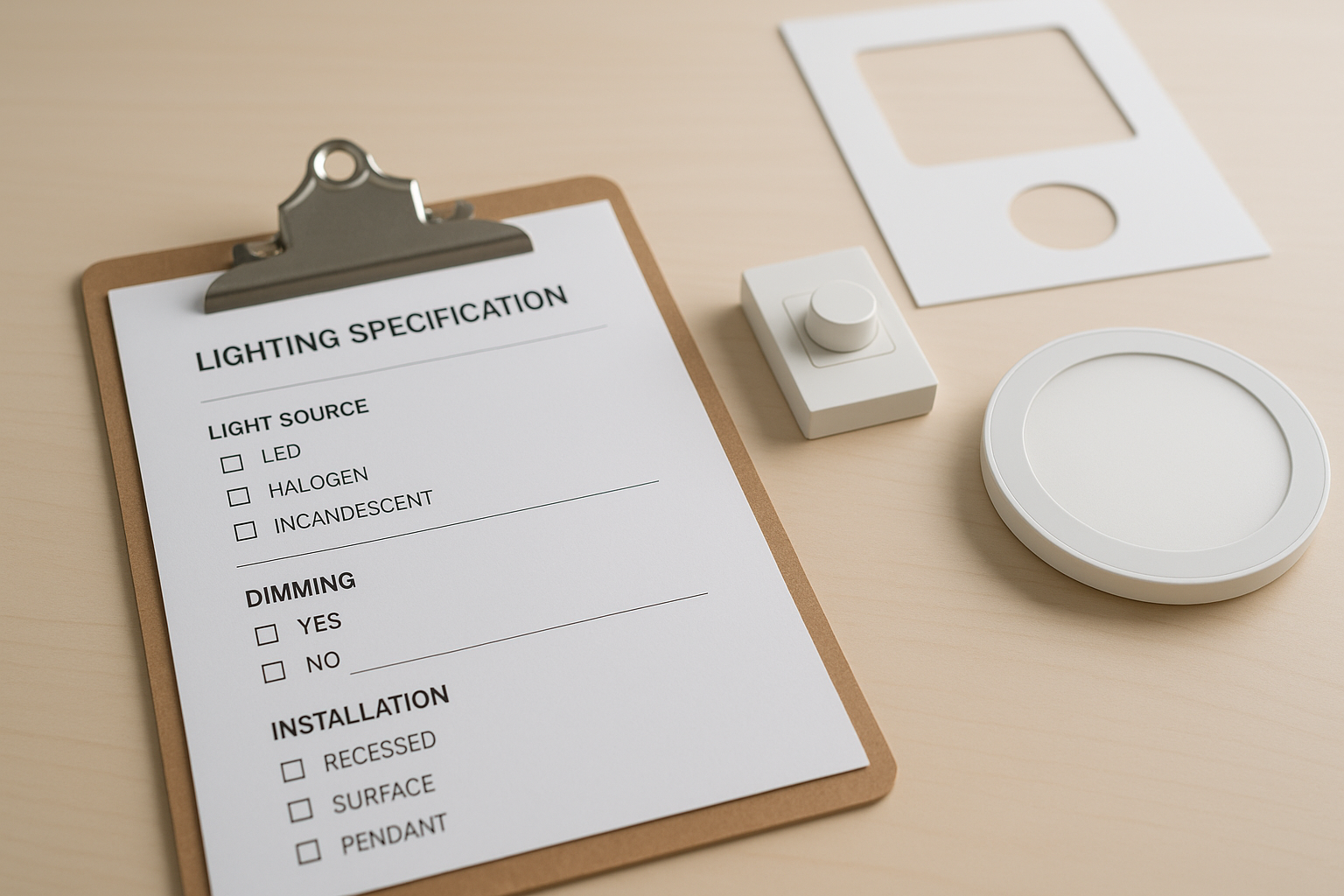
Collect these before you choose size or wattage:
ceiling type (drywall, grid, surface mount)
ceiling height
target light level (if you have it)
dimming requirement (and what dimmer/control system)
environment (kitchen grease, humidity, dust)
If the environment is damp or dusty, check the fixture’s IP rating (ingress protection) suitability for the location. (Don’t guess—verify on the spec sheet.)
A simple rule: the bigger the luminous surface, the more you can reduce fixture count—as long as glare is controlled.
Want more fixtures with smoother uniformity? Lean 4"–6".
Want fewer fixtures and a more “panel” look? Lean 8"–12".
If you only have wattage during early budgeting, use the bands above. As soon as you have real cut sheets, shift to:
delivered lumens per fixture
fixture spacing plan
ceiling height and reflectance assumptions
A practical, widely used starting point:
3000K: hospitality, residential living spaces (warm)
3500K–4000K: offices, classrooms, kitchens (neutral)
5000K+: task-heavy or “crisp” retail/industrial feel
If a project has mixed uses, CCT-selectable panels can reduce SKU risk (verify actual CCT settings and driver behavior). KEOU’s panel light category page highlights options like tricolor CCT and dimmable variants.
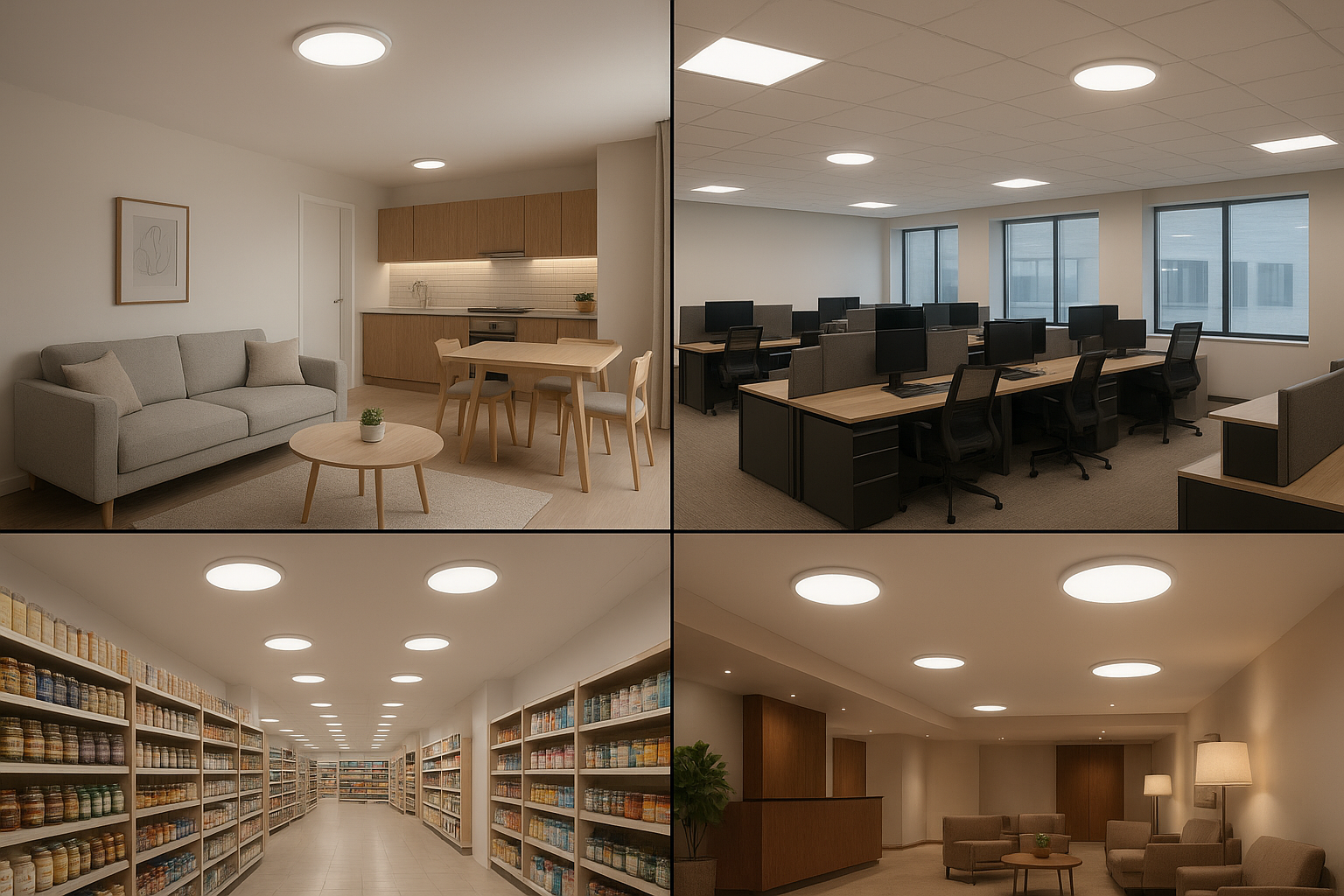
If you’re writing a spec comparison such as “6 inch vs 8 inch vs 12 inch LED panel light”, the most defensible approach is to compare luminous surface + spacing first, then confirm delivered lumens and glare control from the cut sheet.
These are not hard rules—think of them as a way to align size + wattage with what the space is trying to do.
Common pick: 6" class for most rooms, 8" in open living/dining.
Brighter approach: move one band up in wattage (and verify glare).
Where to be careful:
dimmer compatibility (especially if the developer is cost-driven)
visual consistency across unit types
Common pick: 6"–8".
Brighter approach: 8" class with higher lumen package to reduce fixture count.
Where to be careful:
glare on screens; consider diffusers/UGR-style requirements if specified
Common pick: 8"–12" for architectural presence.
Brighter approach: prioritize higher CRI and consistent CCT binning.
Where to be careful:
edge-lit can look great, but uniformity depends on good optics and a quality LGP.
Common pick: 6"–10" depending on ceiling height.
Brighter approach: use dimming + scenes so “bright” doesn’t become “harsh.”
Where to be careful:
make sure dimming range is stable (no flicker) at low levels
Must-haves (avoid rework):
exact cutout spec + template
voltage compatibility
dimming method matched to controls
delivered lumens + photometrics
CCT/CRI confirmed
Nice-to-haves (reduce SKU and change orders):
wattage-selectable driver
CCT-selectable (tricolor)
accessory mounting kits (surface/suspension)
For a broader spec vocabulary (efficacy, CRI, dimming, lifetime) you can also point customers to KEOU’s overview article: LED panel specifications comparison.
No. Edge-lit panels are often chosen for slim profile and a clean, uniform luminous surface, while back-lit designs are typically thicker but can be more cost- and efficiency-competitive. Use edge-lit when the thin profile and appearance matter, and confirm the output and glare performance you need.
For many projects, 6" is the workhorse. If your customers do a lot of open areas or want fewer fixtures, 8" is the next most practical step.
Early in design, wattage bands can help budgeting—but final spec should be based on delivered lumens, photometrics, ceiling height, and spacing. Otherwise you’re guessing.