Author: Huang Publish Time: 22-04-2026 Origin: Site


If you sell panel lights into projects, you already know the real bottleneck isn’t “what looks nice.” It’s whether the fixture fits the ceiling cutout, ships consistently, and installs without callbacks.
This guide compares round vs square recessed ultra-thin panel lights (and a practical standard driver vs DOB option) using the criteria distributors actually care about: fit, layout, assembly, and quote-ready specs. We’ll also reference a round recessed panel light and a square recessed panel light as the two common shapes distributors quote most.
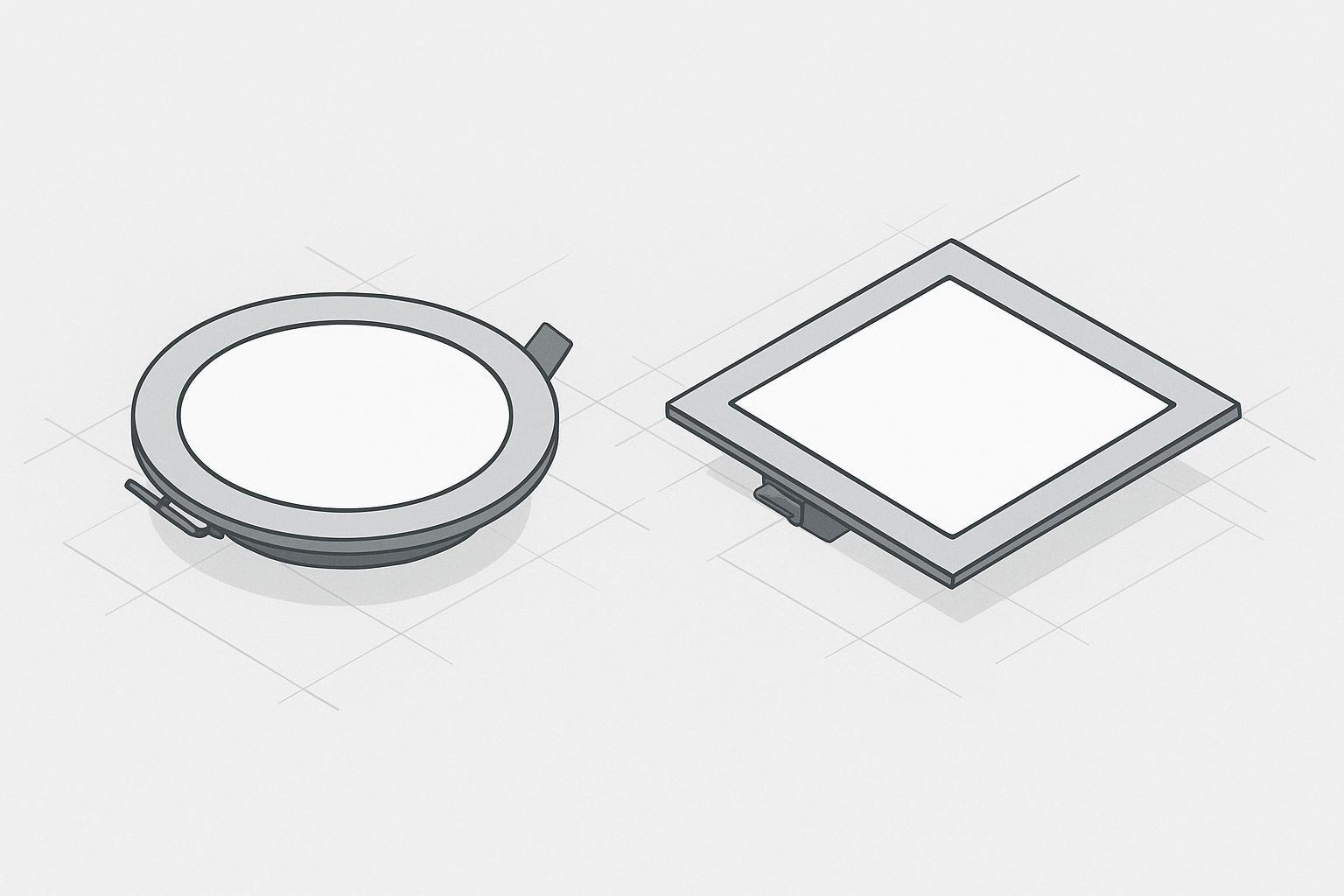
What you’re optimizing for | Choose round | Choose square |
|---|---|---|
Retrofit speed | More forgiving spacing and cutouts | Works best when cutouts are precise and aligned |
Visual style | Soft, subtle, blends into most ceilings | Modern, architectural, grid-friendly |
Ceiling types | Drywall/gypsum ceilings, mixed renovations | Grid layouts and clean-line interiors |
Typical spaces | Residential, corridors, hospitality, mixed-use | Offices, meeting rooms, modern retail |
Pro Tip: If your customer is replacing existing downlights, start with the cutout list. Shape comes second.
For a practical overview of the aesthetic and planning trade-offs, NuWatt Lighting summarizes the square vs round recessed decision in “Understanding Recessed Lighting Options: Square vs. Round”.
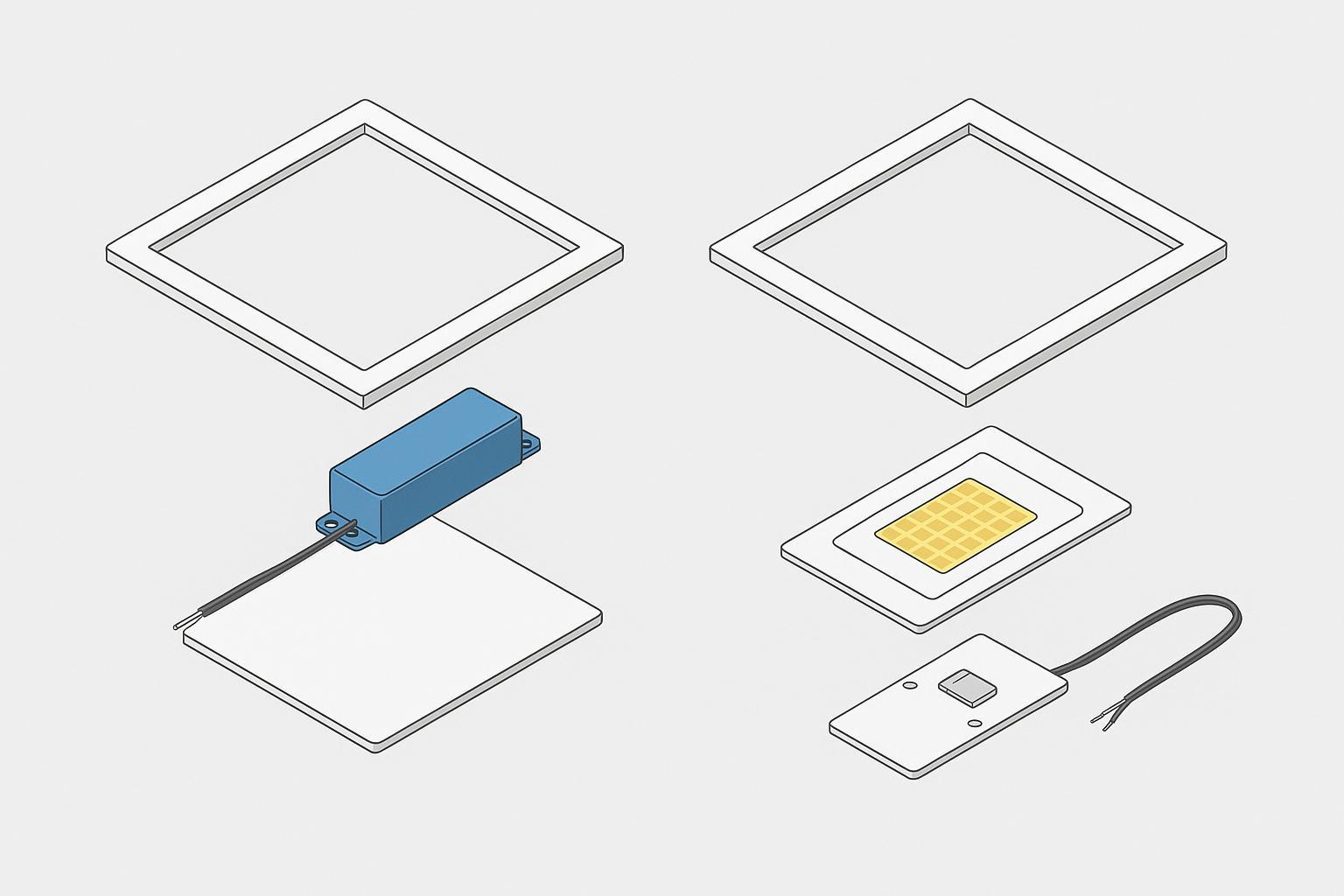
In KEOU’s recessed panel lineup, you’ll see both a standard structure and a DOB option.
Comparison point | Standard recessed panel light | DOB recessed panel light |
|---|---|---|
What “DOB” means | — | Driver electronics integrated on the LED board (DOB PCB) |
Assembly model | Conventional finished-luminaire supply | Designed for efficient assembly; supports SKD workflow |
When it’s a good fit | General projects where the customer wants a familiar configuration | Cost-sensitive, volume orders where simplified assembly matters |
DOB is commonly defined as “driver-on-board”—the driver is integrated on the LED PCB rather than housed as a separate external unit. For a neutral definition, see Shine Lighting’s explanation of Driver-on-Board (DOB) LED lights.
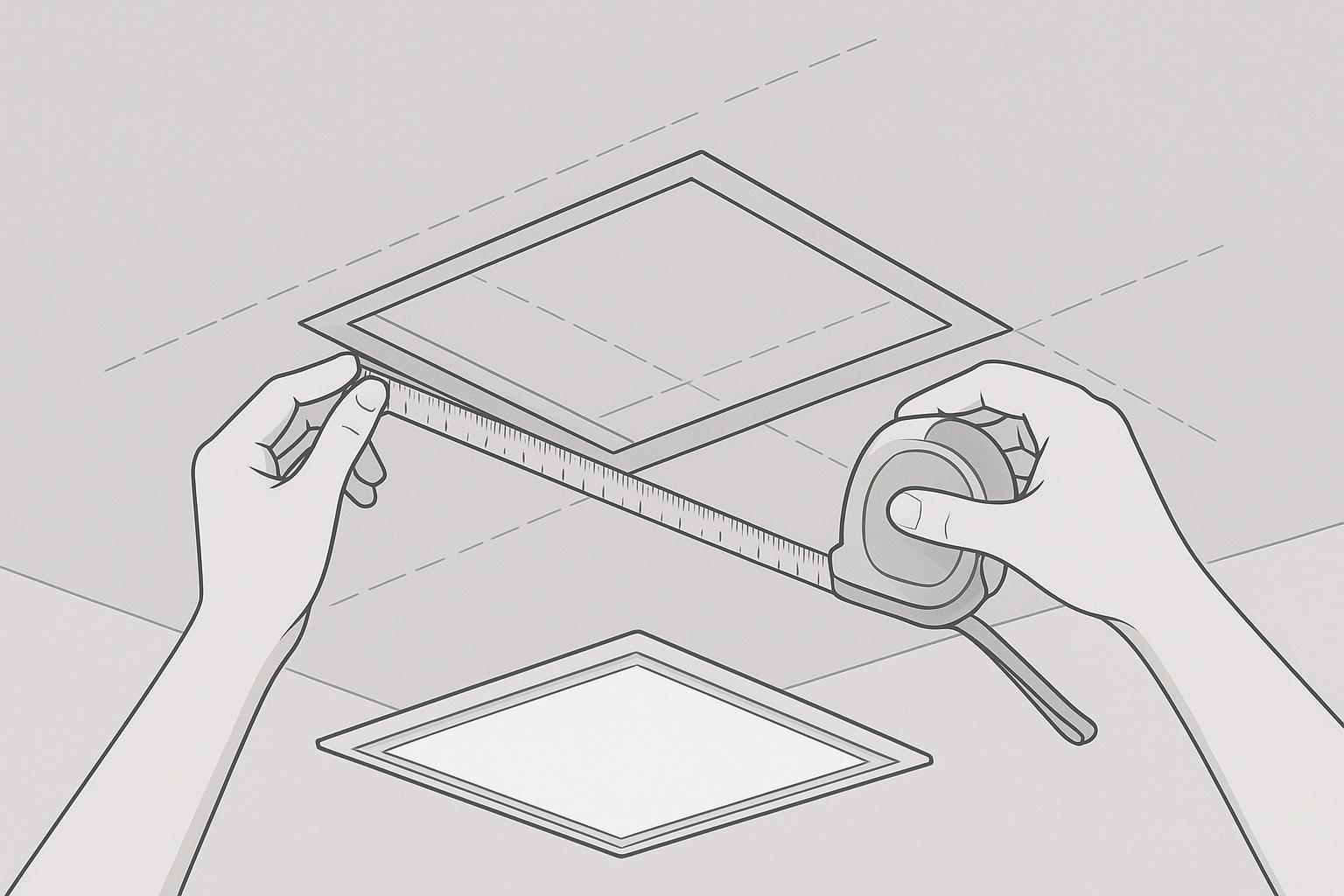
Use these scenarios to guide the default recommendation you offer customers. Then validate with ceiling cutouts and spacing.
Round recessed panels are the safer default when the ceiling has mixed geometry or when the lighting plan isn’t a perfect grid. The visual footprint feels lighter, and small spacing inconsistencies are less noticeable.
Square recessed panels look intentional when the ceiling layout is aligned—especially in modern interiors with straight lines and repeated modules. If the installer is already planning a clean grid, square can look more “designed” than round.
If the space uses strong linear architecture (rectangular aisles, shelving lines), square can reinforce that rhythm. If the layout is flexible or irregular, round keeps the ceiling calmer.
Ultra-thin recessed panel lights are usually chosen for one reason: limited ceiling clearance.
From KEOU’s product pages, the recessed round panel light (model KEOU-MB008) is listed at 20 mm thickness across sizes, while the recessed round DOB panel light (model KEOU-DMB008) is listed at 25 mm thickness.
Here are cutout examples straight from the KEOU pages (round models):
Standard recessed round panel light (KEOU-MB008):
6W: Φ120 mm size, Φ105 mm cutout
12W: Φ170 mm size, Φ155 mm cutout
24W: Φ300 mm size, Φ285 mm cutout
Recessed round DOB panel light (KEOU-DMB008) shows cutout ranges (useful for retrofit tolerance):
7W: Ø120 mm size, Ø95–105 mm cutout
16W: Ø170 mm size, Ø145–155 mm cutout
22W: Ø220 mm size, Ø195–210 mm cutout
⚠️ Warning: Don’t quote “closest size” from memory. Ask for the cutout list (or drawings). Cutout mismatch is the #1 avoidable cause of returns.
Round SKUs typically cover more mixed projects because they don’t force a strict ceiling grid.
Square SKUs can be a strong add-on when your customers frequently do modern offices or grid-aligned retail, but they require tighter layout discipline.
Round cutouts are often more forgiving visually. With square, small alignment mistakes are easier to see—so the installer’s ceiling prep matters more.
When customers ask for a “high cost-performance” panel light, what they often mean is:
stable quality across batches,
simple installation,
fewer field problems,
and a spec that’s easy to repeat across projects.
That’s exactly how you should frame the selection: reduce risk and callbacks, not just initial price.
If you want a room-by-room selection refresher, KEOU also provides a practical guide: How to Select the Perfect LED Panel Light for Any Room.
Keep this short and operational—your team can copy/paste it into RFQs.
Cutout size (and whether it’s a fixed hole size or needs tolerance)
Ceiling clearance (why ultra-thin is required)
Quantity by wattage/size (build your BOM around the cutouts)
Driver architecture preference (standard vs DOB) and any assembly needs (finished vs SKD)
Target application (office vs hospitality vs residential) to avoid over/under-spec’ing
For KSA office-type projects, this spec-focused post can help align expectations on glare and flicker requirements: Office LED Panel Light Spec Guide for KSA.
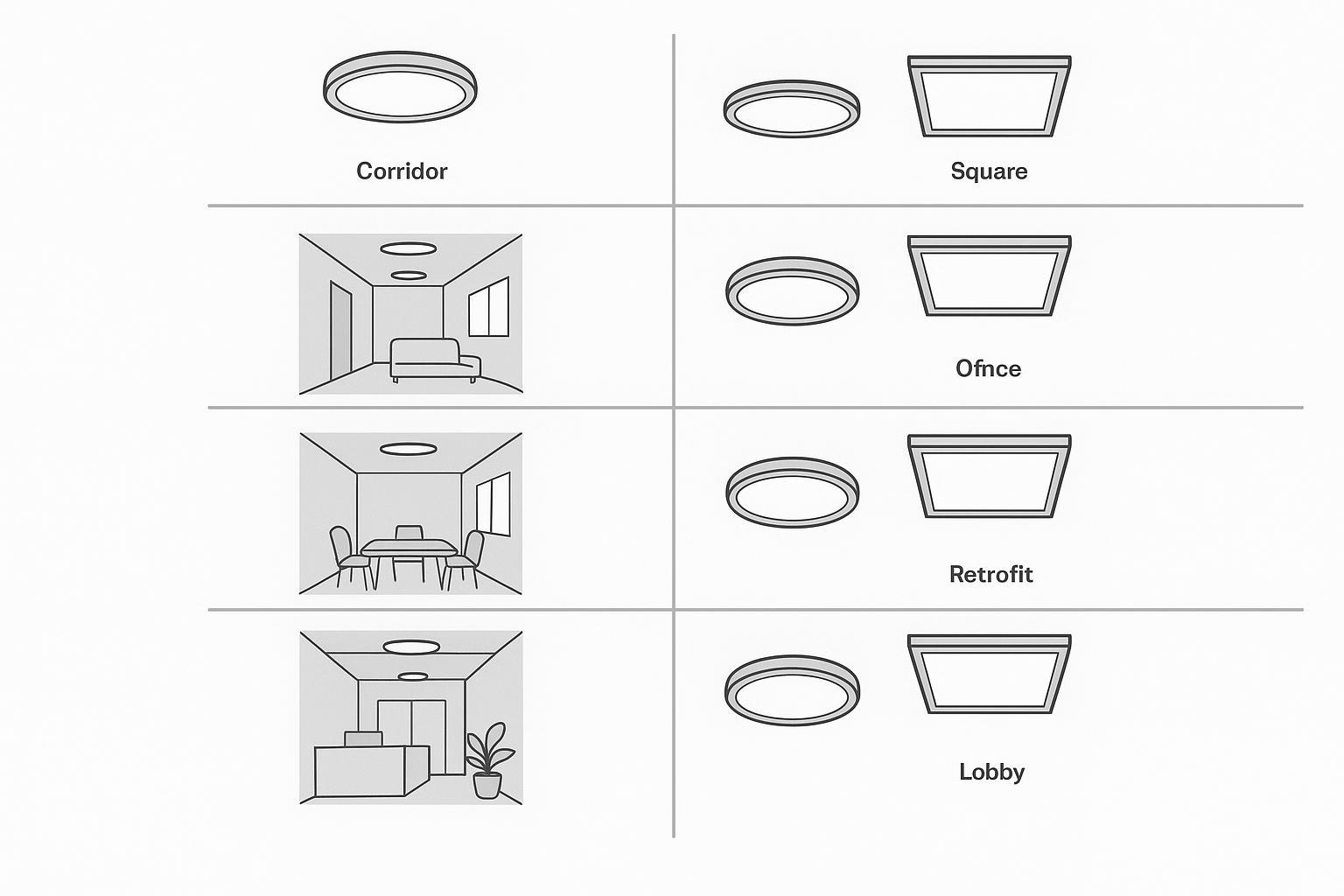
Use this as a starting reference for quoting. Final selection should be driven by cutout measurements and lighting design.
Scenario | Recommended shape | Recommended structure | Round size examples (from KEOU pages) | Cutout examples |
|---|---|---|---|---|
Corridor / hallway | Round | Standard (default) | 6W, Φ120×20 mm | Φ105 mm cutout (6W standard) |
Guest rooms / apartments | Round | Standard or DOB | 9W–12W range by room plan | Φ135 mm (9W standard) / Φ155 mm (12W standard) |
Meeting room / office grid | Square (if aligned layout) | Standard (default) | Use round equivalents when square specs aren’t fixed yet | Start from existing ceiling module/cutout plan |
Retrofit projects with inconsistent cutouts | Round | DOB (when tolerance helps + SKD is useful) | 7W Ø120×25 mm (DOB) | Ø95–105 mm cutout range |
Larger public areas (lobby / open space) | Round or square | Standard (default) | 18W Φ225×20 mm (standard) | Φ210 mm cutout |
For customers who are still comparing “home vs office” expectations, you can also reference: Home vs Office Panel Lights: UGR, CCT, CRI, flicker and dimming.

If you want a quote that your installers won’t fight later, send these four items and we’ll match the right SKUs quickly:
your cutout sizes (or ceiling drawings)
target shape (round, square, or mixed)
preferred structure (standard or DOB)
estimated order quantity by wattage/size
You can start from the product pages and message your requirements directly: