Author: Huang Publish Time: 07-04-2026 Origin: Site


If you’re buying the same “panel light” for both homes and offices, you’ll usually get hit by one of two problems: the home product feels harsh, or the office product feels flat and uncomfortable after a few hours.
This guide breaks down home panel light vs office panel light requirements specifically for surface-mounted square/round LED panel lights—and shows how to translate “comfort” into specs you can actually quote, verify, and standardize.
Along the way, we’ll reference relevant resources from KEOU Lighting (for buyers who want OEM/ODM options and a spec-ready product pack).
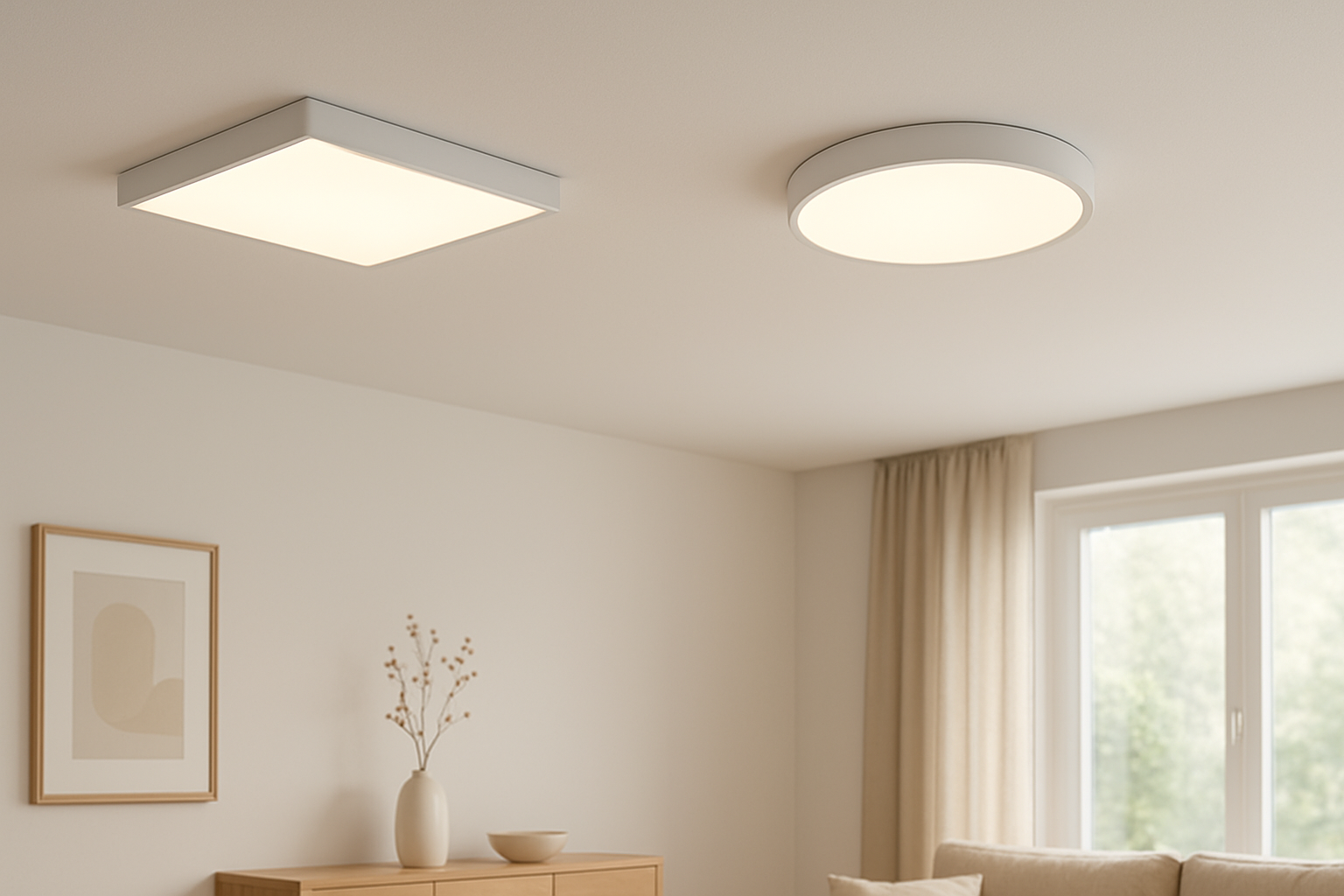
Spec / concern | Typical home priority | Typical office priority | What buyers should request from a supplier |
|---|---|---|---|
Glare control / UGR | Comfort, “soft” feel, no harsh hotspots | Visual comfort over long dwell time | UGR value when available, optic/diffuser description, installation height assumptions |
CCT (color temperature) | Warm/neutral mood | Neutral/cool for focus | CCT options (fixed or selectable), SDCM if provided |
CRI | Skin tones and interior finishes | Natural colors for documents + faces | CRI value (e.g., Ra), any R9 if provided |
Flicker risk | Comfort + camera friendliness | Comfort + meeting rooms/video calls | Driver type, dimming method, flicker metric reports if available; align with guidance such as IEEE 1789-2015 |
Dimming & controls | Simple dimming, smart home compatibility | Consistent dimming across many fixtures | Dimming protocol (TRIAC / 0–10V / DALI), minimum dim level, compatibility notes |
Beam distribution | “Even” light on a smaller area | Uniformity across desks and circulation | Photometric file (IES) + layout recommendation |
Consistency & QC | Looks the same in one room | Looks the same across a whole floor | Binning/consistency approach, incoming QC, test reports you can share |
Glare complaints are the fastest way to turn a “good on paper” panel light into a return risk.
In a home, people usually have more control over where the light lands (lamps, mixed layers, fewer identical fixtures). A surface-mounted panel light is also closer to the eye line in some rooms, so a diffuser that looks fine in a showroom can still feel sharp at night.
In an office, you’re asking people to stare at screens and documents for hours under the same luminaires. Glare becomes a productivity and comfort issue, not just a preference.
If your customer or project spec mentions UGR, the most common office ask is often UGR ≤ 19 (and sometimes lower for visually demanding spaces). But the key procurement point is this: UGR is not a universal number—it depends on room reflectance, luminaire position, and viewing angles.
Pro Tip: Don’t treat UGR as a checkbox. Ask the supplier what assumptions the UGR value is based on (mounting height, spacing, room reflectance). If they can’t explain it, the number won’t protect you.
What you can verify quickly (even without a full lighting design):
Optic/diffuser design intent (microprismatic, honeycomb/louver, deep recess, etc.)
Whether the fixture is marketed as anti-glare with a clear physical mechanism
A photometric file (IES) so your customer can run a simple layout check
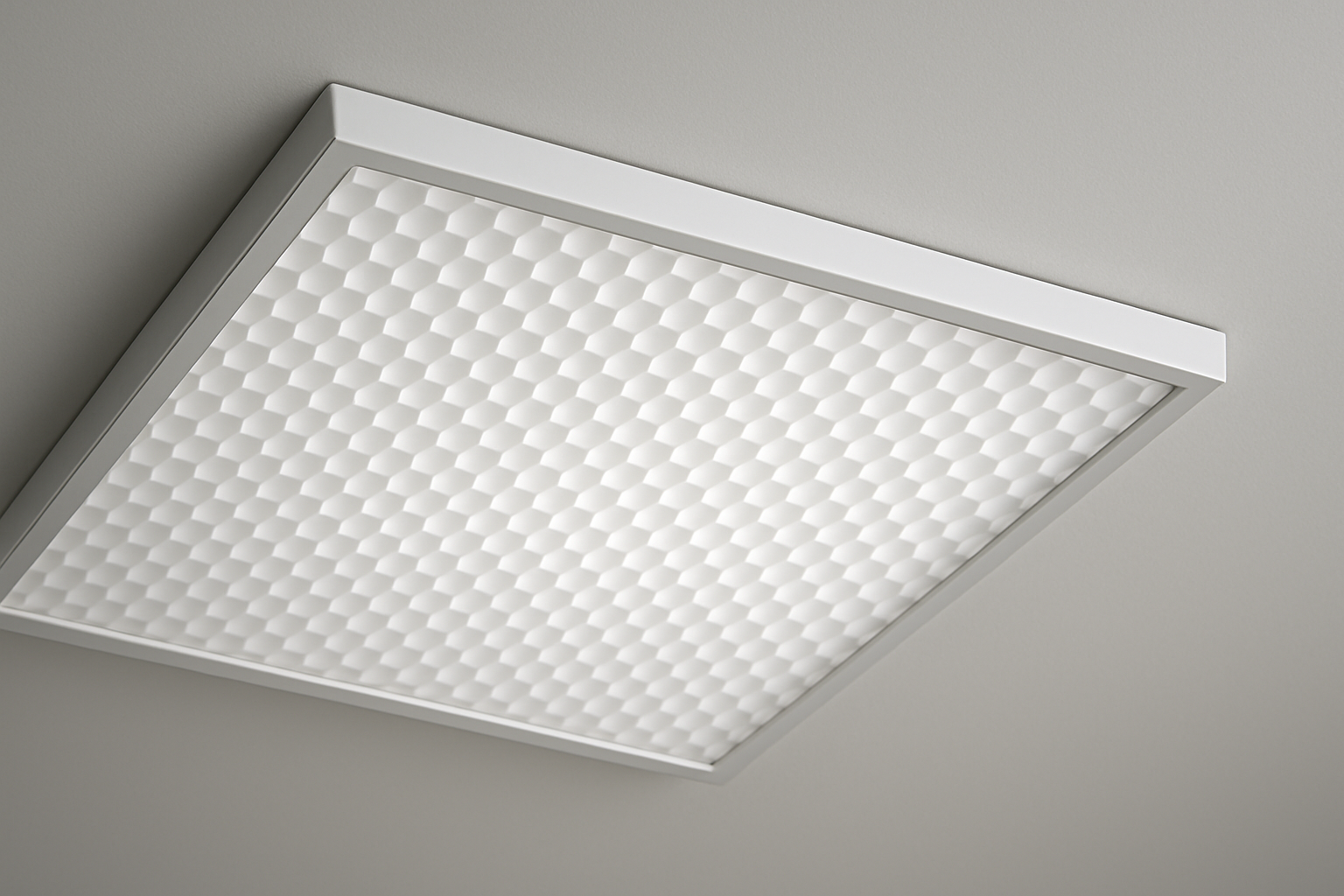
Example: KEOU describes a surface-mounted option with a “patented hexagonal honeycomb anti-glare design” on its anti-glare surface mounted square panel light. That’s useful because it names a specific glare-control approach instead of just saying “low glare.”
If you’re comparing suppliers, include UGR LED panel light data in your request (and ask what assumptions the UGR value is based on).
CCT (correlated color temperature) is where home and office diverge most.
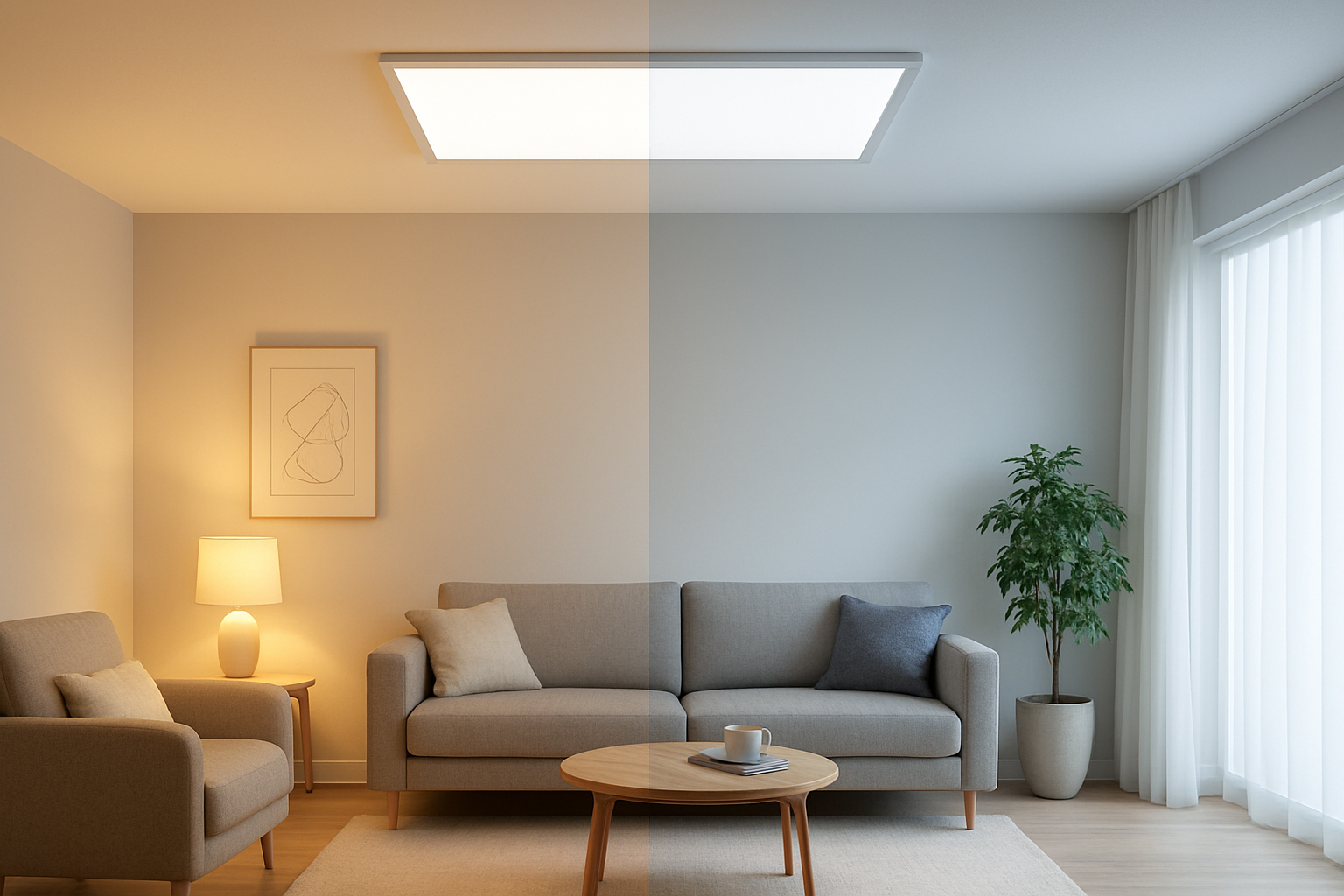
Home buyers often lean warm/neutral because “too cool” light can feel clinical in the evening.
Office buyers often choose neutral/cool because it supports alertness and task visibility.
KEOU’s own selection guidance frames it clearly: warm white (around 2700K–3000K) for relaxing areas and cooler options (often 4000K+) for work zones like kitchens and offices, with adjustable CCT as a flexibility option (see How to select the perfect LED panel light for any room).
Buyer move (decision-stage): standardize one SKU strategy:
Home-focused SKU: warm/neutral CCT, or 3-CCT selectable to reduce inventory risk.
Office-focused SKU: neutral/cool CCT options, and tighter spec control on consistency (see SDCM/bins if the supplier provides it).

CRI affects how natural interior finishes, skin tones, and printed materials look.
In homes, CRI complaints usually show up as “the room looks gray” or “faces look off.”
In offices, CRI matters for people on camera and for document-heavy work.
If your customers ask for a simple rule, keep it practical:
Ask for the CRI value (Ra). If the project is quality-sensitive (retail, meeting rooms, healthcare-adjacent), ask whether the supplier can provide additional color data (like R9) and keep it in the spec pack.
A better approach is to treat flicker as a driver design + dimming interaction issue. The IEEE publishes guidance on LED current modulation and flicker risk mitigation in IEEE 1789-2015. You don’t need to turn that into a compliance claim—but it is a credible reference point when you’re pushing suppliers for measurable information.
What to request for office projects (especially):
driver type and dimming method
confirmation of dimming stability (no shimmer/stepping at low dim)
any available flicker metric reporting (if the supplier provides it) aligned with guidance such as IEEE 1789-2015
⚠️ Warning: If a project requires dimming, don’t approve samples at 100% brightness only. Test at the lowest intended dim level with the actual dimmer/control type. Many “good” fixtures fail here.
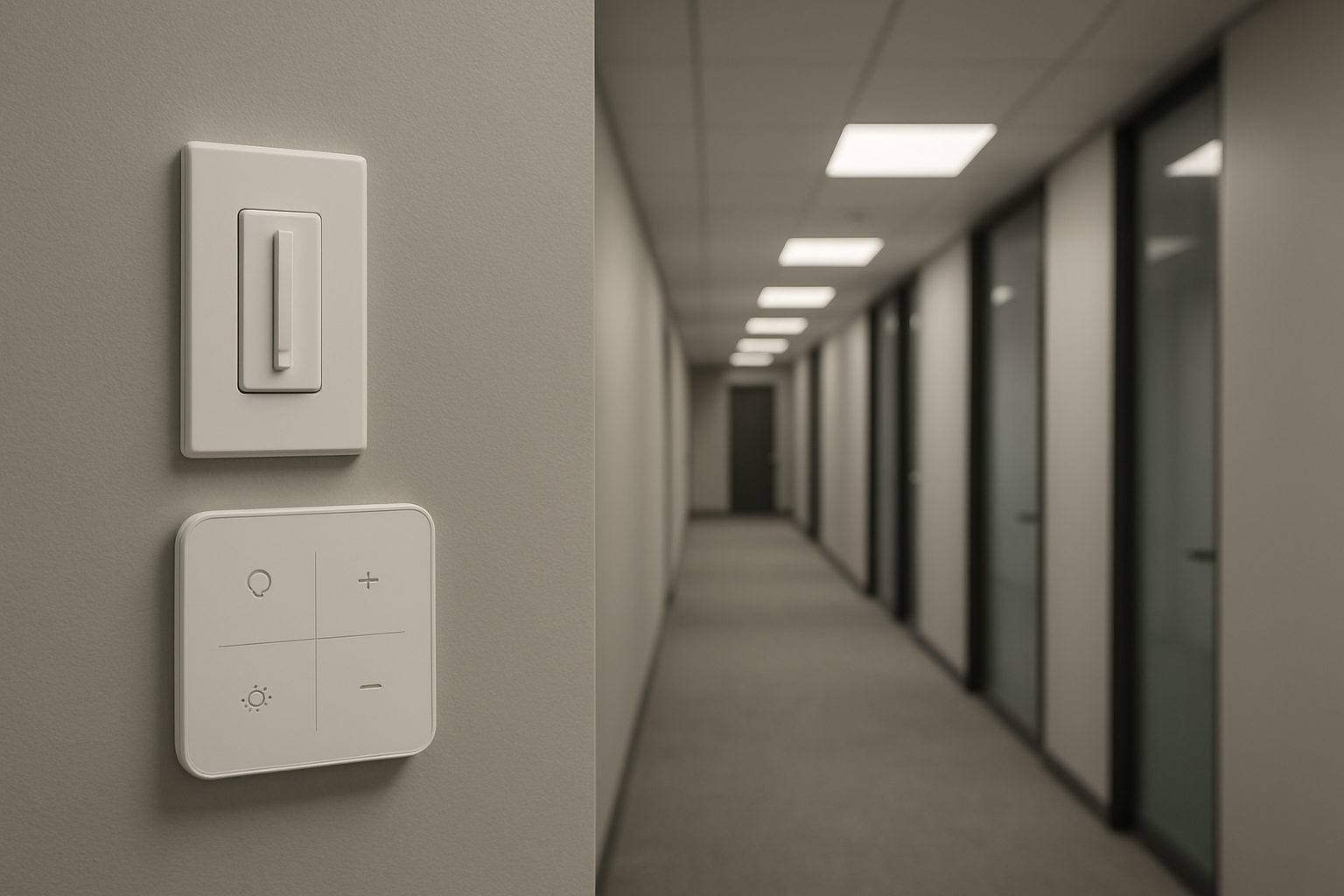
Surface-mounted panels show up in both retrofit and new build situations, and the control expectations differ.
Home buyers often want simple dimming or smart-control compatibility. Inventory-friendly options (like CCT selection) can also reduce SKU sprawl.
In offices, dimming is part of the commissioning process. You’re trying to avoid:
inconsistent dimming curves across batches
compatibility problems with legacy controls
callbacks for flicker or instability at low dim
Decision-stage checklist: ask the supplier to state the dimming protocol clearly (TRIAC, 0–10V, DALI), the supported dimming range, and any known compatibility constraints.

Office specs are usually tied to target illuminance at the work plane. A commonly referenced target band for general office environments is 300–500 lux (30–50 foot-candles), summarized by ArchToolbox in its Recommended Lighting Levels in Buildings (a secondary source referencing lighting handbooks).
Homes rarely specify lux formally. People judge brightness by “feels bright enough” and glare tolerance. That’s why dimming and warm CCT often matter more than maximizing lumens.
If you’re shortlisting office SKUs, don’t stop at lumen output on a datasheet—ask for an IES file and spacing guidance so the buyer can predict uniformity and avoid over-lighting. (For general target ranges, see Recommended Lighting Levels in Buildings.)
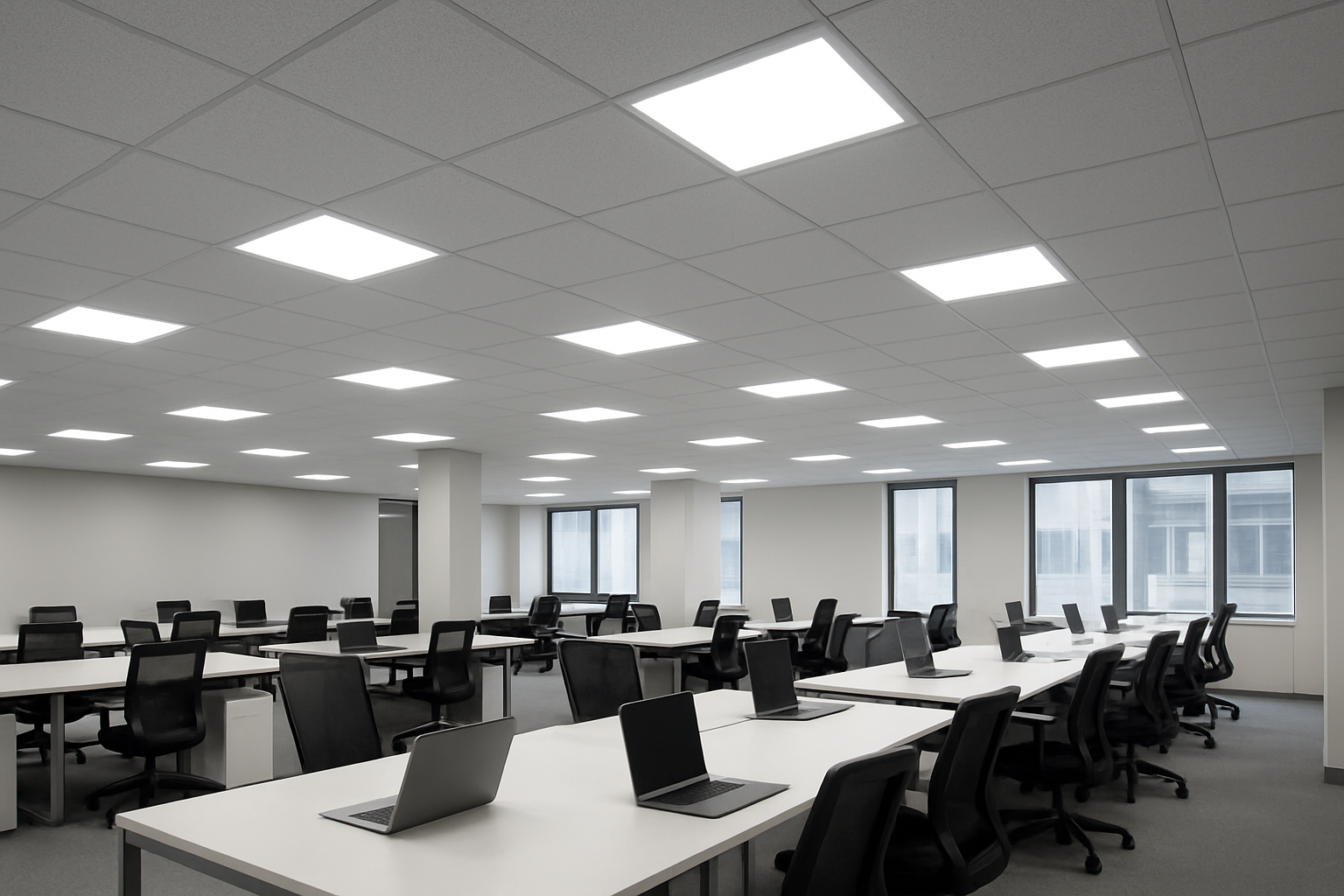
When buyers say “office-grade,” they typically mean:
clear glare-control strategy (not just a claim)
stable dimming with common protocols
documentation ready for projects (IES file, driver notes, options list)
consistent appearance across many fixtures
KEOU’s panel light overview emphasizes panel lights as a slim, uniform illumination option used across residential and commercial spaces (see KEOU Lighting panel light). The buyer takeaway: the same category can serve both, but your spec pack and option control is what makes it “office-ready.”
If you want to see typical configurations and options, start with the KEOU Lighting panel light hub.
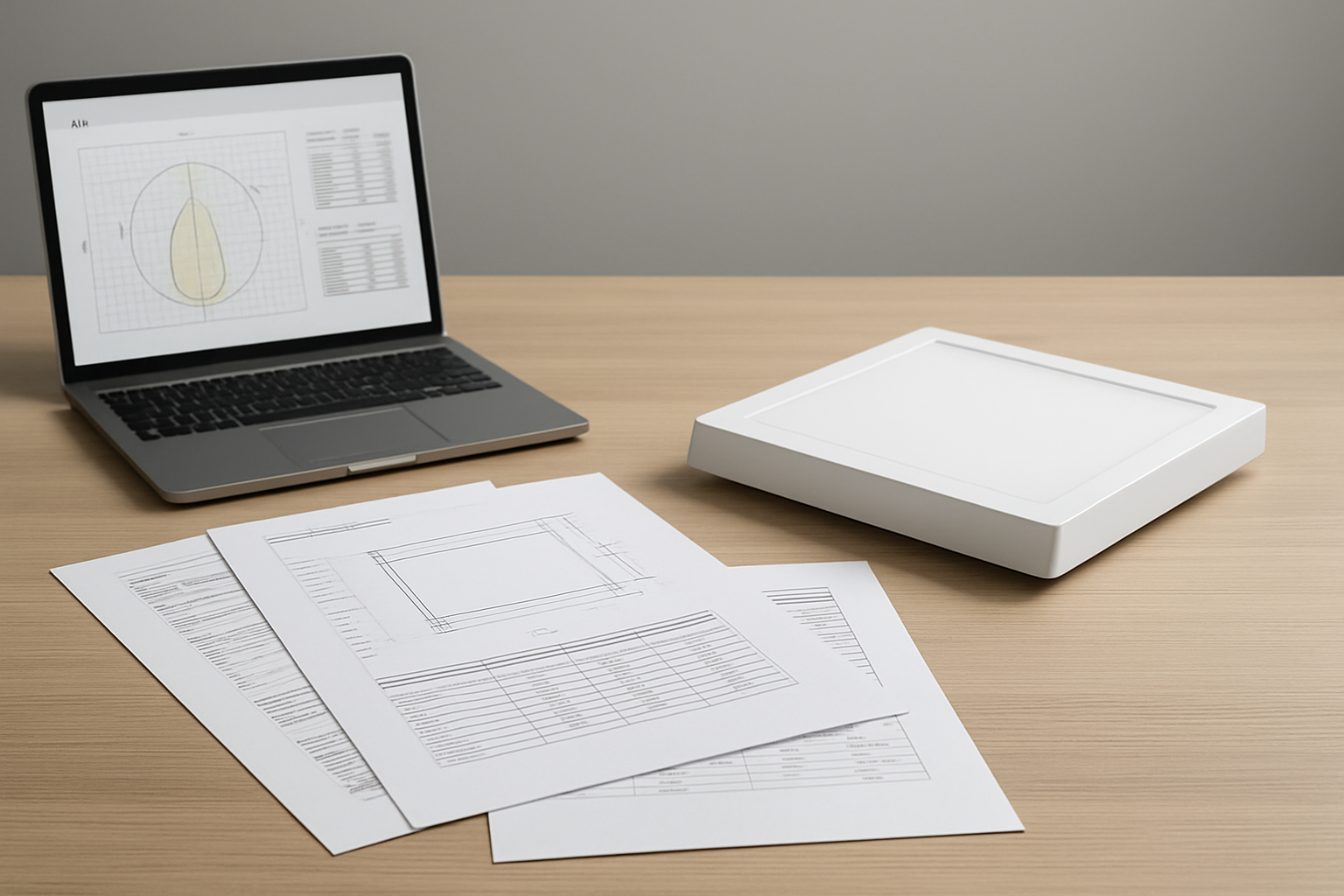
Use this as your supplier email template.
Request:
CCT options (fixed or selectable)
dimming option (if required) + supported dimming type
CRI value
finish/appearance options
Request:
glare-control description + UGR data (with assumptions) if available
IES file + recommended spacing/mounting notes
dimming protocol (0–10V/DALI/TRIAC), minimum dim level, compatibility notes
driver information relevant to flicker risk mitigation (and any available metric reporting)
consistency/QC notes for multi-batch projects
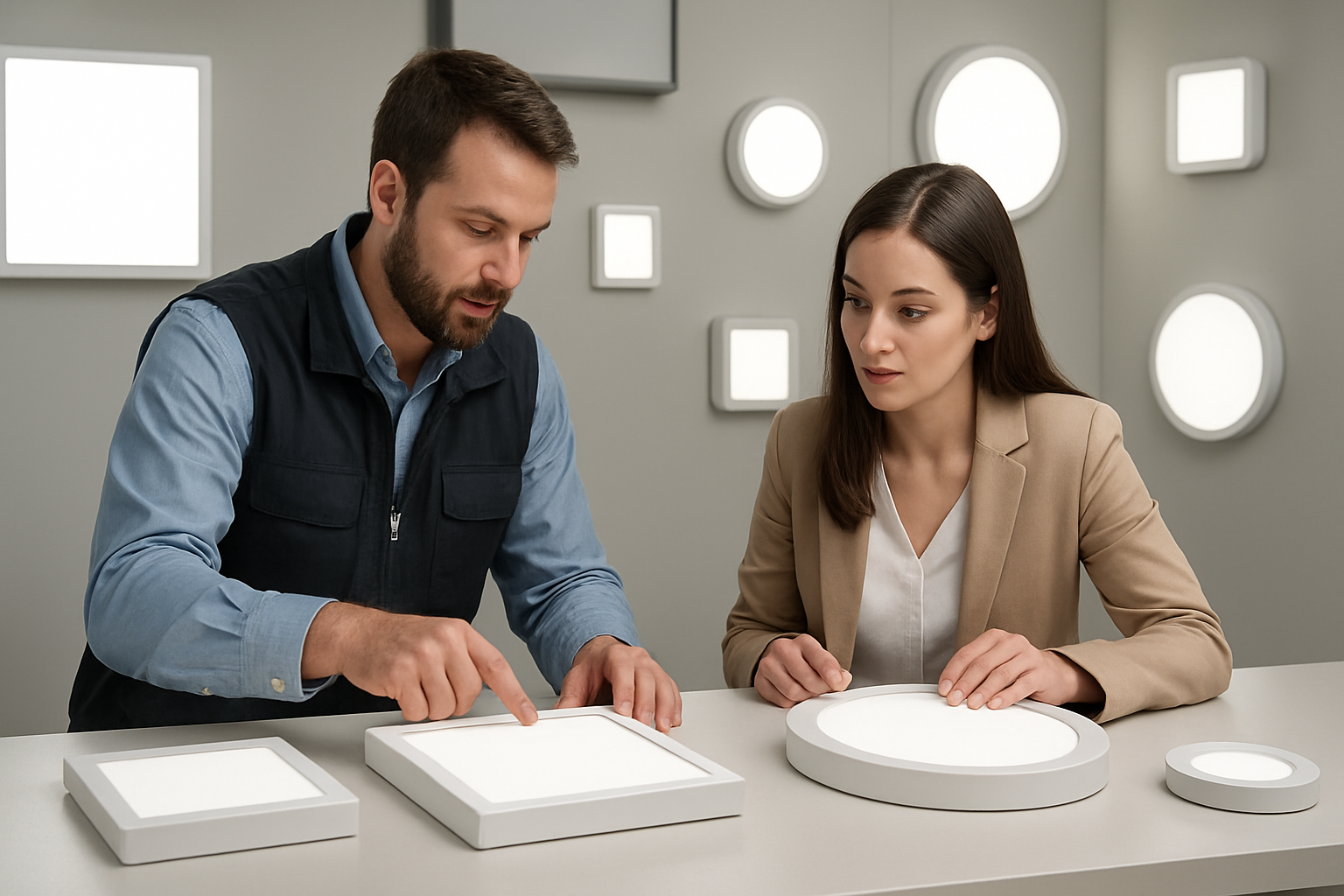
If you’re comparing home and office SKUs and want to reduce return risk, send:
surface-mount size (square/round) and target wattage/lumen range
CCT requirement
dimming/control requirement (TRIAC, 0–10V, DALI)
any glare requirement (UGR target or “low glare” constraints)
KEOU Lighting can then propose surface mounted LED panel light options and provide a project-ready spec pack (including photometrics/driver notes where applicable) for your team to review.