Author: Huang Publish Time: 14-04-2026 Origin: Site


If you’ve ever had a “waterproof” fixture fail early in a pool project, it usually isn’t because LEDs can’t handle wet spaces. It’s because the IP rating wasn’t matched to the actual exposure—spray vs. steam, hose-down cleaning vs. occasional splashes, outdoor wind-driven rain vs. indoor condensation.
This guide gives distributors, contractors, and specifiers a zone-based way to select moisture-proof ceiling lights and wall bulkheads for professional swimming pools (natatoriums), with a short RFQ checklist you can drop into bid documents.

An IP code is a two-digit “ingress protection” rating for solids and water (per IEC 60529). The first digit is dust protection; the second digit is water protection. For a quick refresher on what the two digits represent, see maxon’s guide to what IP ratings mean.
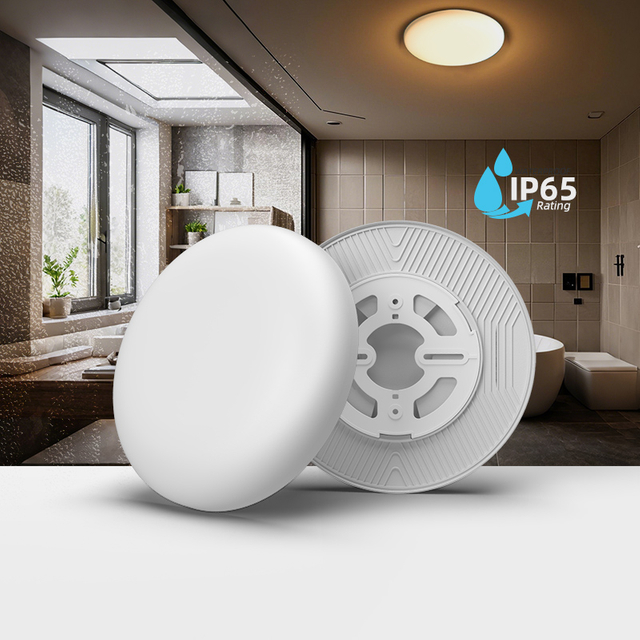
For natatorium lighting, three ratings show up the most. You’ll also see spec sheets describe an IP65 moisture-proof light as the baseline in many wet-area projects:
IP65: dust-tight + protection against water jets (commonly used for outdoor and damp indoor areas)
IP66: dust-tight + protection against more powerful water jets (often referenced as an IP66 waterproof rating in lighting specs)
IP67: dust-tight + protection against temporary immersion
Here’s the decision-critical nuance: IP ratings aren’t cumulative. A fixture tested for temporary immersion (IP67) isn’t automatically tested for powerful jet wash (IP66) unless it’s explicitly dual-rated. If you need a practical comparison, L-com’s IP65 vs IP66 vs IP67 breakdown lays this out clearly.
Key Takeaway: In pool projects, “how the area is cleaned” (wipe-down vs. hose vs. jet wash) often matters more than “indoor vs. outdoor.” Specify IP based on cleaning method.

For most outdoor moisture-proof luminaires, IP65 is the baseline you’ll see because it covers dust-tight sealing and resists water jets. In real projects, many teams step up to IP66 when fixtures may be exposed to frequent spray, aggressive cleaning, or wind-driven rain.
IP67 is typically justified when fixtures may face temporary water pooling or unusually wet conditions (but remember: immersion testing doesn’t replace jet testing).

Below is a practical zoning framework you can use as a specification starting point. Always validate against local electrical code and the project’s actual cleaning SOP.
Exposure profile: persistent humidity, condensation cycles, chemical vapor; usually minimal direct spray if mounted high.
Typical IP target: IP65 is often appropriate for ceiling fixtures here.
Why: The biggest risk is not a pressure jet—it’s vapor ingress, condensation, and long-term seal degradation. That makes overall enclosure design and entry points (gaskets, cable glands) the difference between long service life and moisture-in-driver failures.
Common fixture form factors
Surface-mounted moisture-proof ceiling lights for easy access and maintenance
Sealed wall fixtures used as perimeter lighting where appropriate
What to specify beyond “IP65”
Sealing system details (gasket material + compression design)
Cable entry and gland quality (a frequent failure point)
Driver placement and serviceability (how fast can it be swapped without breaking seals?)
If you want an internal reference for when IP65 is preferred in damp/condensation-prone indoor spaces, KEOU summarizes the selection logic in KEOU’s guide to choosing between IP20, IP54, and IP65.
Exposure profile: splashes, occasional direct spray, puddling risk, plus frequent cleaning that may involve hose-down.
Typical IP target: IP66 when hose-down or direct spray is expected; IP65 may fit in semi-sheltered edges where cleaning is wipe-down only.
Why: In this zone, fixtures often experience repeated jets from many angles, not just occasional splashes.
Where wall bulkheads make sense
Deck perimeters, circulation paths, and walls adjacent to wet traffic
Locations where you need durable, low-glare guidance lighting without fixtures hanging into activity space
Failure mode to avoid: Choosing an IP65 product, then discovering the facility uses stronger spray during cleaning. If cleaning practices can’t be controlled, spec up.
Pro Tip: Ask for the cleaning method during RFQ. “Weekly hose-down” and “daily jet wash” change the IP conversation immediately.
Exposure profile: steam bursts, warm condensation, splashes, and cleaning chemicals.
Typical IP target: IP65 minimum; move toward IP66 if fixtures are close to direct shower spray or if staff routinely hose down walls.
Why: Steam + temperature swings can drive moisture into weak points over time. The right IP rating helps—but long-term performance still depends on sealing quality and materials.
Best-fit fixture types
Moisture-proof ceiling lights for uniform general illumination
Wall-mounted bulkheads where you need robust, serviceable fixtures in tight spaces
Model example (for reference): KEOU’s Double Lampshade Moisture-proof Lamp (COMI-MP003) is listed with an “IP65 waterproof rating” on the product page. Use it as a reference point when you’re building a bill of materials, and confirm the exact spec version you’ll quote (CCT, wattage, lens/housing options) on the datasheet.
Exposure profile: rain, dust, UV, and wind-driven water; sometimes coastal air or heavy weather.
Typical IP target: IP65 as a baseline; IP66 if the fixture is exposed and regularly washed; IP67 only if water pooling or exceptional wetting is expected.
Why: Outdoors, the fixture sees multi-directional weather exposure. If maintenance teams pressure-wash exterior walls, IP66 becomes the safer default.

In natatorium projects, you’re usually balancing three constraints: maintenance access, glare control, and durability.
Surface-mounted moisture-proof ceiling lights are typically the cleanest solution for general illumination because they keep light distribution uniform and simplify maintenance.
Wall bulkheads are often the most practical choice in high-contact areas (corridors around the pool, deck edges, transition zones) because they’re robust, easy to service, and keep fixtures out of the way.
The right answer is often a mix—ceiling fixtures for the main photometric plan, bulkheads for guidance and high-wear perimeter zones.

Before you lock the BOM, ask for these items. It reduces misquotes and keeps return rates down:
Zone map + mounting height (pool hall ceiling vs. splash zone vs. showers vs. exterior)
Cleaning method per zone (wipe-down, hose-down, jet wash)
Target IP rating per zone (IP65 / IP66 / IP67) and whether dual-rating is required
Entry points: cable gland type, sealing at wire entry, and service method
Lens and housing materials and any chemical-compatibility notes for cleaners used on site
Documentation: datasheet + wiring diagram; photometric/IES file if required

If you’re quoting a swimming pool or wet-area project, share your zone plan (or a simple marked-up layout), mounting heights, and cleaning routine.
KEOU can help you map each area to the right moisture-proof ceiling light or wall bulkhead configuration—and provide the documentation your bid package needs.
Start by browsing KEOU’s moisture-proof lamp range, then request a spec match and quote with your project details.

Often, yes—IP65 is a common baseline for outdoor and damp locations because it’s dust-tight and resists water jets. If the fixture will face frequent spray, aggressive cleaning, or severe weather exposure, IP66 is commonly specified.
Only if the fixture is likely to face temporary water pooling or conditions resembling short-term immersion. For many pool-deck cases, IP66 is the more relevant upgrade because cleaning involves jets and angled spray rather than immersion.
No. IP ratings describe ingress protection, not chemical compatibility. For natatoriums, confirm housing/lens materials and any manufacturer guidance on cleaners and long-term exposure.