Author: Huang Publish Time: 13-03-2026 Origin: Site


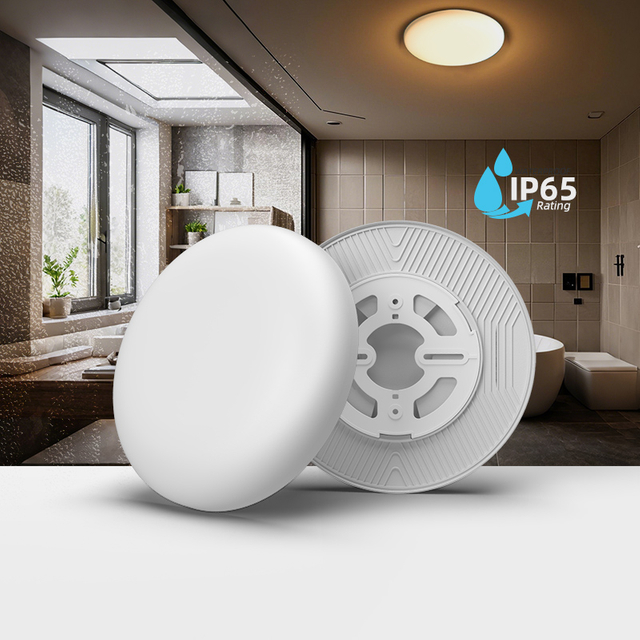
If your fixtures sit under eaves, soffits, or covered walkways where wind can carry rain or sprinklers can mist the ceiling, you are in a semi‑exposed zone. This checklist translates that exposure into a clear minimum IP choice and gives you buyer‑ready steps to verify, install, and maintain the protection you paid for. We focus strictly on IEC 60529 ingress protection ratings. The short answer: a baseline of IP54 works for mild splash, while IP65 is preferred in most semi‑exposed commercial settings to better handle wind‑driven rain and spray, as explained in the practical guidance on outdoor IP choices from Regency Supply’s overview of the best IP rating for outdoor lighting.
Before picking an IP rating, confirm the real on‑site conditions so the enclosure choice matches the water and dust modes it will face.
The ceiling is covered but open to wind on at least one side, such as a porch, soffit, carport, or breezeway.
Occasional rain or sprinkler spray can reach the ceiling plane, but no routine pressure washing is planned.
Surfaces show occasional splash marks or fine spray but not pooling on horizontal seams.
The IP code is two digits. The first digit is for solids and dust. The second digit is for water. For semi‑exposed ceilings, both matter because wind can carry dust and water upward toward entries and seams. A concise mapping is below.
| Exposure snapshot | Minimum IP for outdoor ceiling lights | When to up‑spec |
Covered soffit with occasional splash or light spray | IP54 | Go to IP65 if there is wind‑driven rain or nearby sprinklers |
Wind‑driven rain or periodic hose spray directed upward | IP65 | Consider IP66 if water jets are forceful or routine |
Temporary immersion risk from flooding at ceiling level | IP67 | Only if immersion is credible; otherwise not needed |
For a non‑engineer primer on how IP digits are defined and tested, see Wikipedia’s IP code overview, which summarizes solids levels 0–6 and water levels 0–9 with examples and cross‑references to IEC 60529.
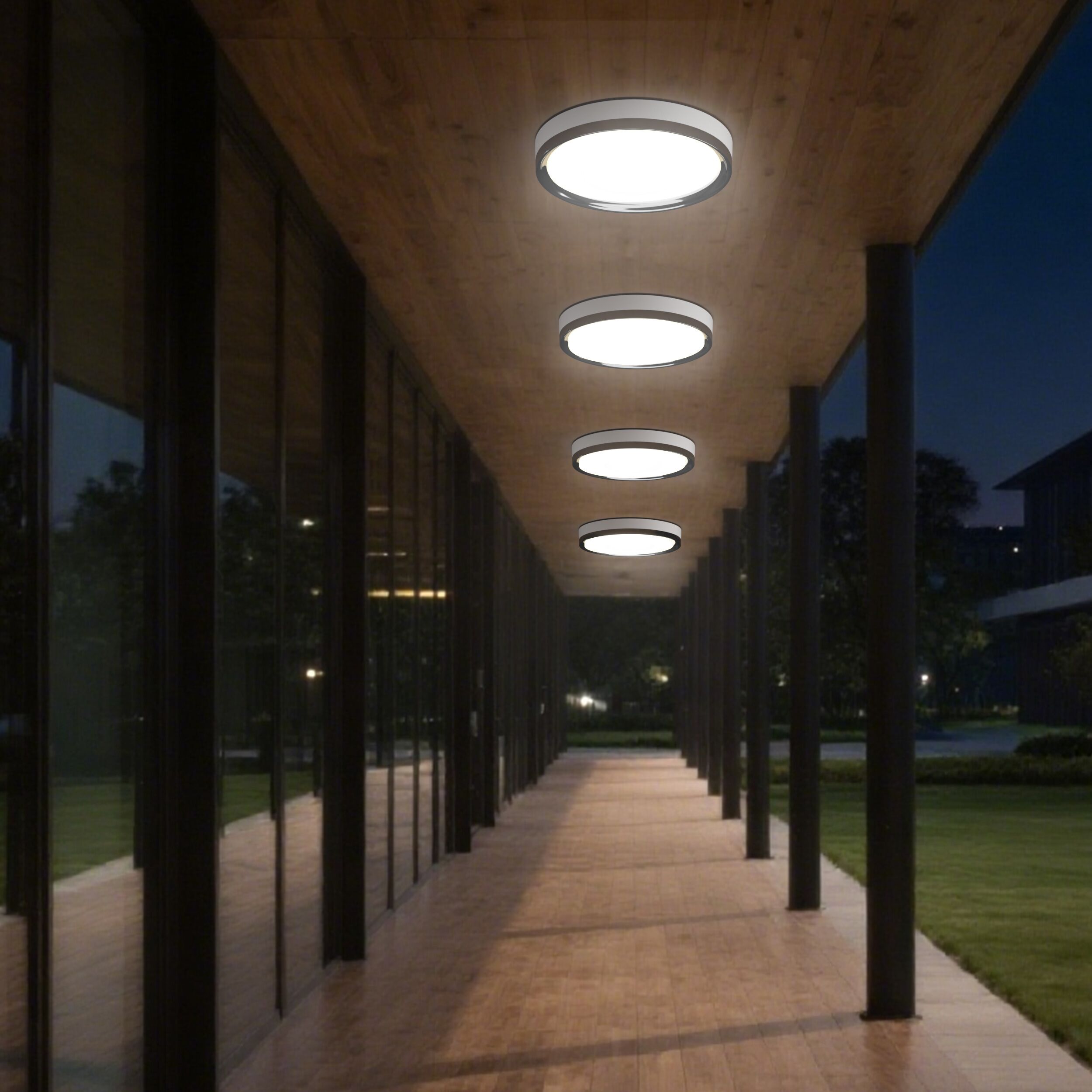
A procurement‑friendly rule of thumb keeps you fast and safe without overspecifying.
IP54 protects against limited dust ingress and splashing water from any direction. Use it when the space is generally calm under a deep overhang, wind is weak, and sprinklers or mist seldom reach the ceiling plane. If you choose IP54, verify that cable entries and access panels are equally protected; the overall protection is only as strong as the weakest point.
IP65 is dust tight and resists low‑pressure water jets. In practice, this gives a helpful buffer for wind‑driven rain and misaligned sprinklers that produce more than a light splash. Multiple industry explainers converge on IP65 as the safer default for outdoor areas with meaningful rain or spray exposure, whereas splash‑only cases can remain at lower ratings. For a clear explanation of IP water test levels and the jump from splash to jets, see Polycase’s guide to IP water resistance ratings.
If routine cleaning includes hose jets pointed upward or close range, consider IP66.
If there is a credible risk of temporary immersion at the fixture plane, specify IP67. Note that IP67 is about immersion, not jets; pick based on the real mode of water exposure.
In dusty or insect‑heavy zones, favor a first digit of 6 for solids even if water exposure is light.
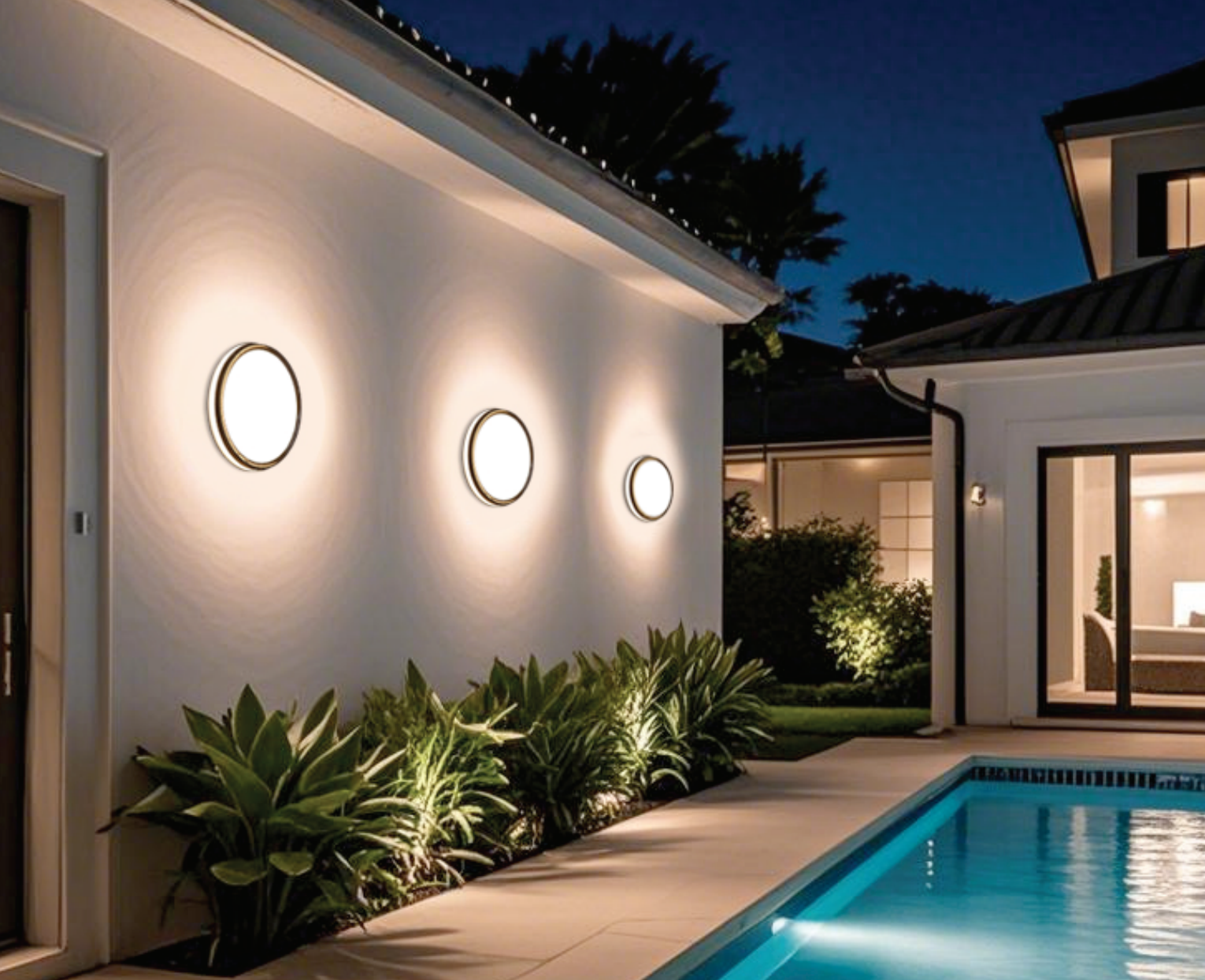
A fixture that passed in the lab can fail on the wall if entries, seams, or fasteners are treated casually. Here’s how to preserve the specified IP rating for outdoor ceiling lights during install.
Match or exceed the fixture rating at every penetration. Use glands and hubs with markings that meet IP54 or IP65 as specified, and avoid upward‑facing entries where water can track inside. Add drip loops and apply the gaskets and sealants approved by the manufacturer. Industry installation advisories on maintaining enclosure IP show how entry planning and gland selection control the outcome.
Check that driver boxes, sensor modules, and any service covers have intact gaskets and close flush to their seats. Torque bezels and fasteners evenly to the value recommended by the manufacturer to avoid pinch points and gaps that defeat the seal.
Ask the supplier to state gasket material and UV stability. Silicone often provides better long‑term compression set and temperature resilience compared to some conventional materials for outdoor LED luminaires. A lighting‑specific gasket whitepaper details why material choice affects seal life under thermal cycling.

Protection is not a one‑time event. A light that is properly maintained keeps its IP performance closer to the day‑one state.
Inspect seals and fasteners annually in mild climates and semiannually where exposure is harsher. Capture photos of gasket condition and keep torque records for reassembled bezels.
Replace gaskets that show cracking, flattening, or loss of elasticity. Keep spares on hand for critical zones.
Do not use high‑pressure washers on IP54 or IP65 fixtures. Manufacturer care instructions commonly warn against pressure washing unless the fixture is specifically rated for stronger jets. Use mild cleaning with a damp cloth; avoid directing water into seams and entries.
Start with the exposure. If it is a covered soffit with only occasional splash, shortlist IP54 and IP65. If wind routinely drives rain to the ceiling plane or sprinklers are nearby, elevate to IP65. If cleaning involves hose jets or the jet is close range, consider IP66. Only choose IP67 when immersion is a credible risk. Prefer a solids digit of 6 in high dust or insect environments. Verify with an IEC 60529 report from an ISO IEC 17025 accredited lab and preserve the rating at entries, panels, and gaskets during installation and maintenance.
In a breezeway under a shallow soffit with frequent wind‑driven rain, a procurement team specified IP65 and required report evidence, then matched cable glands and junction boxes to the same rating to preserve the seal. For a supplier reference that showcases products commonly built to IP65 for outdoor use, see the KEOU Lighting COB Street Light page highlighting a waterproof IP65 rating, which reflects typical construction suited to semi‑exposed environments.
Q1:Is IP54 enough for a covered porch ceiling light?
Usually yes for mild, occasional splash under deep cover. If wind or sprinklers can direct water toward the ceiling plane, move to IP65 for a safer margin.
Q2:Does IP67 automatically outperform IP65 in rain?
Not necessarily. IP67 addresses temporary immersion, while IP65 addresses low‑pressure water jets. Choose based on exposure mode, not a higher number alone.
Q3:Do I need dust tight for soffit installations?
Where insects, coastal sand, or roadside dust are common, a first digit of 6 helps keep contaminants out. In cleaner sites, IP5X can suffice.
Q4:What documents should I request from vendors?
Ask for an IEC 60529 test report from an ISO IEC 17025 accredited lab, plus product label and datasheet showing the claimed rating. Confirm test parameters match the claim and that the date is current for the model.
Q5:Can I pressure wash IP65 ceiling lights?
Avoid it. Unless a fixture is rated and documented for stronger jets, high‑pressure washing can overwhelm seals. Consider IP66 and cleaning controls if jets are routine.