Author: Huang Publish Time: 07-07-2026 Origin: Site


If you’ve ever bought a light bulb and found letters and numbers like “E27” on the box, you’re looking at the bulb’s base type: the part that connects the bulb to the lamp holder (socket). Getting that one detail right matters more than most people think. A bulb can have the perfect shape and brightness and still be the wrong choice if the base doesn’t match.
This guide explains the E27 lamp base in plain language, with a global view and the key safety checks that help you avoid the most common mistakes.
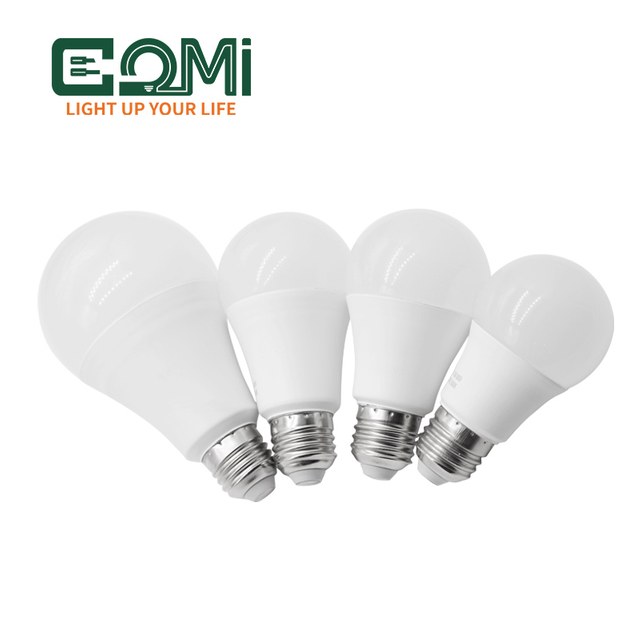
An E27 lamp base is a type of Edison screw base.
The “E” stands for Edison (the Edison screw family).
The “27” refers to the base diameter in millimeters (nominally 27 mm) measured across the thread peaks.
If you want the canonical definition of how Edison screw sizes are named, Wikipedia’s overview of the Edison screw (E-series) base system is a solid reference.
In everyday terms: E27 is the “standard screw” bulb base size in many parts of the world.
You’ll commonly encounter E27 in many places that use 220–240V household power. That includes much of continental Europe, and it’s also widely used across parts of Asia, Oceania, and South America.
At the same time, there are countries where E27 exists alongside other common bases, depending on fixture type, building age, and what products are imported.
Because standards vary, it’s more useful to remember this rule of thumb:
Pro Tip: Don’t guess the base type from geography alone. Check the fixture label or the bulb base marking first, then confirm voltage compatibility.
When someone says “E27 plug,” they often mean “E27 base,” but they might also be mixing it up with a similar-looking standard. Here’s how to tell the common ones apart.
E27 and E26 are very close in size, and they often physically fit each other.
E27: 27 mm Edison screw (common in many 220–240V regions)
E26: 26 mm Edison screw (common in many 100–120V regions)
The practical risk is not the missing 1 mm. It’s the electrical rating.
Many smart bulb makers summarize the voltage expectation clearly. For example, LIFX’s fitting guide for E26, E27, B22, and E14 notes that E26 is typically tied to 100–120V systems, while E27 is typically tied to 200–240V systems.
Both are Edison screw types, but E14 is much smaller.
E14: 14 mm “small Edison screw” base, used in smaller fixtures and decorative lamps
E27: 27 mm “medium Edison screw” base, used in standard lamps and many ceiling fixtures
They’re not interchangeable without an adapter, and adapters can introduce fit, clearance, and heat issues.
B22 looks like a “bulb base standard,” but it’s a different mechanism:
B22 is a bayonet base: you push in and twist to lock.
E27 is a screw base: you twist the bulb in like a jar lid.
If your fixture takes B22, an E27 bulb won’t fit without a converter (and again, converters add complexity and sometimes safety concerns).
Even when the bulb screws in, that doesn’t mean it’s a good idea to use it.
Here are the checks that matter most, globally.

This is the big one.
If a bulb is rated only for 100–120V, do not use it on a 220–240V supply.
Many modern LED bulbs are 100–240V (wide-range input). If you travel or buy imported bulbs, this label is what makes cross-region use safer.
If you’re unsure, stop and check the packaging or the printing on the bulb itself. A quick explainer of base types and regional differences is also covered in Super Bright LEDs’ guide to screw-base bulb types.
⚠️ Warning: A base that fits is not proof of electrical compatibility. Voltage mismatch can cause failure, overheating, or damage.
Light fixtures often have a “Max ___ W” marking. That limit exists because heat builds up around the lamp holder and wiring.
With incandescent bulbs, wattage correlated strongly with heat.
With LEDs, heat is still real, but it’s managed differently (driver + heat sink).
Bottom line: follow the fixture rating. If your fixture is enclosed or poorly ventilated, choose an LED with appropriate thermal design and avoid pushing the maximum.
Two bulbs can share the same E27 base but have very different shapes and sizes.
Before you buy, check:
Will the bulb body fit inside the shade or enclosure?
Will it block a diffuser or touch a heat-sensitive cover?
Is the bulb too long for the fixture?
Adapters (for example, E27-to-E14 or B22-to-E27) are common online. They can be convenient, but they also add extra connection points and can change how heat dissipates.
If you use one:
buy from a reputable seller
avoid using it in enclosed fixtures unless it’s rated for that use
avoid exceeding the fixture’s wattage/heat limit
When in doubt, a qualified electrician can help confirm what your fixture actually supports.
You don’t need special tools, but a simple method helps.
Look for markings: many bulbs and some lamp holders are stamped or printed with “E27.”
Measure the diameter: the threaded metal section is about 27 mm across at its widest point.
Compare the “feel”:
E27/E26: screw thread
B22: smooth base with side pins + push-and-twist
Check the fixture label: some fixtures list both base and max wattage.
If you’re buying online and the listing is unclear, search within the product photos for the base marking, or choose listings that explicitly state both base type and voltage range.
Not exactly. They’re extremely close and often physically interchangeable, but they’re commonly associated with different voltage systems. Treat them as different standards unless the bulb is clearly rated for your supply.
Sometimes, physically yes. Electrically, it depends.
The safe approach is: match the socket voltage and the bulb’s voltage rating, and do not rely on “it screws in” as your test.
“E” refers to the Edison screw family, and “27” is the nominal diameter in millimeters. See the Edison screw reference above for the naming system.
No. E27 is common in many countries and appears globally through trade and imported fixtures. What varies is which base type is most common in everyday homes and buildings.
If you’re choosing a bulb or replacing one you don’t have anymore:
Confirm the base marking (E27) on the fixture or old bulb
Confirm your supply voltage and the bulb’s voltage rating
Check the fixture’s max wattage/heat limit
Confirm bulb shape and length will physically fit
That’s usually enough to avoid the frustrating (and sometimes risky) “it fits but it’s wrong” situation.