
Author: Huang Publish Time: 24-04-2026 Origin: Site


If you’re sourcing an anti-glare square panel light for office and commercial projects, the “backlit vs edge-lit” choice is less about marketing—and more about installation constraints, long-term risk, and how confidently you can defend specs in a tender.
Below is a procurement-friendly comparison designed for commercial lighting distributors/wholesalers. It keeps claims conservative and tells you what to verify.
Neutral baseline reference (for form factor only): KEOU anti-glare embedded square panel light (KEOU‑MB030) — published thickness 19 mm and a honeycomb anti-glare design.
Criteria | Backlit square anti-glare panel (typical) | Edge-lit square anti-glare panel (typical) | What to verify before you stock it |
|---|---|---|---|
Uniformity | Depends on LED spacing + diffuser/lens mixing; low-end designs can show dot pattern | Often naturally smooth due to the LGP, but LGP quality matters | Request a sample; ask what prevents dot pattern/hotspots |
UGR / glare control | Achievable with microprism diffuser or honeycomb/louver optics | Achievable with diffuser stack over the LGP | Ask for UGR report + test conditions; don’t assume |
Thickness | Usually thicker (needs mixing distance) | Usually thinner (common reason to choose it) | Confirm total height incl. driver + mounting frame |
Thermal management | Strong potential with metal backplate and clear heat path | Heat concentrated at edges; relies on frame/heatsink design | Ask how driver heat is handled and whether driver is serviceable |
L70 / TM-21 credibility | Often easier to support with good thermal design—if documents exist | Can be credible too—again depends on design + data | Ask for LM-80 + TM-21 traceability and temperature notes |
LGP yellowing risk | No LGP (this specific risk removed) | Real risk if LGP is low-grade (PMMA vs PS) | Require PMMA LGP (or stabilization details if PS is proposed) |
Cost & lead time | Often stable when standardized | Can rise with custom LGP/films and precision assembly | Ask what’s standard vs custom; confirm lead time on your exact SKU |
Pro Tip: Many project disputes start with glare complaints, not lumen output. Don’t treat UGR as a checkbox—ask for the report and validate with a sample.
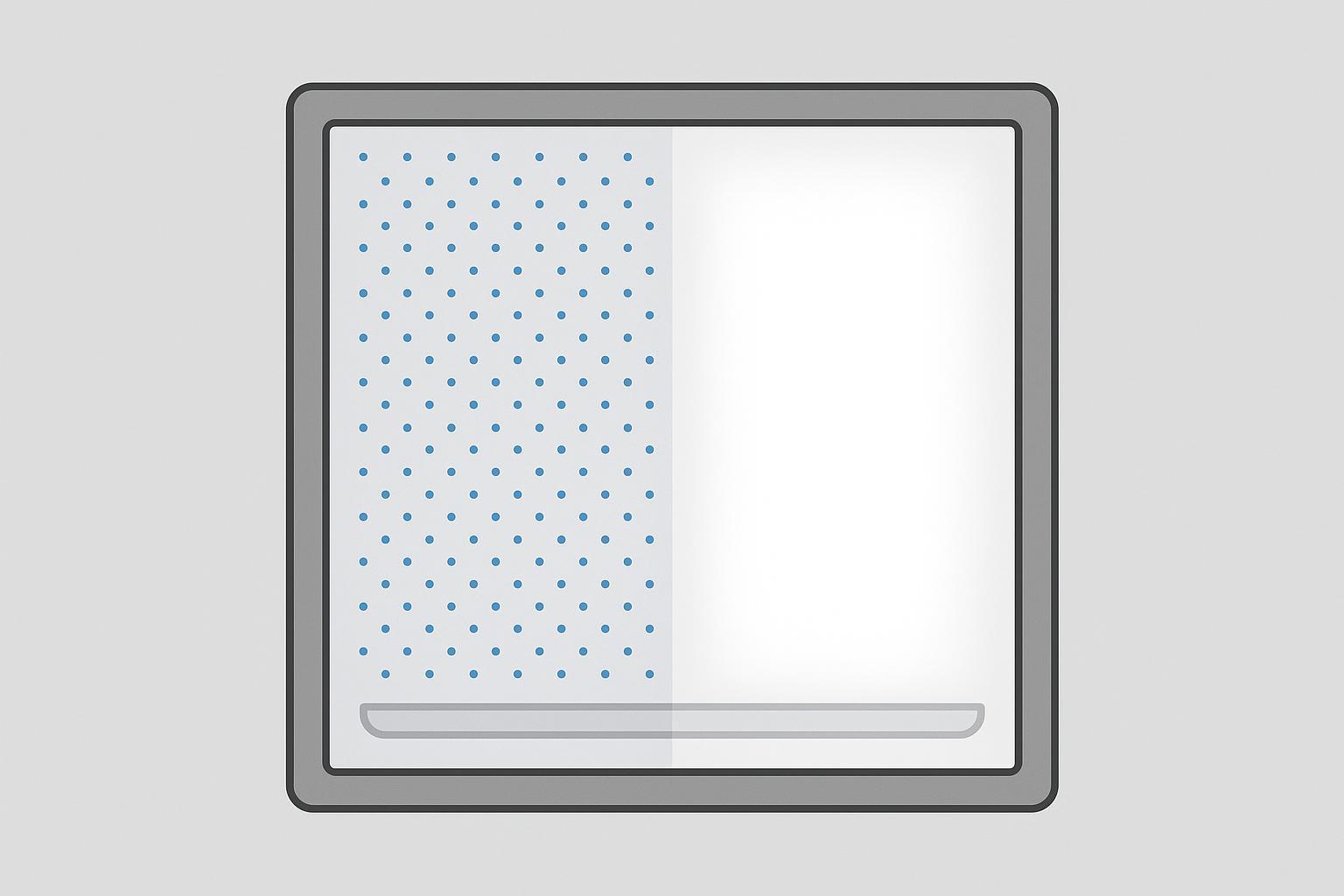
Uniformity issues show up as visible points (dot pattern) or uneven brightness across the face.
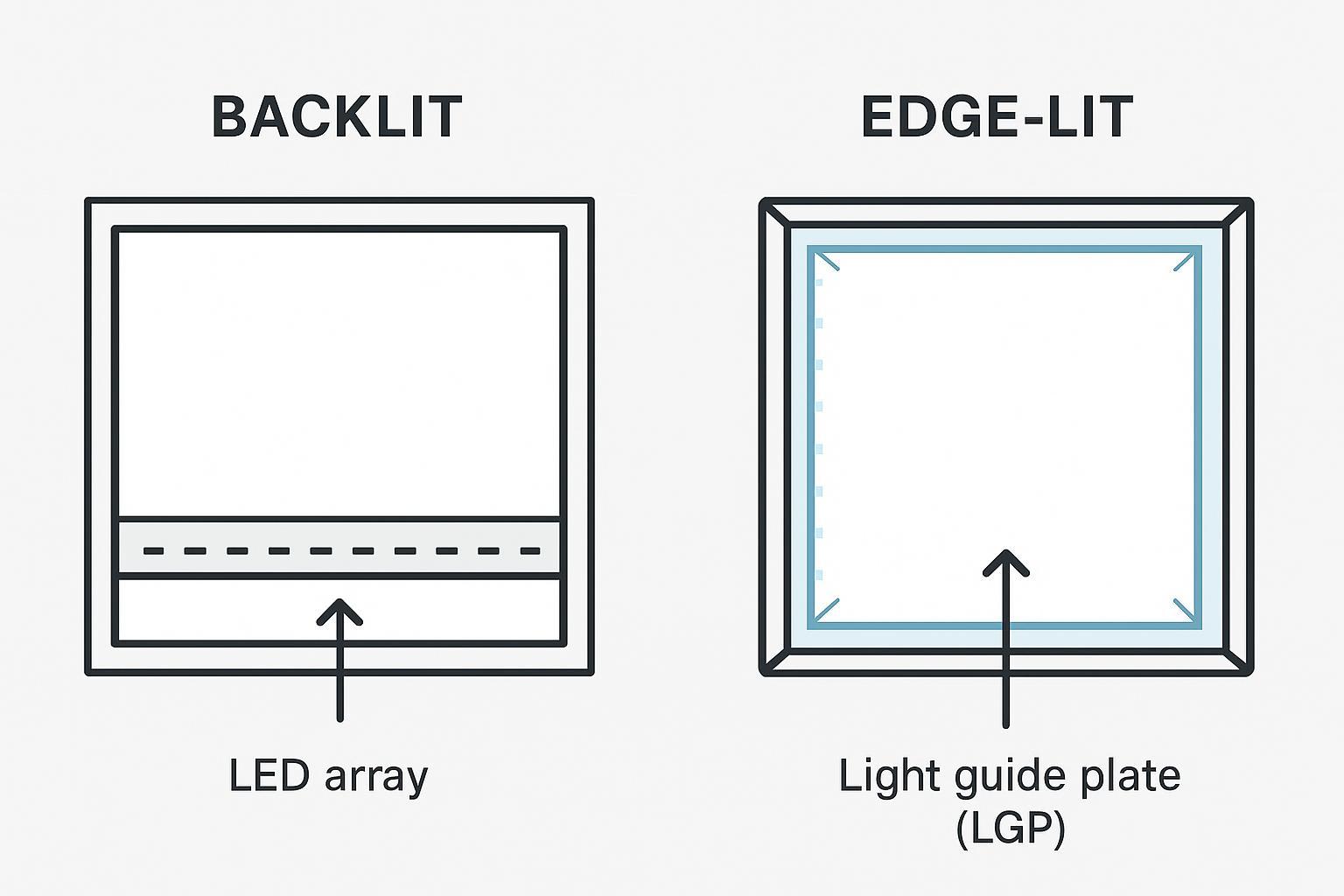
Edge-lit panels inject light from the frame into a light guide plate (LGP) that spreads it across the surface.
Backlit panels shine from an LED array behind the diffuser; good designs use lenses/diffusion and enough mixing distance to blend the array.
Buyer rule: if uniformity is a selling point for your channel, approve one sample in a dim room, then lock the BOM (diffuser/lens stack + LED spec) so your next container matches.
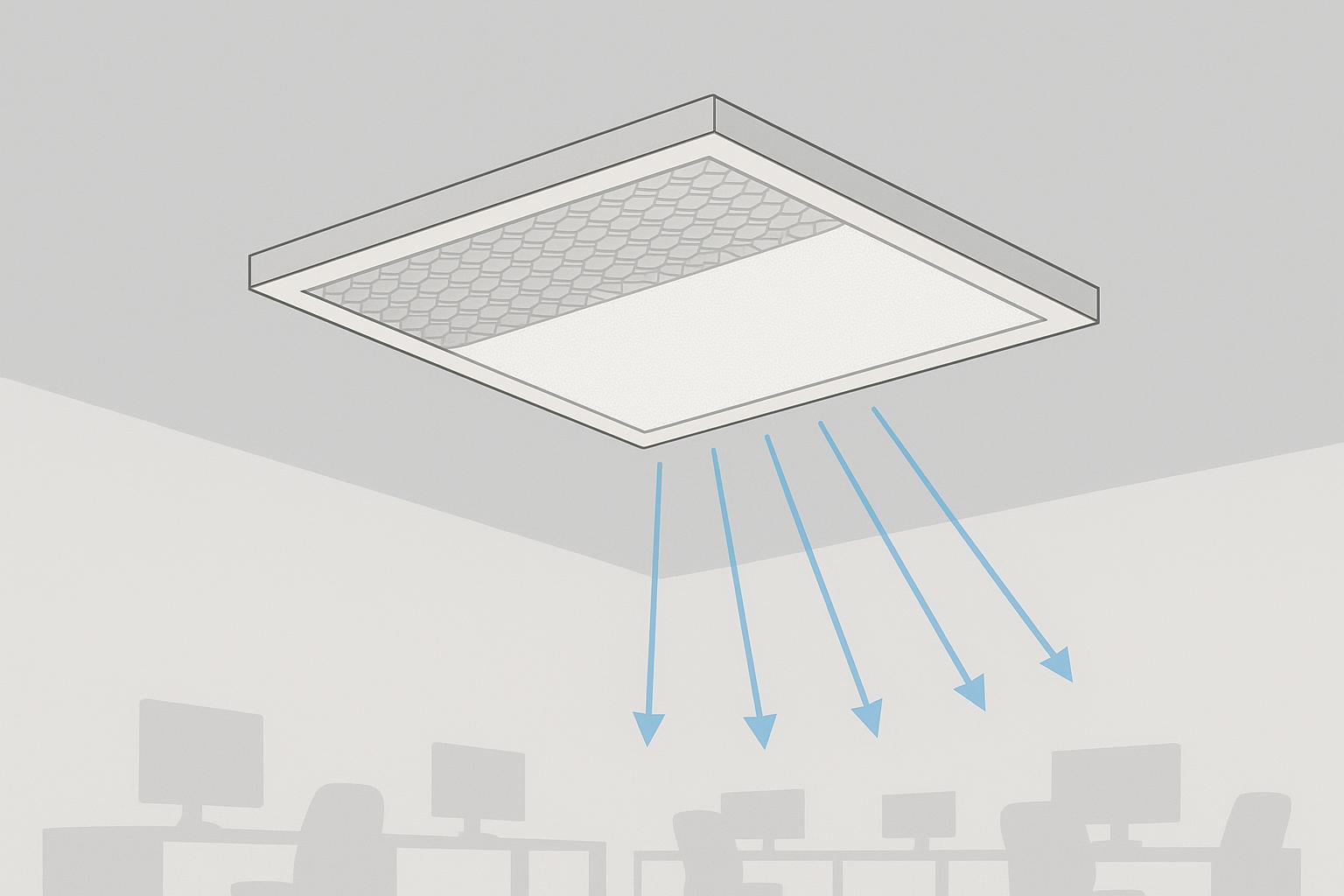
Both architectures can be engineered for low glare. One useful technical reference is NVC UK’s technical support note on edge-lit vs back-lit LED panels (linked once below), which notes that office-friendly UGR performance depends on the front cover/optics.
What to verify for any “UGR 19 LED panel” claim:
the front optic (microprismatic diffuser vs honeycomb/louver)
the test conditions behind the UGR number
Reference (external): NVC UK technical support note on edge-lit vs back-lit LED panels
If you sell into KSA office projects, this internal checklist is a practical add-on for your sales team: Office LED Panel Light Spec Guide for KSA: UGR<19, Flicker & Dimming.
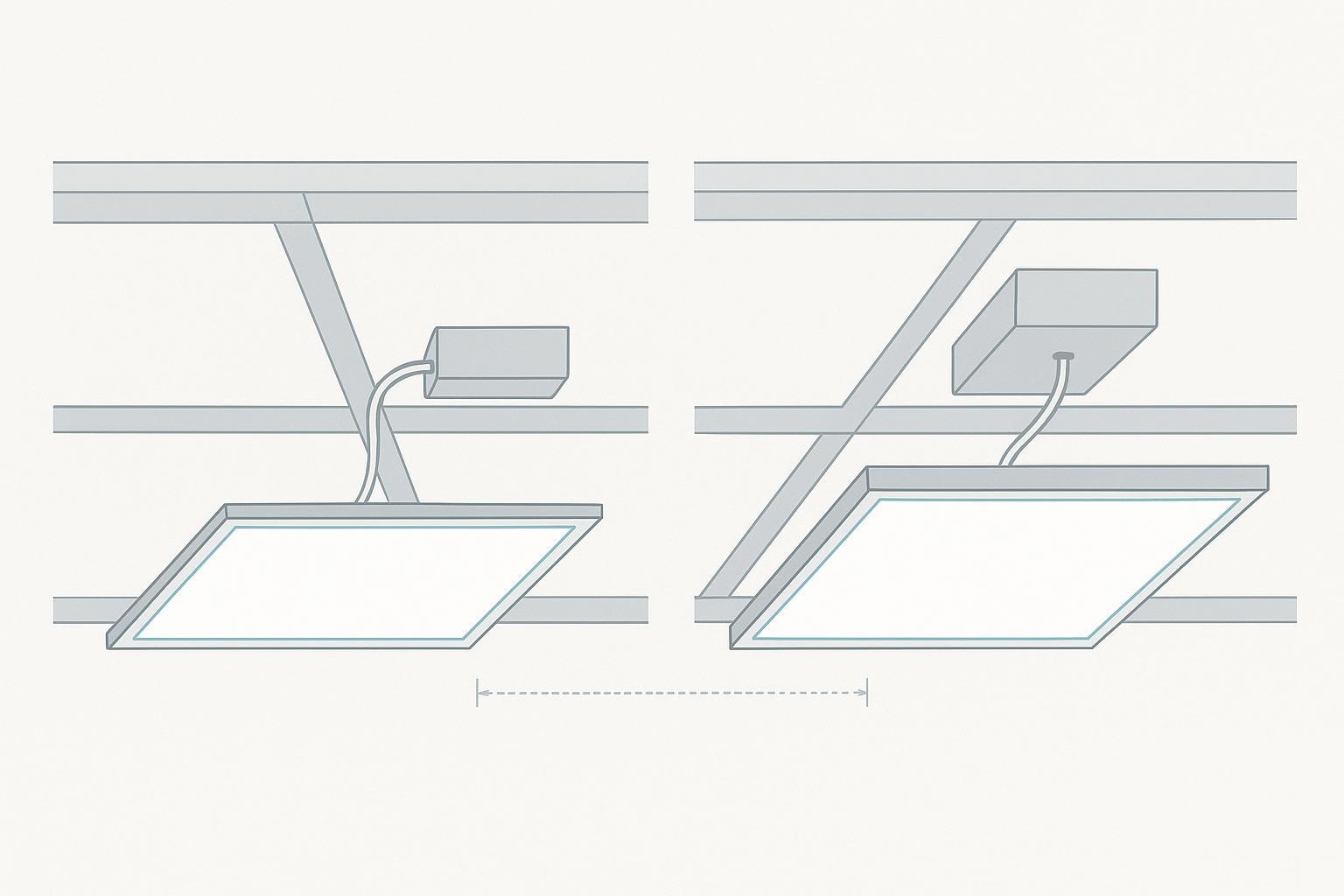
If ceiling depth is tight, edge-lit often wins because thinness is a core reason it exists. If ceiling depth is generous, thickness usually stops being the deciding factor—and serviceability becomes more important.
Installation questions that reduce call-backs:
Is the driver replaceable without damaging the ceiling?
Is the mounting frame standardized for your market’s ceiling systems?
For embedded square form factor reference, KEOU lists 19 mm thickness on KEOU‑MB030 (linked once earlier in the matrix section).
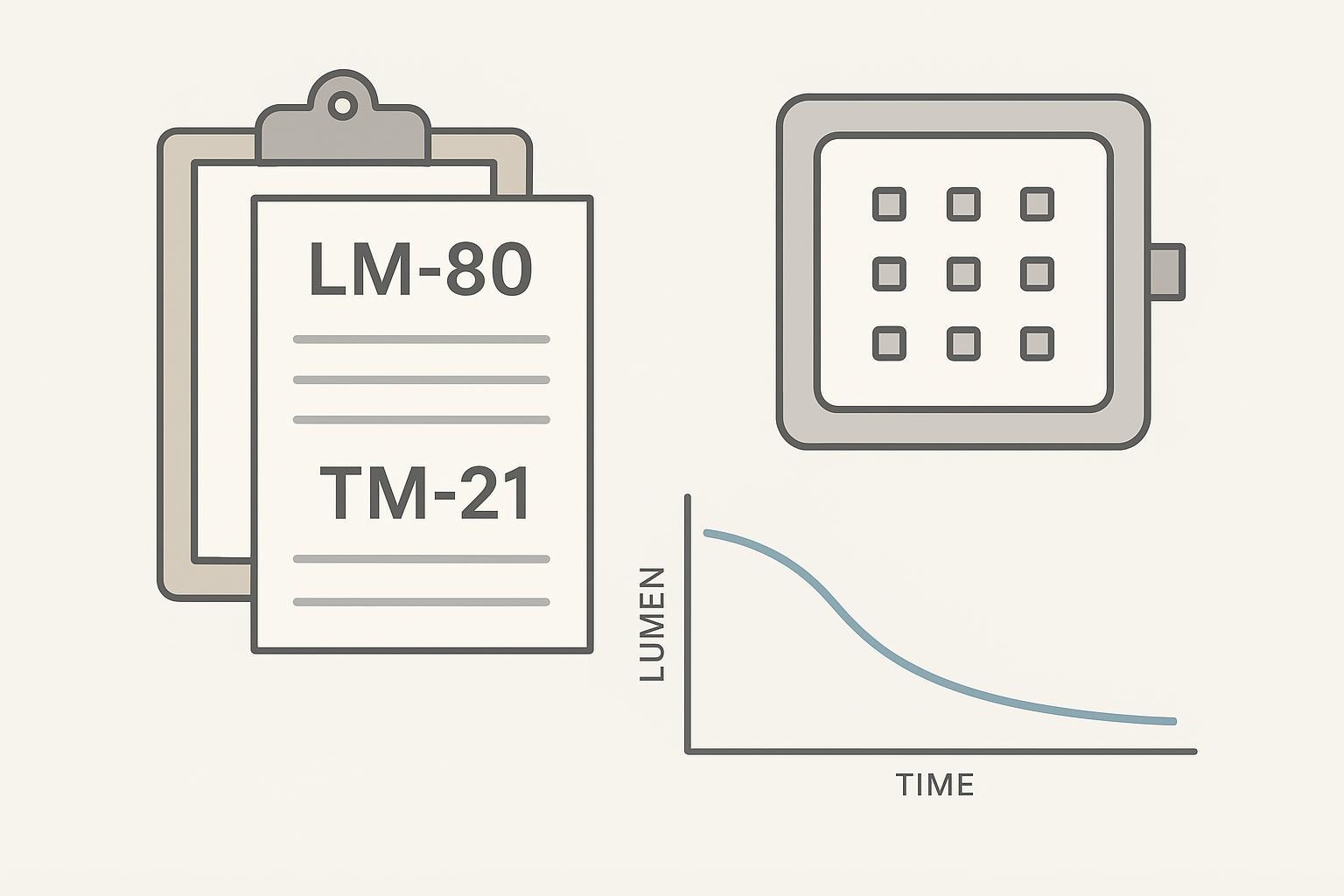
Heat affects lumen maintenance, color stability, and driver reliability.
A simplified framing:
Backlit panels can have a robust thermal path if the LED array is mounted to a metal backplate.
Edge-lit panels concentrate heat at the edges and depend heavily on the frame/heatsink design.
Don’t guess—ask how the supplier manages heat at rated ambient conditions and whether the driver is remote or integrated.
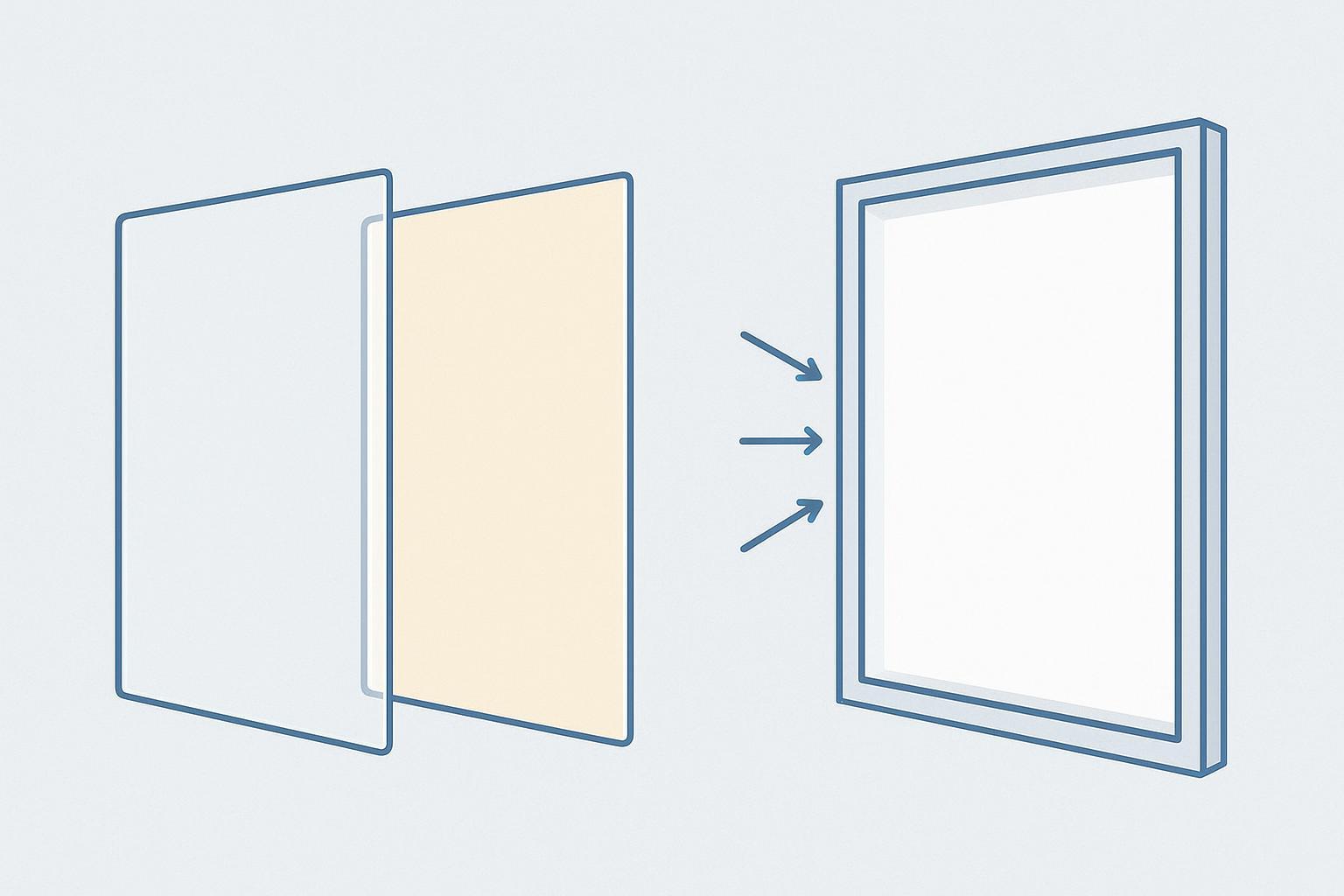
Edge-lit panels depend on an LGP. That makes the material choice a real long-term risk factor.
Per the same NVC UK technical support note linked earlier, quality edge-lit panels typically use PMMA (acrylic) LGPs, while lower-cost PS LGPs can yellow over time without proper stabilization.
Practical PO language:
Require “PMMA LGP” explicitly.
If PS is proposed, require stabilization details and aging/warranty terms.
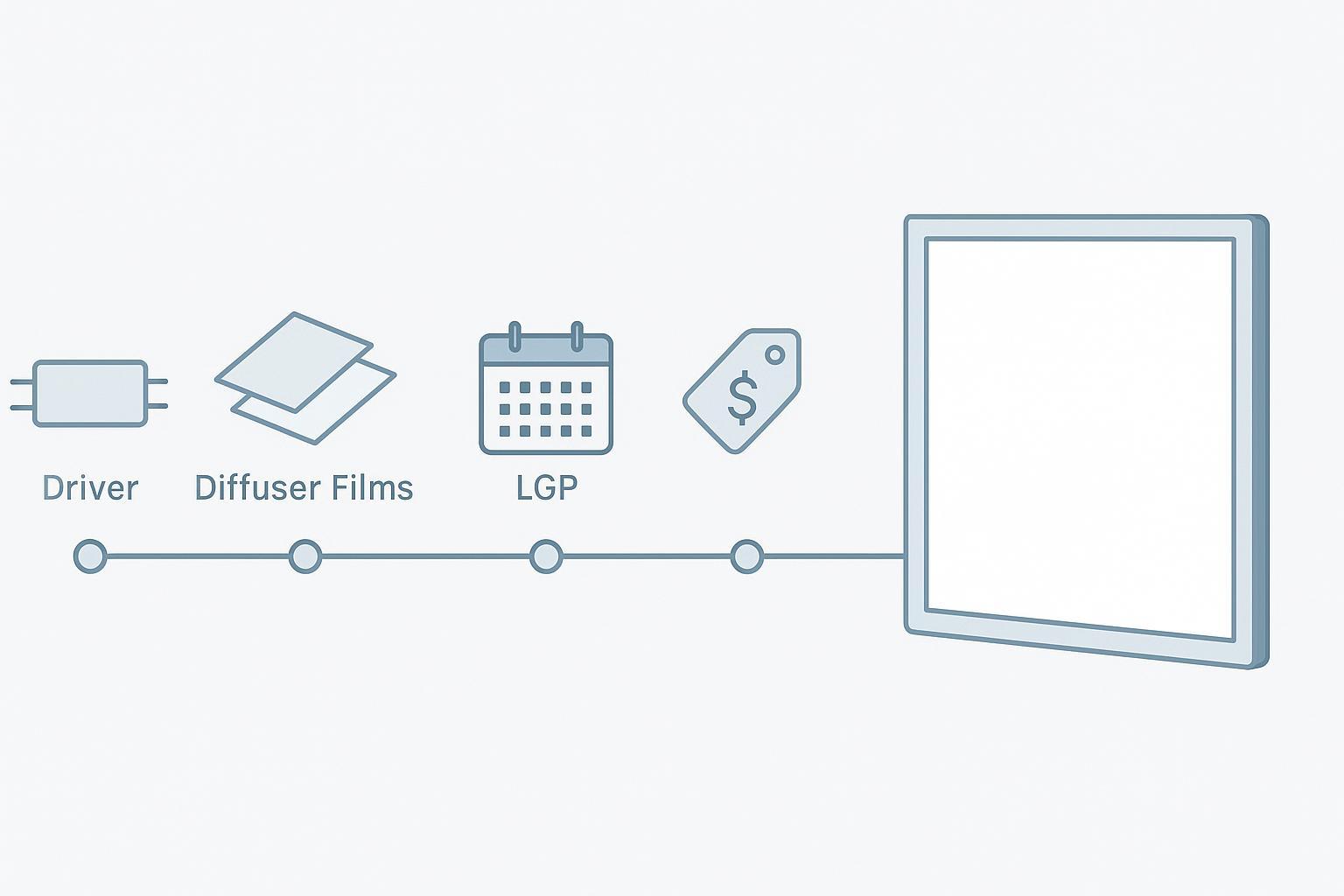
Architecture influences BOM, but what usually moves pricing and lead time are custom requirements:
special sizes or bespoke optical stacks (honeycomb + microprism)
driver/dimming protocols
binning requirements (CCT/CRI consistency)
If you stock both architectures, keep one standardized “default SKU,” and treat the other as a controlled option for projects with a hard constraint (ultra-thin ceiling, premium glare requirement, or special optics).
Uniformity and UGR are mostly driven by the optical stack (diffuser/microprism/honeycomb) and how well the LED emission is mixed—not by edge-lit vs backlit alone. The NVC UK technical support note linked earlier is a good baseline reference for how optics and materials shape outcomes.
Thickness determines whether the panel fits the ceiling plenum or surface-mount frame. Weight and maintenance impact depend on housing material and whether the driver is remote/serviceable. If installers need fast maintenance, prioritize designs where the driver can be replaced without removing the whole unit.
Temperature is one of the biggest drivers of lumen maintenance. The safe procurement approach is documentation: LM-80 is measured data; TM-21 is the projection method (see Ansell Lighting’s LM-80/TM-21 overview linked earlier).
Edge-lit panels rely on an LGP. PMMA LGPs are typically preferred for transmission and yellowing resistance, while low-grade PS can yellow if not stabilized, impacting appearance over time (as noted by NVC UK in the technical support note linked earlier).
Backlit designs can be cost-stable when standardized; edge-lit designs can add LGP/film complexity. Lead time is driven less by the architecture and more by custom size/optics/driver requirements and supply-chain stability.


