Author: Huang Publish Time: 05-03-2026 Origin: Site


 Algeria’s lighting market is opening doors for importers and local assembly partners who can balance compliance, cost, and reliability. This guide distills the 2026 regulatory snapshot, a practical CKD/SKD decision framework, an assembly SOP you can put to work, and Algeria‑fit product guidance for residential interiors—COB downlights, 48V magnetic track lighting, and LED panel lights. Throughout, we reference authoritative sources and flag where you should verify details with a licensed customs broker.
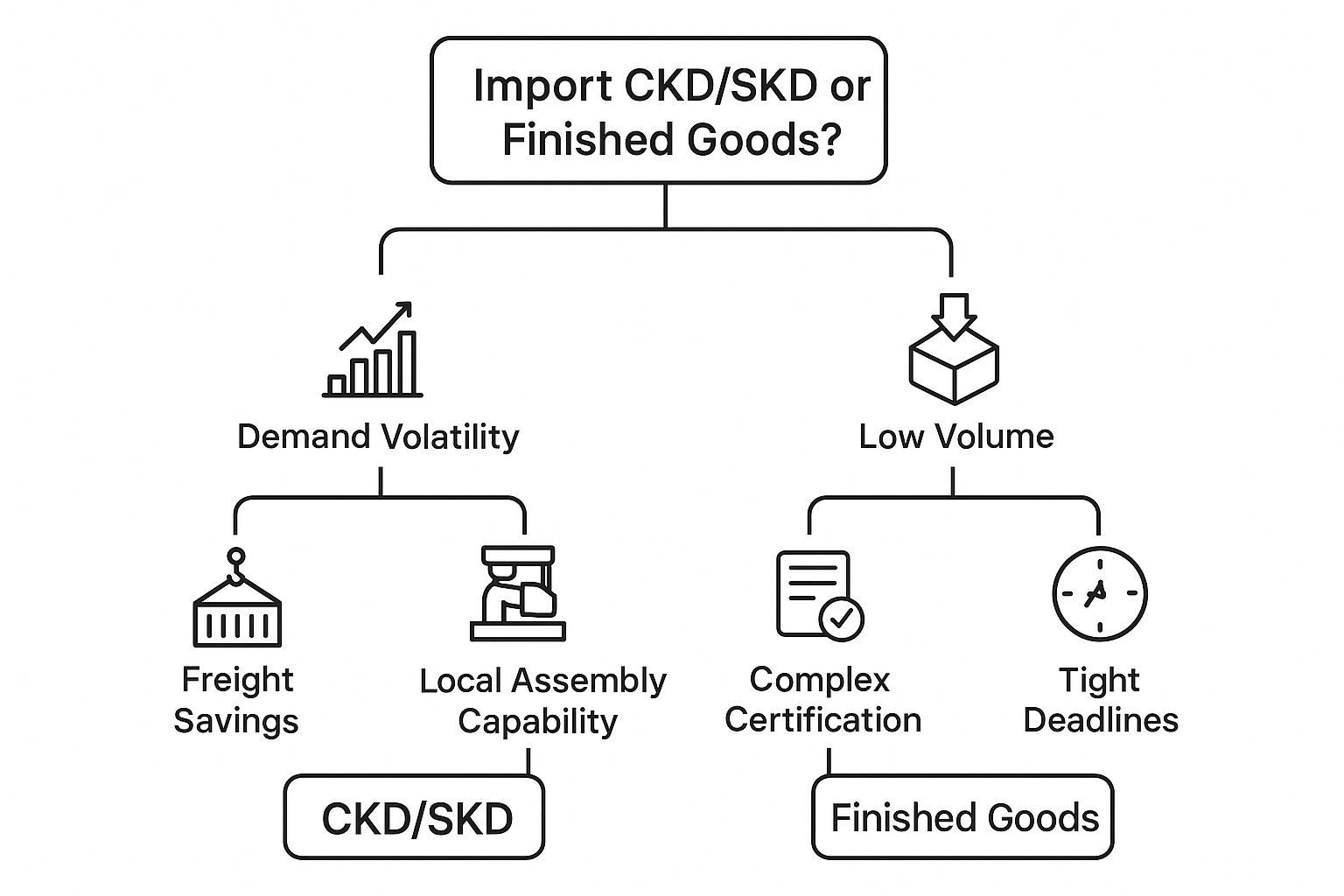
Use this section to judge when the “Algeria lighting components import CKD SKD” path is smarter than finished goods—and when it’s not.
Taxes and fees come first: imports of goods incur TDB; sector‑specific DAPS may apply depending on HS classification. Validate the net tax stack—customs duty, DAPS (if any), VAT, TDB—before negotiating Incoterms. Freight is the next lever: kits can be nested or flat‑packed, raising container utilization and reducing volumetric weight for tracks, panels, and trims. Clearance and flexibility improve when you work with pre‑approved kits and steady replenishment cycles rather than ad‑hoc finished‑goods SKUs. Finally, after‑sales costs drop because locally assembled luminaires are easier to service—swap a driver or LED module without re‑importing a full fixture.
Choose CKD/SKD when demand is volatile and you need buffer assembly to avoid stockouts, when you want last‑mile customization (CCT, trims, optics, wiring harnesses) aligned to project specs, and when freight savings from flat‑pack kits outweigh line setup and labor. If you aim to build local capability and shorten service loops, CKD/SKD strengthens your position.
Prefer finished goods for low volumes or highly fragmented SKUs that won’t amortize assembly overhead, when certification/labeling is complex to replicate locally for small batches, or when deadlines are tight and factory‑finished SKUs with existing test reports are the fastest path.

Before diving into H3 stations, align on tools: torque‑limited screwdrivers, ESD mats, calibrated multimeters, insulation testers, and thermal paste dispensers. Keep a traveler sheet with batch, operator, and timestamp fields for traceability.
Verify LED modules (CCT tolerance and CRI), drivers (200–240 Vac input, surge rating ≥2 kV line), heatsinks/housings, optics (honeycomb/louver or deep‑recess trims), hardware, labels, and spares. Record lot numbers and quarantine any items that miss specs.
Apply thermal interface material per spec, tighten to torque to avoid warping PCBs or trims, route wiring paths to avoid pinch points, and add strain relief where cables enter housings.
Confirm polarity and ground continuity, insulate terminations and verify creepage/clearance, and burn‑in residential drivers 30–60 minutes with extended sampling for spot audits.
Run a functional test with lumen/CRI spot checks on a sampling plan and inspect flicker on dimmable drivers. Apply batch/date labels and local compliance marks, then package optics and trims to prevent scuffing and include quick‑start guides in Arabic/French as needed.
A few Algeria‑fit considerations repeat: wide‑range drivers (200–240 Vac), attention to heat and dust, and anti‑glare options for comfort.

Prioritize thermal design with deep heatsinks and high‑conductivity aluminum for warm interiors—especially in top‑floor apartments where ceiling cavities run hot.
In living rooms and bedrooms, comfort is usually the deciding factor, so favor deep‑recess or honeycomb/louver trims that hide the LED source when you’re seated and reduce “sparkle” on glossy paint.
For corridors and entryways, a slightly wider beam can help avoid scalloping on walls. For kitchens, keep the downlight beam tighter over counters and use a separate ambient layer so you don’t end up with harsh shadows.
On the electrical side, specify surge resilience (≥2 kV line) and choose dimming only where needed (bedrooms and media areas more than kitchens). If you’re importing kits for local assembly, keep optics and trims modular so you can swap anti‑glare inserts room‑by‑room without changing the core LED module/driver.
Explore a neutral category overview for fixtures and trims at the downlight hub: Downlight category overview
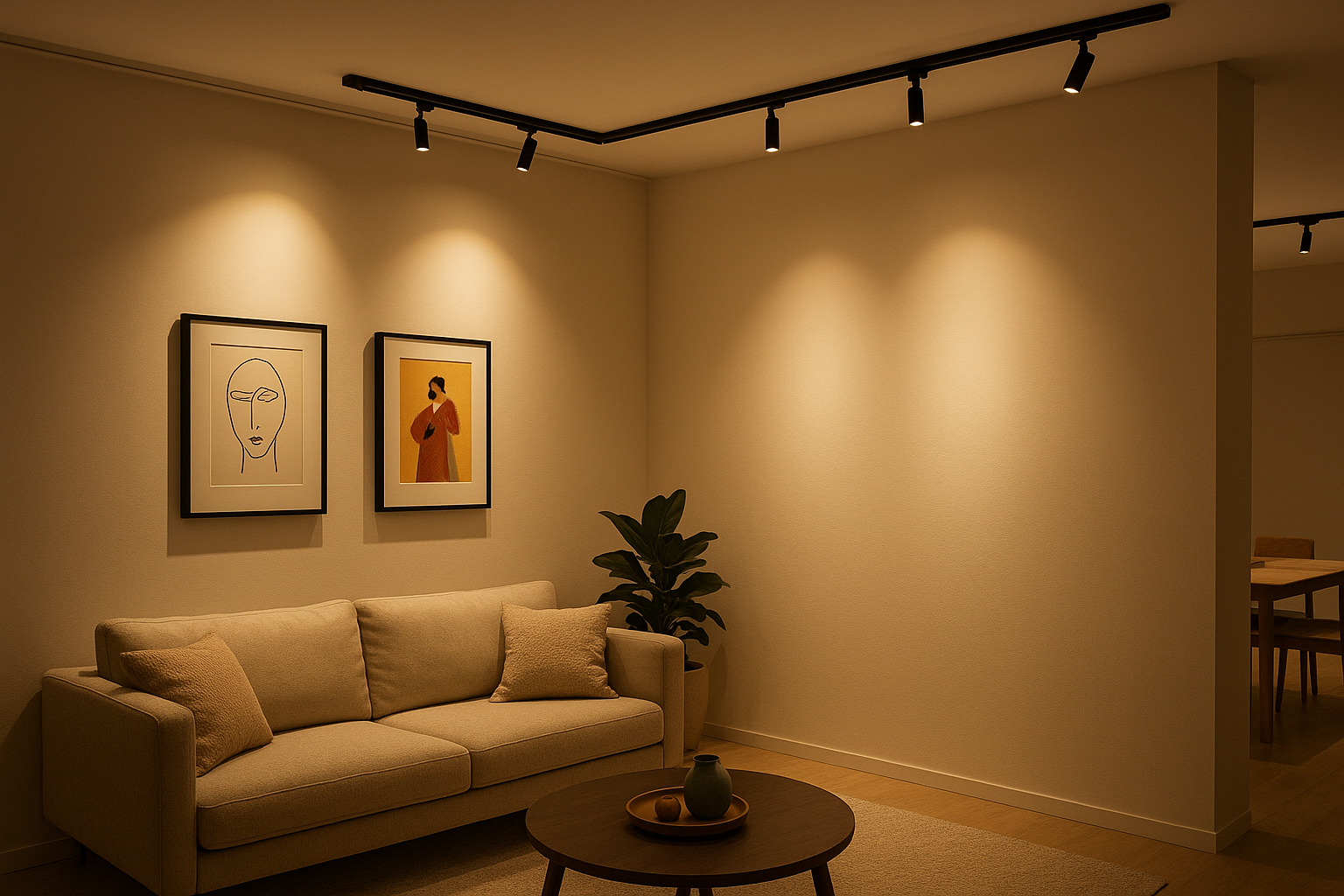
Design around a centralized 48 V driver and magnetic track heads, checking thermal limits in coves and ceiling pockets where airflow is limited.
In living/dining zones, think in layers: use narrow‑beam spots to highlight artwork or a dining table, then add wider floods to wash a wall or boost general brightness without increasing glare.
For long corridors, a continuous track gives you flexibility—more heads near mirrors or entry consoles, fewer in low‑use stretches.
Kitchens are where track systems earn their keep: place heads to rake light across countertops and avoid casting shadows from upper cabinets. Bedrooms often need fewer heads and softer optics; if the homeowner wants a “hotel” feel, you can keep the track for accents and pair it with indirect cove lighting.
On protection and procurement, add SPD at the distribution panel, verify short‑circuit protection on the DC side, and standardize connectors and head types in your kit so local assembly and spares are simple.
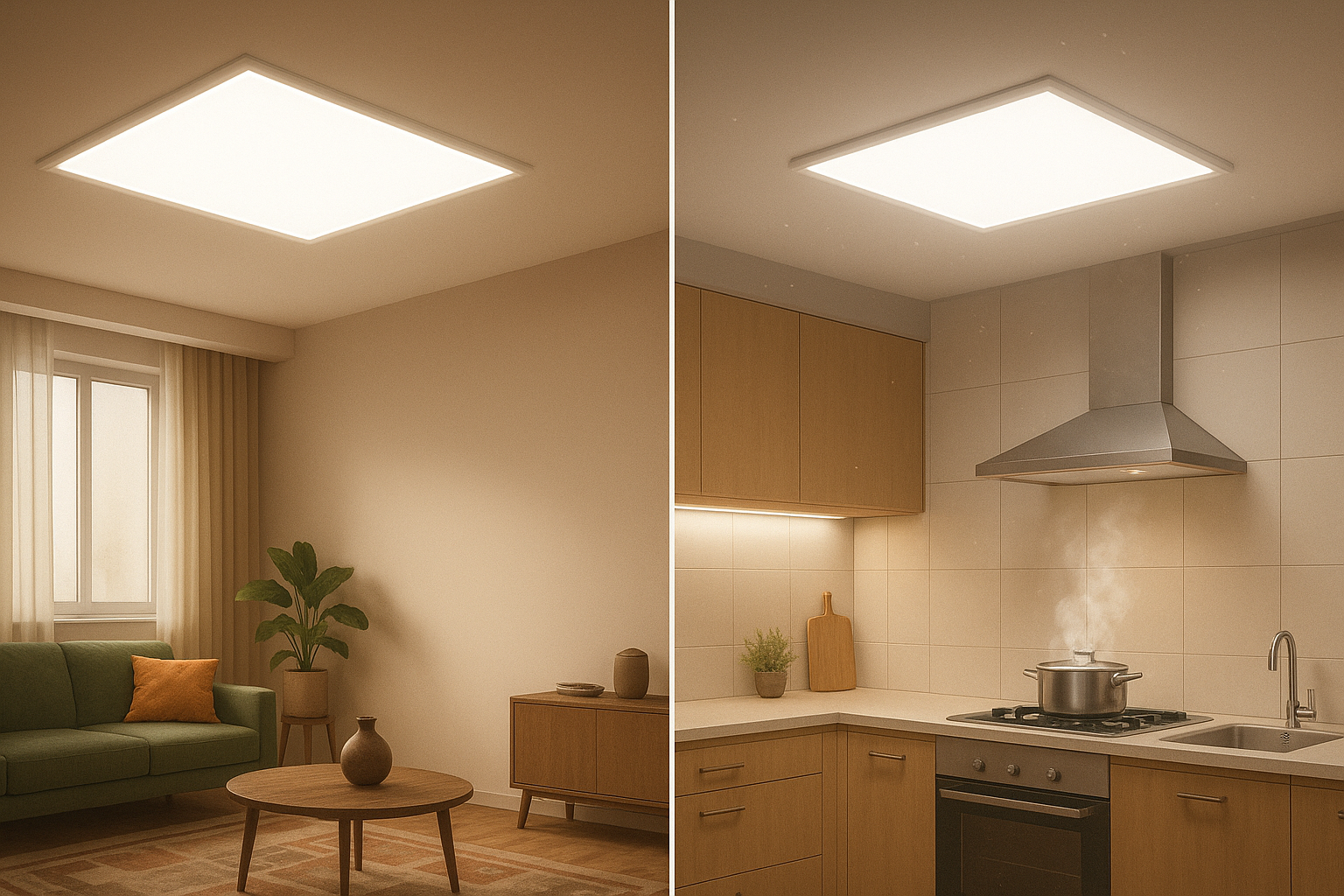
Choose edge‑lit panels for slim profiles in tight ceiling voids, or back‑lit panels for robustness and uniformity—especially where installers may not have time to fine‑tune mounting frames.
Living rooms and bedrooms typically prioritize low glare and an even “ceiling glow,” so match panel size to the room and avoid over‑spacing (it makes the room feel patchy).
For hallways, panels can work well as a simple, high‑uniformity solution that reduces dark spots between fixtures.
Kitchens and bathrooms are where ingress protection matters: IP20 suits dry rooms, while IP44 is a safer default near moisture, steam, or frequent cleaning. In dusty interiors, the same IP44 approach helps reduce maintenance issues like diffuser staining over time.
If you’re importing kits, keep drivers and diffusers consistent across SKUs so replacements don’t become a long‑tail spares problem.
For basics on ingress ratings and room choices, see this indoor panel IP explainer: IP20 vs IP44 vs IP65 for indoor panels
Here’s a neutral, replicable example illustrating how a CKD/SKD kit and local assembly guidance can work in practice. A distributor partners with KEOU Lighting to bring in a residential kit set: COB downlights, a 48 V magnetic track bundle, and standard 600×600 panels. Pre‑shipment, the BOM locks CCT/CRI targets, driver specs (200–240 Vac, ≥2 kV surge), trims, and labels, and the packing list optimizes volume via nested housings and flat‑pack tracks/panels. On arrival, the station flow mirrors Section 4 with kitting, torque‑controlled assembly, driver integration, and 30–60 min burn‑in; traceability labels tie each batch to RMA procedures. After‑sales, the warranty matrix defines module/driver coverage and swap procedures so failed drivers can be replaced locally without re‑importing whole fixtures.
Validate HS codes for each kit line (modules, drivers, housings, optics) and any assembled SKUs; obtain written confirmation of current customs duty, any DAPS exposure, VAT, and the bank domiciliation tax basis; confirm whether any cargo tracking certificate (ECTN/CTN/BSC) applies on your route and port; prepare invoice, packing list, bill of lading, certificate of origin, and conformity paperwork per your broker’s template; and align labeling requirements (language, marks) while keeping batch records for traceability.
Build a simple landed‑cost model comparing CKD/SKD vs finished goods with your actual freight quotes and duty/DAPS assumptions; pilot a small assembly cell using the SOP in Section 4 and measure throughput, rework, and failure rates for one month; standardize your BOM/QA/warranty documents and align with installers on surge protection at the distribution boards; and if you need a neutral reference for kit composition and documentation, review public product category pages (downlights and the indoor panel IP explainer) and consult an engineering partner who can supply complete BOMs and assembly guides.
Q1:What does “Algeria lighting components import CKD SKD” actually cover?
It refers to importing unassembled or semi‑assembled lighting kits—LED modules, drivers, housings, optics—for local assembly, versus importing fully finished luminaires.
Q2:Is DAPS always applied to lighting kits or fixtures?
Not necessarily. DAPS is category‑dependent and changes. You must confirm applicability at the HS‑code level with Algerian Customs or a licensed broker, as advised by KPMG’s 2025 Algeria guide.
Q3:Do I need an ECTN/CTN/BSC for Algeria shipments?
Public carrier lists like Maersk’s ECTN page don’t currently include Algeria, but conflicting advice exists online. Confirm with your forwarder and broker before you ship.
Q4:What driver specs should I prioritize for residential interiors?
Wide input range (around 200–240 Vac), surge resilience (≥2 kV line), appropriate dimming where required, and low flicker. Plan upstream SPDs at distribution boards per engineering practices from DEHN and Phoenix Contact.
Q5:Which residential products are the most reliable choices for Algeria conditions?
COB downlights with solid thermal design and anti‑glare trims; 48 V magnetic track systems with centralized drivers; and LED panel lights with appropriate IP ratings for each room. Use neutral category resources for orientation and validate specs with your supplier before ordering.