Author: Huang Publish Time: 05-08-2026 Origin: Site


Commercial and industrial outdoor lighting projects demand far more than raw lumen output. Whether illuminating a logistics warehouse perimeter, a sports court, or a multi-story architectural facade, direct light placement determines project success. Traditional fixed-angle floodlights often create dark spots, excessive glare, or light pollution that violates local municipal codes.
Specifying an adjustable angle floodlight equips electrical contractors, lighting engineers, and wholesale distributors with field-aiming flexibility. However, not all adjustable mounting mechanisms are built to withstand harsh outdoor conditions. Selecting the wrong bracket hardware, housing material, or tilt angle can lead to wind-induced aiming slippage, seal degradation, and costly maintenance callbacks.
This commercial buyer's guide breaks down the mechanical bracket engineering, optical beam selection, enclosure protection standards, and procurement checklists needed to specify high-reliability adjustable angle LED floodlights.
While fixed-angle luminaires suffice for simple wall-pack applications, commercial project sites frequently present complex elevation changes and targeted illumination requirements.
Site Requirement → Recommended Fixture Strategy
Building Facades & Signage → Adjustable Angle Floodlight (30°–60° Narrow Beam + Trunnion Mount)
Parking Lots & Perimeter Poles → Adjustable Angle Floodlight (Slip Fitter / Tenon Mount)
Industrial Loading Bays → Adjustable Angle Floodlight (90°–120° Wide Beam + Yoke Mount)
Uniform Canopy / Wall Sconces → Fixed-Angle Wall Pack or Ceiling Flush Mount
Specifying adjustable angle LED floodlights delivers three primary operational advantages:
Precision Field Aiming: On-site installers can fine-tune the tilt angle during final commissioning to target specific architectural features or focal zones without re-mounting the junction box.
Reduced SKU Complexity: A single adjustable floodlight model can serve multiple project roles across wall, pole, ground, and ceiling installations, allowing electrical distributors to streamline inventory.
Glare and Trespass Control: Adjusting the tilt angle alongside proper beam optics prevents light spilling into adjacent residential properties or driver sightlines on nearby roadways.
The mounting bracket carries both the dead weight of the luminaire and the dynamic aerodynamic torque created by wind gusts. Understanding the structural differences between bracket types is critical for long-term site reliability.
Mounting Bracket Type | Attachment Surface | Pivot Axis & Range | Typical Wattage Range | Recommended Applications |
|---|---|---|---|---|
Trunnion / Yoke (U-Bracket) | Flat walls, ceilings, concrete slabs, roofs | Dual-side pivot, 180° vertical rotation | 50W – 600W+ | Building facades, billboards, industrial plants, sports arenas |
Slip Fitter Mount | 2-3/8 inch round pole tenon or bullhorn arm | Single tenon clamp, 180° tilt adjustability | 100W – 400W | Parking lot poles, outdoor sports courts, perimeter roadways |
Knuckle Mount | ½ inch NPT threaded electrical junction box | Single-point threaded swivel, 180° tilt | 10W – 50W | Landscape accentuation, small signboards, doorway security |
The single most common mechanical failure in adjustable floodlights is aiming slippage. When a floodlight relies solely on smooth surface friction bolts, wind vibration and daily thermal expansion gradually loosen the joint, causing the light head to drop over time.
According to a commercial yoke mount engineering analysis, fixtures exceeding 30 pounds or 24 inches in width concentrate significant torsional force on the bracket pivot point. To prevent aiming drift:
Interlocking Gear Teeth: High-spec commercial floodlights feature cast serrated gear teeth (indexing teeth) embedded directly into the bracket pivot interface. When the heavy-duty stainless steel locking bolt is torqued, these teeth interlock mechanically.
Vibration & Wind Load Resistance: Interlocking gear teeth convert a friction-based joint into a positive mechanical lock capable of resisting sustained high-velocity wind gusts and equipment vibration without shifting position.
Pro Tip: Always verify that the mounting bracket includes cast gear locking teeth rather than smooth painted washers, especially for high-mount installations above 6 meters (20 feet).
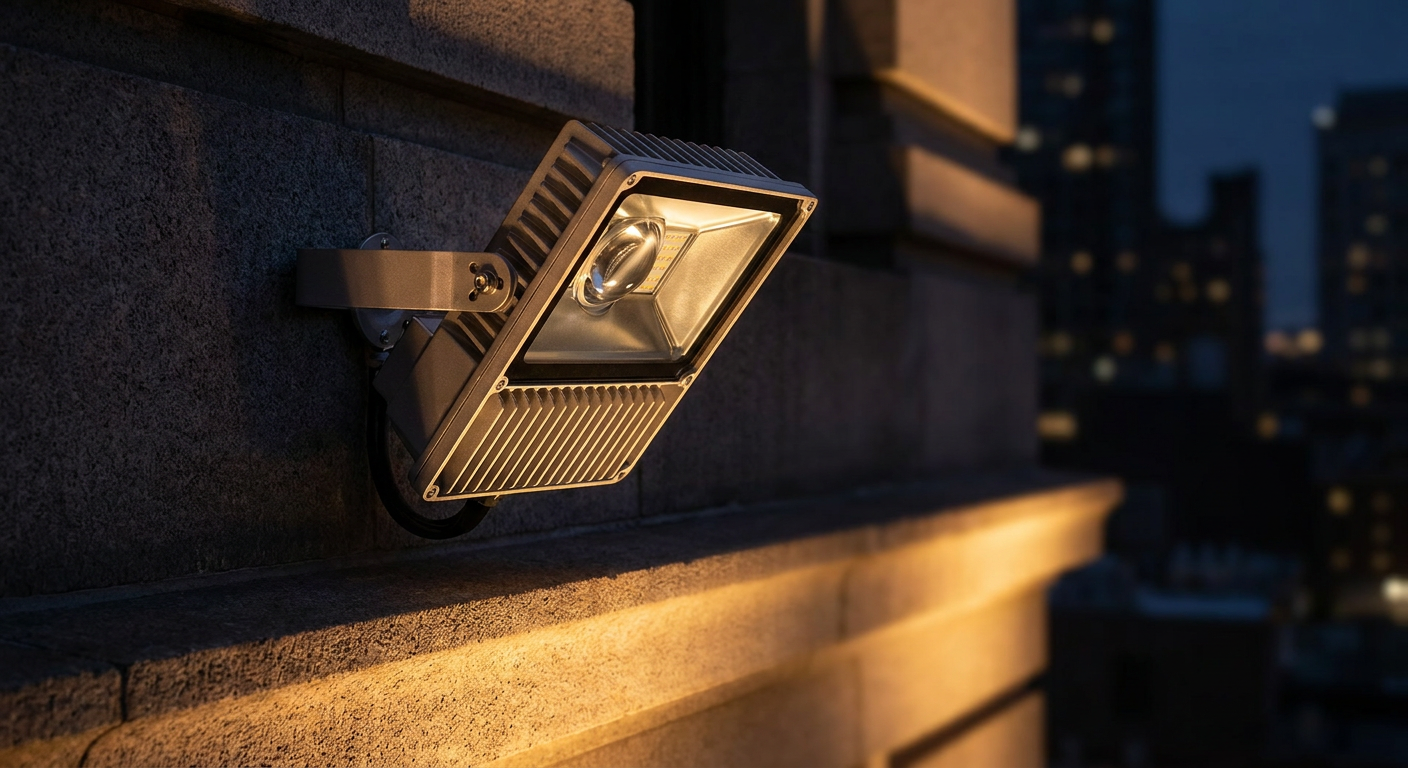
Achieving optimal foot-candle levels across a target surface depends on matching the adjustable bracket tilt with the luminaire's optical distribution.
Narrow Beam (30°–45°) → Long throw, high intensity → Facades, high-mast sports
Medium Beam (60°–75°) → Balanced spread → Signage, perimeter security, yards
Wide Beam (90°–120°) → Broad flood, low glare → Parking areas, loading docks
Narrow Beam (30° – 45°): Produces a high-intensity column of light over long distances. Ideal when floodlights are mounted far from the target, such as sports stadium high masts or tall architectural columns.
Medium Beam (60° – 75°): Delivers a uniform rectangular or circular spread suitable for medium-height commercial walls, billboards, and building perimeters.
Wide Beam (90° – 120°): Spreads illumination across expansive ground areas at lower mounting heights, reducing the total number of poles required in open parking lots.
As detailed in Arani's floodlight mounting comparison, pairing the proper mounting bracket with target beam optics ensures maximum ground coverage while keeping light trespass below regulated limits.
A common oversight during site installation is extreme upward or downward tilting that compromises the luminaire's ingress protection.
When an adjustable floodlight is tilted past 30° from vertical, the weight distribution of the heavy toughened glass mask and internal heatsink shifts forward. In low-quality housings with thin stamped metal, this uneven weight distribution warps the front bezel, causing uneven compression on the silicone waterproof gasket.
Detailed field testing on gasket compression and mounting angle guidelines highlights that aggressive tilt angles can create micro-gaps along the lower seal edge, allowing rainwater pooling and moisture ingress under wind-driven storms.
⚠️ Warning: Never apply external silicone caulking around the front glass rim to fix seal gaps. External caulking blocks built-in pressure-equalization breathing vents, trapping internal condensation and voiding the manufacturer's warranty.
To preserve IP65 or IP66 seal integrity under all aiming angles, commercial floodlights require a rigid, non-deforming enclosure:
ADC12 Die-Cast Aluminum: Provides high structural rigidity that maintains uniform gasket pressure regardless of tilt angle. ADC12 aluminum also features exceptional thermal conductivity, efficiently drawing heat away from the LED chips and driver.
Toughened Glass Cover: Resists thermal shock, high-pressure washing, sand abrasion, and chemical exposure in harsh industrial or coastal environments.
Drip Loop Wiring: Electrical supply cables should always feature a natural downward "drip loop" before entering the cable gland to prevent water from tracking directly into the wiring compartment.
When evaluating wholesale suppliers or reviewing contractor submittals, watch for these common quality red flags:
❌ Smooth Friction Bracket Joints: Lack indexing gear teeth; prone to slipping and sagging under wind load within 6 to 12 months.
❌ Stamped Sheet Metal or Plastic Housings: Lack the heat dissipation and structural stiffness required for heavy commercial duty; warp easily under sun exposure and extreme tilt angles.
❌ Acrylic / Polycarbonate Optics Without UV Coating: Rapidly yellow, craze, and lose light transmittance when exposed to strong sunlight in high-UV regions.
❌ Missing Pressure Equalization Vents: Causes internal pressure build-up during thermal cycles, sucking moist ambient air past the gaskets as the fixture cools down.
Before placing bulk orders or bidding on municipal and commercial tenders, review this engineering checklist:
Item | Detail |
|---|---|
[ ] Mechanical Locking | Does the trunnion or slip fitter bracket feature serrated gear locking teeth? |
[ ] Ingress Protection | Is the fixture certified IP65 or IP66 with an IK08 or IK09 impact rating? |
[ ] Thermal Dissipation | Is the housing constructed from precision die-cast ADC12 aluminum? |
[ ] Optical Options | Are photometrics (.IES files) available for 30°, 60°, 90°, and 120° beam options? |
[ ] Electrical Protection | Is an integrated 6kV or 10kV surge protection device (SPD) included? |
[ ] Environmental Finish | Has the powder coating passed a 1000-hour salt-spray corrosion test? |
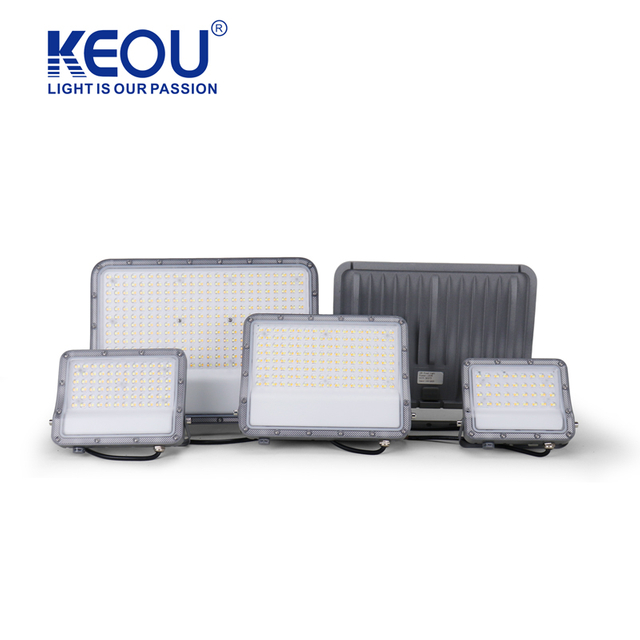
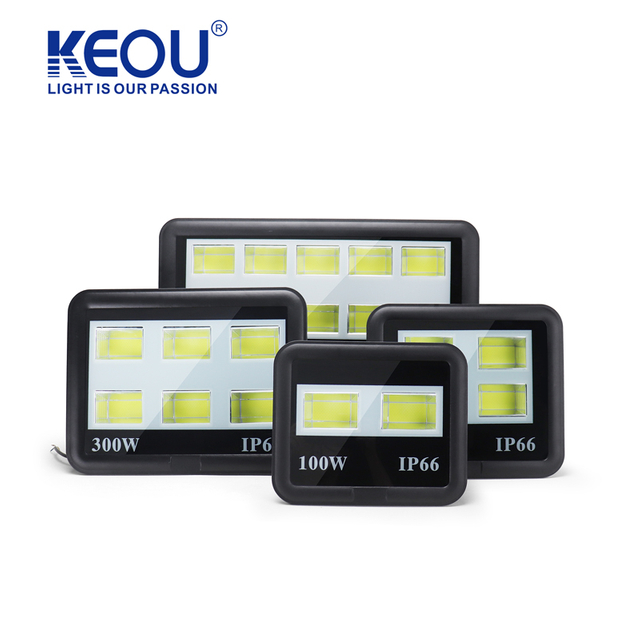
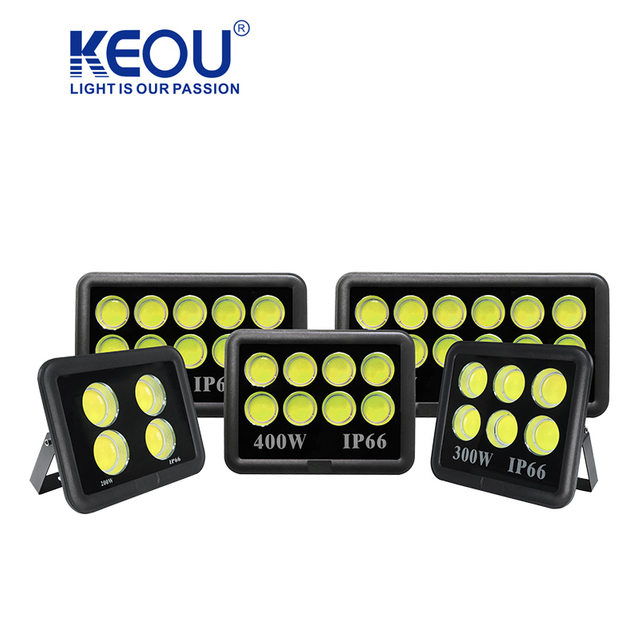
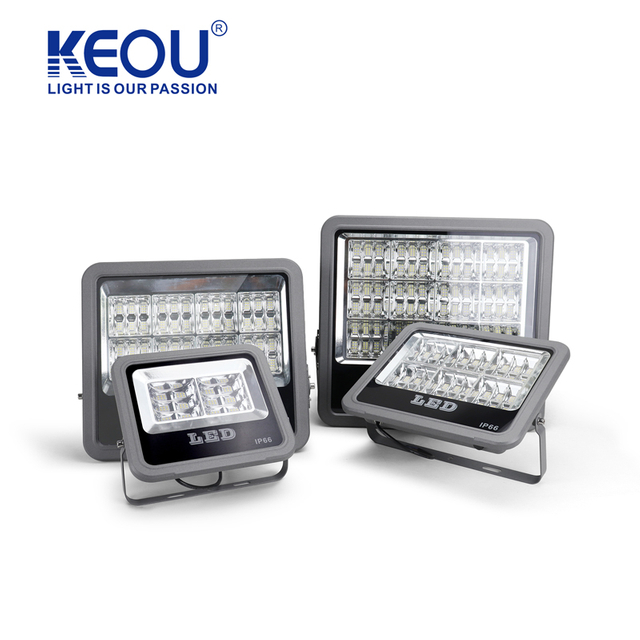
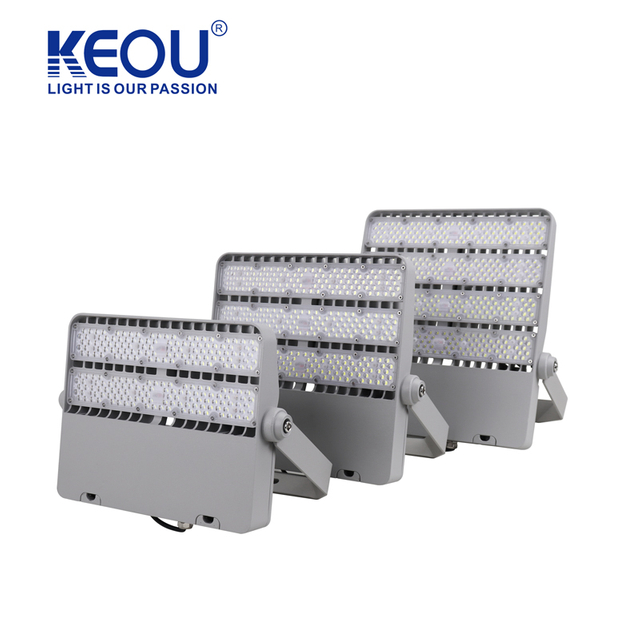
Distributors seeking to expand their commercial inventory can consult KEOU's commercial LED floodlight catalog for a complete overview of heavy-duty, field-adjustable floodlight SKUs.
With over 13 years of specialized semiconductor and LED luminaire manufacturing experience, KEOU Lighting provides high-performance outdoor lighting fixtures engineered for demanding commercial and industrial environments.
For a broader perspective on fixture architectures, read KEOU's commercial floodlight technology comparison.
Key technical capabilities of KEOU adjustable angle floodlights include:
Heavy-Duty Rotatable Brackets: Engineered with heavy-gauge steel and precision-cast gear locking teeth for 180° tilt adjustability and zero-drift wind resistance.
ADC12 Die-Cast Aluminum Housings: Designed with multi-channel thermal cooling fins that maintain LED junction temperatures below 70°C, even in high ambient desert heat.
High-Transmittance Toughened Glass: Combined with anti-glare honeycomb optics and high-efficiency COB/SMD LED chips delivering up to 140 lm/W.
Certified Environmental Protection: Fully rated IP65/IP66 and IK08 impact-resistant, with optional 10kV surge protection for unstable power grids.
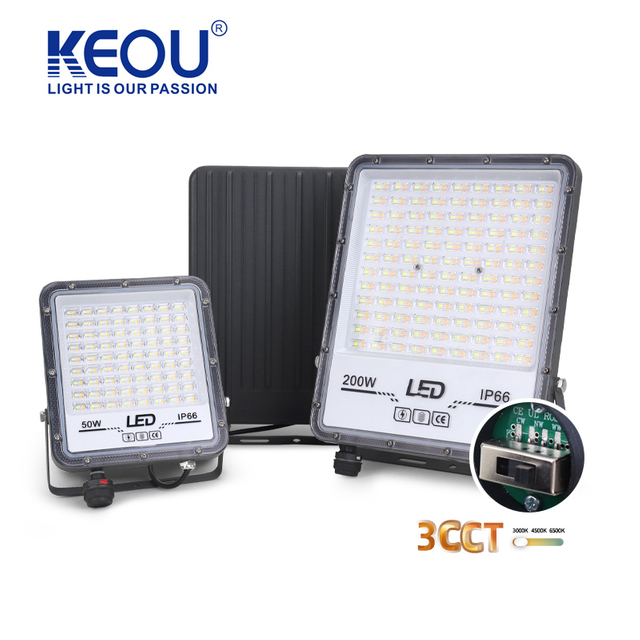
Comprehensive OEM/ODM Customization: Tailored wattage options (50W to 600W), custom CCT (3000K–6500K), specialized beam angles, and private-label packaging for global distributors.
To explore specific high-durability models for outdoor installations, review KEOU's IP66 outdoor floodlight fixtures.
While adjustable brackets allow up to 180° rotation, a tilt angle between 15° and 45° from vertical is recommended for general area lighting. Tilting beyond 45° increases the risk of glare, light trespass, and uneven gasket compression in lower-tier fixtures.
Select fixtures with serrated gear locking teeth embedded in the bracket joint rather than smooth friction washers. Ensure mounting bolts are torqued to manufacturer specifications and use split lock-washers or thread-locking compound.
A trunnion mount (or yoke bracket) is a U-shaped bracket that bolts directly to flat surfaces like walls or roofs. A slip fitter is a cylindrical collar designed to slip over a 2-3/8 inch round pipe or pole tenon, making it ideal for parking lot pole installations.
Next Steps for Project Procurement: Need tailored IES photometric files, custom beam configurations, or wholesale OEM pricing for an upcoming commercial project?
Request Photometric Files & Wholesale Pricing from KEOU Lighting