
Author: Huang Publish Time: 14-02-2026 Origin: Site


If you ask five people in lighting where to find the “next big thing,” you’ll get five different answers—and three of them involve a plane ticket. Here’s the deal: you can track meaningful lighting signals without flying anywhere, as long as you follow a role‑specific routine. This guide structures lighting trends by role so every reader knows exactly where to look and what to do next.
You’ll find a repeatable way to scan credible sources, turn signals into actions, and avoid noise. Each role gets concrete sources, a monitoring cadence, and quick checks to separate fashion from fundamentals (efficacy, controllability, safety, and compliance). We cite primary authorities—DLC, IES, DSIRE, FCC/FTC/EU/UK—so you can verify claims. Think of this as your operating system for tracking lighting trends by role in 15–30 minutes a week.
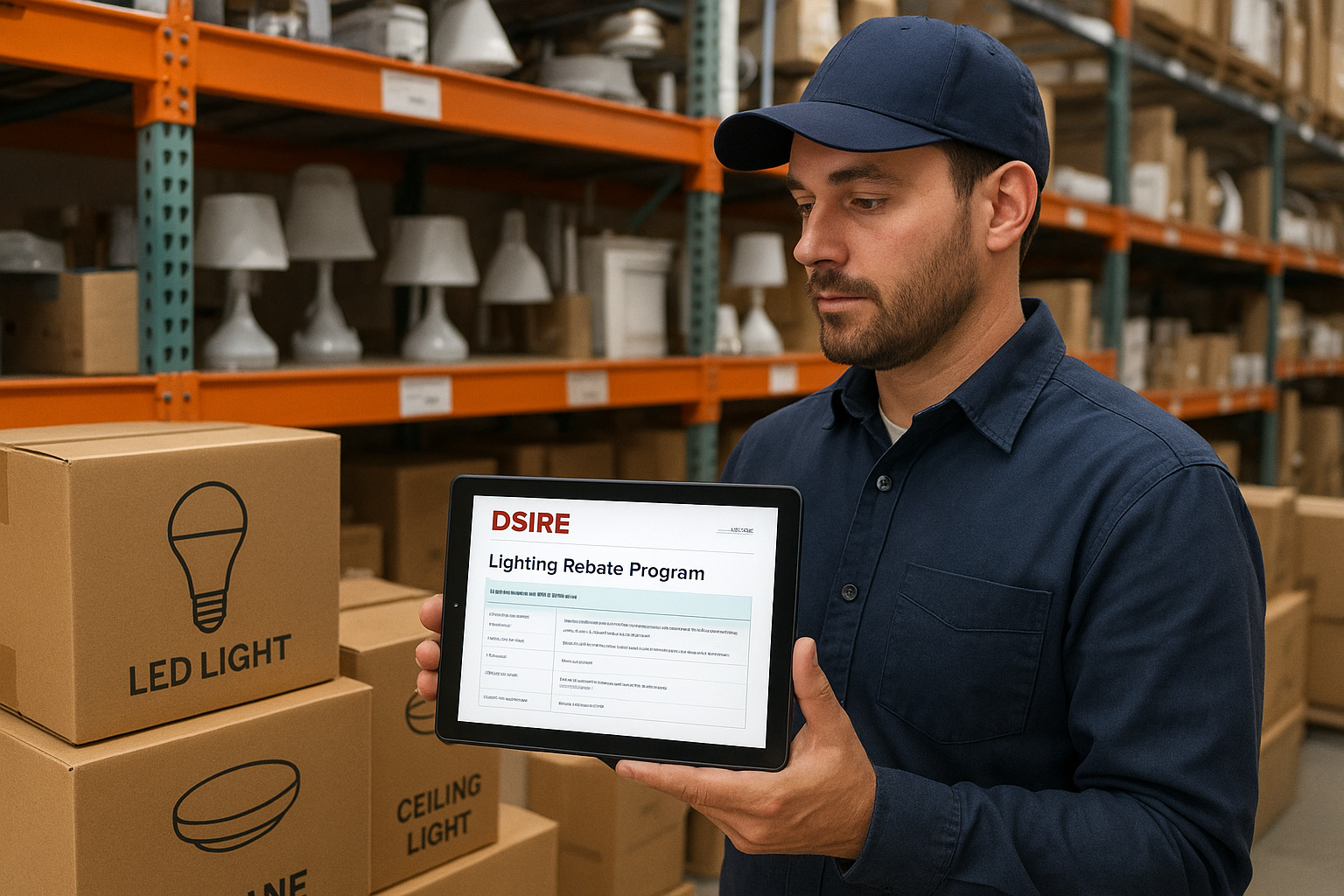
▉ Distributors live at the intersection of rebates, specs, and lead times. Your edge comes from mapping incentives to compliant products and getting samples validated early.
Use DSIRE’s live portal to filter for Lighting + Commercial + Rebate and export your state/utility list monthly. DSIRE is the primary U.S. index of energy programs; values and eligibility change often, so treat it as your calendar trigger. See the Database of State Incentives portal under the programs directory in the “lighting + commercial” filters described on the site: the searchable programs interface is available via the DSIRE programs system page. Read more on the DSIRE programs portal with filters for lighting rebates on the official site: DSIRE programs directory for incentives.
Cross‑check rebate eligibility against DesignLights Consortium qualifications. Many North American utilities reference DLC’s Qualified Products Lists, including SSL and LUNA for dark‑sky criteria. DLC’s program hub explains how SSL V6.0 and LUNA V2.0 inform rebate design; start with the consolidated page: DLC hub for SSL V6.0 and LUNA V2.0. DLC’s fact sheet notes broad program adoption of QPLs across North America; see the organization’s summary here: DLC program facts and QPL influence.
Request LM‑79 test reports and check safety listings directly in official directories. UL’s Product iQ and Intertek’s ETL directory let you verify that luminaires, drivers, and controls are listed correctly. Use the registries to confirm model numbers and categories: UL Product iQ directory (registration required) and Intertek ETL listing directory.
For controls, learn the five foundational strategies documented by DLC—dimming, high‑end trim, occupancy/vacancy sensing, scheduling, and daylight harvesting—because incentives often add extra dollars for networked capability. DLC’s 2024 resources describe these strategies and the current NLC 5.1 requirements: DLC lighting controls best practices (PDF, 2024) and NLC 5.1 technical requirements (2024).
Use rebate start/sunset dates as stock triggers. Validate samples with quick photometric checks (CCT, CRI, beam, UGR claims) and dimming performance before committing to volume. The IES Industry Progress Report offers a curated view of credible innovations each year—use it as a filter against hype: IES Industry Progress Report (2024).
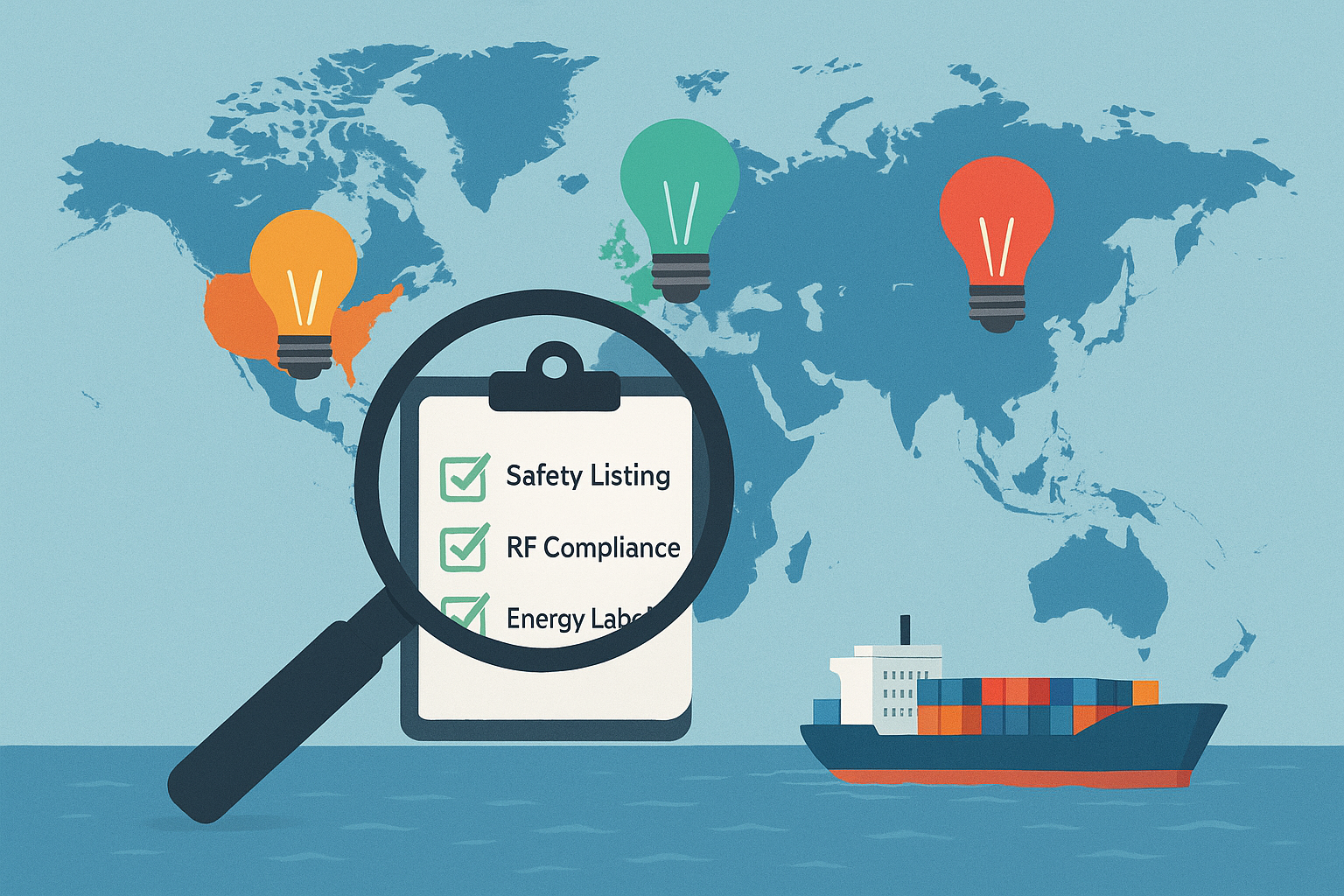
▉ Importers win by mastering documentation: safety listings, radio compliance, and energy labeling. A simple matrix prevents surprises at customs or in market surveillance.
Below is a compact view of what typically applies. Always verify the latest rules on the official pages.
Market | Safety listing | RF compliance | Energy labeling | Reference links |
US | UL or ETL listing (e.g., UL 1598/8750) | FCC Part 15 (Subpart B/C/E) with EAS FCC ID for radios | FTC Energy Labeling Rule where applicable | UL Product iQ; Intertek ETL; eCFR Part 15; FTC energy labeling hub |
EU | CE (LVD/EMC/ErP) | Radio Equipment Directive for radios | EPREL registration and labeling | |
UK | UKCA/CE (as permitted 2024–2026) | Aligned with ETSI frameworks | GB labeling per DESNZ/OPSS guidance | UK ecodesign guidance; UKCA marking; CE marking guidance; RoHS GB |
Ask suppliers for LM‑80/TM‑21 data for LED packages or COBs, LM‑79 for finished luminaires, and evidence of safety listings (certificate numbers you can look up). Verify radios and controllers against FCC authorization records where applicable: FCC equipment authorization search.
Align controls documentation with DLC NLC expectations if you plan to pursue controls rebates; keep commissioning guides on file alongside spec sheets.
Watch Europe’s policy phase‑outs that accelerate LED retrofits. The EU’s revised Mercury Regulation entered into force in mid‑2024, further restricting mercury‑containing lamps; this affects replacement planning and stock strategy. See the European Commission’s summary: EU revised Mercury Regulation enters into force (2024).

▉ Your advantage is speed: sense demand early, comply on listings, and run tight test cycles.
Google Trends is a free way to track seasonality by keyword (e.g., “LED strip lights,” “motion sensor night light”). Use regional filters to align inventory with destination markets: Google Trends home.
Amazon Best Sellers category pages show live product clusters and features (sizes, finishes, CCT ranges) buyers favor; watch how top listings evolve week to week: Amazon Best Sellers directory.
Supplier marketplaces (Alibaba, 1688) can hint at pricing/mix shifts, which often precede retail trends: Alibaba marketplace; 1688 marketplace.
Lighting categories may require safety documentation and specific warnings (e.g., button/coin cell safety, seasonal light standards). Most authoritative guidance lives inside Seller Central; treat the public Brand Analytics page as a capability overview and rely on in‑account Help for exact rules: Amazon Brand Analytics overview. Maintain a folder with test reports, safety listings, labeling images, and user manuals to respond to compliance requests quickly.
Plan variants deliberately (two finishes, two CCTs, one dimming option), track CTR, CVR, returns, and review sentiment. Promote the winners, sunset the rest. Tie your ideation back to Best Sellers feature clusters so you’re not guessing.
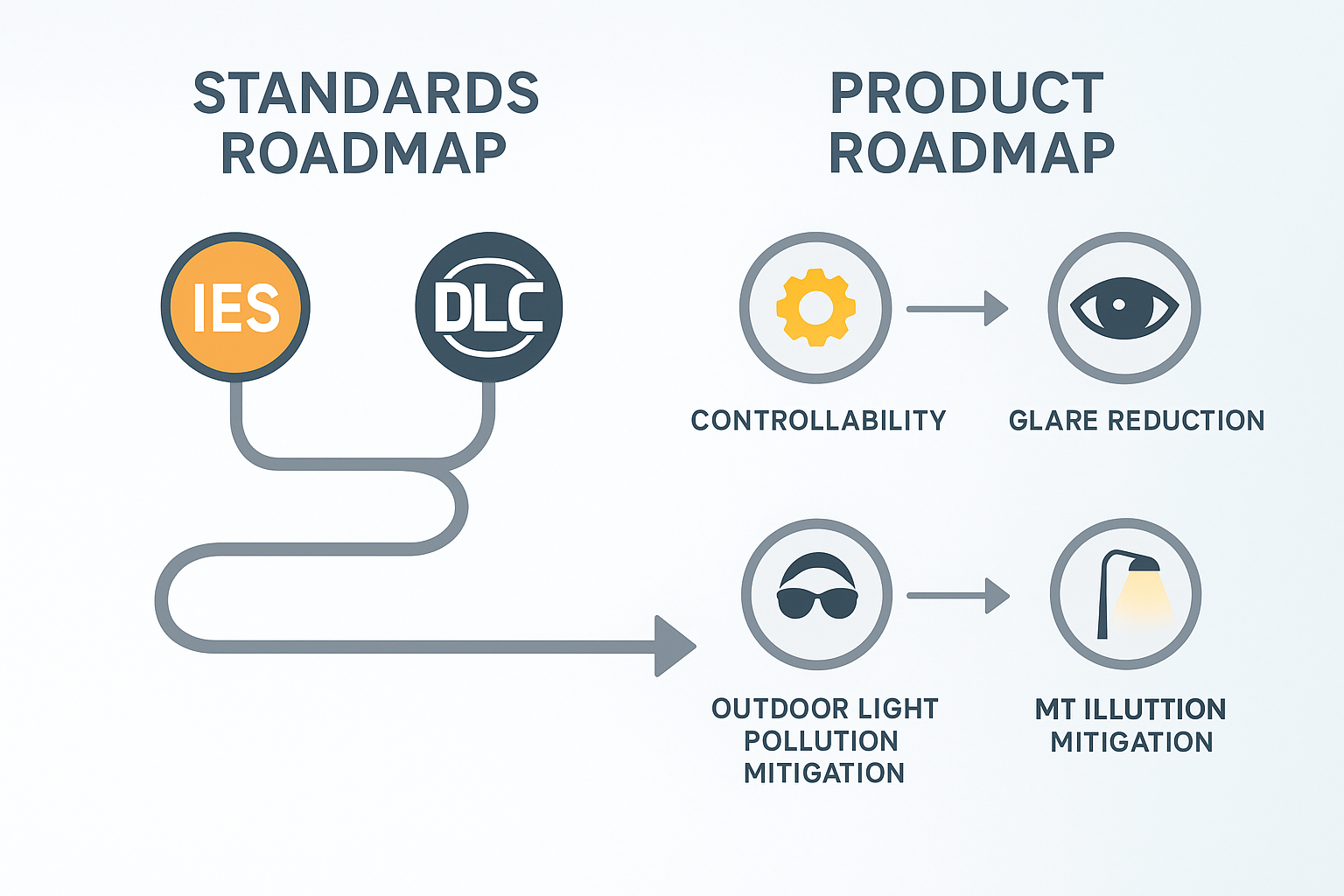
▉ Brands should turn standards roadmaps into product roadmaps, especially around controllability, glare, and outdoor light pollution.
Follow two anchors: IES for measurement/quality signals and DLC for program eligibility. Review the IES Progress Report annually for credible breakthroughs and monitor the IES Standards Toolbox (TM‑30 tools) to pressure‑test color claims. For incentives and spec alignment, track the DLC SSL V6.0 and LUNA V2.0 pages for requirement shifts. Sources: IES Progress Report (2024) and DLC SSL/LUNA program hub.
Networked capabilities increasingly unlock rebates. Keep these core strategies in mind when shaping controls‑ready SKUs and commissioning guides.
Strategy | What to watch |
Dimming | Minimum dim level and flicker metrics that match spec claims |
High‑end trim | Commission per area/task; capture baseline to document savings |
Occupancy/vacancy | Sensor density and tuning to avoid false‑offs |
Scheduling | Building schedules and holiday overrides aligned with use |
Daylight harvesting | Sensor placement and calibration per façade |
▉References: DLC lighting controls best practices (PDF, 2024) and NLC 5.1 technical requirements (2024).
Short application notes on anti‑glare optics, UGR targets, or human‑centric features go further than ad copy. Cite IES/DLC resources and include commissioning checklists so specifiers and distributors can trust your claims.
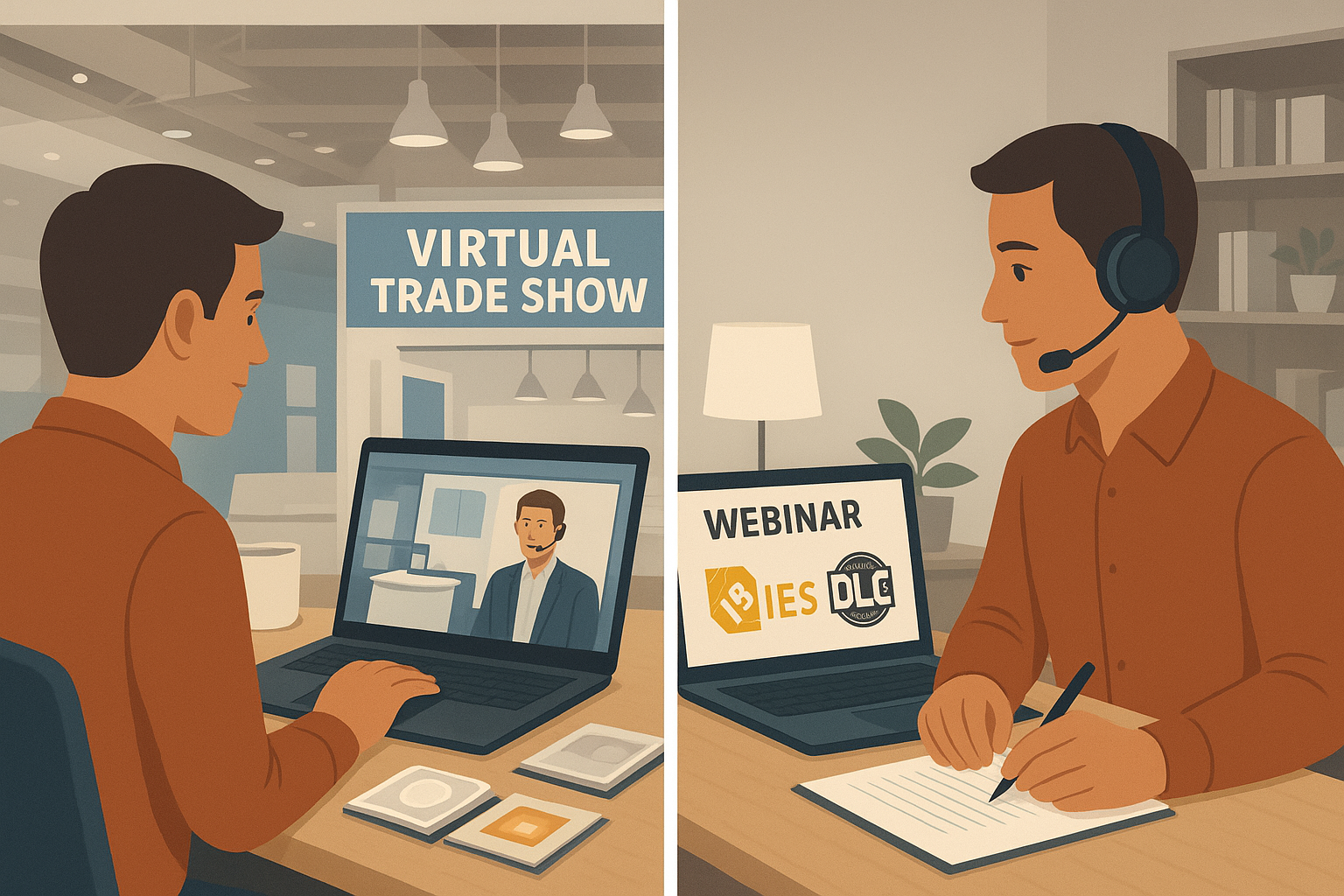
▉ Not traveling? You still have options to source, learn, and meet.
HKTDC’s Spring/Autumn Lighting Fairs provide a hybrid “EXHIBITION+” model with Click2Match online business matching, letting you discover suppliers and request samples remotely. Explore the format on the organizer’s official pages: HKTDC Autumn Lighting Fair EXHIBITION+ and HKTDC Spring Lighting Fair.
IES and DLC routinely post webinars and resources that explain where specifications are heading—use them to guide portfolio and training without leaving your desk. Start at the IES events hubs and the DLC resources index: IES events and education and DLC resources library.
Distributors/channel partners (weekly): Review two utility program pages and DSIRE export for changes; scan DLC SSL/LUNA/NLC news; validate any new sample’s listings in UL/ETL directories. (monthly): Refresh rebate calendar and adjust inventory targets.
Importers (weekly): Confirm any new SKU’s safety listing and FCC status; update compliance matrix if suppliers change components. (monthly): Re‑verify EU/UK labeling steps and EPREL entries for active SKUs.
Cross‑border sellers (weekly): Track Google Trends and Best Sellers deltas; check return and review metrics; tune listings. (monthly): Retire underperforming variants and double‑down on winners.
Brands (weekly): Read IES/DLC updates; review active R&D experiments; capture market feedback from distributors. (monthly): Update roadmap for controls and dark‑sky variants; prepare education assets.
Start with your DSIRE export for targeted utilities, then check the exact model against the DLC SSL/LUNA QPLs. If controls rebates apply, ensure the system meets NLC capabilities documented by DLC.
If your product includes intentional RF transmitters (e.g., Bluetooth/Wi‑Fi controllers) or falls under unintentional radiator rules, you must comply with FCC Part 15. Verify authorization records by FCC ID in the Equipment Authorization System.
Keep safety listings, test reports, and labeling images organized. Use Seller Central’s compliance tools and ensure your documentation (UL/ETL, warnings) matches the listing—especially for products with button/coin cells.
Watch the IES Progress Report for credible innovation signals and the DLC SSL/LUNA pages for requirement updates that often cascade into utility program specs. For color quality work, keep an eye on TM‑30 resources in the IES Standards Toolbox.
Yes. HKTDC’s EXHIBITION+ offers remote supplier matching and sample requests. In parallel, IES and DLC webinars provide on‑demand education that tracks where specifications and incentives are heading.
Follow KEOU website for updates.


