
Author: Huang Publish Time: 04-01-2026 Origin: Site


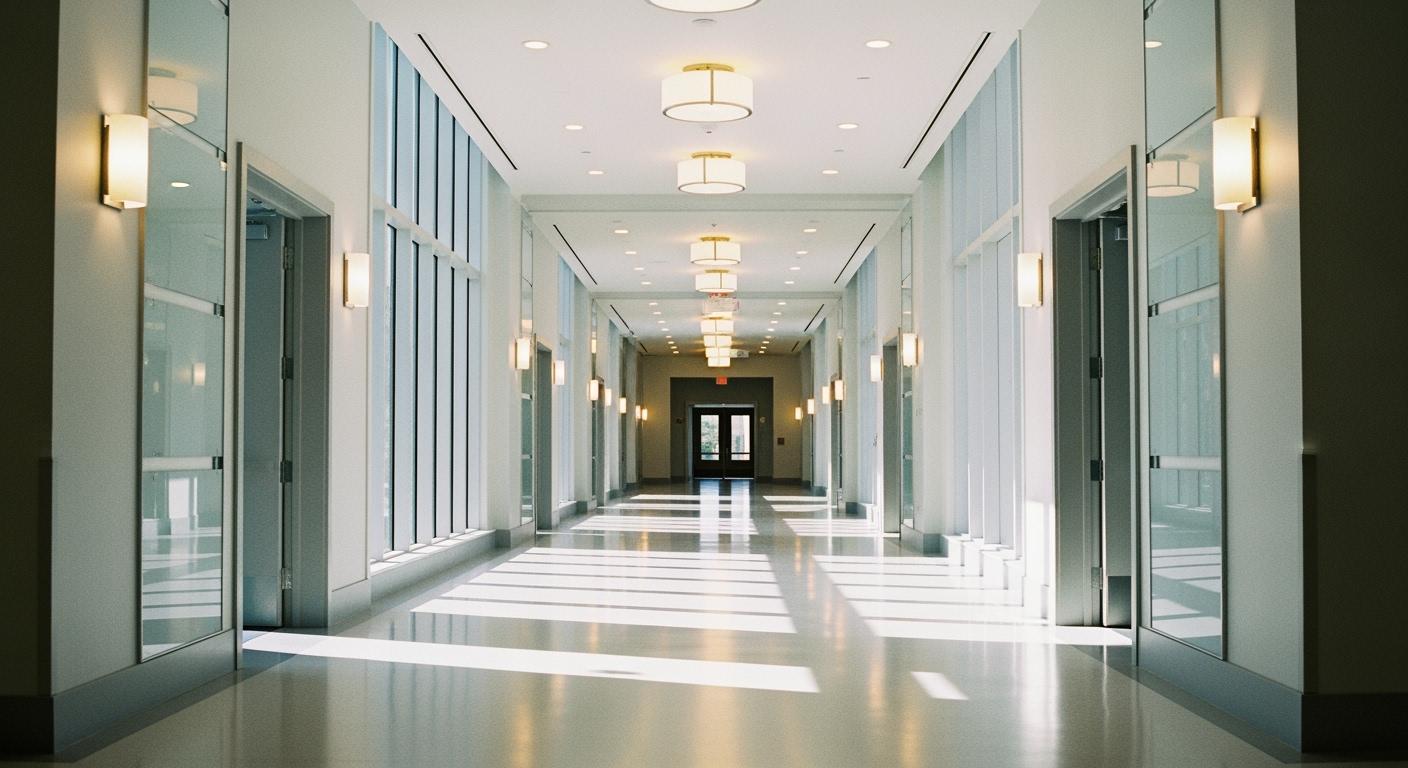
You want to eliminate dark spots in your hallway and corridor. You can do this by picking smart lighting. You can also use natural light. Choose light colors and shiny surfaces. You do not need special skills to make a space bright and safe. When you eliminate dark spots, your hallway feels more welcoming. It is also easier to walk through. You make every corridor safer and more comfortable. You do not have to spend a lot of money to fix dark spots. Many homeowners eliminate dark spots with easy changes.
Tip: If you eliminate dark spots, your corridor will look brighter and bigger.
Use different types of lighting to make your corridor bright. Mix ambient, accent, and task lighting for good light and safety.
Let in more sunlight by adding mirrors and glass doors. These things bounce sunlight around and make your hallway look bigger.
Pick light colors and shiny surfaces. Light paint and glossy things reflect more light, so your hallway looks brighter and friendlier.
Pick the best lighting fixtures and bulbs. Think about how big and what shape your corridor is to spread light evenly.
Add smart lighting controls. Use motion sensors and timers to save energy and keep your hallway bright when you need it.

You can eliminate dark spots in your corridor by using layers of lighting. When you layer your lighting, you combine different types of light to cover every part of your hallway. This method helps you avoid shadows and makes your space look bright and welcoming. Flooding a hallway with light does not mean you need only one strong fixture. You need to use several sources of lighting to get the best results.
Ambient lighting gives your corridor a soft and even glow. It acts as the main source of light in your hallway. You can use overhead lighting, such as ceiling-mounted fixtures or recessed lights, to spread light across the whole area. Place two or three fixtures along the length of the corridor instead of just one. This setup helps you prevent dark corners and keeps the illumination balanced. Ambient lighting fills the space and makes it easy to see where you are going.
Accent lighting adds style and depth to your hallway. You can use wall sconces, LED strips, or small spotlights to highlight artwork or architectural features. Accent lighting does not just make your corridor look nice. It also helps reduce shadows by adding extra light to areas that ambient lighting might miss. When you use accent lighting, you create a more interesting and lively space.
Task lighting focuses on areas where you need extra light for safety. You can place task lighting near steps, doorways, or any spot where you need to see clearly. This type of lighting works with ambient lighting to make sure every part of your corridor is safe to walk through. Task lighting helps you avoid accidents and makes your hallway more functional.
Tip: Use a mix of ambient, accent, and task lighting to cover every part of your corridor. This approach gives you even lighting and a beautiful hallway.
By combining these three types of lighting, you create a well-lit corridor that feels safe and looks great.
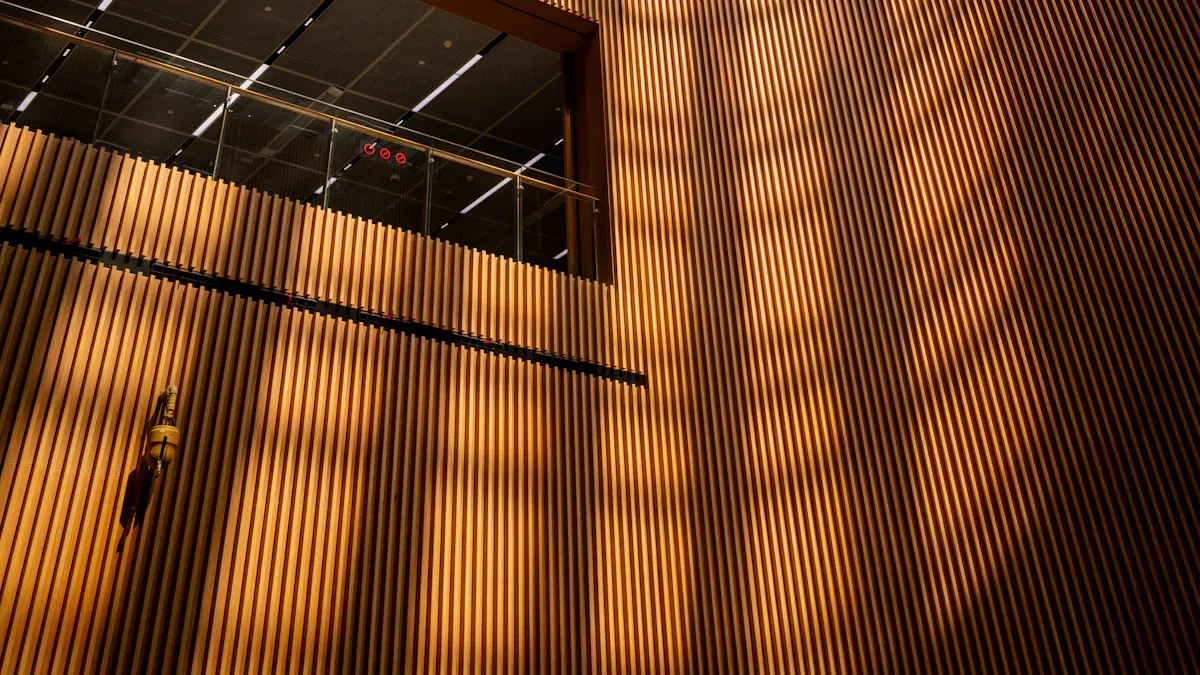
Letting in more natural light makes your hallway feel bigger and brighter. You can use easy design ideas to bring in light from other rooms. This makes your hallway look friendly and open. If you use more natural light, you do not need as many lights during the day. It also makes the space feel happy.
Mirrors and glass doors help spread sunlight in narrow hallways. When you add mirrors, they bounce sunlight deeper into the hallway. Big mirrors on the wall or mirrored doors make the space look much brighter. Glass doors and glass walls let sunlight move between rooms. This connects rooms and makes the hallway seem larger.
Glass doors let sunlight go from one room to another.
Mirrors bounce and spread sunlight, making small spaces brighter.
If you put mirrors in the right spot, you can see more and enjoy outside views.
To make your hallway brighter, put mirrors across from windows or near doors. This helps you use all the sunlight you can get.
Tip: Large mirrors can make your hallway twice as bright.
Open sightlines let sunlight move easily through your hallway. If you line up windows and doors, sunlight can travel down the hallway without anything in the way. This makes the space brighter and means you do not need extra lights. You can see farther, so the hallway feels bigger and less crowded.
Big furniture can block sunlight and make shadows. If you take out large items, sunlight can reach every part of the hallway. Pick small or open shelves if you need storage. This keeps the walkway clear and lets sunlight fill the space. A hallway with less stuff always looks brighter and more welcoming.
If you use mirrors, glass doors, and smart design, you can turn a dark hallway into a bright and sunny place.
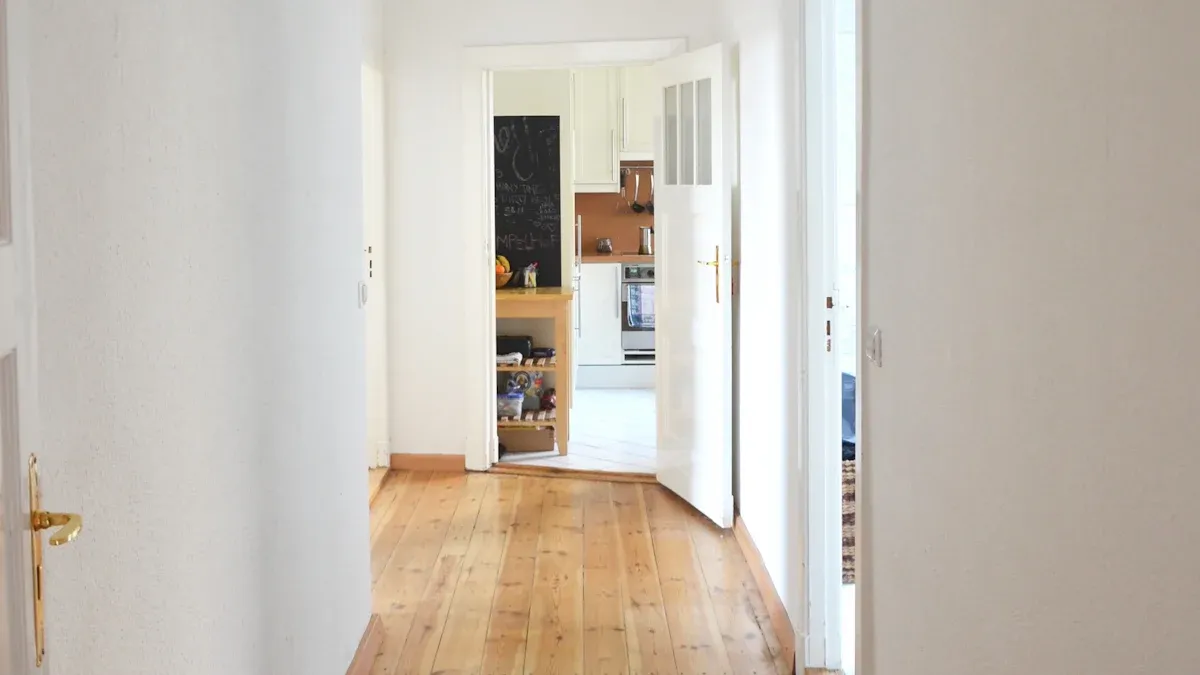
You can make a dark hallway brighter by picking light colors. Use smart choices for walls, ceilings, and floors. These tricks help your hallway feel open and happy. Good lighting and color show off the shape of your corridor.
Pick wall paints with a light reflectance value above 50. These colors reflect more light than they soak up. Your hallway gets brighter and feels bigger. Pale white, cream, or soft gray work well. Put these colors on walls and ceilings for more brightness. Glossy paint and trim help too. They bounce light around and add shine.
Tip: Light colors with high LRV make your hallway look brighter and more welcoming.
Shiny surfaces make your hallway brighter without extra lights. Use glossy tiles, glass, or shiny metal on floors or walls. These materials reflect sunlight and led lighting. They spread brightness everywhere. Put shiny surfaces where they catch sunlight or led lights. This saves energy and makes your hallway glow.
Shiny surfaces make your hallway feel open and bright.
Glossy floors and walls make your hallway brighter.
Shiny decorations and high-gloss paint reflect light and add brightness.
Shiny floors and ceilings push brightness deeper into your hallway.
Wall art and sconces add light and style. Pick art with light colors and shiny frames. These reflect light and make your hallway brighter. Use led sconces or picture lights to light up art and add brightness. Textured sconce lighting, pendant lighting, and flush mount lighting make your hallway interesting. Sconces at eye level give even light and help you see better.
Note: Wall washers and picture lights can make your hallway brighter and show off your favorite art.
You can make a dark hallway bright with color, shiny surfaces, and smart lighting. These easy changes make your hallway safe, stylish, and full of light.
Picking the right lighting fixtures and bulbs is important. It helps make your hallway bright and safe. Think about your hallway’s shape and size before you choose.

Linear LED fixtures are best for long, narrow corridors. These lights turn on fast and shine evenly. They do not flicker when the power changes. You can put them in a row along the hallway. This keeps the whole space bright with no dark spots. Regular bulbs can leave some areas in shadow. Linear LEDs keep the light steady everywhere.

Wide or open corridors need lights that spread out. Use ceiling panels or big flush mounts for these spaces. Put these lights about 6 to 8 feet apart. This helps keep the brightness even in the hallway.

If your ceiling is low, use slim or recessed lights. These lights do not hang down. Your hallway will feel open and not crowded. Recessed lights also help stop glare.

For high ceilings, use pendant lights or bright fixtures. These lights make sure the floor and walls are bright. The whole corridor will feel well-lit.

Track lighting or adjustable lights help in tricky spots. You can point these lights at dark corners or curves. Every part of your hallway stays bright. Track lighting also lets you show off special features or art.
Wall washers and directional sconces are good for art. They shine light from the ceiling to the floor. This makes the corridor look bigger and shows off art details.
| Benefit | Description |
|---|---|
| Uniform Illumination | Brightness from top to bottom, easier to see |
| Bright Spatial Impression | Makes the hallway feel bigger and more welcoming |
| Highlighting Artwork | Shows off textures and details |
| Eliminating Shadows | Cuts down on dark corners, makes the hallway look better |
In homes, warm white light (2700K–3000K) feels cozy. Warm light makes colors look nice and helps you relax.
For public or work hallways, use cool white light (4000K–5000K). This light keeps people alert and stops eye strain. It also makes the space look clean and bright.
Tip: Pick the right color temperature and fixture for your hallway. This helps everyone feel safe and comfortable.

Smart lighting controls give you more ways to manage light in your hallway or corridor. These systems help you save energy, boost safety, and make your space more comfortable. You can use motion sensors, timers, and smart home features to get the best results.
Motion sensors turn on the lighting when someone enters the hallway. You do not need to touch a switch. The light comes on by itself and turns off when no one is there. This keeps the corridor bright only when you need it. You save energy and money because the lighting does not stay on all the time.
Datacenters have saved 30-50% on lighting costs by using motion sensors.
A datacenter in Singapore cut energy use by about 40% with motion-sensor LEDs.
A DHL hub lowered lighting energy costs by 30% after adding occupancy controls.
You can use motion sensors in homes, schools, or offices. These sensors make sure the light covers every part of the hallway. You do not have to worry about dark spots or wasted energy.
Tip: Motion sensors help you keep the lighting bright and safe without extra effort.
Timers and automation let you set when the lighting turns on and off. You can program the light to match your daily routine. This makes your hallway safer and more convenient.
Timers shut off lighting by themselves, which lowers the risk of overheating.
Timed lighting makes it look like someone is home, which can scare off intruders.
Automatic lighting control stops accidents from lights left on too long.
You do not have to remember to turn off the light. The system does it for you. This keeps your corridor safe and saves energy.
Smart home systems let you control the lighting from your phone or voice assistant. You can change the light level, color, or schedule with a tap or a voice command. This gives you full control over your hallway or corridor.
Follow these steps for the best smart lighting setup:
Learn how people use the space. Different places need different lighting controls.
Set energy goals and check local rules for lighting.
Think about who will manage the system. Pick controls that match their skills.
Make sure the lighting stays on during emergencies.
Balance safety and cost. Night-lighting can help with security.
Smart home integration helps you keep the lighting flexible and easy to use. You can adjust the light for any need, from bright hallway lighting during the day to soft corridor lighting at night.
Note: Smart lighting controls make your home safer, more efficient, and more comfortable.
Q1: How can you make a dark corridor safer at night?
You can use motion-sensor night lights. These lights turn on when you walk by. They help you see where you are going and lower the risk of falls. You do not need to search for a switch in the dark. Motion-sensor lights work well for children, older adults, and anyone who gets up at night.
Tip: Place motion-sensor lights near bedroom doors and along the hallway for the best coverage.
Q2: What is the best way to keep a hallway bright all the time?
You should install LED guide strips along the baseboards. These strips create a clear path and give off steady light. LED strips use little energy and last a long time. You can use them in hallways, entryways, or even on stairs.
Q3: How do smart lighting systems help in corridors?
Smart lighting systems turn lights on and off automatically. You can set schedules or use sensors. This means your hallway stays bright when you need it and saves energy when you do not. You can control smart lights with your phone or voice.
Q4: Why do you need to replace dim or flickering bulbs?
Dim or flickering bulbs make it hard to see. They can cause eye strain and even lead to accidents. You should check your bulbs often and replace them if they do not work well. Bright, steady light keeps your hallway safe and comfortable.
Q5: Can you use both natural and artificial light in a corridor?
Yes, you can. Use windows, glass doors, or skylights for natural light during the day. At night or on cloudy days, use your layered lighting plan. This gives you the best brightness at all times.
Note: A mix of lighting types gives you the most control and comfort in your hallway.
You can change your hallway by using smart lighting ideas. Use different kinds of lighting and let in more sunlight. Pick light colors and shiny materials to help reflect light. Choose lights that match your style and add smart controls for easy use. Making your hallway brighter helps keep people safe and comfortable. Bright hallways also make your home worth more and make people happier.
| Safety & Comfort Benefit | Statistic/Fact |
|---|---|
| Pedestrian Safety | 9% of people hit in parking lots are from cars backing up. |
| Crime Reduction | Dark parking areas have 30% more crime than bright ones. |
| Accident Reduction | Good lighting can lower car crashes in garages by 25%. |
Lighting in all hallways and corridors makes them safer, nicer, and better looking. Try these tips now and see how lighting can improve your hallway.


