Author: Site Editor Publish Time: 08-07-2026 Origin: Site


Workspace lighting is often treated as a background utility, yet clinical and occupational data reveal it as a significant driver of human performance. Studies indicate that a vast majority of occupants are actively dissatisfied with their workplace lighting quality. Poor illumination acts as a hidden operational cost, directly correlating with reduced employee satisfaction, degraded mood, and compromised working efficiency. Legacy office lighting, specifically fluorescent troffers, represents both a psychological and physiological liability. These outdated fixtures cause measurable productivity drains, including severe eye strain, tension headaches, circadian disruption, and increased error rates. Recognizing this impact shifts the focus toward modern, scientifically-backed lighting infrastructure. Upgrading to a Flat Panel Light has become the industry-standard solution for optimizing human performance and facility efficiency, directly addressing the visual environment's role in daily output.
Biological Impact: Lighting color temperature and intensity directly dictate employee alertness, mood, and cognitive function throughout the workday.
Mental Well-Being: Poor, flickering office illumination is clinically linked to psychological fatigue, mood drops, and seasonal depression; high-quality light mimics natural patterns to support employee mental health.
The Technical Solution: Upgrading to a flat panel light resolves the primary productivity killers of legacy lighting: visible flicker, harsh glare, and uneven light distribution.
Evaluation Criteria: Selecting the right lighting requires balancing Unified Glare Rating (UGR), Color Rendering Index (CRI), tunable color temperatures, and structural compatibility with existing ceiling grids.
ROI and Implementation: While initial capital expenditure is required, the transition yields measurable returns through reduced energy consumption, lowered maintenance costs, and mitigated employee fatigue.
Improper lighting prevents efficient work completion. Ergonomic and occupational health data consistently link inadequate visual environments to severe visual fatigue. When employees struggle to see clearly or are subjected to harsh glare, their cognitive load increases. This constant strain forces the eyes to work harder, leading to rapid fatigue and a direct drop in daily productivity. Facility managers often overlook the fact that visual discomfort translates directly into physical exhaustion. A worker squinting through eight hours of spreadsheet analysis under degrading fluorescent tubes is burning unnecessary energy just to process visual information. This baseline problem is not merely a matter of preference; it is a measurable ergonomic failure that degrades the operational capacity of the workforce.
The mechanics of visual fatigue are straightforward. The human eye constantly adjusts to the brightest light source in its field of vision. When a workspace features uneven lighting, with bright spots directly above and dark shadows across the desk surface, the pupillary sphincter muscle is forced into a continuous cycle of dilation and constriction. This muscular overwork manifests as a dull ache behind the eyes, blurred vision by mid-afternoon, and a sharp decline in reading comprehension and data entry accuracy. Addressing this requires a fundamental shift in how we illuminate commercial spaces.
Light color temperature heavily influences the human circadian rhythm. Blue-enriched, cooler light in the 4000K to 5000K range is necessary for high-acuity tasks and morning alertness. This spectrum suppresses melatonin production, keeping employees focused. Conversely, warmer tones between 2700K and 3000K are ideal for collaborative areas or break spaces. Warmer light reduces cognitive load, allowing staff to decompress effectively during downtime.
To understand the application of color temperature in a commercial setting, consider the biological response to natural sunlight. Morning sunlight contains a high concentration of blue wavelengths, signaling the brain to wake up and initiate cortisol production. Traditional office lighting often fails to replicate this dynamic shift. By installing fixtures that provide the correct color temperature for the specific function of a room, facility operators can actively support the biological needs of the occupants.
Color Temperature (Kelvin) | Light Appearance | Biological Effect | Ideal Workspace Application |
|---|---|---|---|
2700K - 3000K | Warm White / Yellowish | Promotes relaxation, melatonin release | Break rooms, lounge areas, cafeterias |
3500K - 4000K | Neutral White | Balances comfort and alertness | General open-plan offices, conference rooms |
4000K - 5000K | Cool White / Daylight | Suppresses melatonin, sharpens focus | Drafting rooms, laboratories, high-acuity task areas |
Poor lighting conditions degrade employee mood and elevate stress levels. Harsh, clinical illumination can make a workspace feel sterile and uncomfortable, leading to psychological fatigue. Furthermore, inadequate light exposure is closely linked to Seasonal Affective Disorder (SAD) and depressive symptoms, particularly in windowless workspaces. Providing light that mimics natural daylight patterns is crucial for supporting employee mental health and maintaining a positive workplace atmosphere.
The psychological impact extends to how employees perceive their environment and their employer. A dimly lit, flickering office communicates neglect. It creates a gloomy atmosphere that dampens enthusiasm and collaboration. In contrast, a brightly and evenly lit space feels expansive, clean, and professional. The psychological lift provided by high-quality illumination is a subtle but powerful tool for maintaining high morale, especially during the darker winter months when employees may commute to and from work in the dark.
The physiological chain reaction caused by legacy lighting is severe. Fluorescent flicker and harsh glare directly cause eye strain and tension migraines. These physical ailments lead to increased absenteeism, higher error rates, and subsequent drops in daily output. Over time, the chronic discomfort associated with poor lighting can even negatively impact employee retention, as workers seek healthier environments.
Consider the mechanics of fluorescent flicker. Older magnetic ballasts operate at a frequency that produces a visible, rapid oscillation in light output. Even if the flicker is not consciously perceived by every individual, the neurological system detects it. The brain works overtime to process this unstable visual input, leading to neurological fatigue and tension headaches. Upgrading the lighting infrastructure eliminates this invisible stressor, resulting in a healthier, more comfortable workforce capable of sustained concentration.
Measuring and specifying low-glare fixtures is critical to prevent screen reflection and visual discomfort. A Unified Glare Rating (UGR) of less than 19 is the standard requirement for office environments. Low UGR fixtures ensure that light is directed efficiently without causing disabling or discomforting glare on computer monitors, thereby protecting visual acuity.
Glare occurs when a light source is significantly brighter than the surrounding environment, causing the eye to struggle with the contrast. In an office setting, this usually happens when ceiling fixtures reflect off glossy monitor screens or when the light source itself is too intense and directly in the field of view. Achieving a UGR of less than 19 requires fixtures designed with specialized diffusers or micro-prismatic lenses that scatter the light evenly, softening the output while maintaining adequate foot-candles on the work surface.
A high Color Rendering Index (CRI) replicates the natural color spectrum. A CRI greater than 80 is standard, though greater than 90 is ideal for tasks requiring precise color differentiation. High CRI lighting reduces visual strain and mimics natural light, which helps boost employee energy levels and improves the overall visual comfort of the workspace.
CRI measures how accurately a light source reveals the true colors of objects compared to a natural light source. Under low CRI lighting, colors appear washed out, dull, or unnatural. This might seem trivial for basic data entry, but it creates a subconscious sense of visual dissonance. For tasks involving graphic design, marketing materials, or product inspection, high CRI is absolutely non-negotiable. By specifying fixtures with a CRI of 90 or above, facility managers ensure that the indoor environment feels vibrant and natural.
Eliminating "hot spots" and shadows is essential in open-plan offices. Uniform light distribution maintains consistent visual acuity across the entire floor plate. When light is evenly spread, employees do not have to constantly adjust their vision as they look around the room, reducing eye fatigue and maintaining focus.
Achieving uniform distribution requires careful photometric planning. It is not enough to simply install bright fixtures; the spacing, mounting height, and beam angle must be calculated to ensure overlapping pools of light. This eliminates the "cave effect" where the upper walls and ceilings remain dark while the desks are brightly lit. A well-designed layout using a Flat Panel Light system pushes light outward, illuminating vertical surfaces and creating a sense of spaciousness.
Lighting choices significantly impact facility compliance with occupational standards. Upgrading fixtures helps meet OSHA requirements for workplace safety and illumination. Furthermore, high-quality lighting is a critical component for achieving wellness certifications such as the WELL Building Standard and LEED, demonstrating a commitment to employee health and environmental sustainability.
To systematically evaluate your current lighting and define success criteria for an upgrade, follow these practical steps:
Conduct a Foot-Candle Audit: Use a calibrated light meter to measure the illuminance at desk height across various zones in the office. Compare these readings against IES (Illuminating Engineering Society) recommendations.
Assess Glare and Reflections: Walk the floor during peak working hours and observe monitor screens from different angles to identify problematic reflections from existing fixtures.
Survey Employee Satisfaction: Distribute a brief, anonymous questionnaire asking staff about eye strain, headache frequency, and their general perception of the office lighting.
Review Existing Infrastructure: Document the ceiling grid type, plenum depth, and current wiring configurations to determine structural compatibility for new fixtures.
Define Technical Specifications: Based on the audit, establish strict minimums for the new fixtures, such as UGR < 19, CRI > 80, and specific lumen outputs.
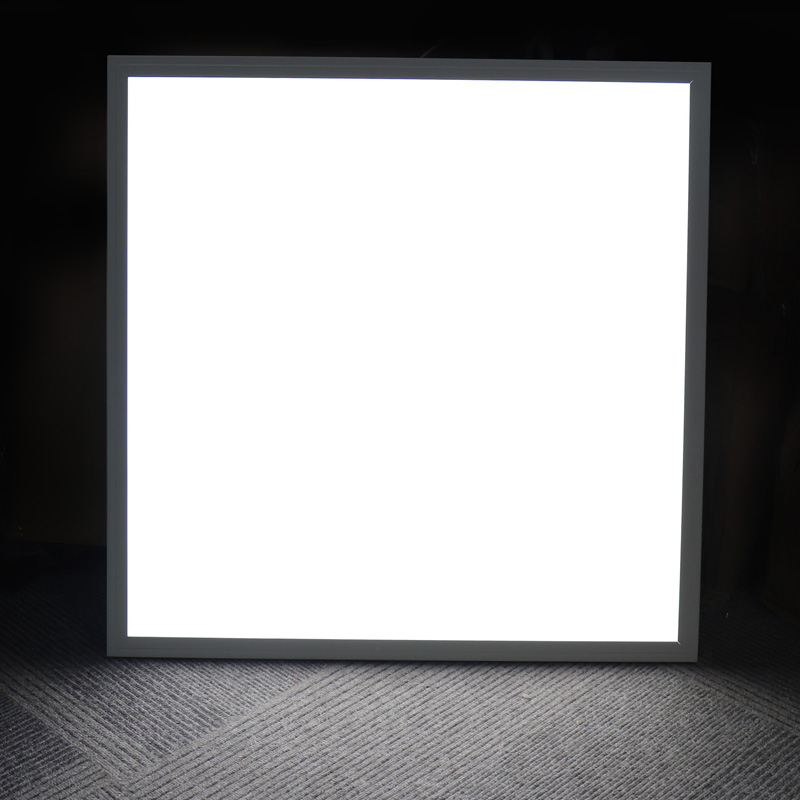
LED flat panels offer distinct architectural and functional advantages over traditional lensed troffers in commercial environments. They provide a clean, modern aesthetic while delivering superior light quality. The even illumination and reduced glare make a Flat Panel Light the most pragmatic choice for upgrading office infrastructure.
The shift away from fluorescent troffers is driven by the fundamental design of the flat panel. Traditional troffers rely on a parabolic reflector or a prismatic lens to push light from a central tube downward. This inherently creates a bright center and darker edges. A flat panel, however, utilizes a large, flat luminous surface. This design distributes the light emission over a much wider area, drastically reducing the surface brightness of the fixture itself while maintaining high overall lumen output. The result is a soft, volumetric light that fills the space without causing visual discomfort.
Understanding the differences between edge-lit and back-lit panels is necessary for proper specification. Each design has specific structural and performance characteristics that dictate its best application.
Feature | Edge-Lit Flat Panel | Back-Lit Flat Panel |
|---|---|---|
Diode Placement | Along the perimeter of the frame | Directly behind the diffusion lens |
Profile Thickness | Ultra-thin (often under 1 inch) | Deeper profile (typically 1.5 to 3 inches) |
Light Distribution | Highly diffused, very soft, excellent uniformity | Direct output, requires high-quality lens to avoid hot spots |
Energy Efficiency | Slightly lower efficacy due to light bouncing through a guide plate | Higher efficacy (more lumens per watt) due to direct emission |
Best Application | Shallow plenums, areas requiring premium aesthetics and lowest glare | Standard drop ceilings, projects prioritizing maximum energy savings |
High-quality LED drivers in flat panel lights provide continuous, flicker-free illumination. This directly mitigates the headache risks and fatigue associated with the magnetic ballast flicker of older fluorescent tubes. Stable light output is non-negotiable for maintaining visual comfort over an eight-hour shift.
The driver is the engine of the LED fixture. It converts alternating current (AC) from the building's mains into the direct current (DC) required by the diodes. Inferior drivers allow ripples in the current to pass through, resulting in high-frequency flicker. While this flicker might not be visible to the naked eye, it can cause stroboscopic effects on moving machinery and trigger neurological strain. Specifying fixtures with premium, low-ripple drivers ensures a smooth, continuous stream of light, completely eliminating this hidden productivity killer.
Integrating 0-10V dimming and selectable CCT (Correlated Color Temperature) allows localized control over task lighting. This technology gives users the power to customize their workspace illumination based on the time of day or specific tasks, further enhancing comfort and productivity.
Tunable white technology represents a major leap forward in workspace ergonomics. Instead of a static color temperature, these fixtures allow facility managers or individual users to adjust the light from warm to cool. In a practical application, an office might run at a crisp 4000K during the morning to promote alertness, and gradually shift to a warmer 3000K in the late afternoon to align with the body's natural circadian wind-down. Combined with 0-10V dimming, this level of control ensures that the lighting environment is always optimized for the specific needs of the occupants at any given moment.
Calculating the payback period of a lighting upgrade involves assessing wattage reduction and maintenance savings. LED panels often yield a 50% or greater reduction in energy consumption. Additionally, eliminating ballast and tube replacement maintenance significantly lowers long-term operational expenses, offsetting the initial capital expenditure.
The operational savings extend far beyond the utility bill. Traditional fluorescent systems require constant maintenance. Facility teams spend countless hours dragging ladders across office floors to replace burnt-out tubes and failing ballasts. This not only consumes labor hours but also disrupts the employees working below. A modern Flat Panel Light boasts a lifespan exceeding 50,000 hours. Once installed, they require virtually zero maintenance for a decade or more. This massive reduction in maintenance labor allows facility teams to redirect their focus to more critical building operations.
The financial impact of improved visual ergonomics extends beyond energy savings. Reducing absenteeism, decreasing error rates, and increasing task accuracy directly improve the bottom line. When employees are comfortable and free from visual strain, their overall output and efficiency increase measurably.
Consider the cost of a single employee calling in sick due to a severe tension migraine triggered by flickering lights. Now multiply that across a workforce of hundreds over the course of a year. The lost productivity dwarfs the energy savings of the lighting upgrade. By providing a visually comfortable environment, companies reduce these hidden losses. Furthermore, tasks requiring high attention to detail, such as accounting or quality control, see a reduction in error rates when the lighting provides high CRI and uniform distribution. The return on investment is realized not just in the electrical room, but on the balance sheet through sustained human performance.
Many facilities qualify for local energy rebates when installing DLC (DesignLights Consortium) listed flat panels. These utility incentives can substantially offset the initial costs of the upgrade, making the transition to modern lighting highly cost-effective.
Utility companies actively encourage the adoption of energy-efficient technologies to reduce the strain on the electrical grid. By specifying fixtures that carry the DLC Premium classification, facility managers can tap into prescriptive or custom rebate programs. These rebates often cover a significant percentage of the hardware costs. Navigating the rebate process requires careful documentation of the existing wattage, the proposed replacement wattage, and the operating hours of the facility, but the financial offset makes the effort highly worthwhile.
Compatibility checks are required for T-bar grid systems before installation. You must verify sizing requirements, typically standard 2x2 or 2x4 dimensions. You must also assess plenum space constraints to specify the correct panel depth, especially when choosing between edge-lit and back-lit options.
The physical installation of new fixtures into an existing ceiling grid presents specific challenges. Older buildings may have sagging T-bars or non-standard grid dimensions. Before ordering hundreds of fixtures, a physical survey of the ceiling infrastructure is mandatory. If the plenum space above the ceiling tiles is congested with HVAC ductwork, plumbing, or cable trays, a deep back-lit panel might not fit. In these scenarios, the ultra-thin profile of an edge-lit panel becomes a structural necessity rather than an aesthetic choice.
Phased installation strategies prevent workflow interruption in occupied office spaces. Scheduling retrofits during off-hours or sectioning off specific zones ensures that daily operations continue smoothly without significant downtime.
To execute a seamless upgrade in an occupied building, follow a structured installation plan:
Establish a Phasing Schedule: Divide the floor plan into manageable zones. Schedule the electrical contractors to work on one zone at a time, preferably during evenings or weekends.
Protect the Workspace: Require contractors to use drop cloths over desks and equipment to prevent dust and debris from the ceiling grid from contaminating the work area.
Pre-Assemble Components: Have the installation team pre-wire the quick-connect whips and attach the seismic earthquake clips to the fixtures before bringing them onto the office floor to speed up the installation process.
Conduct Immediate Testing: As each zone is completed, power on the fixtures and test the dimming circuits to ensure everything is functioning correctly before the employees return the next morning.
Incompatible dimmers, motion sensors, or daylight harvesting systems pose significant risks. It is necessary to verify driver compatibility before procurement to ensure seamless integration with existing or planned smart building controls.
Modern lighting systems rarely operate on simple toggle switches. They are integrated into complex networks of occupancy sensors and daylight harvesting photocells. If the LED driver in the new flat panel is not compatible with the existing 0-10V dimming protocol, the lights may flicker, drop out at low dimming levels, or fail to turn on entirely. Facility managers must cross-reference the driver specifications with the control system manufacturer's compatibility charts. Running a mock-up test with a single fixture and the existing sensors is the most effective way to mitigate this risk before committing to a full-scale rollout.
Conduct a localized lighting audit using a calibrated light meter to measure current foot-candles and identify areas with severe glare or inadequate illumination.
Run a pilot test by installing a small batch of flat panel fixtures in a high-complaint department to gather direct employee feedback on visual comfort.
Verify the structural compatibility of your existing T-bar grid and measure the available plenum depth to determine if edge-lit or back-lit panels are required.
Consult with a commercial lighting specialist to ensure the selected fixtures meet DLC requirements for utility rebates and integrate seamlessly with your existing smart controls.
A: The 4000K to 5000K range is best for focus and high-acuity tasks, as it mimics daylight and promotes alertness. Tunable fixtures offer the benefit of adjusting this temperature throughout the day to align with natural circadian rhythms.
A: Yes. High CRI and daylight-mimicking color temperatures support the human circadian rhythm. This biological alignment can elevate workplace morale and help mitigate symptoms of seasonal mood changes in environments lacking natural sunlight.
A: LED drivers provide continuous, non-oscillating light output, completely eliminating the magnetic ballast flicker of fluorescents. Additionally, the frosted diffusion lenses distribute light evenly, reducing harsh glare and preventing hot spots on work surfaces.
A: Edge-lit panels have diodes on the perimeter, offering a thinner profile and softer, highly diffused light. Back-lit panels have diodes directly behind the lens, providing higher energy efficiency but requiring a deeper housing to prevent hot spots.
A: The IES recommends specific foot-candle levels for offices, which typically translates to 3000 to 4000 lumens per fixture for standard ceiling heights. This ensures adequate, uniform illumination for detailed desk tasks without causing glare.
A: Yes, they are specifically designed to be compatible with standard 15/16-inch and 9/16-inch T-grid ceilings. They are manufactured to fit seamlessly into standard 2x2 or 2x4 architectural dimensions.
A: They require virtually no maintenance. They boast a lifespan exceeding 50,000 hours and completely eliminate the need for routine tube replacements and ballast troubleshooting associated with legacy fluorescent systems.