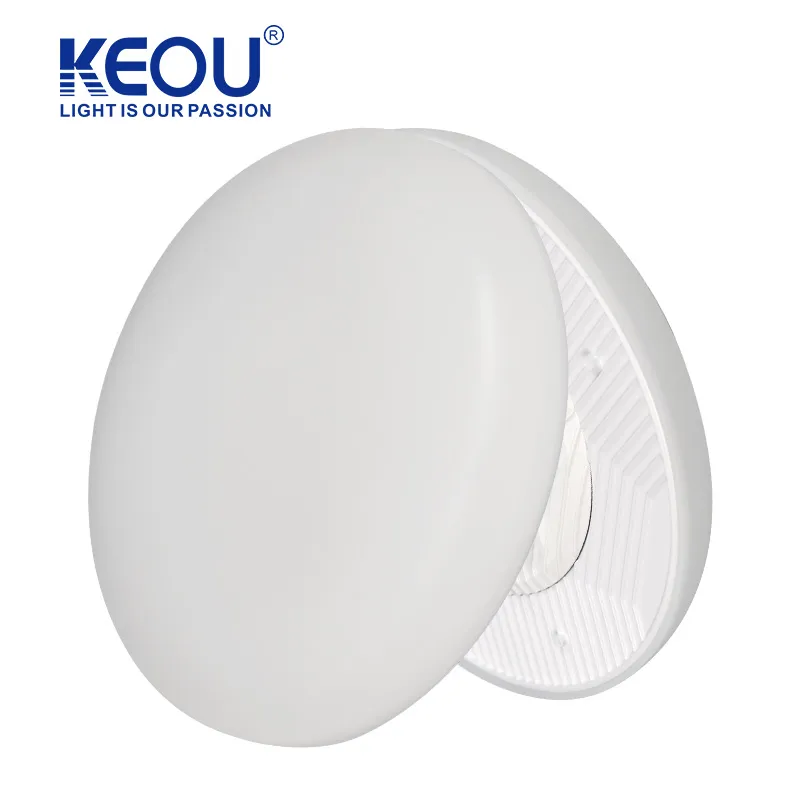
Backplate material is one of the few LED panel light decisions that locks in cost, weight and thermal headroom for the whole product life, so it deserves more than a datasheet glance. The real choice sits among four candidates: die-cast aluminium, extruded aluminium, stamped steel and thermally conductive plastic. None of them wins outright. Each trades bulk thermal conductivity against tooling cost, part consolidation, freight weight and process limits, and the right answer shifts with wattage, housing geometry and annual volume. This comparison sets out those trade-offs criterion by criterion, with the figures a procurement team needs to run its own break-even rather than accept a supplier’s default.
Thermal Conductivity: What the W/m·K Numbers Actually Tell You
Bulk thermal conductivity ranks the four candidates clearly, but it only decides the outcome when conduction through the backplate dominates the thermal path. Die-cast A380 sits at 96 W/m·K, extruded 6063 at 201–218 W/m·K, stamped steel at roughly 45–60 W/m·K, and filled thermoplastics in the 0.7–5.0 W/m·K band. Read the table below as a starting screen, not a verdict.
| Material | Bulk thermal conductivity (W/m·K) | Typical density (g/cm³) | Relative material cost | Geometry capability |
|---|---|---|---|---|
| Die-cast aluminium (A380) | 96 | ~2.7 | 1.0× (base) | Full 3D, integral fins |
| Extruded aluminium (6063) | 201–218 | ~2.7 | 0.9–1.1× | Constant cross-section only |
| Stamped steel | 45–60 | ~7.85 | 0.5–0.7× | 2.5D, no effective integral fins |
| Thermally conductive plastic | 0.7–5.0 | SG 1.45–1.8 | 0.3–0.6× | Full 3D, one-shot moulding |
The intuition that aluminium conducts far better than plastic — roughly twenty times at the low end of these ranges, up to two orders of magnitude at the high end — holds for the bulk number, but not for the finished luminaire. Heat must cross the LED die, the MCPCB, the thermal interface material and the backplate before convection carries it to room air, and the thinnest, worst-bonded layer in that chain usually sets the limit. On a large, well-ventilated panel where the wall is thin and the surface area generous, a lower-conductivity backplate can still meet the same temperature rise. Ask suppliers for through-plane conductivity measured on the actual wall thickness, not the headline in-plane figure.
Cost: Material Price Versus Total Landed Cost
Material price per kilogram is the weakest of the cost signals; tooling amortisation, part count, assembly labour and freight usually move the landed number more. The relative indices above put die-cast aluminium at 1.0×, extrusion at 0.9–1.1×, stamped steel at 0.5–0.7× and conductive plastic at 0.3–0.6×. Those ratios describe raw stock, not the price you pay per finished backplate.
Die-cast and injection moulds are fixed upfront costs, and they flip the decision at low annual volume: below the mould’s break-even quantity, machining or stamping an existing design can stay cheaper for years. Against that, a single moulded plastic part can absorb fins, bosses, snap-fits and a cable gland that a metal assembly would build from five or six components, removing fasteners, torque specs and assembly steps with them. Steel’s low stock price is partly cancelled by its density, roughly 2.9 times aluminium’s, which raises freight per unit. Treat the comparison as a break-even calculation on your own volume forecast and part count, not a rule of thumb tied to wattage alone.
Weight, Freight and Installation
Density decides freight and handling before any thermal argument starts. Aluminium runs about 2.7 g/cm³, steel about 7.85 g/cm³, and conductive plastic compounds sit at a specific gravity of 1.45–1.8, which cuts weight by more than 30% on the same part volume. A same-volume steel backplate is therefore close to three times the mass of an aluminium one, and that penalty compounds through container loading, per-unit freight, ceiling structure load and installer handling time on large panel runs. For project procurement, weight belongs in the landed-cost model alongside price, because a cheaper backplate that ships heavier rarely stays cheaper at the dock.
Manufacturability: Stamping, Extrusion, Die Casting and Moulding
Process capability decides which designs are feasible before cost or conductivity matter. Die-cast aluminium (A380 or ADC12) delivers full 3D geometry with integrated radial fins and tight tolerances around ±0.03–0.05 mm, but requires a mould. Extrusion (6063) gives the highest conductivity of the common options yet only constant cross-sections, which suits linear profiles and panel frames rather than radial fin arrays. Stamped steel is limited to 2.5D shapes and cannot form effective integral fins. Conductive plastic injection-moulds complex features in a single shot but carries low conductivity and a grade-dependent service temperature. A common practical pattern is the hybrid: an extruded body with die-cast end caps, using each process where it is strongest.
Corrosion, Durability and Operating Environment
Environment narrows the shortlist for humid, coastal and regularly cleaned installations. Aluminium forms a protective oxide and anodises well, with extruded profiles performing best and die-cast parts good once treated; A380’s copper and zinc content slightly reduces corrosion resistance compared with other alloys. Steel corrodes readily and needs coating. Conductive plastic is inherently corrosion-resistant but may degrade under UV outdoors, so confirm the grade for exposed applications. Salt-spray testing to ASTM B117 is the standard way to compare coated samples, and results should be read as relative corrosion resistance under an accelerated test, not as a guaranteed service life.
Why Backplate Material Alone Doesn’t Set Junction Temperature
A high-conductivity backplate cannot compensate for a poor thermal interface or insufficient surface area, which is the most common over-specification in panel procurement. Junction temperature is set by the whole resistance chain: LED die, MCPCB, thermal interface material, backplate, then convection to air. Each link adds resistance in series, and the largest term dominates. If the interface material is thick or poorly bonded, or the backplate has too little area and airflow to shed heat, upgrading the alloy changes little. Surface-area and convection limits can cap performance regardless of conductivity, so specify the interface and geometry before paying for a higher-grade alloy.
What to Specify and Test Before Ordering
Convert the comparison into a specification the supplier can be held to, then verify it on the finished luminaire rather than the datasheet alone.
- Alloy and temper: name the grade explicitly, for example A380 or 6063-T6, so substitutions are visible at incoming inspection.
- Measured conductivity: request through-plane values on the actual wall thickness, not a family range.
- Finish and salt-spray hours: state the coating and the ASTM B117 duration the sample must survive.
- Wall thickness and tolerance: fix both, since thin walls and loose tolerances erode the thermal path.
- Finished-luminaire thermal test: measure temperature rise at rated wattage on the assembled fixture, and confirm construction against the relevant luminaire safety standard, IEC 60598-1:2024.
Which Material for Which Application
Match the material to the fixture’s thermal load, geometry and volume rather than to a single preferred supplier. Die-cast aluminium suits complex 3D commercial and industrial housings and higher-wattage panels where radial fins and tight tolerances matter. Extruded aluminium fits linear fixtures and panel frames where a constant profile is enough and the highest conductivity is wanted. Stamped steel works for low-cost, low-wattage indoor fixtures where weight and thermal load are modest. Conductive plastic fits low-power, weight-sensitive or corrosion-prone designs where geometry freedom and part consolidation outweigh the conductivity gap. Each wins in some cases and loses in others, so the selection should follow the application, not the other way round.
Verdict
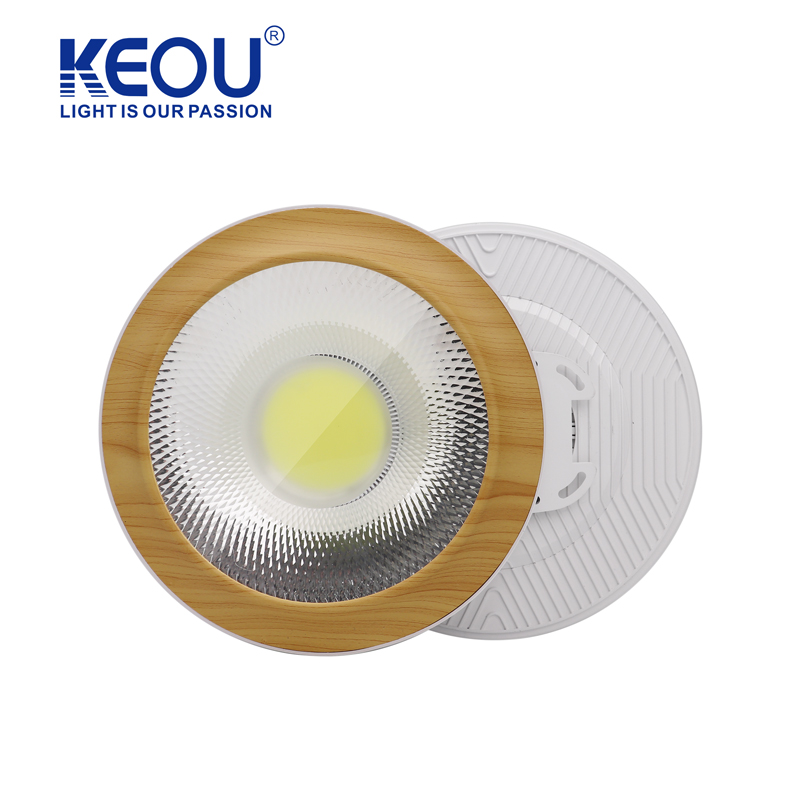
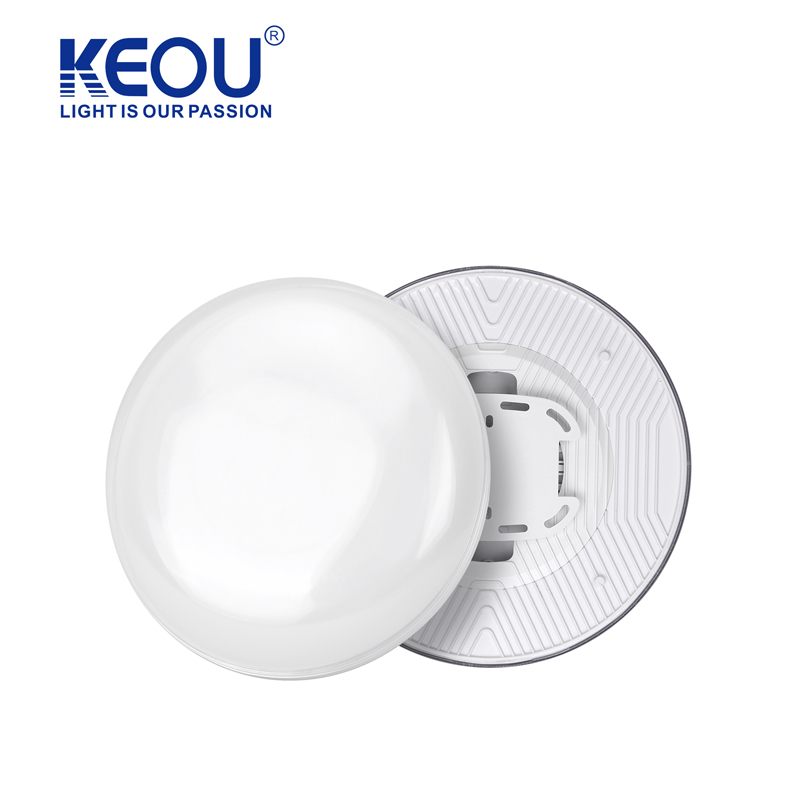
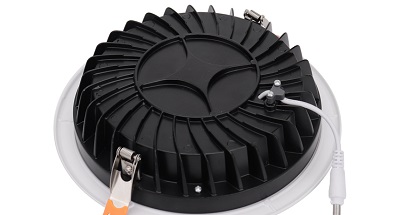
There is no universally best backplate material; the right choice is the one whose conductivity, cost, weight and process capability match the fixture’s wattage, geometry and annual volume. Apply the decision rule in order: thermal load and geometry first, then landed cost at volume, then environment. As one example of the die-cast route, KEOU Lighting builds downlight backplates in die-cast aluminium with integrated cooling grooves, which suits buyers sourcing complex 3D housings at volume.