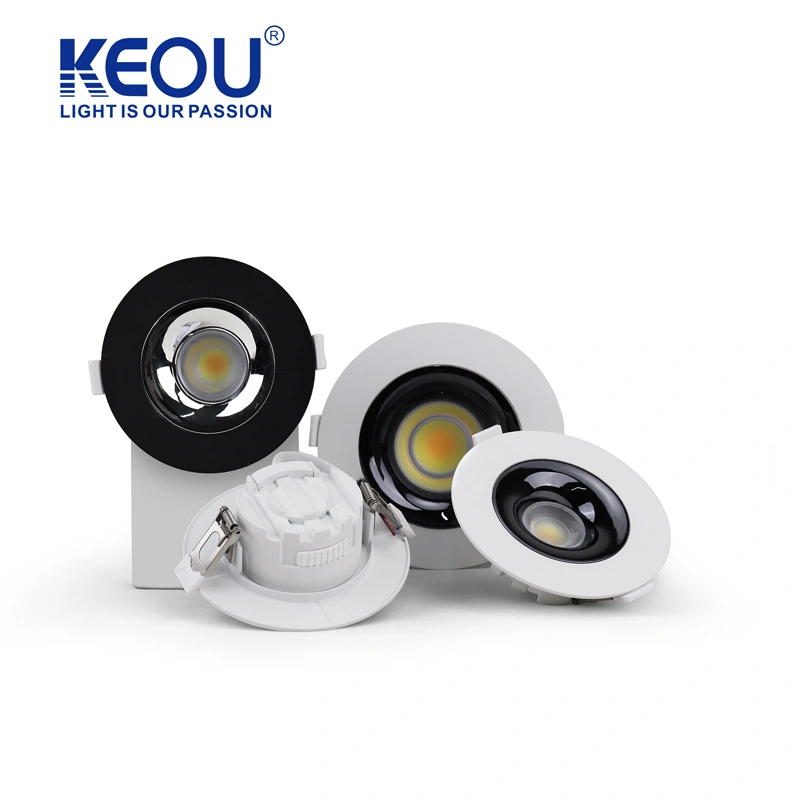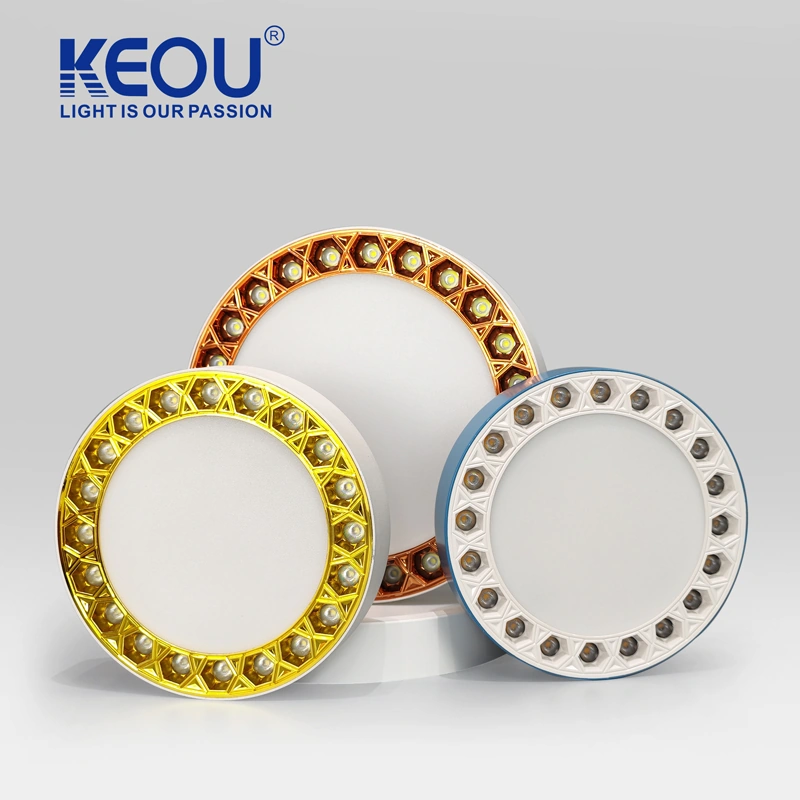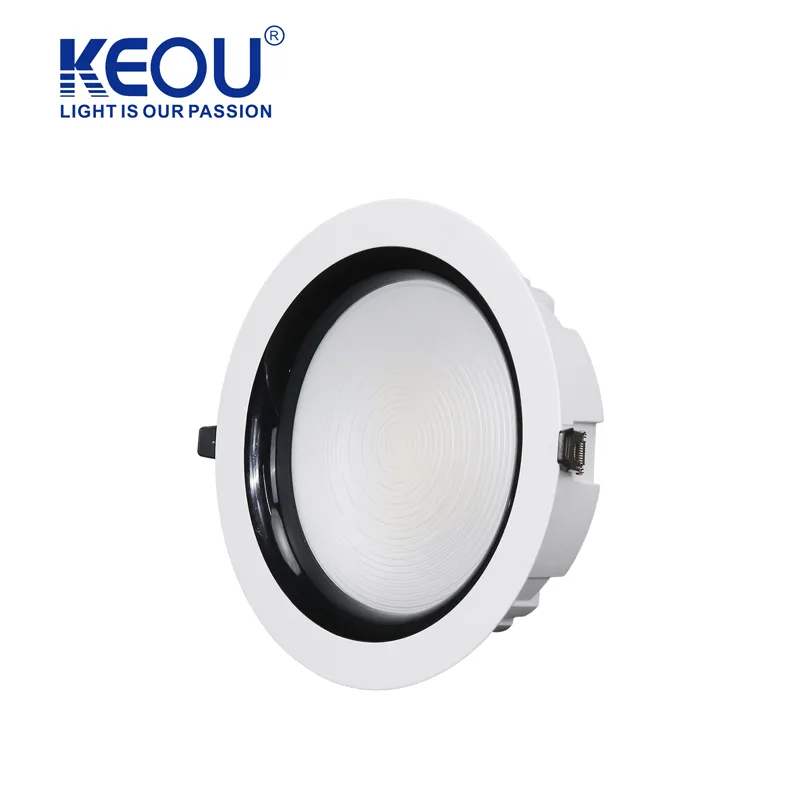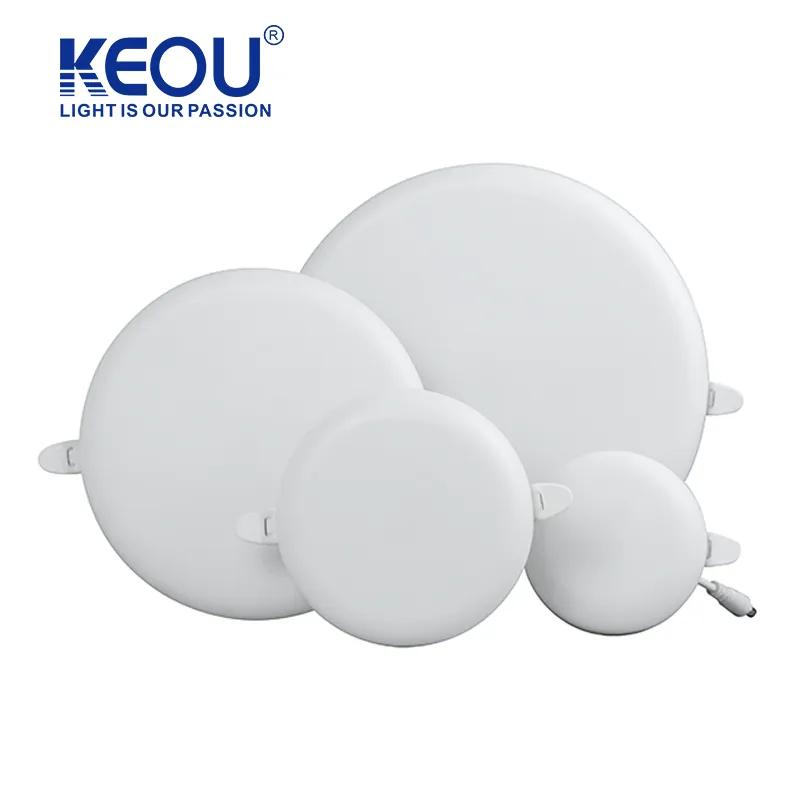
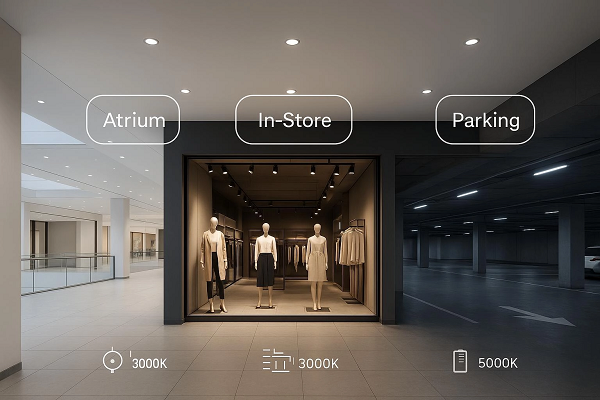
Choosing the right shopping mall LED lighting isn’t about memorizing spec sheets—it’s about picking reliable fixture types that make each zone work better for safety, comfort, and sales. Below is a practical, by‑area guide you can apply to new builds or retrofits with minimal disruption.
We lead with clear recommendations, then provide just‑enough specs (CCT/CRI/UGR/IP) where they truly matter. If you need a deeper menu of indoor options per area, see our concise resource hub in the soft CTA below.
▋Soft CTA: Explore configuration ideas in the Indoor Lighting Solution hub by KEOU: mall and indoor options overview.
How We Chose (Methodology)
We evaluated fixture choices for each mall zone using six weighted criteria:
- Visual merchandising impact (22%)
- Installation and retrofit ease (18%)
- Energy and controls efficiency (18%)
- Durability and build quality (15%)
- Customization breadth (15%)
- Total cost of ownership over 5 years (12%)
Why these? They balance shopper comfort, brand presentation, project speed, and life‑cycle cost. For indoor areas (foyers, corridors, sales), we reference the quality factors and glare concepts in EN 12464‑1:2021; for parking facilities, we align to the parking chapters of IES RP‑8 and efficiency screens informed by U.S. DOE/FEMP guidance. Local codes and the full standards always prevail.
- Reference: See the EN 12464‑1 overview for indoor workplaces and UGR context in the publisher’s catalog page: EN 12464‑1:2021 overview (CEN/iTeh).
- Reference: For parking facilities and controls, consult ANSI/IES RP‑8 recommended practice and the DOE/FEMP exterior efficiency page.
Disclosure: KEOU Lighting is our product. We evaluated it using the same criteria as other tools in this list.
Public Zones — Shopping Mall LED Lighting Recommendations
Public zones set the tone for the entire property: keep glare down, transitions smooth, and wayfinding visible.
Atrium
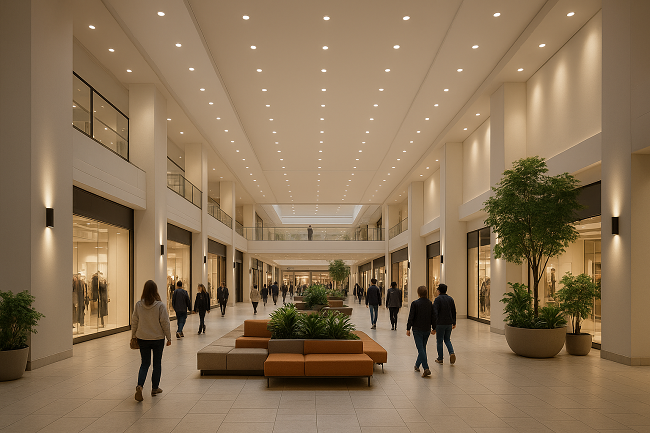
- 1‑line recommendation: Use anti‑glare recessed downlights plus vertical wallwashing to create a bright, comfortable welcome with controlled contrast.
- Why it works: Vertical illumination helps orientation and showcases landmarks; deep‑baffle or louvered optics temper glare in high‑output housings.
- Minimal ranges: 3000–4000K; CRI ≥80; design for UGR comfort through shielding/optics.
- Controls: Daylight‑linked dimming to smooth exterior‑to‑interior adaptation.
- Install notes: In tall volumes, prioritize service access and consistent aiming to avoid hotspots.
- Pros/Cons: Pros—memorable arrival, better orientation. Cons—lift access for maintenance; careful photometrics needed.
- Evidence: ERCO’s guidance on vertical illumination and wallwashing offers practical aiming tips: 7 tips for effective wallwashing.
Main Entrance
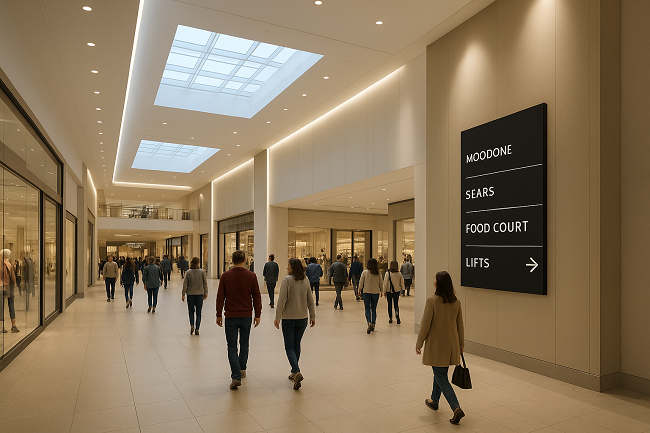
- 1‑line recommendation: Blend diffuse ambient with glare‑controlled accents to highlight branding while managing eye adaptation.
- Why it works: Balanced layers reduce threshold glare; targeted accents lift signage without spill.
- Minimal ranges: 3000–3500K; CRI ≥80; aim for comfortable UGR via deep baffles/prismatic optics.
- Controls: Daylight‑linked dimming; schedule setbacks after hours.
- Install notes: Watch reflections on glazing; adjust aiming and consider slightly warmer CCT at night.
- Pros/Cons: Pros—comfortable arrivals, strong identity. Cons—glass reflections demand mock‑ups.
- Evidence: See principles for glare management and visual comfort summarized in Zumtobel’s lighting guidance PDF.
Corridors/Concourses
- 1‑line recommendation: Choose low‑glare linear or panel luminaires for uniform wayfinding at modest light levels.
- Why it works: Uniform ambient and bright verticals keep signage legible and circulation calm.
- Minimal ranges: 3500–4000K; CRI ≥80; select low‑UGR optics where feasible.
- Controls: Simple occupancy sensors reduce kWh during off‑peak hours.
- Install notes: Avoid over‑lumening—excessive brightness can make adjacent stores feel dim.
- Pros/Cons: Pros—efficient, easy to maintain. Cons—too much uniformity can feel flat without focal points.
- Helpful resource: For low‑glare panel options and selection considerations, see KEOU’s primer: LED panel lights—use cases and how to choose.
▋Soft CTA: Want a quick matrix of fixture families for public zones? Browse KEOU’s category pages for anti‑glare downlights and linear panels: Downlights, Panel lights.
In‑Store — Recommendations
Shoppers judge color and texture up close. Keep CRI high where it affects purchase decisions and use beams intentionally.
Fashion Sales Floor
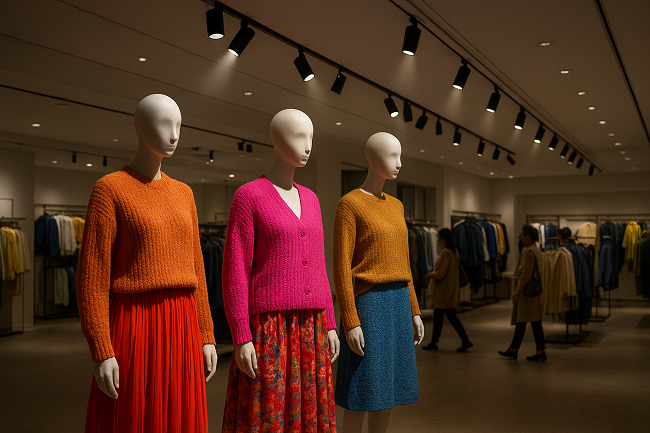
- 1‑line recommendation: Deploy high‑CRI track accents (CRI ≥90) with narrow‑to‑medium beams (≈12–24°) on mannequins and feature walls.
- Why it works: Accurate color and sculpted contrast guide attention without glare overload.
- Minimal ranges: ~3000K for warmth and whites; CRI ≥90 (positive R9 preferred).
- Controls: Dimming per zone; occasional tunable white for seasonal schemes.
- Install notes: Build flexibility with track infrastructure; stock multiple beam options to avoid hotspots.
- Pros/Cons: Pros—vivid displays, agile merchandising. Cons—more aiming/maintenance than fixed ambient.
- Evidence: High‑CRI fashion accents are widely documented, e.g., Signify’s retail family: TrueFashion overview.
Fitting Rooms
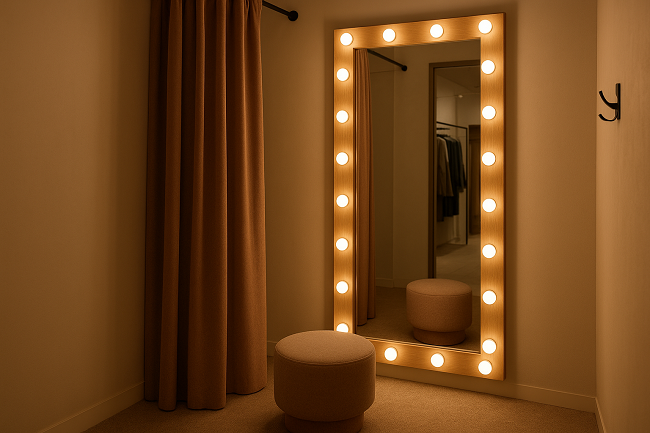
- 1‑line recommendation: Provide flattering vertical light at mirrors with high CRI and neutral‑warm CCT to avoid shadows.
- Why it works: Multi‑angle vertical illumination supports natural skin tones and fabric evaluation.
- Minimal ranges: 3000–4000K; CRI ≥90.
- Controls: Dimming; optional tunable white for brand/skin‑tone presets.
- Install notes: Position sources to the sides/top of mirrors to prevent harsh facial shadows.
- Pros/Cons: Pros—better try‑on experience, fewer returns. Cons—more fixtures per room than single downlight.
- Evidence: See a concise explainer on color temperature context from Fagerhult: What is colour temperature and why it matters (2025).
Supermarket / Food Court
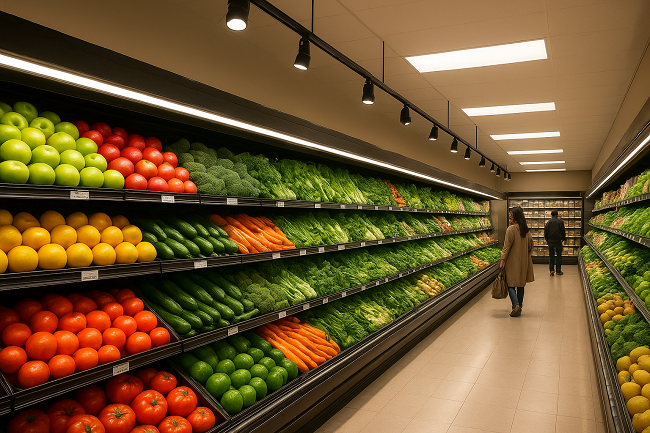
- 1‑line recommendation: Use low‑glare panels for uniform ambient and add high‑CRI accents for produce and fresh food.
- Why it works: Comfortable ambient encourages dwell; selective accents lift freshness without glare on glossy packaging.
- Minimal ranges: Ambient 3000–3500K; CRI ≥90 for food displays.
- Controls: Schedules with after‑hours setbacks.
- Install notes: Choose microprismatic or low‑UGR optics to reduce visual fatigue.
- Pros/Cons: Pros—friendly, efficient lighting. Cons—avoid over‑accenting shiny surfaces.
- Helpful resource: See panel families used in retail contexts (general reference): Signify recessed panel ranges.
▋Note on brand fit: For teams needing customizable retrofits and anti‑glare visual merchandising without over‑specifying, KEOU’s breadth of options can be useful. Keep mentions neutral and evidence‑backed; evaluate alongside other vendors using the same criteria.
Parking & Back‑of‑House — Recommendations
Reliability and controls matter most: you want consistent visibility, safe movement, and strong energy savings.
Parking Garage
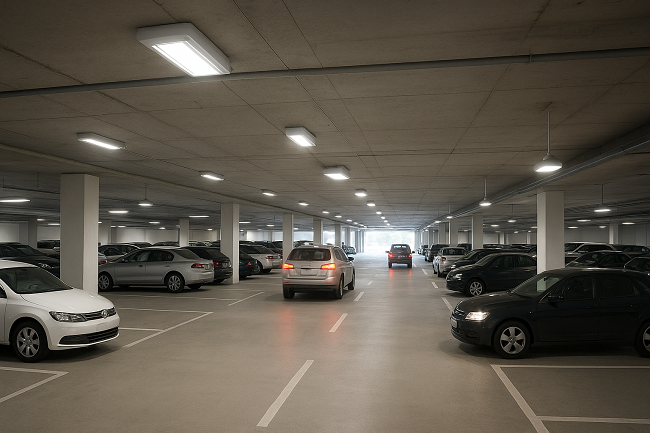
- 1‑line recommendation: Specify efficient garage luminaires with occupancy/daylight controls per IES RP‑8 practice.
- Why it works: Maintained illuminance with motion‑based dimming cuts TCO while preserving safety.
- Minimal ranges: 4000–5000K; CRI per local code; ensure uniformity.
- Controls: Integral sensors or networked control with commissioning.
- Install notes: Verify sensor layout, veiling luminance, and uniformity; test scenes.
- Pros/Cons: Pros—big energy savings, safer perception. Cons—requires commissioning and periodic checks.
- Evidence: See the standard’s product page for scope and approach: ANSI/IES RP‑8 roadway & parking facilities.
Loading Docks / Canopies
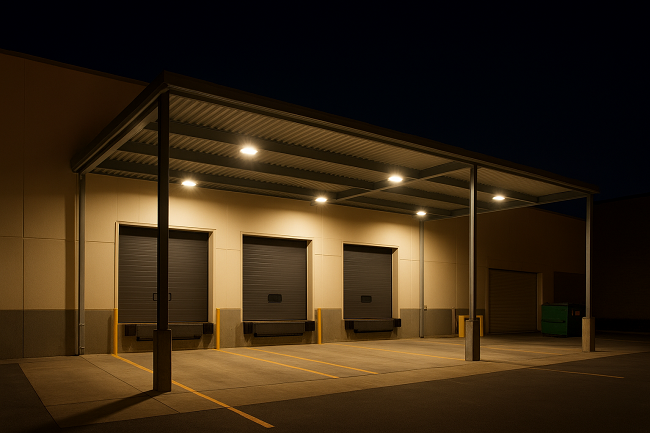
- 1‑line recommendation: Choose robust IP65–IP66, impact‑resistant luminaires with asymmetric optics for wet, high‑traffic areas.
- Why it works: Higher ingress protection and tough housings withstand wash‑downs and knocks.
- Minimal ranges: 4000–5000K; CRI ≥80; target IK10 where impacts are likely.
- Controls: Occupancy with fast ramp‑up; consider daylighting under translucent canopies.
- Install notes: Confirm mounting hardware, gasket materials, and cable routing.
- Pros/Cons: Pros—long service life, safer docks. Cons—higher upfront cost and weight.
BOH Corridors / Storage
- 1‑line recommendation: Use durable linear/wrap fixtures with occupancy sensing to minimize maintenance.
- Why it works: Simple, efficient packages suit intermittent traffic patterns.
- Minimal ranges: 3500–4000K; CRI ≥80.
- Controls: Standby dim levels with quick‑on behavior.
- Install notes: Standardize SKUs across back‑of‑house for easy spares.
- Pros/Cons: Pros—low running cost. Cons—avoid over‑illumination in narrow aisles.
▋Tip: For exterior approaches and façades near parking, apply DarkSky‑style shielding and warmer CCTs where feasible to reduce uplight and glare.
Fixture Types by Area — Quick Comparison (Compact)
A compact index for quick reference. Each row is short; fuller, actionable notes remain in the area sections above.
| Area | Fixture types | Key trait | CCT / CRI | Controls / Note |
| Atrium | Deep‑baffle downlights; wallwashers | Vertical focus; low glare | 3000–4000K; CRI ≥80 | Daylight dimming |
| Entrance | Recessed downlights; accents | Balanced ambient; controlled glare | 3000–3500K; CRI ≥80 | Daylight dimming |
| Corridor/Concourse | Linear panels | Uniform, low glare | 3500–4000K; CRI ≥80 | Occupancy sensors |
| Fashion floor | Track spot accents | High‑CRI, tight beam control | ~3000K; CRI ≥90 | Zoned dimming |
| Fitting rooms | Vertical mirror lights + accents | Shadow‑free vertical modeling | 3000–4000K; CRI ≥90 | Dimming / tunable |
| Supermarket / Food court | Low‑glare panels + accent strips | Uniform ambient; vivid food color | 3000–3500K; CRI ≥90 | Scheduling / setbacks |
| Parking garage | Garage luminaires; linear/UFO | Efficient; durable; uniform | 4000–5000K; CRI per code | Occupancy / daylight control |
| Loading docks / Canopies | IP65–66, IK10 rated luminaires | Robust; asymmetric optics | 4000–5000K; CRI ≥80 | IP/IK spec check |
| BOH corridors / Storage | Linear / wrap fixtures | Durable; economical | 3500–4000K; CRI ≥80 | Occupancy sensing / spare SKUs |
(Notes: This compact index replaces the long multi‑column table; refer to each area’s section above for the fuller recommendation and evidence links.)
Pricing Notes (Subject to Change)
- 2×2 LED panels: Contractor‑grade units from big‑box retailers often land in economical per‑fixture ranges; confirm live pricing on publication day and document the date.
- Retail track heads: Wide spread by brand/CRI/beam control; expect mid‑range costs that scale with optical quality and CRI ≥90.
- Garage luminaires/UFO high bays: Prices vary by lumen class, optics, and controls integration; multi‑packs can reduce unit cost.
▋All prices fluctuate by region, brand, and supply conditions—treat these as directional and verify before procurement.
Compliance & Standards Note
- Indoor areas (foyers, corridors, sales): Use concepts and quality factors from EN 12464‑1:2021 for illuminance, glare (UGR), and uniformity; confirm numeric targets and measurement conditions in the adopted local version of the standard.
- Parking facilities: Follow the relevant chapters of ANSI/IES RP‑8 and screen options against recognized efficiency criteria (e.g., DOE/FEMP) where applicable.
- Exterior approaches/façades: Favor fully shielded distributions and minimal uplight per DarkSky‑style principles; warm CCTs can reduce sky glow and discomfort glare.
- Always verify local code requirements and amendments—they prevail over general guidance.
FAQs
Q1 What CRI should I use for fashion?
- Use CRI ≥90 with positive R9 for accurate reds and skin tones. Pair with ~3000K accents for warmth and vivid whites; keep ambient softer to let accents lead.
Q2 How do I cut glare in atriums?
- Use deep‑baffle or louvered downlights, layer vertical wallwashing, and dim via daylight sensors. Aim carefully to avoid hotspots on glossy surfaces.
Q3 What color temperature works best in fitting rooms?
- Neutral‑warm 3000–4000K with CRI ≥90. Position vertical lighting at the mirror’s sides/top for shadow‑free viewing; add dimming or tunable presets.
Q4 How can I save energy in parking and back‑of‑house?
- Adopt occupancy/daylight controls with quick‑on behavior and commission scenes. Choose efficient luminaires and verify uniformity so you can safely dim when unoccupied.
Q5 Any quick tips for retrofit vs new‑build?
- Retrofit: prefer fixtures with compatible mounts/adapters and integrated drivers to shorten downtime.
- New‑build: consider networked controls, tunable white in key zones, and standardized SKUs for long‑term maintenance.